The Ultimate Financial Modelling Roadmap: From Beginner to Investment Banker
Posted on 17 Jul 2026
By Dr. Vikas Gupta
Financial modelling is one of the most sought-after skills in the finance industry. Whether you aspire to become an investment banker, equity research analyst, credit analyst, or corporate finance professional, mastering financial modelling can significantly improve your career prospects. Yet, many students struggle because they don't know where to begin or which skills to prioritize.
This Financial Modelling Roadmap is designed to simplify your learning journey. Instead of jumping between random tutorials and courses, you'll discover a structured path that takes you from understanding finance fundamentals to building advanced valuation models used by industry professionals. Along the way, you'll also learn essential Banking Terms for Beginners and develop the analytical skills employers look for during interviews.
If you're a finance student pursuing an MBA, CA, CFA, or commerce degree, consider this guide your roadmap to becoming industry-ready.
Ace Finance Careers
Master valuation techniques and strategic forecasting methods. Learn premium investment evaluation tricks via our advanced PGDM framework. Enroll today.
Financial modelling is the process of creating a spreadsheet-based representation of a company's financial performance. By using historical data, assumptions, and forecasts, professionals can estimate future revenue, profitability, cash flows, and business value.
Financial models help businesses and investors answer critical questions, such as:
Is a company worth investing in?
How will future sales affect profitability?
What is the fair value of a company's shares?
How will an acquisition impact financial performance?
These models play a central role in investment banking, equity research, corporate finance, private equity, and credit analysis.
Today's finance roles demand more than theoretical knowledge. Employers expect candidates to interpret financial statements, evaluate investment opportunities, and make data-driven recommendations.
Strong financial modelling skills can open doors to careers in:
Investment Banking
Equity Research
Corporate Finance
Financial Planning & Analysis (FP&A)
Credit Analysis
Private Equity
Venture Capital
Business Consulting
Beyond technical expertise, financial modelling strengthens problem-solving, analytical thinking, and business decision-making—qualities valued across industries.
Career Opportunities After Learning Financial Modelling
A strong foundation in financial modelling can prepare you for multiple finance careers.
Assess borrower creditworthiness and financial risk
Corporate Finance Executive
Budgeting, forecasting, and financial planning
FP&A Analyst
Business forecasting and performance analysis
Private Equity Analyst
Evaluate investment opportunities
As organizations increasingly rely on data-driven financial decisions, professionals with modelling expertise continue to enjoy strong career growth.
The Ultimate Financial Modelling Roadmap
Learning financial modelling becomes much easier when you follow a structured progression instead of trying to master everything at once.
Step 1: Finance Fundamentals
Step 2: Accounting Basics
Step 3: Excel Mastery
Step 4: Banking Concepts
Step 5: Financial Statement Analysis
Step 6: Forecasting
Step 7: Three-Statement Financial Model
Step 8: Valuation Techniques
Step 9: Advanced Financial Models
Step 10: Interview Preparation & Portfolio Building
Let's explore each stage in detail.
Stage 1: Build Strong Finance Fundamentals
Every successful financial modeller starts with core finance concepts.
Focus on understanding:
Time Value of Money (TVM)
Risk and Return
Cost of Capital
Capital Structure
Discounting
Financial Ratios
Inflation and Interest Rates
Without these concepts, advanced valuation techniques become difficult to understand.
Instead of memorizing formulas, learn why businesses make financial decisions and how investors evaluate opportunities.
Stage 2: Learn Accounting Thoroughly
Accounting forms the backbone of financial modelling.
You should understand how the three primary financial statements are connected.
Income Statement
Shows a company's revenue, expenses, and profits over a specific period.
Balance Sheet
Represents what a company owns and owes.
Cash Flow Statement
Tracks the movement of cash through operating, investing, and financing activities.
Once you understand how these statements interact, building financial models becomes much more intuitive.
Stage 3: Master Excel
Excel remains the most widely used tool in investment banking and corporate finance.
Focus on mastering:
IF
SUMIFS
INDEX
MATCH
XLOOKUP
OFFSET
Pivot Tables
Conditional Formatting
Charts
Keyboard Shortcuts
Speed and accuracy matter just as much as technical knowledge. Investment banking professionals often complete complex models under tight deadlines, making Excel efficiency a valuable skill.
Stage 4: Banking Terms for Beginners
Before diving into valuation models, familiarize yourself with the language of finance. Understanding common banking terms will make financial reports, analyst presentations, and interviews much easier.
Some essential Banking Terms for Beginners include:
EBITDA
EBIT
Enterprise Value (EV)
Market Capitalization
Free Cash Flow (FCF)
Working Capital
Return on Equity (ROE)
Return on Capital Employed (ROCE)
Weighted Average Cost of Capital (WACC)
Beta
Capital Expenditure (CapEx)
Depreciation
Amortization
Leverage
Liquidity
Net Debt
Earnings Per Share (EPS)
Dividend Yield
Operating Margin
Terminal Value
Don't just memorize definitions. Understand where these terms appear in financial statements and how they influence business decisions.
Elite Wealth Matrix
Step past traditional banking systems seamlessly. Acquire core portfolio metrics, operational risk management structures, and key corporate tools today.
Compares financial performance over multiple years to identify growth patterns.
Vertical Analysis
Shows each financial statement item as a percentage of revenue or total assets, making comparisons easier.
Ratio Analysis
Financial ratios provide quick insights into company performance.
Important categories include:
Liquidity Ratios
Profitability Ratios
Solvency Ratios
Efficiency Ratios
Valuation Ratios
Companies with similar revenues can have very different financial health. Ratio analysis helps uncover these differences.
Stage 6: Learn Financial Forecasting
Forecasting is where financial modelling becomes predictive rather than historical.
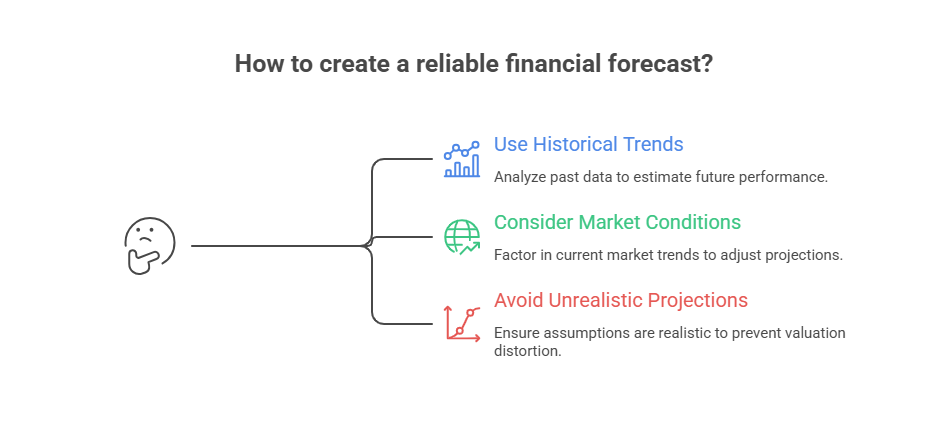
Instead of recording what has happened, analysts estimate future business performance using assumptions based on historical trends and market conditions.
Key forecasting areas include:
Revenue Growth
Cost of Goods Sold
Operating Expenses
Capital Expenditure
Working Capital
Debt Repayment
Tax Rates
Well-researched assumptions are the foundation of reliable financial models. Avoid unrealistic growth projections, as they can significantly distort valuation outcomes.
Stage 7: Build Your First Three-Statement Model
The three-statement model integrates the Income Statement, Balance Sheet, and Cash Flow Statement into a single dynamic model.
This is often the first comprehensive financial model finance professionals build.
A well-structured model should:
Link all financial statements correctly.
Use consistent assumptions.
Include error checks.
Be easy to audit and update.
Present outputs in a clean, organized format.
Once you've mastered this model, you'll be ready to explore advanced valuation techniques such as Discounted Cash Flow (DCF), Comparable Company Analysis, and Merger & Acquisition (M&A) models.
The Ultimate Financial Modelling Roadmap: From Beginner to Investment Banker
In Part 1, you learned the fundamentals of finance, accounting, Excel, financial statement analysis, forecasting, and how to build a three-statement model. These skills form the foundation of every finance career. The next step is to apply them to valuation, investment analysis, and interview preparation.
Stage 8: Learn Business Valuation Techniques
Valuation is one of the most important applications of financial modelling. It helps estimate the intrinsic value of a business and supports investment decisions, mergers, acquisitions, and fundraising.
Here are the three most commonly used valuation methods:
Discounted Cash Flow (DCF) Analysis
DCF estimates a company's value by forecasting future cash flows and discounting them to their present value using the Weighted Average Cost of Capital (WACC).
A DCF model typically includes:
Revenue and expense forecasts
Free Cash Flow calculations
Terminal Value estimation
Discount rate (WACC)
Enterprise Value and Equity Value
Although DCF requires several assumptions, it is widely regarded as one of the most comprehensive valuation methods.
Comparable Company Analysis (Comps)
This method compares a company with similar publicly listed businesses using valuation multiples such as:
EV/EBITDA
Price-to-Earnings (P/E)
EV/Sales
Price-to-Book (P/B)
Comparable analysis provides a market-based perspective and is often used alongside DCF to validate valuation estimates.
Precedent Transaction Analysis
This approach values a company by studying past mergers and acquisitions involving similar businesses. It helps determine acquisition premiums and market trends.
Learning these valuation techniques prepares you for careers in investment banking, private equity, equity research, and corporate finance.
Stage 9: Explore Advanced Financial Models
Once you understand valuation, move on to advanced financial models that investment banks and consulting firms use regularly.
Mergers & Acquisitions (M&A) Model
An M&A model evaluates whether acquiring another company creates value for shareholders. Analysts assess purchase price, financing structure, synergies, and post-merger financial performance.
Leveraged Buyout (LBO) Model
Private equity firms use LBO models to determine whether a company can be acquired primarily through borrowed funds and later sold for a profit.
Sensitivity and Scenario Analysis
Financial decisions rarely depend on one outcome. Sensitivity analysis allows analysts to test different assumptions, such as changes in revenue growth, operating margins, or discount rates, to understand how these variables affect valuation.
Stage 10: Develop Equity Research Skills
Equity research professionals evaluate listed companies and provide investment recommendations based on detailed financial analysis.
To succeed in this role, you should learn how to:
Read annual reports
Analyze industry trends
Forecast earnings
Build valuation models
Write concise research reports
Present investment recommendations with supporting evidence
Common Equity Research Interview Questions
If you're preparing for analyst roles, practice answering these frequently asked Equity Research Interview Questions:
Walk me through a DCF valuation.
How do you value a company with negative earnings?
What is Enterprise Value, and why is it different from Market Capitalization?
Which financial statement would you review first and why?
How would rising interest rates affect stock valuations?
Explain EBITDA in simple terms.
What factors influence a company's share price?
Which valuation multiple do you prefer and why?
Interviewers often evaluate your reasoning as much as your technical knowledge. Practice explaining concepts clearly rather than memorizing answers.
Stage 11: Strengthen Credit Analysis Skills
Credit analysts assess whether businesses or individuals can repay loans. Their work supports lending decisions made by banks and financial institutions.
Key areas include:
Cash Flow Analysis
Debt Servicing Capacity
Liquidity Assessment
Profitability Analysis
Industry Risk
Financial Ratios
Credit Ratings
A credit analyst must balance quantitative analysis with qualitative factors such as management quality and market conditions.
Today's finance professionals are expected to go beyond Excel. Familiarity with automation and data visualization tools can significantly improve productivity and employability.
Consider learning:
Power BI for interactive dashboards and financial reporting.
SQL for retrieving and analyzing financial data.
Python for automation, forecasting, and data analysis.
VBA for streamlining repetitive Excel tasks.
Bloomberg Terminal for accessing financial market data and company information.
You don't need to master every tool immediately. Start with Excel, then gradually expand your technical toolkit as your career progresses.
Build a Strong Finance Portfolio
Employers value practical experience alongside academic qualifications. A portfolio demonstrates your ability to apply concepts in real-world scenarios.
Include projects such as:
A three-statement financial model
A DCF valuation of a listed company
Comparable Company Analysis
An equity research report
A credit assessment report
A financial dashboard using Power BI
Analysis of an annual report
Document your assumptions, methodology, and conclusions for each project. This showcases both your technical and communication skills.
Common Mistakes to Avoid
Many beginners delay their progress by making avoidable mistakes. Watch out for these common pitfalls:
Skipping accounting fundamentals
Memorizing Excel formulas without understanding their purpose
Using unrealistic assumptions in forecasts
Ignoring error checks in financial models
Building complex models before mastering the basics
Failing to practice with real company financial statements
A strong financial model should be accurate, transparent, and easy to update.
A 12-Month Financial Modelling Learning Plan
Following a structured plan can help you stay consistent.
Month
Focus Area
1
Finance Fundamentals
2
Accounting Basics
3
Excel Skills
4
Banking Terms & Financial Statements
5
Financial Statement Analysis
6
Forecasting Techniques
7
Three-Statement Model
8
DCF Valuation
9
Comparable Company Analysis
10
M&A and LBO Modelling
11
Equity Research & Credit Analysis
12
Portfolio Building and Interview Preparation
Adapt this roadmap based on your academic schedule and career goals. Consistent practice is more effective than trying to learn everything in a short period.
How Practical Learning Supports Finance Careers
While online resources provide valuable theoretical knowledge, practical exposure is essential for developing industry-ready skills. Working on live case studies, analyzing annual reports, and participating in corporate interactions can deepen your understanding of financial decision-making.
Institutions such as Asia Pacific Institute of Management emphasize industry-oriented learning through experienced faculty, practical projects, and corporate exposure. This approach helps students bridge the gap between classroom concepts and the analytical skills expected in finance roles.
Conclusion
Building expertise in financial modelling is a journey that combines strong fundamentals, consistent practice, and real-world application. From understanding accounting principles and mastering Excel to learning valuation techniques, credit analysis, and equity research, each stage plays a crucial role in preparing you for careers in investment banking, corporate finance, consulting, and financial analysis.
Rather than trying to learn everything at once, focus on progressing through the roadmap step by step. As your technical skills improve, strengthen your problem-solving ability by working on real company financial statements, building valuation models, and preparing for technical interviews. Over time, this practical experience will help you stand out in a competitive finance job market.
For students aspiring to build a successful career in finance, learning in an environment that emphasizes industry exposure, practical projects, and mentorship can make a meaningful difference. Asia Pacific Institute of Management supports aspiring finance professionals through an industry-oriented curriculum, experienced faculty, corporate interactions, and practical learning opportunities that help bridge the gap between classroom concepts and workplace expectations.
Whether you are a beginner exploring finance or an MBA, CA, CFA, or commerce student preparing for investment banking and equity research roles, bookmark this Financial Modelling Roadmap and revisit it as you develop new skills. Treat it as your long-term learning companion, update your knowledge regularly, and keep building projects that showcase your capabilities. With dedication and continuous learning, you can create a strong foundation for a rewarding career in the world of finance.
Lead Markets Online
Future-proof your administrative goals via dynamic project experience. Master equity analysis frameworks and secure your institutional placement position.
Dr. Vikas Gupta is a distinguished academic in the education and research domain, specializing in finance and related interdisciplinary studies. He is known for his...
Financial modelling is the process of creating spreadsheet-based models to forecast a company’s financial performance and estimate its value. It is widely used in investment banking, equity research, corporate finance, and consulting.
02.
How long does it take to learn financial modelling?
Most beginners can build a solid foundation within six to twelve months through consistent practice, project work, and regular revision.
03.
Is financial modelling only for investment banking?
No. Financial modelling is valuable for careers in equity research, corporate finance, private equity, venture capital, FP&A, consulting, and credit analysis.
04.
Which Excel skills are essential for financial modelling?
Functions such as IF, SUMIFS, INDEX, MATCH, XLOOKUP, Pivot Tables, and keyboard shortcuts are essential for building efficient and accurate financial models.
05.
Can I learn financial modelling without an MBA?
Yes. Students pursuing B.Com, BBA, CA, CFA, or other finance-related programs can develop financial modelling skills through structured learning and practical projects.
06.
Why are interview questions important during preparation?
Practicing technical and conceptual questions improves confidence and helps you explain financial concepts clearly during interviews.


















.webp) Call Us
Call Us