

24 Oct 2026
How AI Is Changing Management Careers and the Skills Students Need



Every admission season brings the same question, and the labels confuse students more than the programmes do. What matters is who approves the course, who designs the curriculum, and what opportunities the qualification opens up afterwards. Many students ask about the difference between PGDM and MBA and wonder which is better for their goals.
This guide sets out the practical differences, so candidates can judge a programme on its merits rather than its name.
The PGDM vs MBA question starts with who awards the qualification. An MBA is a degree awarded by a university, usually through its department or an affiliated college, and the syllabus follows what the university sets. A PGDM is a diploma awarded by an autonomous institute that is approved by AICTE, and the institute writes and updates its curriculum.
On campus, recruiters mostly look at the institute's standing, the skills students show, and the projects they have completed. An AICTE-approved PGDM is generally treated as equal to an MBA for jobs. Those thinking of a PhD or a government post should check the equivalence rules for that route first.
A PGDM course after graduation is open to any graduate with a recognised bachelor's degree, provided their marks meet the cut-off. At Asia Pacific Institute of Management, New Delhi, the stated minimum is 50 per cent. Admission is through CAT, XAT, CMAT, MAT, ATMA, or GMAT scores, followed by a group discussion and a personal interview.
The programme lasts for two years. AIM's AICTE-approved PGDM is offered in four forms: Marketing, Banking and Financial Services, Big Data Analytics, and General with dual specialisations. Students should choose the one that matches the work they can picture themselves doing.
The PGDM career opportunities in India include marketing and brand roles, sales, banking and financial services, analytics, operations, and consulting. FMCG, BFSI, IT services, e-commerce, and start-ups are the usual hiring sectors.
What shapes the outcome is the institute's corporate network and how much real work a student does before placement. At AIM, every student completes a summer internship, and the Centre for Corporate Relations handles recruiter engagement. Candidates should ask any institute for batch-wise placement reports instead of relying on the highest package alone.
The first step is to check approvals. Confirm the programme is AICTE-approved, then read the curriculum carefully, including the electives and how recently it was revised. Faculty profiles, internship rules, and alumni working in the desired roles are also worth reviewing.
The full cost should be compared too, which includes hostel and living expenses, not only tuition. After that, students should be honest about their goals. Someone who wants to teach or research may prefer the university route, while a student aiming at corporate roles will care more about industry exposure and live projects.
Neither label guarantees a successful career. The institute, the specialisation, and what a student does during those two years matter far more. AIM offers PGDM and healthcare MBA programmes in New Delhi, and reading each programme page before applying makes choosing between them easier.


24 Oct 2026
How AI Is Changing Management Careers and the Skills Students Need
24 Oct 2026
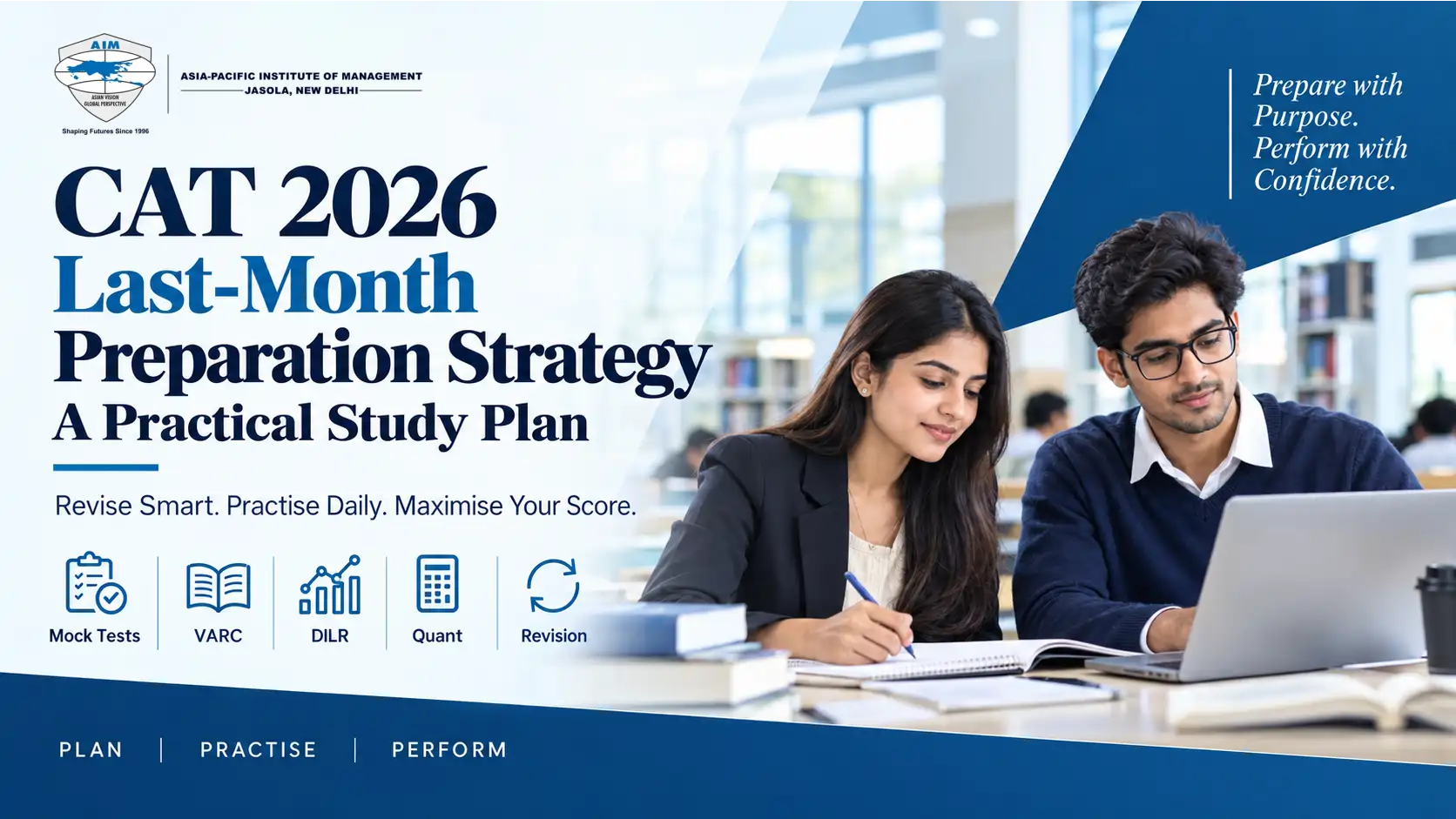
CAT 2026 Last-Month Preparation Strategy: A Practical Study Plan

14 Oct 2026
AI and Management Education: How AIM Is Preparing Students for the Future of Business
13 Oct 2026
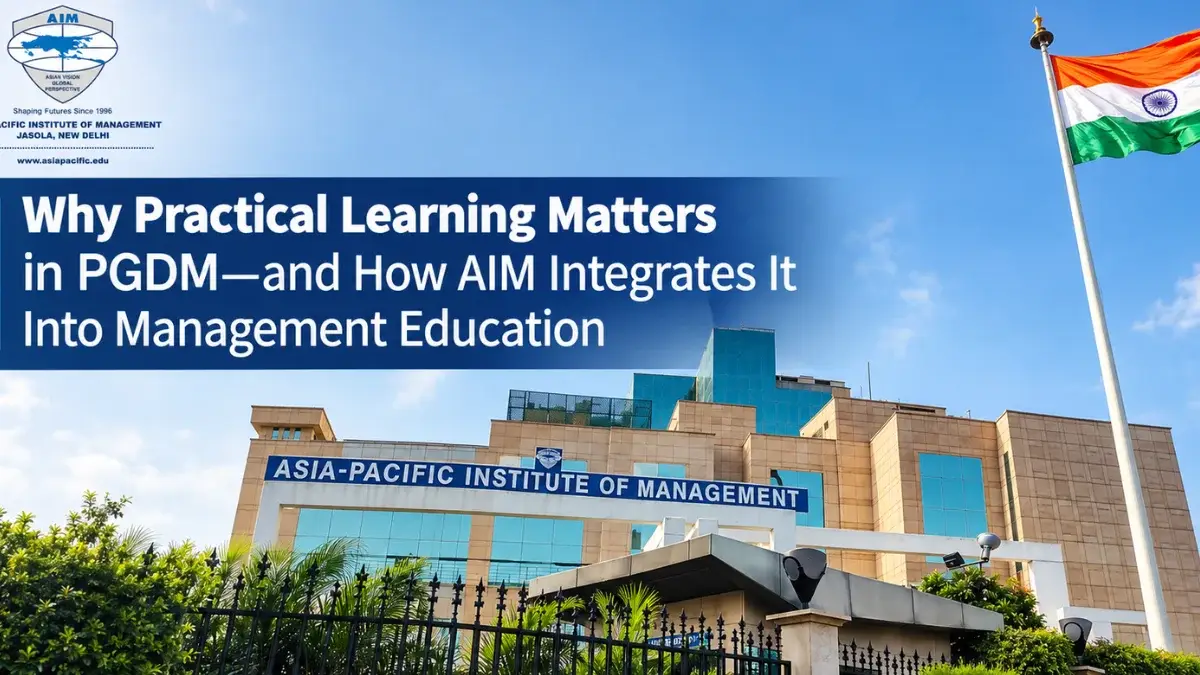
Practical Learning in PGDM: Why It Matters and How AIM Integrates It Into Management Education
12 Oct 2026
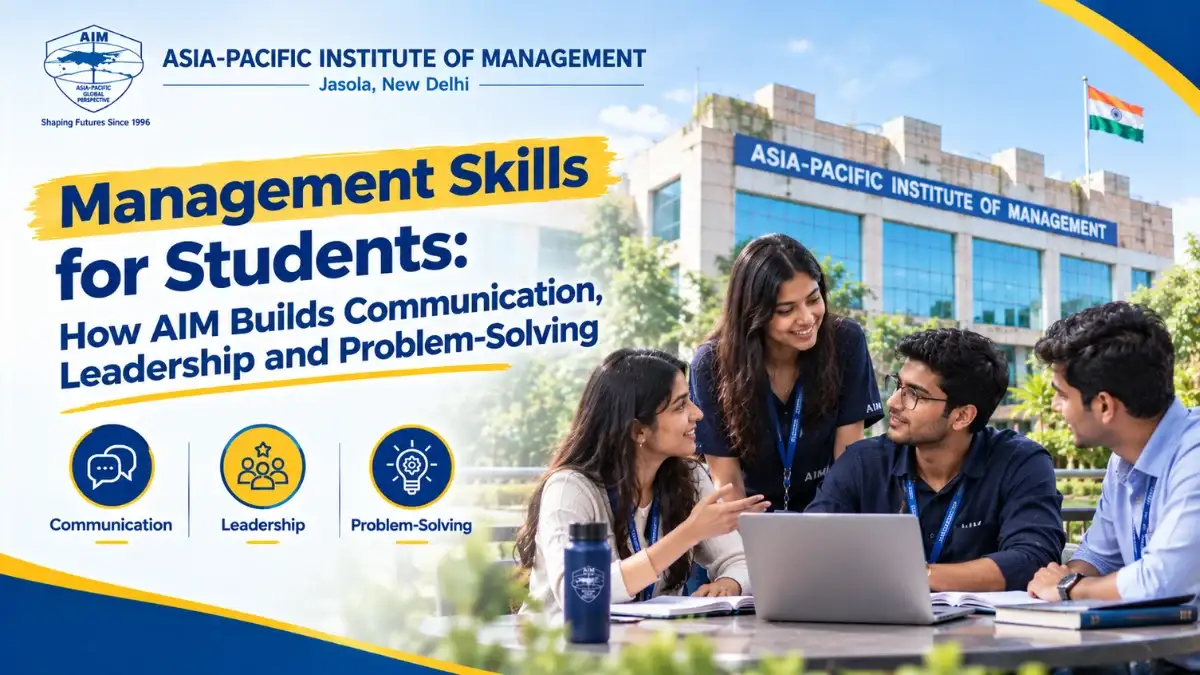
Management Skills for Students: How AIM Builds Communication, Leadership and Problem-Solving






BBA Brochure

PGDM Brochure
MBA Brochure

.webp) Call Us