PGDM Applications at AIM Are Closing Soon | Secure Your Seat Now

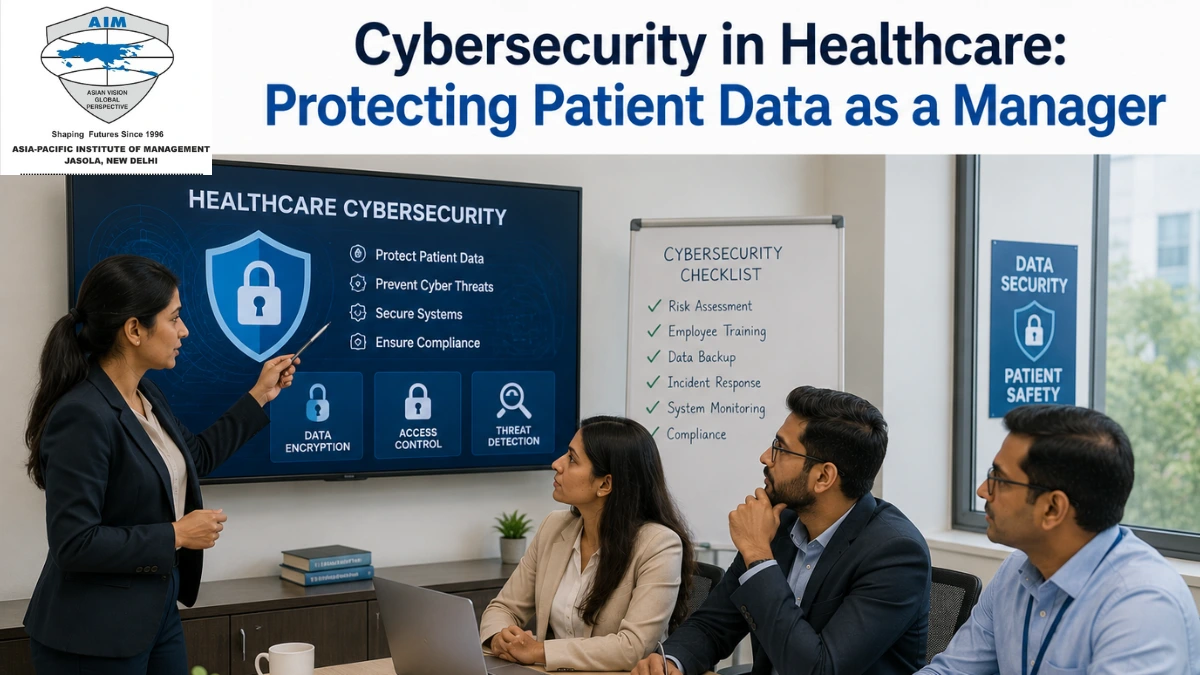
Cybersecurity in Healthcare: Protecting Patient Data as a Manager

By Dr. Vikas Gupta

Cybersecurity in Healthcare: Protecting Patient Data as a Manager

Introduction

Healthcare organizations are rapidly adopting digital technologies to improve patient care and operational efficiency. Electronic health records, telemedicine systems, AI-driven healthcare platforms, and cloud-based hospital systems have transformed healthcare delivery.

However, digital transformation has also increased cybersecurity risks. Hospitals and healthcare organizations manage highly sensitive patient information, making them attractive targets for cyber threats.

As a result, healthcare data security has become a major priority in modern healthcare management.

For students pursuing an MBA in hospital and healthcare management, understanding cybersecurity is no longer optional. Future healthcare leaders must know how to protect patient data while ensuring smooth healthcare operations.

What is Healthcare Data Security?

Healthcare data security refers to the protection of patient information, medical records, healthcare systems, and digital infrastructure from unauthorized access, misuse, or cyberattacks.

Healthcare data often includes:

  • Patient medical records
  • Diagnostic reports
  • Insurance information
  • Personal identification details
  • Financial information
  • Treatment histories

The goal is to maintain confidentiality, integrity, and accessibility of healthcare information.

Why Healthcare Organizations Are Vulnerable to Cyber Threats

Healthcare systems increasingly depend on digital technologies.

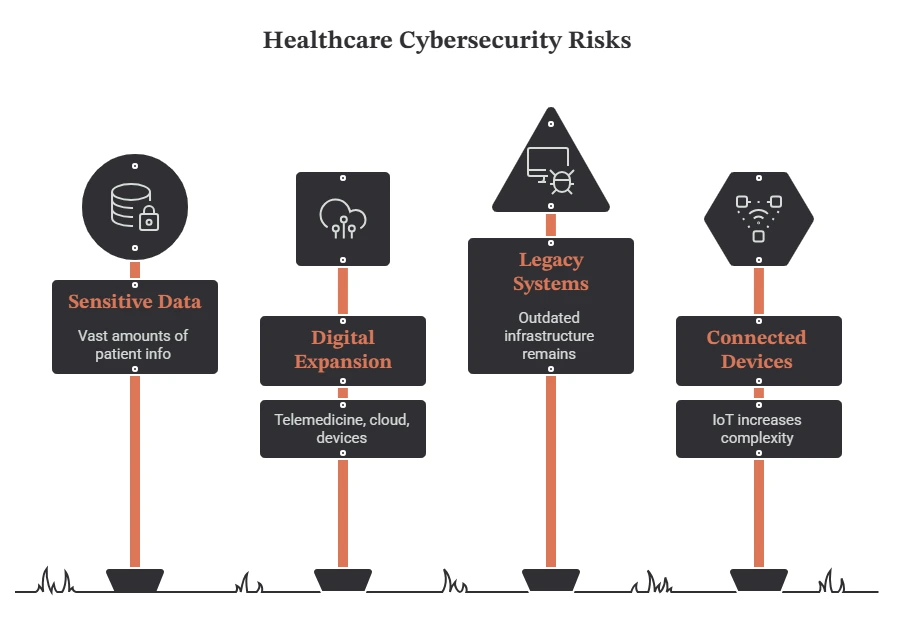
However, several factors increase cybersecurity risks.

Large Volumes of Sensitive Data

Hospitals manage vast amounts of patient information daily.

Expansion of Digital Healthcare

Telemedicine, cloud systems, and connected devices create additional access points.

Legacy Technology Systems

Some healthcare organizations still use outdated infrastructure.

Growing Connected Device Networks

Smart healthcare devices and IoT technologies increase complexity.

Therefore, cybersecurity has become a critical management concern.

Bonus:  MBA to Healthcare Startup: A Success Guide 

Common Cybersecurity Threats in Healthcare

Understanding cyber risks helps future managers build safer systems.

1. Data Breaches

Unauthorized access to healthcare systems can expose sensitive patient information.

Consequences include:

  • Loss of trust
  • Financial damage
  • Operational disruption

2. Ransomware Attacks

Cybercriminals sometimes block access to healthcare systems and demand payment.

Hospitals heavily rely on continuous access to data, making such attacks dangerous.

3. Phishing Attacks

Fraudulent emails and messages may trick staff into revealing sensitive information.

Human error remains a major cybersecurity challenge.

4. Insider Threats

Unauthorized access can also occur internally due to negligence or misuse.

Managers must implement proper access controls.

5. Device and Network Vulnerabilities

Connected healthcare devices require regular monitoring and protection.

Why Healthcare Managers Play a Critical Role

Cybersecurity is not solely an IT responsibility.

Healthcare managers increasingly oversee:

  • Risk management strategies
  • Policy implementation
  • Staff awareness programs
  • Operational compliance
  • Technology adoption decisions

Understanding healthcare data security helps managers strengthen organizational resilience.

Bonus: Why Healthcare Careers Stay Strong During Recessions 

Key Responsibilities of Healthcare Managers in Cybersecurity

Develop Security Policies

Managers establish guidelines for safe technology use.

Promote Employee Awareness

Training reduces risks caused by human errors.

Coordinate with Technology Teams

Managers work closely with IT professionals.

Ensure Regulatory Compliance

Healthcare organizations must maintain privacy and security standards.

Support Risk Assessment

Regular evaluations help identify vulnerabilities.

How Technology Improves Healthcare Data Security

Technology itself also helps strengthen cybersecurity.

Artificial Intelligence

AI can identify suspicious activities and unusual patterns.

Multi-Factor Authentication

Additional verification improves access security.

Data Encryption

Encryption protects information during storage and transfer.

Cloud Security Systems

Advanced platforms improve data protection.

Healthcare leaders increasingly need technology awareness.

Career Opportunities in Healthcare Data Security

Students exploring mba in healthcare management colleges in india can pursue several emerging roles.

Popular Career Roles

  • Healthcare Information Security Manager
  • Health IT Operations Manager
  • Digital Healthcare Consultant
  • Risk and Compliance Manager
  • Healthcare Technology Strategist

As healthcare systems become increasingly digital, cybersecurity-related roles continue expanding.

How MBA in Healthcare Management Helps

An MBA in hospital and healthcare management develops leadership and operational capabilities for modern healthcare environments.

Key Learning Areas

  • Healthcare operations
  • Strategic management
  • Leadership skills
  • Technology awareness
  • Healthcare systems understanding

Institutes like Asia Pacific Institute of Management focus on practical learning and industry-oriented education. Students gain exposure to healthcare systems, emerging technologies, and real-world management challenges.

Why Delhi NCR is Ideal for Healthcare Education

Delhi NCR offers strong healthcare and technology ecosystems.

Key Advantages

  • Access to healthcare organizations
  • Healthcare technology exposure
  • Internship opportunities
  • Industry interaction

Students searching for the best colleges for mba in healthcare management often prefer Delhi NCR due to strong professional opportunities.

Step-by-Step Guide to Build a Career in Healthcare Technology Management

Step 1: Understand Healthcare Systems

Learn healthcare workflows and digital infrastructure.

Step 2: Choose the Right MBA Program

Enroll in an MBA in hospital and healthcare management.

Step 3: Build Technology Awareness

Understand healthcare systems and cybersecurity fundamentals.

Step 4: Gain Practical Exposure

Participate in projects and healthcare internships.

Step 5: Stay Updated

Follow healthcare technology and cybersecurity trends.

Key Insights for Students and Parents

  • Healthcare cybersecurity has become increasingly important
  • Patient data protection requires strategic leadership
  • Technology awareness improves employability
  • Healthcare managers increasingly oversee digital systems
  • Delhi NCR offers strong healthcare learning opportunities

Conclusion

Healthcare systems are becoming increasingly digital and interconnected. Therefore, healthcare data security is now a critical part of healthcare leadership and operational management.

Students who combine healthcare expertise with technology awareness can become future-ready professionals capable of protecting healthcare systems and patient trust.

Experience Campus Life

Build healthcare technology leadership skills with industry-focused MBA programs designed for future healthcare security.

Apply Now

About the Author

author

Dr. Vikas Gupta

Dr. Vikas Gupta is a distinguished academic in the education and research domain, specializing in finance and related interdisciplinary studies. He is known for his...

Read Full Bio →

Leave a comment

Your email address will not be published. Required fields are marked *

Frequently Asked Questions (FAQs)

01. What is healthcare data security?

It involves protecting patient information and healthcare systems from cyber threats.

02. Why is cybersecurity important in healthcare?

Healthcare organizations manage highly sensitive information.

03. What are common healthcare cyber threats?

Data breaches, ransomware, phishing, and network vulnerabilities are common risks.

04. Can MBA healthcare graduates work in technology-related roles?

Yes, graduates can work in healthcare technology and operations positions.

05. Why should healthcare managers understand cybersecurity?

Managers increasingly oversee technology systems and organizational risks.

06. Why study healthcare management in Delhi NCR?

Delhi NCR offers healthcare infrastructure and industry opportunities.

07. How to choose the best healthcare management college?

Focus on curriculum quality, practical learning, internships, and placement support.

Follow Us

Subscribe to Our Newsletter

Download Brochure

M.Sc/B.Sc Brochure

PGDM Brochure

MBA Brochure

Apply Now Call Us Email WhatsApp