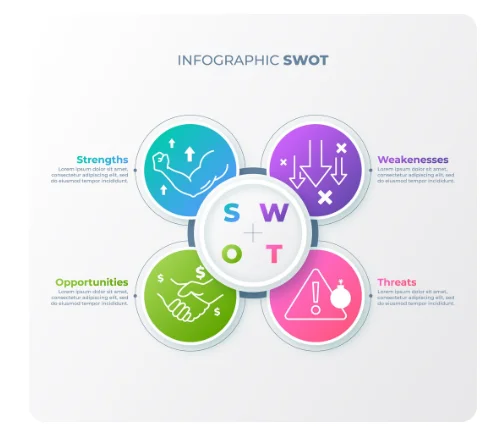
SWOT Analysis is a framework used to evaluate internal and external factors that influence an organization, project, product, or individual. By examining strengths, weaknesses, opportunities, and threats, businesses can develop effective strategies, improve performance, and gain a competitive advantage in the marketplace.
2. Definition
SWOT Analysis is a strategic management technique that helps organizations assess their current position and future potential. It identifies internal strengths and weaknesses, along with external opportunities and threats, enabling managers to make informed decisions and create effective business strategies.
Explore UG Careers
Choose UG programs offering industry exposure, skill development, and opportunities to achieve long-term professional goals.
Apply Now
→
3. Key Highlights
- SWOT stands for Strengths, Weaknesses, Opportunities, and Threats.
- Helps organizations evaluate internal and external environments.
- Supports strategic planning and decision-making.
- Identifies competitive advantages and improvement areas.
- Applicable to businesses, projects, products, and personal development.
- Widely used in marketing, management, and business planning.
4. Detailed Explanation
SWOT Analysis is one of the most commonly used strategic planning tools in business management. It helps organizations understand their strengths, such as strong brand reputation or skilled employees, and recognize weaknesses that may limit growth. The analysis also examines external opportunities, such as emerging markets or technological advancements, and threats like increasing competition or changing regulations. By evaluating these four factors, businesses can develop strategies that capitalize on strengths, address weaknesses, seize opportunities, and reduce risks. SWOT Analysis is valuable because it provides a structured approach to strategic thinking and organizational planning.
5. Examples / Applications
Example of SWOT Analysis for a New E-Commerce Business
Strengths
- User-friendly website
- Unique product offerings
- Strong digital marketing strategy
Weaknesses
- Limited brand awareness
- Small operational team
- Restricted budget
Opportunities
- Growing online shopping market
- Expansion into new regions
- Increasing smartphone usage
Threats
- Intense competition
- Changing consumer preferences
- Rising logistics costs
Other Applications
- Business strategy development
- Marketing campaign planning
- Product launch evaluation
- Career planning and self-assessment
- Organizational performance improvement
6. Related Terms
- Strategic Management
- Business Planning
- Competitive Analysis
- Market Research
- PESTLE Analysis
7. Why This Term Matters for Students
- Develops strategic thinking and analytical skills.
- Helps understand business decision-making processes.
- Useful for academic projects, entrepreneurship, and career planning.
Start UG Journey
Pursue UG programs that build analytical abilities, practical knowledge, and strong foundations for future career success.
Apply Now
→












.webp) Call Us
Call Us