y Dr. Srinka Bose
The Digital Regulatory Environment: Why is it Important?
Technological developments, especially in recent years, have been one of the key drivers facilitating international trade in services. Services that traditionally required customers to be in close proximity to their suppliers can now be traded from a distance. This has allowed firms to reach global markets at lower costs (OECD, 2024). To ensure that not only should currently trading firms sustain or improve their ability to contribute to global commerce, but potential exporters should also find an environment encouraging the digital supply of services internationally. For this, it is important to identify barriers which could be prohibiting or inhibiting this supply. The
OECD Digital Services Trade Restrictiveness Index (DSRTI) provides data which reflects barriers to certain areas of international digital transactions. A reasonable amount of academic research has benefited from using these.
Here, as a slight departure from the above, we shall consider an aligned database on differences in the digital regulations between a pair of countries. Recent studies have established that cross-border cooperation acts as an enabler for digital commerce (Ahmed, 2019; Suh and Roh, 2023). This makes it important to explore these differences. The values for digital regulatory heterogeneity have been constructed using the OECD DSTRI database mentioned earlier. This database informs us, through scores ranging from 0 to 1 on how different two countries are in their overall digital services trade restrictions. A more elaborate explanation of what these scores indicate has been discussed below.
Against this backdrop of the global digital trade environment, what we question here is:
- How does India differ in its digital services trade regulations from existing and potential trading partners?
- Is there any pattern in the differences between the ‘Global North’ and the ‘Global South’ (for which India has been a strong voice) countries?
What Defines the Global North and Global South?
India has, for the past few years, made a conscious attempt to establish its commitment to the ‘Global South’ countries. Virtual summits on ‘Voice of Global South (VoGS)’ have been hosted in the last few years by India. This brings us to the question of what exactly is the ‘Global South’ as opposed to the ‘Global North’. It should be understood that, contrary to the apparent perception of a geographical demarcation of the countries of the world, the ‘Global South’ comprises all developing countries and the ’Global North’ of the developed ones. Apparently, the term ‘Global South’ was coined by Carl Oglesby, an American anti-war activist, in 1969, and it continues to be used in global discourses.
An Overview of the Countries Examined
Not all countries of either the ‘Global North’ or the ‘Global South’ could be examined here but those that have been looked into are the major trade players. Thus, India’s differences in digital trade regulations have been considered with 89 countries of the world from the 90-country database from which these values have been drawn, namely the
OECD, Digital Services Trade Heterogeneity indices. These countries together contribute to more than 85% of world services trade and, therefore, could be accepted as a reasonably representative sample for an examination. They also cover all four income groups as categorized by the World Bank, namely- High-Income countries, Upper-Middle Income countries, Lower-Middle Income countries and Low-Income countries. The high-income countries together, as has been mentioned earlier, have been referred to as the Global North and the rest form the Global South. Of the 89 countries examined, 41 were from the former and 48 from the latter.
The Numbers and What They Say
The data source provides a score ranging from 0 to 1 for each country pair to show the degree of variation in digital services trade regulations between them. The largest score, 1, indicates maximum difference in this variation, and 0 indicates no variation between the pair of countries. The actual scores have been normalized between 0 and 1 for clearer understanding. These have been explained through Table 1. The scores have been divided into five categories and graded from
Very Low digital regulatory differences to
Very High.
Thus, those countries with which India has very high differences in digital trade regulations have large scores (0 to 0.20) and come under the ‘
Very High’ category.
Table 1: Defining Digital Regulatory Differences Based on Normalized Scores
| Scores |
Digital Regulatory
Differences |
| 0 – 0.20 |
Very Low |
| 0.20 – 0.40 |
Low |
| 0.40 – 0.60 |
Average |
| 0.60 – 0.80 |
High |
| 0.80 – 1 |
Very High |
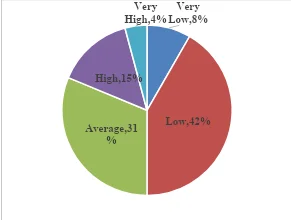
The overall differences in the regulatory environment for international digital transactions have been portrayed through charts for the Global North (Figure 1) and for the Global South (Figure 2). Several interesting observations can be made through a comparison of the information in these two pie charts. First, India has a
High to
Very High regulatory differences with far more countries of the Global South (of which it itself is a part) than with the Global North. Of the 48 countries in the former India has above average digital services trade variations with 9 countries (18.8% of all the Global South countries). On the other hand, of the 41 countries of the Global North, India had
High to
Very High differences in digital regulations with only 4 countries (contributing to 9.8% of all Global North economies). Second, the proportion of countries with average scores is almost double for the Global South (31.3%) compared to the Global North (12.2%). Turkey, Zimbabwe and Mexico are some of the Global South countries with
Very Low digital regulatory variations with India. Corresponding low values for the North can be attributed to Greece, New Zealand, Belgium, etc.
Figure 1: India’s Digital Regulatory Differences with the Global North
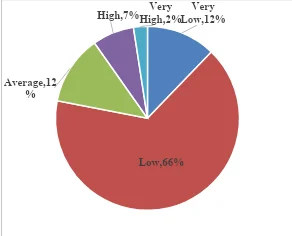 Figure 2: India’s Digital Regulatory Differences with the Global South
Takeaways
The improvements in international digital commerce and the importance of the need for a facilitating digital regulatory environment are well recognized. On one hand, India is an important player in the international supply of digitally enabled services; on the other, it has been making a consistent attempt to establish itself as a voice for the ‘Global South’. The numbers here, however, reveal that differences in the digital services trade regulations are higher with developing countries. Given that greater coherence in these regulations will improve trade, policies need to focus on how to narrow these differences. Well-chosen policies, either unilaterally or bilaterally implemented, are likely to improve India-Global South trade and strengthen not only its position in the Global South but also its commitment to improving overall trade performance in the same. This, in turn, would help improve economic efficiencies and overall welfare for the Global South.
We at the Asia-Pacific Institute of Management encourage you to think innovatively with an ethical paradigm. We are a top-rated PGDM College in Delhi and North India. We encourage you to connect and interact with us and build a career at one of the best MBA colleges in Delhi.
Note: This blog was written by a faculty member of the Asia-Pacific Institute of Management
Keywords: India digital trade regulations, Global North vs Global South, digital regulatory differences, OECD Digital Services Trade Restrictiveness Index, international digital commerce, India Global South relations, cross-border digital trade, Voice of Global South (VoGS).


















.webp) Call Us
Call Us