

27 Nov 2026
International Business Careers After PGDM: Global Supply Chains, Export Management and Multinational Company Jobs


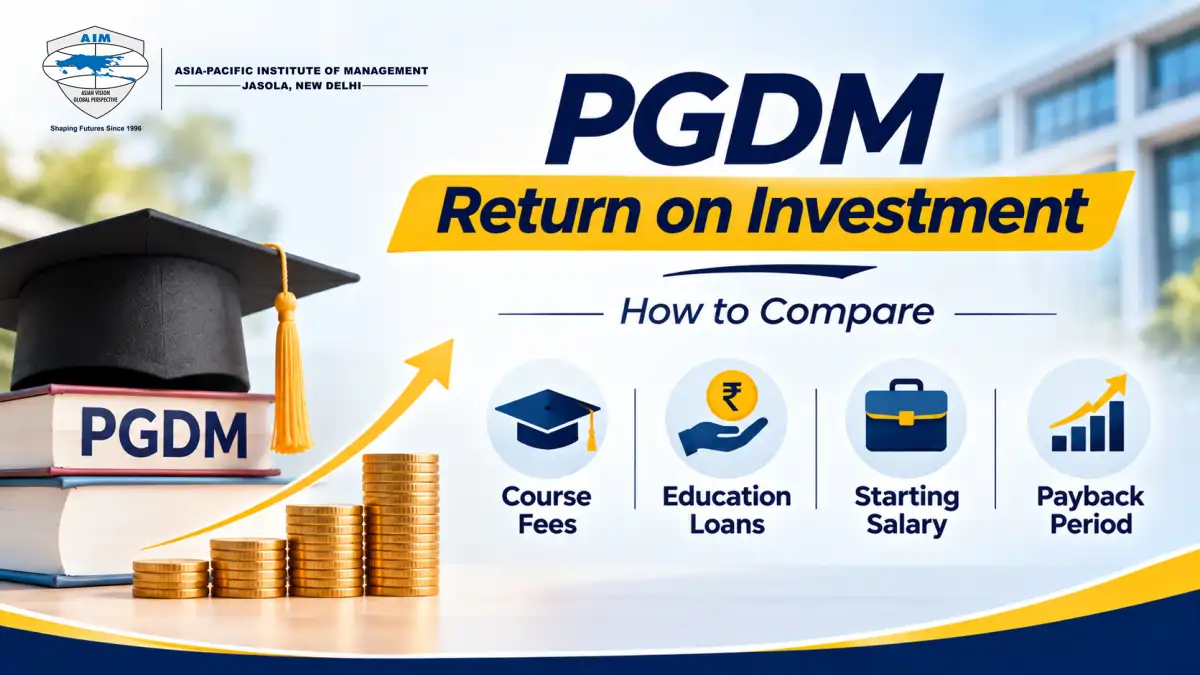
A PGDM is a big financial commitment, yet many families decide without a clear way to judge the return. Brand name, peer choices and campus visits often drive the decision. Understanding PGDM fees in Jasola, New Delhi, and how to compare them with placement results gives you a firm basis for a decision this large.
The tuition fee on the admissions page is not the full cost. Add up:
Ask the college for an itemised cost before you apply.
If you borrow, learn the principal, interest rate, repayment period and moratorium. The link between PGDM Education Loan and Fees looks simple, but the total repayment can be much higher than the amount borrowed, especially over seven years. Compare the full repayment with your expected take-home salary. A common rule of thumb is to keep the total monthly EMI at about 15 to 20 per cent of take-home pay. If it goes above 30 per cent, money pressure can affect your early career choices.
Read placement reports with care. Median salary is more useful than average salary, because a few very high offers can pull up the average. Also look at which sectors and companies hire. A college placed mostly in BFSI, consulting and FMCG gives a different salary path than one placed mostly in small firms, even when the medians look alike.
When you assess a PGDM College with Good ROI in Jasola, ask for median salary by specialisation, not just the overall number. Ask how many students were placed through the formal process and how many found jobs on their own. Ask how long placements took.
This is the payback period.
Step 1: Find the salary increment. Subtract your pre-PGDM salary from your post-PGDM starting salary. If you have no work experience, use a reasonable entry-level salary without a management degree as the baseline.
Step 2: Find total investment. Add programme cost, income given up during the course and total loan interest.
Step 3: Divide. Total investment divided by the annual salary increment gives the payback period in years. Many people consider three to five years strong. Beyond seven years, the case weakens unless your salary grows quickly after your first job.
The cheapest college is not always the best value if placements are weak. The costliest one is not always poor value if salaries are much higher. What matters is the ratio of total investment to realistic earnings.
ROI analysis for a PGDM is not complicated, but it needs honest numbers from both the college and the student. Total cost, median salary by specialisation and loan repayment burden are the three figures to check. Asia Pacific Institute of Management in Jasola, New Delhi, offers PGDM programmes. If you are comparing a PGDM College with Good ROI in Jasola, visit the official website and ask the admissions team for the fee structure, loan options and placement data.

27 Nov 2026
International Business Careers After PGDM: Global Supply Chains, Export Management and Multinational Company Jobs
26 Nov 2026
Digital Marketing vs Brand Management After PGDM: Skills, Job Roles, Salary and Industry Demand

25 Nov 2026
How to Choose a PGDM Specialisation Based on Your CAT Percentile, Graduation Background and Career Goals

24 Nov 2026
PGDM in Business Analytics vs Data Science: Curriculum, Technical Skills, Career Scope, and Salary
21 Nov 2026
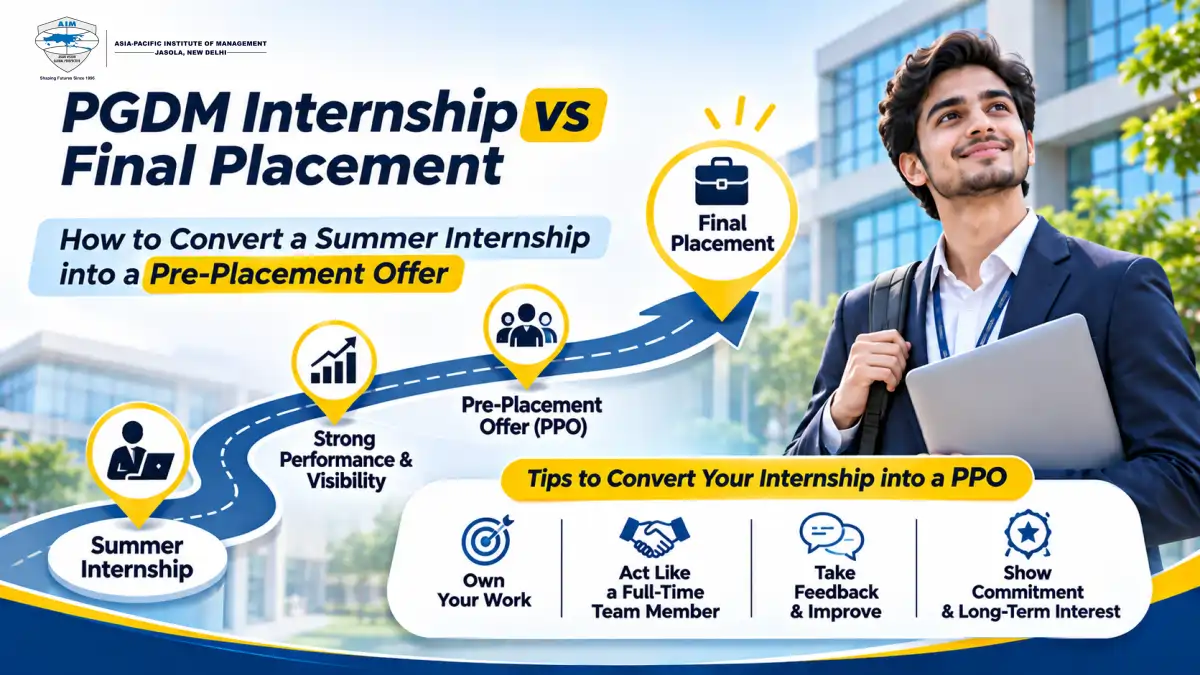
PGDM Internship vs Final Placement: How to Convert a Summer Internship into a Pre-Placement Offer




November 27, 2026
November 26, 2026
November 25, 2026


BBA Brochure

PGDM Brochure
MBA Brochure
Executive MBA Brochure
.webp) Call Us