

02 Mar 2026
Asia Pacific Institute of Management, New Delhi: Admission 2026, Cutoff, Courses, Fees, Placements


By MS. HARSHITA JAIN
Assistant Professor – Finance
Carbon credits are tradable allowances enabling businesses to emit a specified quantity of carbon dioxide or equivalent greenhouse gases—usually one metric ton. Governments and regulatory bodies globally have established emissions limits under numerous cap-and-trade programs and zero-emission vehicle (ZEV) requirements. Businesses that emit less than their quotas accumulate excess credits, which they can sell to companies that exceed their quotas. The system rewards emission reductions by giving clean practices monetary value.
Tesla, as a producer exclusively of zero-emission EVs, always produces excess carbon credits. Unlike other automakers, who need to buy credits to meet strict environmental regulations or pay massive fines, Tesla's credits are a valuable asset. This created an environment where Tesla was not only the clean-tech leader but also a crucial player in the carbon credit market.
Established in 2003, Tesla, Inc. was not only born as a car company but as a clean energy visionary dedicated to revolutionizing the transportation industry and addressing the current global imperative of climate change. Its mission was unambiguous from the beginning:
"To accelerate the world's transition to sustainable energy."
The co-founders, such as Martin Eberhard and Marc Tarpenning, as well as early backer and CEO Elon Musk, knew that the transport sector accounted for almost a quarter of all carbon dioxide emissions worldwide — a key driver of global warming. Their answer was audacious but straightforward: create zero tailpipe-emission fully electric vehicles and cut one of the biggest sources of greenhouse gases.
Tesla's initial product, the 2008 Roadster, proved that electric vehicles could be not only fast and desirable but also efficient — dispelling the notion that EVs would be boring or inconvenient. This ground-breaking action was only the first step in Tesla's grand strategy to decrease carbon footprints in the automotive and energy sectors. By demonstrating electric cars could surpass gasoline-powered vehicles in speed, aesthetics, and mileage, Tesla established a new standard and inspired extensive interest and investment within the EV sector worldwide.
In addition to automobiles, Tesla also expanded into renewable energy products such as solar panels and battery storage systems, further solidifying their intent on becoming carbon-neutral and living sustainably. Their Giga factories, which utilized renewable power and optimized production, highlighted Tesla's emphasis on comprehensive sustainability. These huge manufacturing centres not only increase auto production but also minimize the carbon footprint of production by incorporating clean energy and recycling technologies — a testament to Tesla's conviction that sustainable innovation has to cover the entire value chain, from raw materials to end product.
Tesla's forward-thinking vision since its founding has been based on fighting carbon emissions by transforming the automotive sector with zero-emission electric vehicles (EVs). In addition to its goal to help the world transition to sustainable energy as quickly as possible, Tesla has leveraged a frequently overlooked revenue source: the sale of carbon credits. This eco-friendly regulatory asset began as a small supplementary source of income that grew into a multi-billion-dollar financial driver contributing heavily to Tesla's profitability and competitive advantage.
Tesla's carbon credit sales began in earnest during the early 2010s, concurrent with international momentum to reduce greenhouse gas emissions. During the initial stages, the sales were low volume but high impact, primarily targeted at California's ZEV program—a pioneering regulatory framework requiring automobile manufacturers to reduce emissions or purchase credits. As of 2014 and 2015, Tesla was already selling credits while stepping up production of high-end vehicles like the Model S and Model X. These early successes showed that environmental compliance equalled big money.
Since Tesla's launch of the Model 3 in 2017 to mass-market acclaim, demand for its carbon credits shot into the stratosphere. Tighter controls on emissions in the U.S., Europe, and China placed additional pressure on carmakers to cut their pollution. Tesla's revenue from carbon credit sales exploded—from approximately $150 million in 2016 to over $400 million in 2018.
During 2019 to 2020, this revenue stream skyrocketed. With all the competitors scrambling but lagging behind in EV production, Tesla's carbon credits were in greater demand than ever before. Tesla reported nearly $1.58 billion in regulatory credit sales in 2020 alone. This was instrumental in financing Tesla's rapid expansion and directed the company toward long-term profitability amidst huge capital spending.
Since 2021, Tesla has consistently made over a billion dollars annually in carbon credits, highlighting the importance of this revenue stream. Even when other automakers brought out electric vehicles, Tesla's supremacy in zero-emission manufacturing meant other automobile firms continued purchasing credits to meet increasingly stringent regulations.
Tesla's revenues from carbon credits kept growing, reaching $1.78 billion in 2022 and $1.79 billion in 2023. In 2024, its credit sales grew by 54% to approximately $2.76 billion due to ongoing regulatory pressure on its competitors, which have yet to transition to electric fleets.
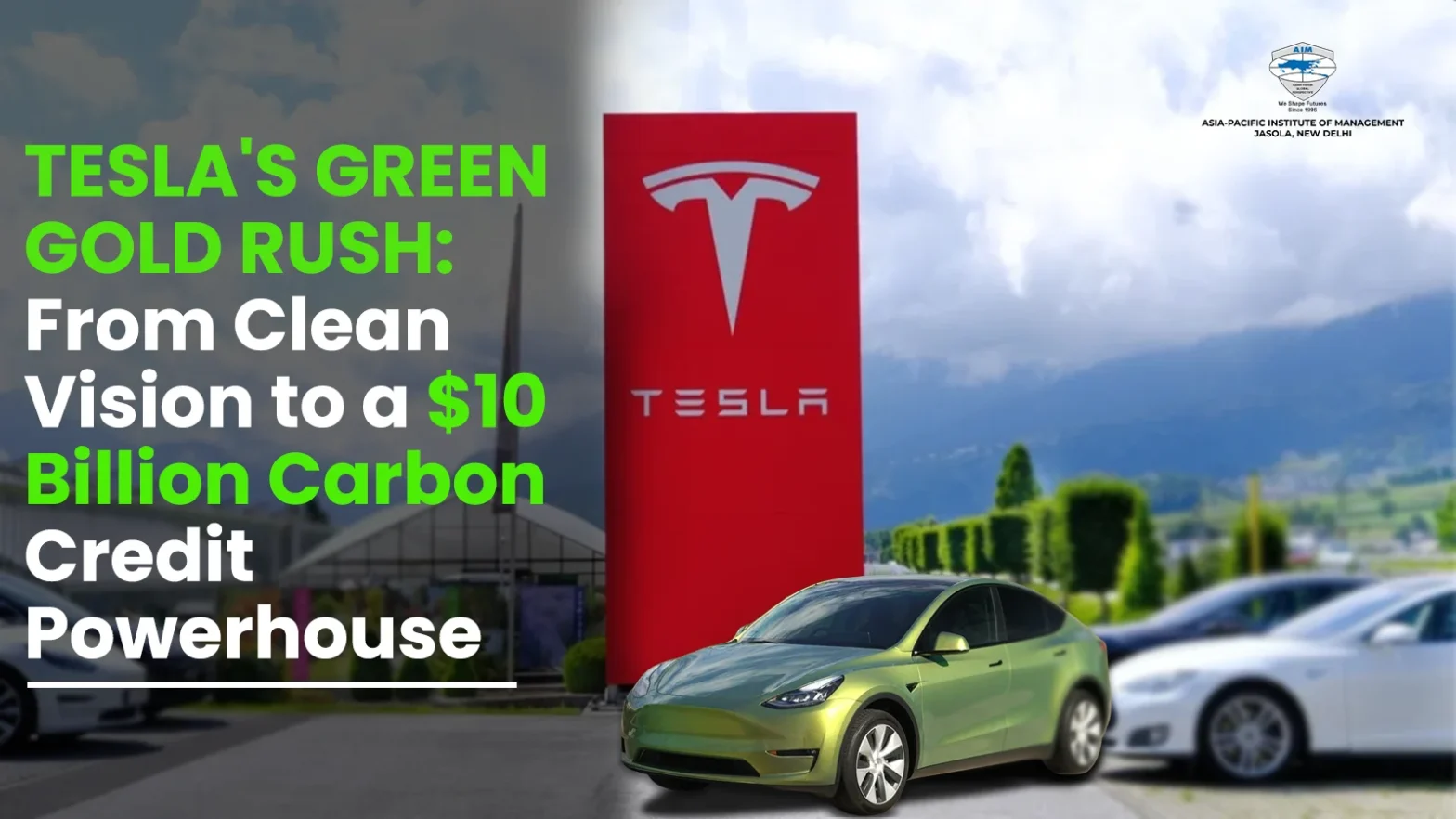
This incredible growth means that since 2017, Tesla has accumulated over $10.4 billion from selling carbon credits—a figure that not only complements vehicle and energy product sales but also represents a cornerstone of the company's financial strategy.
Tesla's leadership in carbon credit sales is more than a financial profit. It's a strategic asset that allows the company to invest in innovation, ramp up manufacturing capacity, and stay ahead in the fast-changing automotive sector. As Tesla CEO Elon Musk once said, "Our mission is to accelerate the world's transition to sustainable energy," and carbon credit revenues are among the instruments that fund that mission.
The interaction of regulatory policy and Tesla's zero-emission fleet creates a win-win situation: regulators impose emission cuts, automakers comply through purchases of credits, and Tesla gets financially rewarded while driving greater industry change. This scenario not only rewards Tesla's early embrace of sustainability but also puts pressure on traditional automakers to speed up their electric vehicle initiatives—competitors who are still in the process of transitioning to electric fleets.
To put the size into perspective, in Q4 2024 alone, Tesla made $692 million from regulatory credit sales, which accounted for almost 30% of its quarterly net income of $2.33 billion. This is a prime example of how carbon credit sales are so deeply intertwined with Tesla's profitability that they present a solid cushion amid unpredictable car sales and market volatility.
Tesla's carbon credits have become a vital resource for numerous legacy automakers that are having difficulties meeting increasingly stringent emissions mandates. Legacy manufacturers are under great pressure to make the transition from internal combustion engines to electric cars (EVs) quickly enough to satisfy regulators. Tesla's excess carbon credits are a lifeline that can help them avoid enormous fines and penalties.
Some of the largest buyers:
Fiat Chrysler Automobiles (FCA) is said to have paid approximately $2.4 billion buying carbon credits by consolidating its fleet emissions with Tesla's zero-emission vehicles. This move allowed FCA to meet regulations and avoid paying expensive fines. Also taking advantage of Tesla's credits are major world players such as Stellantis, Toyota, Ford, Mazda, and Subaru to achieve tough European Union CO₂ emission requirements. These automakers risk billions in penalties if they do not comply, so Tesla's credits are invaluable. More and more automakers globally are resorting to Tesla's carbon credits as the world's transition to electric cars moves unevenly by region and by company.
This dynamic builds a symbiotic but profitable financial arrangement: Tesla benefits from creating cleaner technology, and traditional automakers receive the regulatory approval necessary to keep operating without disruption.
While Tesla's revenue from carbon credits has been profitable, a number of challenges can impact its future trend:
Tesla's path from humble start up to worldwide clean energy giant cannot be separated from its strategic application of carbon credits. From its outset with a revolutionary mission to drive emissions to zero, Tesla harnessed regulatory tools to build a $10 billion carbon credit empire, making environmental compliance a competitive strength.
Tesla's story shows how visionary innovation coupled with regulatory acumen can generate both profit and progress and serves as a guide for sustainable capitalism in the 21st century.
Note: This blog was written by a faculty member of the Asia-Pacific Institute of Management

02 Mar 2026
Asia Pacific Institute of Management, New Delhi: Admission 2026, Cutoff, Courses, Fees, Placements
17 Nov 2025
CASH FLOW STATEMENT(AS – 3)

17 Nov 2025
National Summit on CSR organised by Asia-Pacific Institute of Management & INDIACSR at New Delhi

13 Nov 2025
Applications of Artificial Intelligence in Business

04 Nov 2025
4-Day Orientation-cum-Industry Connect Programme Asia Pacific Institute of Management, New Delhi






M.Sc/B.Sc Brochure

PGDM Brochure
MBA Brochure



.webp) Call Us
Call Us