Introduction
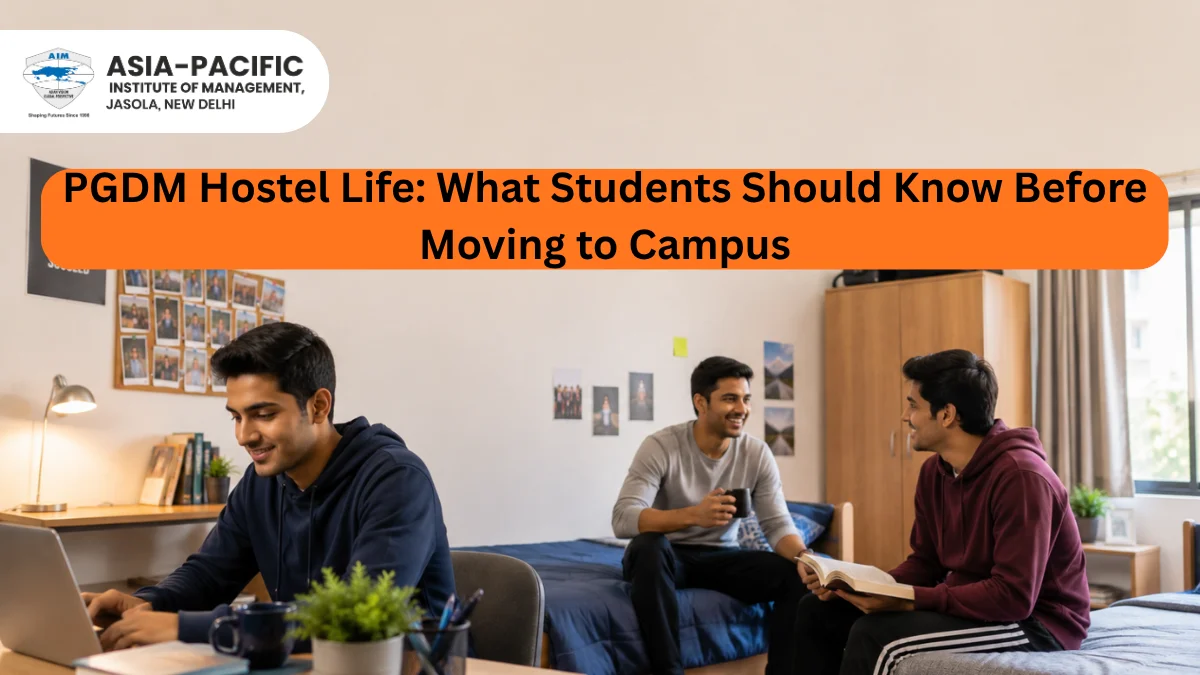
PGDM hostel life can be a major adjustment for students moving away from home to pursue management education. Along with attending classes, completing projects, and preparing presentations, hostel residents need to manage daily routines, shared spaces, personal expenses, laundry, meals, study schedules, and relationships with roommates. For many outstation students, it is their first experience of living independently.
Understanding hostel life before moving can make this transition more manageable for students and reassuring for parents. Rather than focusing only on the room itself, families should examine safety arrangements, rules, meals, connectivity, transport, study facilities, healthcare access, and the overall residential environment. This student guide explains what to expect from hostel living during a PGDM, what to verify before admission, what to pack, and how to balance campus life with the demands of a management programme.
PGDM Hostel Life Guide
Explore dynamic campus living, modern amenities, and vibrant community bonding during your PGDM program. Secure your admission at Asia-Pacific today!
Apply Now
Key Takeaways
- PGDM hostel life combines independent living with the academic demands of a full-time management programme.
- Students and parents should verify accommodation, security, meals, internet, transport, healthcare access, rules, and costs directly with the institution.
- A consistent routine can make it easier to balance classes, projects, social activities, sleep, and personal responsibilities.
- Roommates and hostel peers can become an important source of social interaction, collaborative learning, and day-to-day support.
- Students should pack according to official hostel rules and actual room facilities rather than carrying everything they might possibly need.
Bonus: life of a management student
What Is PGDM Hostel Life?
PGDM hostel life is the residential experience of management students who live in institution-operated, affiliated, or nearby student accommodation while completing a PGDM. It typically combines academic routines with shared living, meals, personal responsibilities, social interaction, and campus activities, although accommodation facilities and residential arrangements vary significantly between institutions.
For an outstation student pursuing a post graduate diploma in management, moving into a hostel changes more than the daily commute.
At home, many routine tasks may happen automatically. In a hostel, students become responsible for managing belongings, schedules, expenses, laundry, meals, sleep, and shared spaces alongside academic commitments.
Residential arrangements also differ considerably. Some institutions have accommodation on campus, while others may facilitate housing elsewhere. Room occupancy, furnishings, meal arrangements, timings, visitor policies, security procedures, and other rules can differ.
Students should therefore use the official hostel information provided by their institution as the primary reference.
What Should Students Check Before Moving Into a PGDM Hostel?
Before moving into a PGDM hostel, students should verify room type, furnishings, security procedures, meal arrangements, internet access, laundry options, electricity and water provisions, transport, healthcare access, hostel rules, and the complete accommodation cost. Confirm these details directly because facilities, inclusions, restrictions, and charges can change between institutions and academic sessions.
Do not make a packing list until you know what the room already provides.
Ask the institution for current information about:
- Room occupancy and available furniture
- Mattress, bedding, and storage arrangements
- Washroom configuration
- Wi-Fi or internet facilities
- Meal plans and dining timings
- Laundry arrangements
- Electricity or appliance restrictions
- Entry and exit procedures
- Visitor rules
- Security and emergency contacts
- Medical assistance or nearby healthcare
- Transport between accommodation and campus, if required
- Hostel fees, deposits, and other applicable charges
If possible, students and parents can also inspect the accommodation before finalising arrangements.
Students comparing PGDM colleges in Delhi NCR should not assume that similarly priced programmes offer similar residential facilities. Accommodation should be evaluated separately from the academic programme.
Bonus: PGDM course details
What Should You Pack for PGDM Hostel Life?
Pack for PGDM hostel life by prioritising everyday essentials, academic materials, appropriate clothing, personal-care items, medicines you normally require, important documents, and permitted electronics. The final list should be based on the hostel's existing facilities, local weather, dress expectations, and rules governing appliances or other belongings.
A practical packing approach is to divide belongings into categories.
Everyday Essentials
Carry comfortable daily clothing, footwear, toiletries, towels, reusable water bottles, and basic organisational items.
Bedding should be purchased or packed only after confirming what the hostel provides and the appropriate dimensions.
Academic and Professional Items
A PGDM course can involve presentations, projects, formal events, interviews, industry interactions, and classroom activities.
Along with a laptop and stationery where needed, pack suitable professional clothing and footwear. Keep digital and physical copies of important academic and identity documents according to institutional requirements.
Basic Room Organisation
A few compact organisers can make shared spaces easier to manage.
Avoid overpacking decorative or bulky items before seeing the room. Storage is often more limited than students expect.
Medicines and Personal Requirements
Carry regular medicines and prescriptions where applicable, together with basic personal health items appropriate for you.
Students with specific medical or dietary requirements should understand available local support before moving.
Most importantly, check the hostel's prohibited-items list. Do not assume appliances such as kettles, irons, heaters, or cooking devices are permitted.
How Can Students Adjust to PGDM Hostel Life?
Students can adjust to PGDM hostel life by establishing a routine early, communicating respectfully with roommates, keeping their living space organised, managing expenses, staying connected with family, and participating gradually in campus activities. Adjustment takes different amounts of time for different students, so building practical habits is more useful than expecting immediate comfort.
The first few weeks can feel unfamiliar.
A new room, new classmates, different food, academic pressure, and greater independence can all arrive at once. Creating structure helps reduce unnecessary day-to-day decisions.
Start with regular sleep and wake times that fit the academic schedule. Identify when you study best and protect that time.
Stay in touch with family without making constant comparison between hostel life and home. At the same time, interact with classmates and participate in activities that genuinely interest you.
A familiar routine gradually turns an unfamiliar environment into a manageable one.
Vibrant PGDM Hostels
Thrive in a supportive student community featuring top-tier facilities, safe environments, and lasting peer networks. Enroll in our PGDM program right now!
How Can Students Balance Hostel Life With a PGDM Course?
Students can balance hostel life with a PGDM course by planning around academic priorities rather than treating hostel activities and coursework as separate worlds. A weekly schedule for classes, preparation, group projects, exercise, meals, social activities, and sleep can reduce last-minute pressure while still leaving enough flexibility for the unpredictable demands of management education.
A PGDM program can include lectures, case preparation, presentations, assignments, group work, competitions, projects, and professional-development activities.
Hostel living adds another layer because friends and distractions are often only a few steps away.
A simple weekly planning system helps. Note fixed commitments first, then block time for individual study and group work. Social activities can fit around these priorities rather than automatically occupying every free evening.
Students should also avoid turning late-night studying into a permanent routine. An occasional deadline is different from consistently sacrificing sleep because work was postponed.
Independence includes learning when to stop socialising and start working.
How Does Hostel Life Support Peer Learning in a PGDM Program?
Hostel life can support peer learning by giving PGDM students more opportunities for informal discussion, collaborative preparation, group-project coordination, and interaction with classmates from different backgrounds. These exchanges can extend learning beyond scheduled classes, but students still need boundaries so academic collaboration does not become constant interruption or inappropriate sharing of individually assessed work.
Residential life can make collaboration easier.
A marketing-oriented student may discuss a case with someone interested in finance. A student exploring PGDM in data analytics might help classmates interpret quantitative information, while receiving useful perspectives about customers, strategy, or business context in return.
Students interested in PGDM in marketing management, for example, can gain from conversations with peers whose interests lie outside marketing. Business decisions rarely remain within a single functional area.
Hostel friendships can also make it easier to create study groups and practise presentations.
However, productive peer learning requires discipline. Agree on study times, respect quiet periods, and follow institutional academic-integrity rules when completing assessed work.
How Should Students Handle Roommates and Shared Spaces?
Students should manage roommate relationships by discussing expectations early, respecting privacy, sharing common responsibilities fairly, and addressing small problems before they become major conflicts. Conversations about sleep schedules, lights, noise, cleanliness, guests, shared belongings, study habits, and personal boundaries can prevent many misunderstandings that arise when two people with different routines share limited space.
Your roommate does not have to become your closest friend.
A successful roommate relationship can simply be respectful, reliable, and considerate.
Discuss practical matters within the first few days. For example, if one person studies late while another sleeps early, agree on lighting and noise arrangements that work for both.
Do not use another person's belongings without permission. Keep common areas reasonably clean and communicate when something is causing difficulty.
If a disagreement cannot be resolved directly and becomes serious or persistent, follow the hostel's established process for seeking assistance from the appropriate residential authority.
How Can PGDM Students Manage Hostel Expenses?
PGDM students can manage hostel expenses by separating fixed accommodation costs from variable personal spending and tracking both consistently. Before moving, students and parents should understand which expenses are included in hostel charges and which are separate, such as meals, laundry, local travel, personal supplies, printing, subscriptions, and discretionary spending.
Start with a simple monthly budget.
Accommodation charges may be fixed, but day-to-day expenses can accumulate unnoticed. Food deliveries, cafés, transport, entertainment, and small online purchases can collectively become significant.
Students should distinguish needs from convenience spending.
Setting a weekly discretionary limit can be easier than trying to reconstruct spending at the end of the month. Keeping a small emergency reserve is also sensible.
For parents evaluating a PGDM course in Delhi or elsewhere, accommodation costs should be considered alongside tuition and other educational expenses. Never rely on an old blog, forum post, or third-party estimate for current hostel fees; confirm the latest charges directly with the institution.
What Safety and Well-Being Factors Should Students Consider?
Students and parents should understand hostel security procedures, emergency contacts, entry and exit rules, healthcare access, fire-safety arrangements, and processes for reporting maintenance or residential concerns. Students should also protect personal belongings, follow institutional rules, maintain sensible routines, and know whom to contact when they need academic, administrative, medical, or personal support.
Save essential contact details before an emergency occurs.
Students should know how to contact hostel administration, campus security, relevant academic offices, and nearby medical assistance where applicable.
Keep important documents and valuables secure. Avoid sharing access credentials or personal financial information casually.
Well-being also depends on routine. Regular meals, sufficient sleep, physical activity, and time away from screens can make a demanding academic schedule easier to manage.
When a student is struggling with an issue that requires specialised help, using the relevant institutional support service is more appropriate than relying solely on friends.
How Should Parents Evaluate Hostel Facilities for a PGDM Student?
Parents evaluating PGDM hostel facilities should focus on verified practical information rather than photographs or general promotional descriptions. Important factors include location, security, room arrangements, meals, cleanliness, internet connectivity, transport, healthcare access, residential supervision, emergency procedures, rules, and total costs, as well as whether the environment supports the student's academic routine.
For families considering PGDM courses in Delhi NCR, accommodation can be particularly important for outstation students unfamiliar with the area.
Ask direct questions. Where is the accommodation located in relation to academic facilities? How do students travel between locations? Who handles residential concerns? What is provided in the room? What are the current meal arrangements and applicable charges?
If evaluating a PGDM institute in Delhi, check current information on the institution's official website or contact its authorised admissions or hostel office.
Parents should also involve the student in the decision. They will be living in the environment every day, so practical fit matters alongside parental concerns.
What Common PGDM Hostel Life Mistakes Should Students Avoid?
Common PGDM hostel life mistakes include overpacking, ignoring hostel rules, overspending, postponing coursework, sacrificing sleep regularly, neglecting shared-space etiquette, and limiting social interaction to a small familiar group. Another mistake is trying to handle every difficulty alone instead of approaching the appropriate roommate, faculty member, hostel authority, or student-support resource when assistance is genuinely needed.
Freedom can be one of the best aspects of hostel life, but it also requires self-management.
Nobody may remind you to prepare tomorrow's case, wash your clothes, limit late-night conversations, or track your spending.
Students should also avoid comparing their hostel experience constantly with what classmates post online. Residential experiences differ, and social media rarely represents the full routine of academic life.
Use hostel living as an opportunity to develop practical independence without losing sight of why you moved to campus: your education and broader development.
Bonus: MBA or PGDM curriculum guide
Conclusion
PGDM hostel life is an important part of the management-school experience for many outstation students. Living away from home can introduce new responsibilities involving time, money, roommates, meals, personal organisation, and academic discipline, while also creating opportunities for friendships, peer learning, and greater independence.
Preparation makes the transition easier. Before moving, students and parents should verify current accommodation facilities, rules, security arrangements, costs, connectivity, transport, meals, and available support directly with the institution. Students should pack according to actual requirements rather than assumptions and establish sustainable routines soon after arrival. Hostel life does not need to be perfectly organised from the first day. The practical goal is to build habits that allow residential independence and the demands of a post graduate diploma in management to work together effectively.
PGDM Housing Options
Experience premium residential life tailored for serious management academics and personal growth. Join Asia-Pacific Institute of Management today!
Apply Now
About the Author
Dr. Vikas Gupta
Dr. Vikas Gupta is a distinguished academic in the education and research domain, specializing in finance and related interdisciplinary studies. He is known for his...
Read Full Bio →
















.webp) Call Us
Call Us