

24 Oct 2026
Global Exposure in Management Education: Does an International Immersion Programme Help?

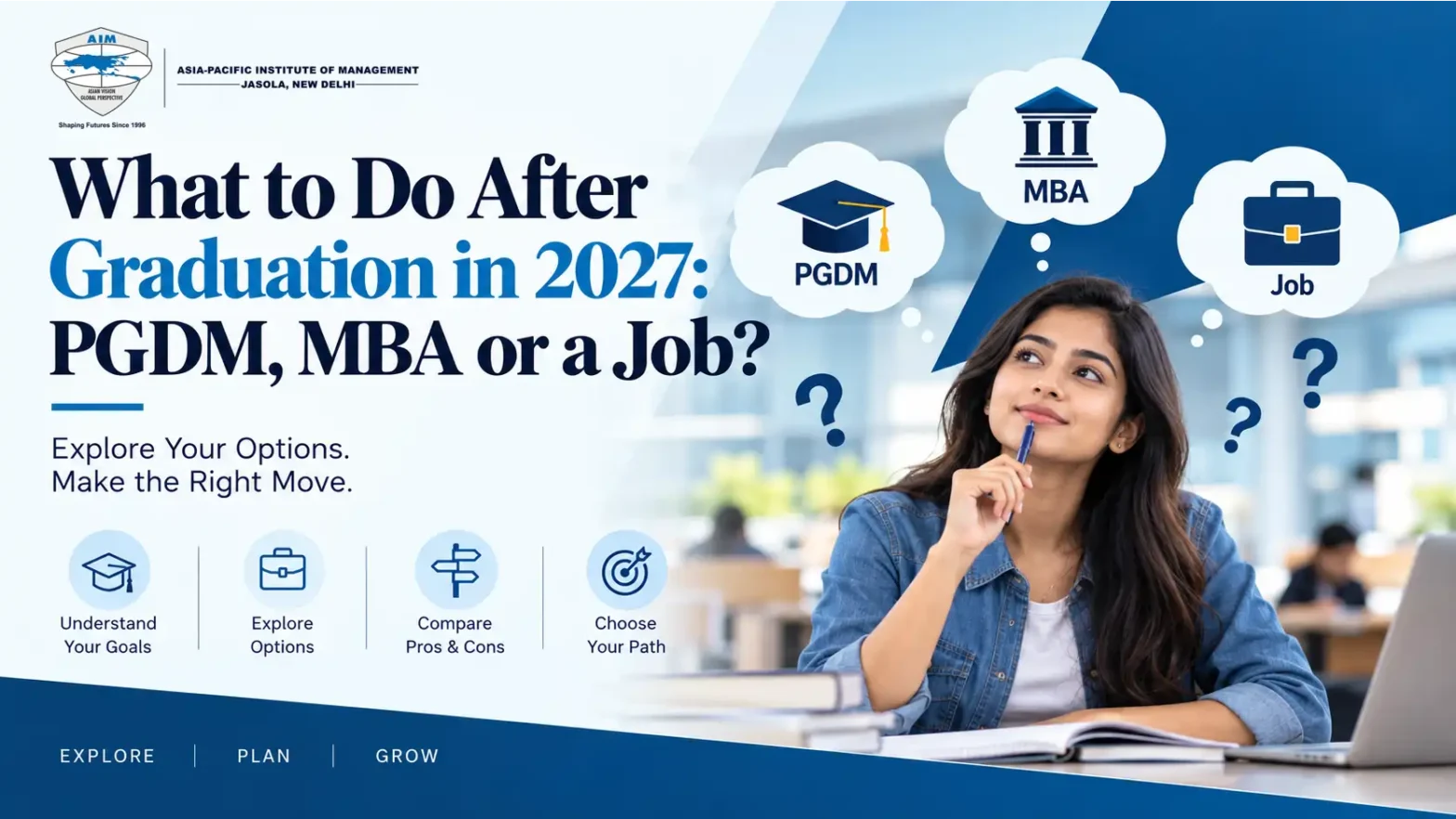
Final-year students often face three main options,, which are likely to be going straight into a management programme, taking a job first, or choosing a different path altogether. There is no single right answer, because the best choice depends on a student's stream, finances, goals, and appetite for risk. Many are also looking at courses after graduation for career growth and wondering which one is worth the investment.
This guide helps weigh the options calmly.
Options include management programmes, professional courses such as CA, CMA, CFA, and CS, law, specialised master's degrees, and skill-based certifications in areas like analytics or digital marketing.
The best approach is to start from the role wanted in five years and work backwards. Some roles demand a specific credential, while others reward skills and experience. Speaking to people already doing the job and reading job descriptions closely both help.
A two-year PGDM after graduation can be a fast route into management roles. Asia Pacific Institute of Management, New Delhi, offers AICTE-approved specialisations in Marketing, Banking and Financial Services, Big Data Analytics, and General, and its website shows that admissions are open for the 2027 to 2029 batch.
Admission is through scores in exams such as CAT, XAT, CMAT, MAT, ATMA, or GMAT, followed by a group discussion and interview. Preparation should begin early, since entrance exams usually fall in the second half of the year.
Some candidates choose an MBA after graduating from university, while others pick a sector-focused programme, such as healthcare management, which AIM offers. A few prefer to work for a couple of years first and return with sharper goals and better interview material.
Going straight in saves time, while working first can improve clarity and class contributions. Both routes can work, so the choice should rest on finances and how sure a student is about their direction.
Management courses after a BCom build on an accounting base that already suits finance, banking, marketing, operations, and HR. A programme focused on banking and financial services builds directly on this foundation.
A management study can also be paired with professional credentials or an analytics skill, which makes a profile broader. A student's stream should not feel limiting, as many management programmes welcome graduates from all streams.
Career options after graduation in India go beyond further study. There are corporate entry roles, sales, analytics, teaching, government exams, start-ups, family businesses, and freelancing. Many people try a job for a year or two before deciding on a degree.
It helps to list goals, estimate costs, and note exam timelines, then talk to seniors and alumni. A decision made with good information rarely feels like a mistake later.
The right path is the one that fits a student's goals, finances, and temperament. Comparing options honestly and starting early makes the decision easier. AIM in New Delhi offers PGDM and healthcare MBA programmes for graduates who decide that further management study is the best way forward.


24 Oct 2026
Global Exposure in Management Education: Does an International Immersion Programme Help?

24 Oct 2026
PGDM Fees vs Return on Investment: How to Evaluate a B-School
24 Oct 2026
MBA in Healthcare Management: Career Scope, Skills and Job Roles in India

24 Oct 2026
Fintech and BFSI Careers in India: Skills, Roles and Management Pathways

24 Oct 2026
Digital Marketing and AI: Career Opportunities for Management Graduates






BBA Brochure

PGDM Brochure
MBA Brochure


.webp) Call Us