Clinical to Healthcare Management Career Guide

PGDM Admissions 2027–29 Are Now Open | Secure Your Seat Now

From Clinical to Corporate: How Healthcare Professionals Can Move Into Management

By Dr. Vikas Gupta

From Clinical to Corporate: How Healthcare Professionals Can Move Into Management

Introduction 

Healthcare professionals build valuable expertise through clinical education and patient-care experience. However, many eventually want to explore opportunities beyond direct clinical practice.

Some may be interested in hospital administration. Others may prefer healthcare consulting, operations, health-tech, pharmaceutical management, business development, or healthcare strategy.

A clinical to healthcare management career can provide a structured pathway for professionals who want to combine healthcare knowledge with business and management skills.

The transition does not mean abandoning your healthcare background. Instead, it involves applying your clinical understanding to organisational, operational, and strategic challenges.

For professionals considering this move, the key is to understand which skills transfer, which skills need development, and which management roles align with their experience.

Expand Your Healthcare Career

Build management skills to transition from clinical practice into healthcare operations, consulting, strategy, and leadership opportunities across healthcare organizations.

Apply Now →

What Is a Clinical to Healthcare Management Career?

A clinical to healthcare management career involves moving from primarily patient-facing responsibilities into roles focused on managing people, processes, services, projects, or healthcare organisations.

These roles can include:

  • Hospital administration
  • Healthcare operations
  • Quality management
  • Healthcare consulting
  • Business development
  • Healthcare strategy
  • Health-tech management
  • Project management
  • Healthcare analytics
  • Pharmaceutical management

The transition can happen gradually.

A healthcare professional may first take responsibility for a team or project. Later, they may move into department-level or organisation-wide responsibilities.

Therefore, clinical experience can become a foundation for management rather than a limitation.

Why Are Healthcare Professionals Moving Into Management?

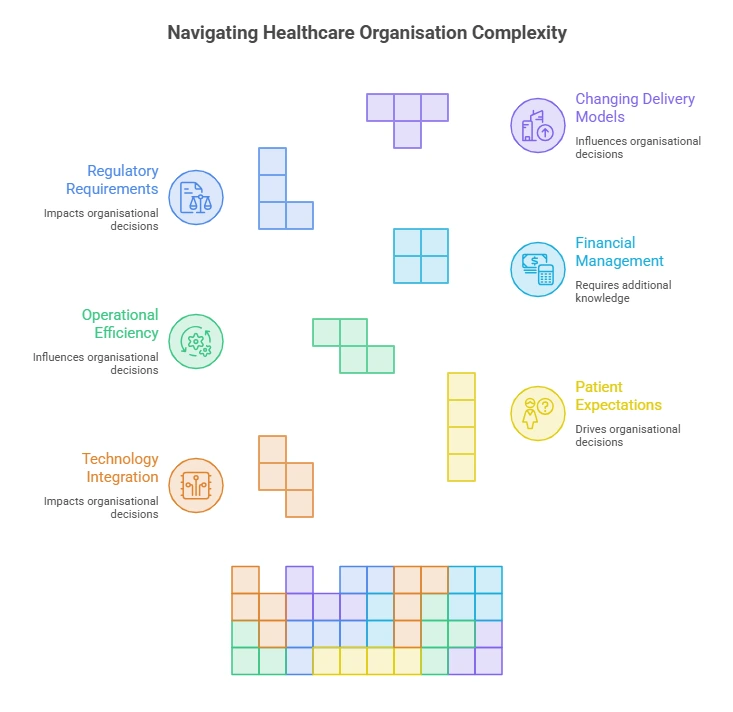
Healthcare organisations are becoming increasingly complex.

Technology, patient expectations, operational efficiency, financial management, regulatory requirements, and changing healthcare delivery models all influence organisational decisions.

As a result, healthcare organisations need professionals who understand healthcare delivery and can also manage business and operational priorities.

Clinical professionals already understand many aspects of healthcare.

However, management roles may require additional knowledge of:

  • Finance
  • Strategy
  • Operations
  • Leadership
  • Analytics
  • Marketing
  • Project management
  • Organisational behaviour

Developing these skills can make the transition more practical.

Clinical to Corporate Healthcare: What Does It Mean?

Clinical to corporate healthcare refers to moving from primarily clinical responsibilities into business, management, or organisational roles within the healthcare sector.

This does not necessarily mean leaving healthcare.

Instead, professionals may move from treating patients to managing healthcare-related systems, teams, services, or businesses.

For example, a clinician might transition into:

  • Hospital operations
  • Healthcare consulting
  • Corporate healthcare strategy
  • Health-tech
  • Pharmaceutical management
  • Healthcare business development
  • Quality management
  • Healthcare projects

This can allow professionals to use their healthcare knowledge in a different professional context.

Which Clinical Skills Transfer to Management?

One of the biggest advantages clinical professionals have is that they already possess several transferable skills.

Problem-Solving

Clinical work requires professionals to analyse situations and make informed decisions.

This ability can transfer to management and operational problem-solving.

Communication

Healthcare professionals regularly communicate with patients, families, colleagues, and multidisciplinary teams.

Management roles also require strong communication.

Teamwork

Clinical environments often involve collaboration across multiple professional groups.

This experience can be valuable when managing cross-functional teams.

Decision-Making

Clinical professionals frequently make decisions using available evidence and professional judgement.

Management also requires structured decision-making.

Attention to Detail

Healthcare requires accuracy and careful documentation.

These habits can support quality, operations, and compliance-related responsibilities.

Healthcare Industry Knowledge

Perhaps the most important advantage is familiarity with healthcare environments.

Clinical professionals understand many challenges that purely business-focused professionals may not experience directly.

What Skills Do You Need to Add?

Clinical experience provides a strong foundation. However, management requires additional capabilities.

Financial Management

Professionals moving into management should understand:

  • Budgets
  • Cost management
  • Financial performance
  • Resource allocation
  • Basic financial analysis

Strategic Thinking

Management involves thinking beyond individual cases or departments.

Professionals need to understand organisational goals, market conditions, growth opportunities, and long-term priorities.

Operations Management

Operations professionals focus on how services are delivered.

Relevant areas include:

  • Process improvement
  • Resource planning
  • Workforce coordination
  • Performance monitoring
  • Service efficiency

Business Analytics

Healthcare organisations increasingly use data for decision-making.

Professionals can benefit from understanding data interpretation, reporting, business intelligence, and performance metrics.

Leadership

Management involves influencing people and coordinating teams.

Important skills include delegation, conflict management, coaching, negotiation, and change management.

Non-Clinical Careers for Healthcare Professionals

There are many non clinical careers for healthcare professionals within the healthcare ecosystem.

1. Hospital Administration

Hospital administrators coordinate organisational and operational functions.

Responsibilities can include administration, resource planning, patient services, staffing coordination, and process management.

2. Healthcare Operations

Operations roles focus on improving how healthcare services function.

Professionals may work on workflow, resource utilisation, service delivery, and performance.

3. Healthcare Consulting

Healthcare consultants analyse business and organisational problems.

Projects may involve:

  • Strategy
  • Market research
  • Operations
  • Process improvement
  • Business planning
  • Transformation

Clinical experience can provide useful industry context.

4. Healthcare Strategy

Strategy professionals work on long-term organisational priorities.

They may analyse markets, services, growth opportunities, and business models.

5. Health-Tech Management

Health-tech companies require professionals who understand healthcare and business.

Potential functions include product operations, implementation, partnerships, business development, and healthcare strategy.

6. Pharmaceutical Management

Healthcare professionals may explore management roles within pharmaceutical organisations.

Possible functions include marketing, business development, operations, project management, and strategy.

7. Quality Management

Quality professionals focus on improving processes and maintaining organisational standards.

Healthcare experience can provide valuable context for this work.

8. Healthcare Business Development

Business development involves identifying new markets, services, partnerships, and growth opportunities.

Strong communication and healthcare knowledge can be valuable in these roles.

Healthcare Career Transition: A Step-by-Step Approach

A successful healthcare career transition should be planned rather than rushed.

Step 1: Define Your Reason for Moving

Ask yourself why you want to move into management.

Possible reasons include:

  • Career growth
  • Leadership opportunities
  • Interest in business
  • Desire for broader impact
  • Interest in strategy
  • Reduced patient-facing responsibilities
  • Interest in healthcare entrepreneurship

A clear reason will help you select the right pathway.

Step 2: Choose a Management Direction

Healthcare management is broad.

Decide whether you are most interested in:

  • Operations
  • Hospital administration
  • Consulting
  • Strategy
  • Quality
  • Health-tech
  • Business development
  • Healthcare analytics

Step 3: Assess Your Existing Skills

Make a list of your transferable clinical skills.

Then identify the management capabilities you need to develop.

Step 4: Consider Formal Management Education

An MBA or Executive MBA can provide structured learning in:

  • Finance
  • Strategy
  • Operations
  • Leadership
  • Analytics
  • Marketing
  • Organisational management

Working professionals may consider executive-oriented programs depending on their experience and eligibility.

Step 5: Gain Management Exposure

You do not always need to wait until completing a management degree.

Look for opportunities to:

  • Lead projects
  • Coordinate teams
  • Participate in committees
  • Improve processes
  • Manage initiatives
  • Support operational decisions

These experiences can strengthen your management profile.

Step 6: Reposition Your Resume

A clinical resume and a management resume should highlight different strengths.

Instead of only listing clinical responsibilities, highlight:

  • Team leadership
  • Process improvements
  • Projects
  • Operational responsibilities
  • Data analysis
  • Cost awareness
  • Stakeholder coordination

This can help employers understand your management potential.

How to Move From Clinical to Management

Professionals asking how to move from clinical to management should focus on gradual skill development.

A practical pathway could look like this:

Clinical experience → Project responsibility → Team coordination → Management education → Operations or administrative role → Leadership position

This is not a fixed career ladder.

Some professionals may move directly into management education. Others may first gain administrative or project experience.

The best route depends on your qualifications, experience, goals, and available opportunities.

Build Corporate Healthcare Skills

Turn clinical expertise into business capabilities with practical learning in finance, strategy, operations, analytics, and leadership for healthcare careers.

Apply Now →

Is an MBA Useful for Healthcare Management for Clinicians?

Healthcare management for clinicians can become more accessible when clinical expertise is combined with formal management education.

An MBA can provide structured knowledge of:

  • Business strategy
  • Finance
  • Operations
  • Marketing
  • Human resources
  • Analytics
  • Leadership
  • Project management

For experienced professionals, an Executive MBA may be worth considering if they want to continue working while developing management skills.

However, the program should match your career stage and objectives.

Executive MBA vs Regular MBA for Working Healthcare Professionals

Both formats can develop management capabilities, but their typical audiences and structures can differ.

FactorRegular MBAExecutive MBA
Typical audienceStudents and early-career professionalsWorking professionals
Work experienceMay vary by programOften designed for experienced professionals
Career objectiveBroad management developmentLeadership and career advancement
Learning approachManagement fundamentalsAdvanced management and application
Work compatibilityDepends on formatOften designed around working professionals

Exact eligibility and structure vary by institution.

Therefore, candidates should review the latest program requirements before applying.

Healthcare Leadership for Clinicians

Moving into management does not mean losing your clinical identity.

In fact, clinical experience can become an advantage in leadership roles.

Clinicians understand:

  • Patient needs
  • Healthcare workflows
  • Clinical teams
  • Service delivery
  • Patient safety concerns
  • Healthcare challenges

When combined with management knowledge, this experience can support more informed organisational decisions.

Healthcare leadership requires professionals to balance clinical realities with operational and business priorities.

Therefore, clinicians can bring a valuable perspective to management teams.

Career Opportunities After Moving Into Management

The transition can lead to several potential career directions.

Hospital Operations Manager

Focuses on processes, teams, resources, and service delivery.

Healthcare Project Manager

Coordinates healthcare projects, implementation initiatives, timelines, and teams.

Healthcare Consultant

Works on strategy, operations, market analysis, and organisational challenges.

Healthcare Strategy Professional

Supports long-term planning, growth, market analysis, and strategic initiatives.

Quality Manager

Focuses on process improvement, quality systems, and organisational performance.

Healthcare Business Development Manager

Works on partnerships, market opportunities, service expansion, and growth.

Health-Tech Professional

Works at the intersection of healthcare, technology, and business.

Healthcare Administrator

Coordinates organisational and administrative functions within healthcare services.

Career progression depends on experience, skills, employer requirements, organisational opportunities, and professional performance.

Bonus: Healthcare MBA After Life Sciences 

Salary Expectations During a Career Transition

Salary should be considered carefully during a clinical-to-management transition.

A management role may have a different compensation structure from a clinical position.

Salary can depend on:

  • Professional experience
  • Management responsibilities
  • Organisation
  • Industry
  • Location
  • Role
  • Skills
  • Previous qualifications
  • Performance

Therefore, professionals should evaluate the complete opportunity rather than focusing only on the initial salary.

Long-term career progression, learning opportunities, leadership exposure, and role fit are also important.

Common Challenges in a Clinical-to-Management Transition

Lack of Business Knowledge

Clinical education does not always cover finance, strategy, or business operations.

Formal management education can help address this gap.

Limited Management Experience

Employers may look for evidence of leadership and project ownership.

Start building this experience early.

Different Workplace Culture

Corporate healthcare may operate differently from clinical environments.

Professionals need to adapt to business communication, performance metrics, deadlines, and organisational structures.

Changing Professional Identity

Moving away from direct clinical work can feel unfamiliar.

However, healthcare management still contributes to healthcare delivery.

Competition for Management Roles

Management positions can attract candidates from different backgrounds.

Therefore, combining clinical knowledge with strong management and communication skills can help create a differentiated professional profile.

How Asia Pacific Institute of Management Can Support This Transition

A successful transition requires management education that connects theory with practical business situations.

Asia Pacific Institute of Management focuses on:

  • Industry-oriented curriculum
  • Practical learning
  • Experienced faculty
  • Corporate exposure
  • Career-focused management education

For healthcare professionals, this approach can help develop broader management capabilities while building on their existing healthcare experience.

The goal should be to understand management principles and learn how to apply them to real organisational challenges.

A 12-Month Preparation Roadmap

Healthcare professionals can begin preparing for a management transition systematically.

Months 1–3: Career Assessment

Identify your preferred management area and evaluate your current skills.

Months 4–6: Skill Development

Focus on communication, analytics, finance, leadership, and business fundamentals.

Months 7–9: Management Exposure

Take responsibility for projects, teams, process improvements, or organisational initiatives.

Months 10–12: Career Positioning

Update your resume, build professional connections, research management opportunities, and evaluate suitable management programs.

This roadmap can be adjusted according to your career stage.

Mistakes to Avoid

Leaving Clinical Work Without a Plan

Understand your next career direction before making a major transition.

Assuming an MBA Is Enough

Management education is valuable, but practical experience also matters.

Ignoring Transferable Skills

Your clinical background can be a significant professional asset.

Focusing Only on Job Titles

Evaluate responsibilities, learning opportunities, growth potential, and organisational fit.

Neglecting Communication

Management careers require strong communication across teams and stakeholders.

Expecting Immediate Leadership

Leadership positions usually require demonstrated management capability.

Bonus: Healthcare MBA After Microbiology 

Conclusion

A clinical to healthcare management career can offer healthcare professionals a pathway into broader responsibilities without completely leaving the healthcare sector.

The transition can lead toward hospital administration, operations, consulting, strategy, health-tech, business development, quality, and other non-clinical roles.

However, successful career transitions require planning. Clinical experience provides valuable healthcare knowledge, while management education can add business, financial, operational, and leadership capabilities.

Therefore, professionals should identify their target role, assess their skill gaps, gain management exposure, and select education that aligns with their career objectives.

Asia Pacific Institute of Management provides industry-oriented management education, practical learning, experienced faculty, and corporate exposure for professionals looking to develop broader management capabilities.

If you are ready to move from clinical responsibilities toward healthcare management, explore how structured management education can help you build the skills needed for your next professional chapter.

Prepare For Healthcare Leadership

Prepare for management roles by developing strategic thinking, financial awareness, leadership, and operational skills that complement your clinical experience.

Apply Now →

About the Author

author

Dr. Vikas Gupta

Dr. Vikas Gupta is a distinguished academic in the education and research domain, specializing in finance and related interdisciplinary studies. He is known for his...

Read Full Bio →

Frequently Asked Questions (FAQs)

01. Can healthcare professionals move from clinical to management roles?

Yes. Healthcare professionals can transition into management roles by developing business, leadership, operations, finance, analytics, and strategic skills. Clinical experience can provide valuable healthcare industry knowledge.

02. What is a clinical to healthcare management career?

It is a career pathway where healthcare professionals move from primarily clinical responsibilities into management, administration, operations, strategy, consulting, quality, or business roles within healthcare.

03. What are non-clinical careers for healthcare professionals?

Potential non-clinical careers include hospital administration, healthcare consulting, healthcare operations, health-tech, business development, quality management, healthcare strategy, analytics, and pharmaceutical management.

04. Is an MBA useful for clinicians moving into management?

An MBA can provide structured knowledge in strategy, finance, operations, leadership, analytics, and business management. Its usefulness depends on the professional’s career goals and the relevance of the selected program.

05. Can doctors move into corporate healthcare?

Yes. Doctors can explore corporate healthcare roles in strategy, operations, consulting, health-tech, healthcare business development, administration, and entrepreneurship, subject to role and employer requirements.

06. How can I move from clinical to management?

Start by identifying your target management function. Then develop business skills, gain project or leadership exposure, consider relevant management education, and reposition your professional profile around transferable skills.

07. Can nurses transition into healthcare management?

Experienced nurses can explore healthcare management pathways, subject to employer and program requirements. Leadership, operations, project management, communication, and business skills can support this transition.

08. Does moving into management mean leaving healthcare?

No. Many management roles remain directly connected to healthcare delivery. Professionals can contribute to hospitals, healthcare services, health-tech, pharmaceuticals, consulting, and other healthcare organisations without working primarily in direct patient care.

Follow Us

Subscribe to Our Newsletter

Download Brochure

BBA Brochure

PGDM Brochure

MBA Brochure

Apply Now Call Us Email WhatsApp