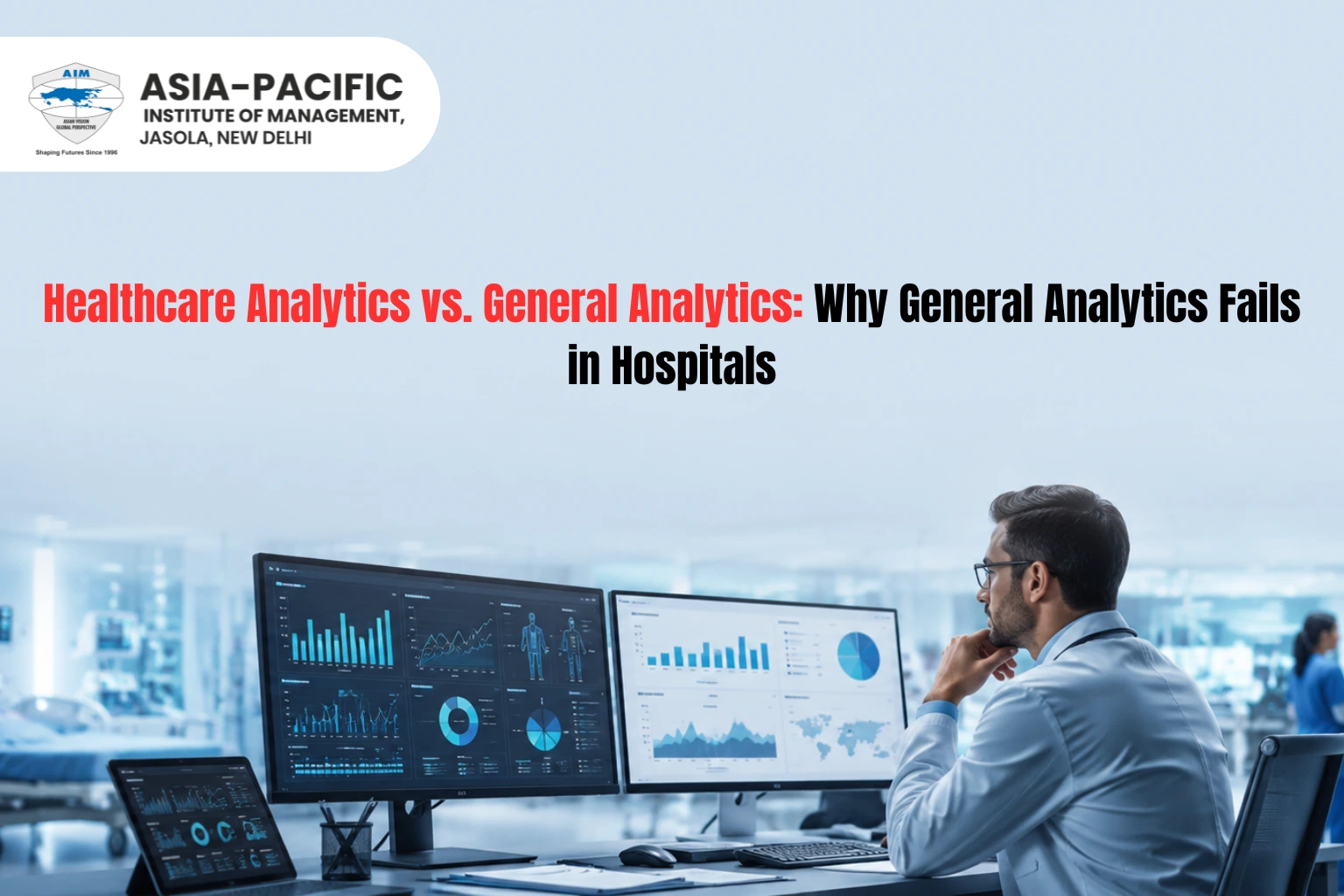
Healthcare Analytics vs. General Analytics: Why General Analytics Fails in Hospitals
Posted on 07 Jun 2026
By Dr. Vikas Gupta
Introduction
Data has become one of the most valuable assets in modern organizations. From e-commerce and banking to manufacturing and healthcare, analytics is helping businesses make informed decisions and improve performance.
However, many people assume that analytics works the same way across all industries. In reality, healthcare presents unique challenges that require specialized expertise. General analytics approaches that work well in retail or finance often fail when applied to hospitals and healthcare systems.
This growing demand for specialized professionals has significantly increased the healthcare analytics course scope in India and globally. Organizations are actively seeking experts who understand both data analytics and healthcare operations.
If you are considering a career in analytics, understanding the difference between healthcare analytics and general analytics can help you make a more informed decision.
What Is Healthcare Analytics?
Healthcare analytics refers to the systematic use of healthcare data to improve patient outcomes, operational efficiency, financial performance, and clinical decision-making.
Unlike general analytics, healthcare analytics combines:
Data science
Healthcare management
Clinical knowledge
Regulatory compliance
Patient care processes
The objective is not only to analyze numbers but also to improve healthcare delivery and patient experiences.
Master Healthcare Analytics
Develop healthcare analytics expertise and gain industry-ready skills to drive smarter decisions across modern healthcare organizations.
General analytics focuses on extracting insights from data to support business decisions across industries.
Common areas include:
Sales analytics
Marketing analytics
Financial analytics
Customer analytics
Supply chain analytics
While these applications are valuable, they are typically centered around business performance metrics rather than patient outcomes or clinical decision-making.
As a result, the methods used in general analytics may not adequately address healthcare-specific challenges.
Why General Analytics Fails in Hospitals
Many organizations initially attempt to apply traditional analytics models to healthcare settings. However, hospitals operate differently from most businesses.
1. Healthcare Data Is Highly Complex
Healthcare data includes:
Medical histories
Diagnostic reports
Treatment records
Laboratory results
Imaging data
Physician notes
Unlike sales or marketing data, healthcare information is often unstructured and interconnected.
Without healthcare domain knowledge, analysts may misinterpret critical information.
2. Patient Outcomes Matter More Than Business Metrics
In many industries, analytics focuses on increasing revenue or improving customer engagement.
Hospitals have additional priorities:
Patient safety
Clinical effectiveness
Quality of care
Regulatory compliance
Analytics models must account for medical outcomes rather than solely operational performance.
3. Healthcare Decisions Involve Clinical Risks
An incorrect recommendation in retail may impact sales.
An incorrect recommendation in healthcare can affect patient health.
Therefore, healthcare analytics requires greater precision, validation, and collaboration with clinical experts.
4. Strict Regulatory Requirements
Healthcare organizations must comply with regulations related to:
Patient privacy
Data security
Medical documentation
Healthcare reporting
General analytics professionals may not have experience navigating these requirements.
Professionals with expertise in healthcare systems, analytics tools, and data interpretation often enjoy strong career progression opportunities.
As healthcare organizations increasingly rely on data-driven decision-making, demand for qualified analysts continues to rise.
Tech Jobs in Healthcare Are Expanding Rapidly
The healthcare sector is becoming increasingly technology-driven.
This transformation has created numerous tech jobs in healthcare, including:
Healthcare Data Analyst
Analyzes healthcare data to support strategic decisions.
Clinical Informatics Specialist
Bridges healthcare delivery and information technology.
Healthcare Business Intelligence Analyst
Develops dashboards and reporting systems for healthcare organizations.
Healthcare AI Specialist
Builds AI-powered healthcare solutions.
Digital Health Consultant
Supports healthcare digital transformation initiatives.
These roles represent the future of healthcare and offer exciting opportunities for students interested in both technology and healthcare.
Why Students Should Consider Healthcare Analytics Education
Healthcare analytics sits at the intersection of healthcare, technology, and management.
Students who develop expertise in these areas gain access to a growing industry with long-term career potential.
Programs that combine:
Healthcare management
Data analytics
Technology applications
Industry exposure
Practical projects
can help students build the skills required for modern healthcare careers.
Institutions such as Asia Pacific Institute of Management emphasize industry-oriented learning, practical exposure, and healthcare-focused management education that aligns with emerging industry needs.
As these trends continue, healthcare analytics will become even more important.
Professionals who understand both healthcare systems and advanced analytics will be well-positioned to lead this transformation.
Conclusion
While analytics is transforming every industry, healthcare requires a specialized approach. General analytics methods often fail because hospitals operate within a unique environment shaped by patient care, clinical decision-making, regulatory requirements, and complex operational systems.
This growing need for specialized expertise has significantly expanded the healthcare analytics course scope. Students who combine healthcare knowledge with analytics skills can access exciting opportunities in healthcare technology, hospital operations, data management, and strategic decision-making.
As healthcare continues its digital transformation, healthcare analytics professionals will play a critical role in shaping the future of patient care and healthcare management.
Become Data Leader
Learn healthcare-focused analytics and management skills that help improve patient outcomes and operational performance.
Dr. Vikas Gupta is a distinguished academic in the education and research domain, specializing in finance and related interdisciplinary studies. He is known for his...
Healthcare analytics involves analyzing healthcare data to improve patient outcomes, operational efficiency, and strategic decision-making.
02.
What is the healthcare analytics course scope?
Healthcare analytics offers career opportunities in healthcare organizations, hospitals, consulting firms, health-tech companies, and analytics departments.
03.
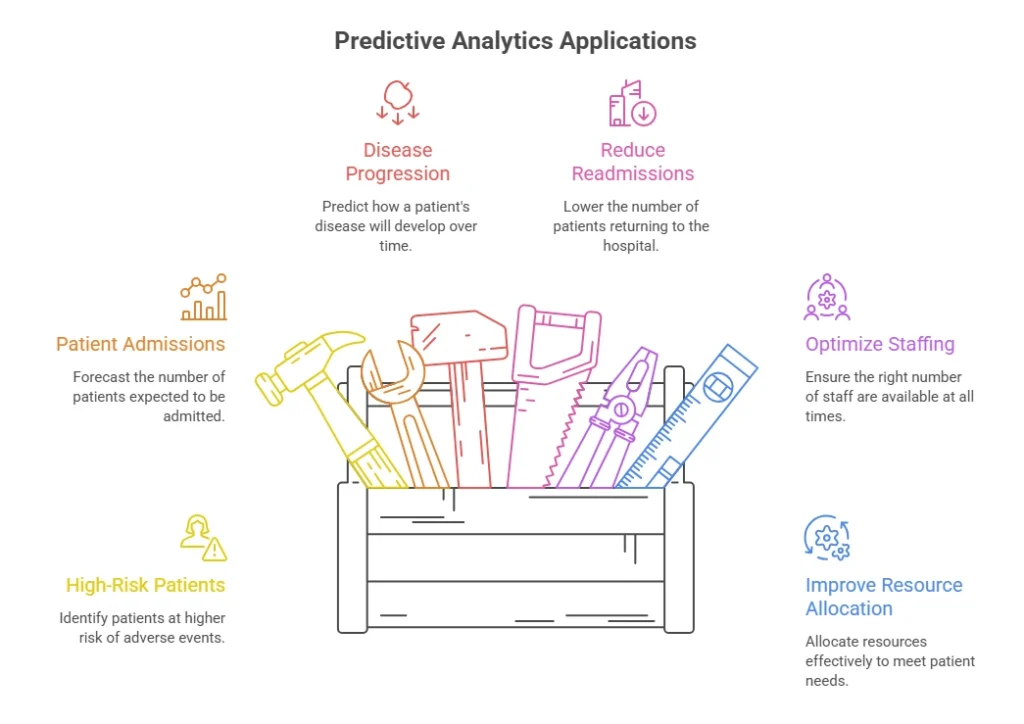
What is predictive analytics in hospitals?
Predictive analytics uses historical and real-time healthcare data to forecast outcomes such as patient admissions, disease progression, and resource requirements.
04.
What is clinical data management?
Clinical data management involves collecting, validating, organizing, and maintaining healthcare data for operational, research, and regulatory purposes.
05.
What are the top tech jobs in healthcare?
Healthcare data analyst, clinical informatics specialist, healthcare business analyst, healthcare AI specialist, and digital health consultant are among the leading roles.
06.
How is healthcare analytics different from general analytics?
Healthcare analytics focuses on patient care, clinical outcomes, and healthcare operations, while general analytics primarily focuses on business performance.
07.
Is healthcare analytics a good career option?
Yes. The growing use of data in healthcare has created strong demand for professionals with healthcare analytics expertise.













.webp) Call Us
Call Us