PGDM Applications at AIM Are Closing Soon | Secure Your Seat Now

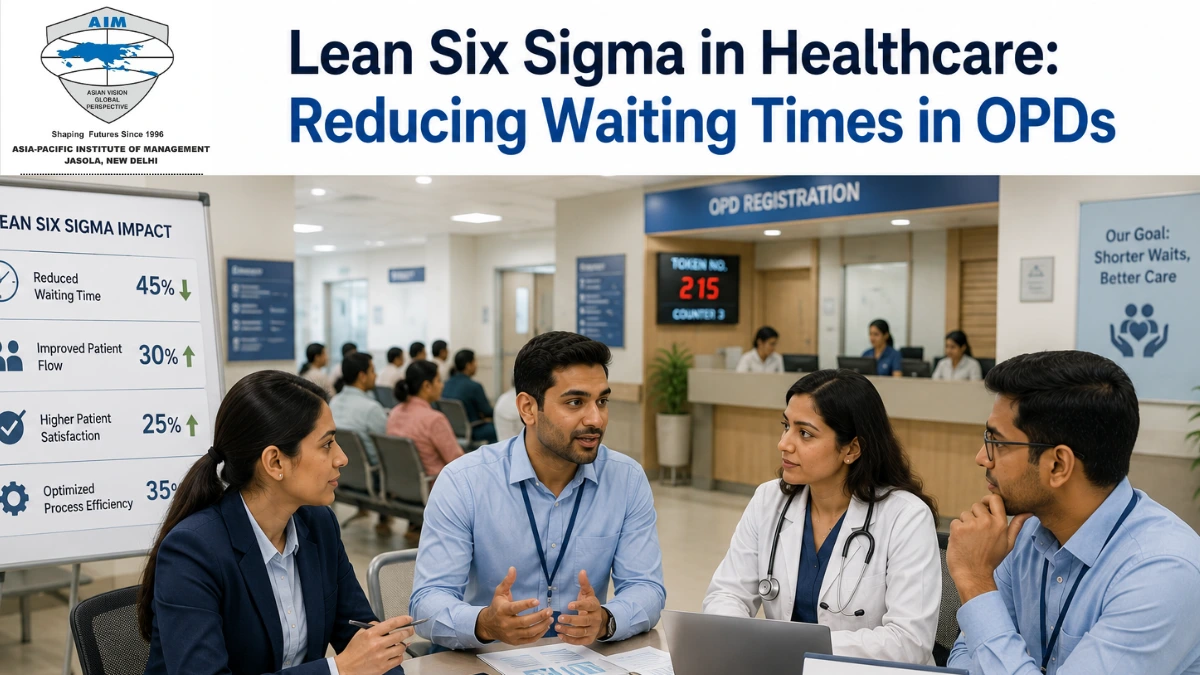
Lean Six Sigma in Healthcare: Reducing Waiting Times in OPDs

By Dr. Vikas Gupta

Lean Six Sigma in Healthcare: Reducing Waiting Times in OPDs

Introduction

Long waiting times in Outpatient Departments (OPDs) remain one of the most common challenges in healthcare facilities. Patients often experience delays due to overcrowding, inefficient processes, poor scheduling systems, and operational bottlenecks.

Today, hospitals are increasingly adopting lean six sigma healthcare practices to improve efficiency and enhance patient experiences. These management methodologies help healthcare organizations streamline workflows, reduce delays, and optimize resource utilization.

For students pursuing an MBA in hospital and healthcare management, understanding process improvement techniques like Lean Six Sigma has become increasingly valuable.

What is Lean Six Sigma in Healthcare?

Lean six sigma healthcare combines two management approaches:

Lean Management

Lean focuses on eliminating waste and improving workflow efficiency.

Six Sigma

Six Sigma focuses on reducing errors and improving process quality.

Together, these approaches help healthcare organizations improve operational performance and patient satisfaction.

Why OPD Waiting Times Are a Major Challenge

Outpatient departments handle large patient volumes daily.

Common causes of delays include:

  • Manual registration systems
  • Poor appointment scheduling
  • Resource shortages
  • Communication gaps
  • Inefficient patient flow management

Long waiting periods affect both patient experience and hospital efficiency.

Therefore, hospitals increasingly adopt process optimization methods.

Bonus:  10 Lucrative Healthcare Careers Without NEET 

How Lean Six Sigma Helps Reduce OPD Waiting Times

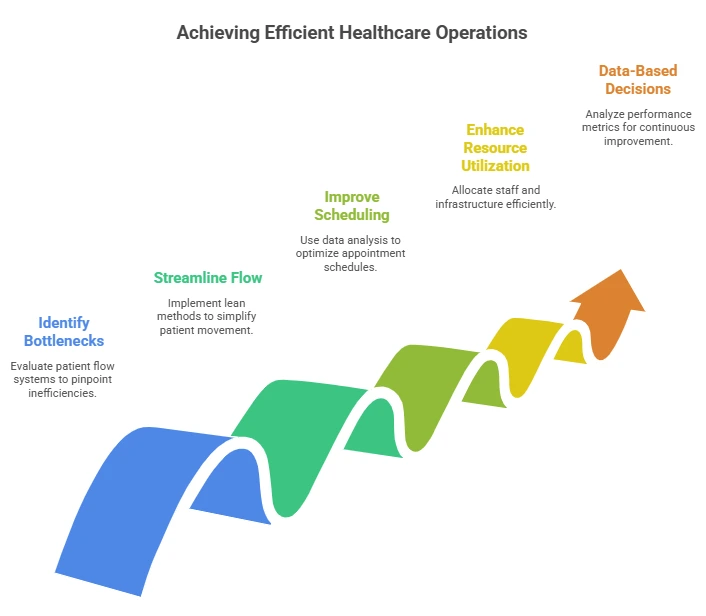
1. Identifying Process Bottlenecks

Healthcare managers first evaluate patient flow systems.

Areas examined include:

  • Registration delays
  • Consultation scheduling
  • Diagnostic procedures
  • Administrative processes

This helps identify inefficiencies.

2. Streamlining Patient Flow

Lean methods focus on simplifying movement across healthcare processes.

Examples include:

  • Faster registration systems
  • Organized appointment structures
  • Improved patient navigation

This reduces unnecessary waiting periods.

3. Improving Appointment Scheduling

Data analysis helps hospitals predict patient demand.

Managers can:

  • Optimize consultation schedules
  • Reduce overcrowding
  • Allocate resources efficiently

Improved scheduling enhances operational performance.

4. Enhancing Resource Utilization

Hospitals often face staff and infrastructure constraints.

Lean Six Sigma supports:

  • Better staff allocation
  • Efficient use of consultation rooms
  • Reduced workflow delays

This improves patient experiences significantly.

5. Data-Based Decision Making

Healthcare organizations increasingly rely on performance metrics.

Managers analyze:

  • Average waiting time
  • Patient volume patterns
  • Operational efficiency indicators

Data helps improve decision-making continuously.

Bonus: Health Insurance Trends Driving Management Careers 

Benefits of Lean Six Sigma in Healthcare

Implementing lean six sigma healthcare offers multiple advantages.

Improved Patient Satisfaction

Reduced waiting times create better patient experiences.

Better Operational Efficiency

Hospitals streamline workflows and reduce resource waste.

Higher Quality Standards

Improved processes support healthcare quality goals.

Reduced Operational Costs

Efficiency improvements often lower unnecessary expenses.

Better Staff Productivity

Healthcare teams can perform more effectively.

Role of Healthcare Managers in Lean Six Sigma Implementation

Healthcare managers play a critical role in process optimization.

Major Responsibilities Include

  • Identifying workflow challenges
  • Monitoring performance metrics
  • Managing process improvements
  • Coordinating teams
  • Implementing quality initiatives

Strong leadership supports successful operational change.

Career Opportunities in Healthcare Process Management

Students exploring mba in healthcare management colleges in india can pursue several quality and operational roles.

Popular Career Options

  • Healthcare Operations Manager
  • Hospital Quality Manager
  • Process Improvement Specialist
  • Healthcare Consultant
  • Patient Experience Manager

Healthcare organizations increasingly seek professionals with operational expertise.

How MBA in Healthcare Management Helps

An MBA in hospital and healthcare management develops management and operational capabilities.

Key Learning Areas

  • Healthcare operations
  • Quality management
  • Leadership development
  • Strategic planning
  • Process optimization

Institutes like Asia Pacific Institute of Management emphasize practical learning and industry-focused education. Students gain exposure to healthcare systems and real operational challenges.

Why Delhi NCR is Ideal for Healthcare Education

Delhi NCR offers strong healthcare infrastructure and industry exposure.

Key Advantages

  • Access to advanced healthcare organizations
  • Internship opportunities
  • Corporate healthcare interaction
  • Growing healthcare ecosystem

Students searching for the best colleges for mba in healthcare management often prefer Delhi NCR because of its professional environment.

Step-by-Step Guide to Build a Career in Healthcare Quality Management

Step 1: Understand Healthcare Systems

Learn healthcare workflows and operational structures.

Step 2: Choose the Right MBA Program

Enroll in an MBA in hospital and healthcare management.

Step 3: Develop Analytical Skills

Process optimization requires data interpretation abilities.

Step 4: Gain Practical Exposure

Participate in healthcare projects and internships.

Step 5: Stay Updated

Follow quality management and healthcare trends.

Key Insights for Students and Parents

  • Lean Six Sigma improves healthcare efficiency significantly
  • Reducing waiting times improves patient experiences
  • Healthcare managers increasingly lead operational improvements
  • Practical exposure strengthens employability
  • Delhi NCR offers strong healthcare learning opportunities

Conclusion

Healthcare organizations increasingly prioritize efficiency and patient satisfaction. Therefore, lean six sigma healthcare has become an important strategy for improving healthcare operations and reducing waiting times.

Students who develop expertise in quality management and healthcare operations can build rewarding careers in modern healthcare systems.

Experience Campus Life

Build healthcare operations expertise with industry-focused MBA programs designed for future quality management leaders.

Apply Now

About the Author

author

Dr. Vikas Gupta

Dr. Vikas Gupta is a distinguished academic in the education and research domain, specializing in finance and related interdisciplinary studies. He is known for his...

Read Full Bio →

Leave a comment

Your email address will not be published. Required fields are marked *

Frequently Asked Questions (FAQs)

01. What is Lean Six Sigma healthcare?

It combines process improvement and quality management methodologies for healthcare systems.

02. How does Lean Six Sigma reduce OPD waiting times?

It improves workflows and eliminates operational inefficiencies.

03. Why are OPD waiting times a challenge?

High patient volume and inefficient processes often create delays.

04. Can MBA healthcare graduates work in quality management roles?

Yes, healthcare graduates can work in operations and process improvement roles.

05. What skills are required for healthcare process management?

Leadership, analytics, communication, and operational skills are important.

06. Why study healthcare management in Delhi NCR?

Delhi NCR offers healthcare exposure and strong industry connectivity.

07. How to choose the best healthcare management college?

Focus on curriculum quality, practical learning, internships, and placement support.

Follow Us

Subscribe to Our Newsletter

Download Brochure

M.Sc/B.Sc Brochure

PGDM Brochure

MBA Brochure

Apply Now Call Us Email WhatsApp