How Online Healthcare MBAs Are Transforming Medical Careers
Posted on 09 Oct 2026
By Dr. Vikas Gupta
Introduction
The healthcare industry is changing rapidly. Digital health services, hospital networks, healthcare technology, and evolving patient expectations are reshaping how medical organizations operate. As a result, healthcare professionals increasingly need business knowledge alongside their clinical or technical expertise.
An online healthcare MBA can offer a flexible way to develop management skills while balancing professional responsibilities. It introduces learners to business strategy, financial planning, healthcare operations, leadership, and organizational decision-making. However, the value of this qualification depends on the program's curriculum, recognition, practical learning, and relevance to individual career goals.
For doctors, nurses, healthcare administrators, pharmaceutical professionals, and other medical-sector employees, management education can open new professional pathways. It can also support a medical career transition into administration, consulting, healthcare technology, or business leadership.
In this guide, we explore how online healthcare MBAs are influencing medical careers, the opportunities they may support, and what students should consider before enrolling.
Transform Your Healthcare Career
Develop essential management skills, strengthen your business knowledge, and explore new career opportunities across healthcare administration, operations, and leadership.
An online healthcare MBA is a business management program designed to develop managerial knowledge for the healthcare sector. Depending on the institution, it may combine general MBA subjects with healthcare-focused modules and industry applications.
Unlike a traditional classroom-based program, an online format delivers some or most learning activities digitally. Students may access lectures, study materials, assignments, and discussions through an online learning platform.
However, online delivery does not automatically mean a program is suitable for every working professional. Students should verify the qualification's recognition, admission requirements, learning format, examination arrangements, and practical components before enrolling.
What Do You Learn in an Online Healthcare MBA?
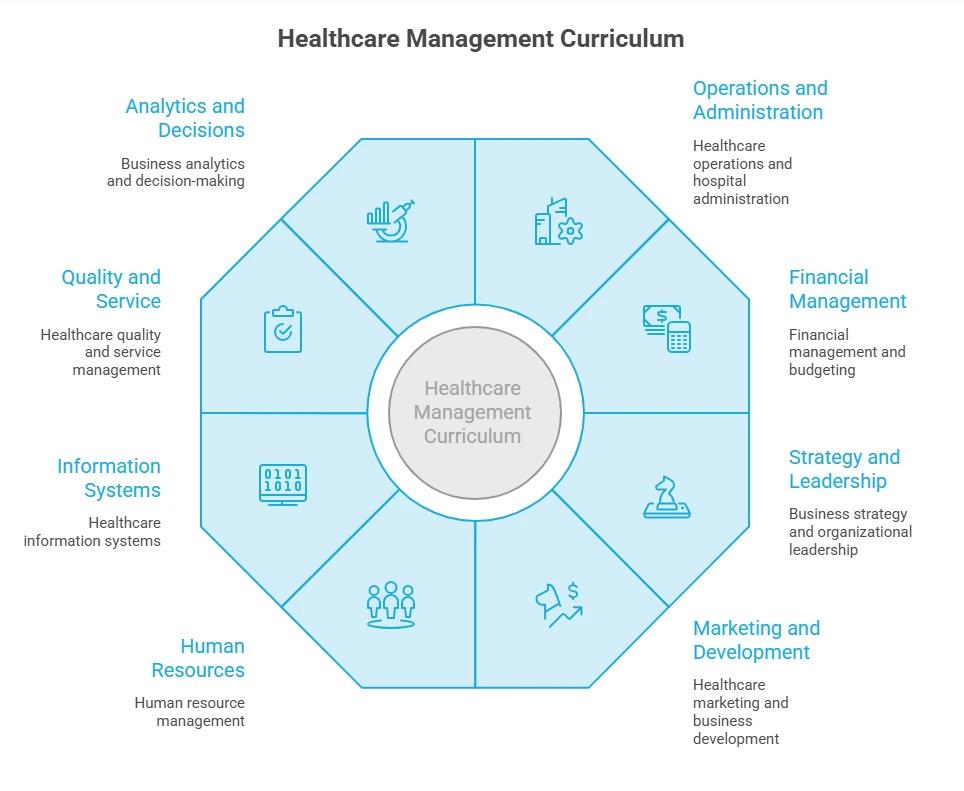
The curriculum varies across institutions, but common subjects may include:
Healthcare operations and hospital administration
Financial management and budgeting
Business strategy and organizational leadership
Healthcare marketing and business development
Human resource management
Healthcare information systems
Healthcare quality and service management
Business analytics and decision-making
Additionally, some programs include case studies, live sessions, projects, or industry interactions.
These learning experiences can help students understand how healthcare organizations manage resources, improve operational efficiency, and balance business priorities with service quality.
Why Are Online Healthcare MBAs Becoming Relevant to Medical Professionals?
Healthcare professionals often develop specialized knowledge through clinical training, technical education, or workplace experience. However, career progression into management may require additional skills.
For example, managing a hospital department involves more than understanding medical services. Professionals may also need to plan budgets, coordinate teams, monitor performance, and improve processes.
An online healthcare MBA can help address this learning gap through structured management education.
1. Flexible Learning for Working Professionals
Healthcare employees often work demanding schedules. Doctors, nurses, administrators, and healthcare support professionals may find regular classroom attendance difficult.
An online program can provide greater flexibility when it offers recorded lectures, digital study materials, or adaptable learning schedules.
Consequently, learners may be able to continue working while studying. However, online programs still require consistent time for assignments, examinations, and independent learning.
2. Business Skills Beyond Clinical Expertise
Clinical knowledge remains essential for medical practice. However, leadership positions may also require financial understanding, strategic planning, communication, and operational decision-making.
A healthcare MBA can introduce professionals to these business responsibilities.
For instance, a clinician interested in hospital administration may benefit from studying budgeting, resource allocation, and organizational management.
3. Understanding Healthcare Technology
Digital health platforms, electronic health records, telehealth services, and data-driven operations are changing healthcare delivery.
Healthcare managers increasingly need to understand how technology supports organizational performance and service improvement.
An online MBA may help learners develop the business perspective needed to evaluate technology investments, coordinate implementation, and assess operational outcomes.
However, specialized technical roles may require additional training beyond an MBA.
4. Opportunities for Career Diversification
Some medical professionals eventually want to explore roles outside direct patient care. Others may prefer administration, consulting, healthcare business development, or technology-related work.
Management education can help them understand these alternative career pathways.
Nevertheless, a qualification alone does not guarantee a career change. Relevant experience, transferable skills, networking, and employer requirements also influence opportunities.
How an Online Healthcare MBA Can Transform Medical Careers
The impact of management education depends on how learners apply their knowledge. For some professionals, an MBA may support progression within their current organization. For others, it may help them prepare for a different professional direction.
Hospital Administration and Healthcare Operations
Hospitals require professionals who can coordinate departments, manage resources, monitor performance, and support efficient service delivery.
An online healthcare MBA can introduce learners to operations management, organizational strategy, budgeting, and quality improvement.
These skills may be relevant to administrative roles in hospitals, diagnostic centres, healthcare networks, and other service providers.
However, senior positions often require substantial experience and may have specific eligibility requirements.
Healthcare Consulting and Business Strategy
Healthcare organizations face challenges involving cost management, process improvement, service expansion, and organizational change.
Consulting professionals help evaluate these challenges and develop practical recommendations.
An MBA can strengthen business analysis, strategic thinking, and communication skills. Professionals with healthcare experience may also bring valuable industry knowledge to consulting projects.
Entry requirements vary, so candidates should review the experience and analytical skills expected for each position.
Healthcare Technology and Digital Health
Healthcare technology businesses need professionals who understand both organizational needs and commercial objectives.
Possible career areas include business operations, product implementation, partnerships, service delivery, and business development.
An online healthcare MBA may help professionals understand how digital solutions fit into business models and healthcare workflows.
For technology-heavy roles, additional digital, analytical, or technical skills may improve career readiness.
Pharmaceutical and Medical Business Management
Pharmaceutical companies, medical equipment businesses, and healthcare service providers employ professionals in sales, marketing, operations, and business development.
Medical-sector experience can be useful in these environments because employees may already understand healthcare stakeholders, service requirements, or product applications.
A management qualification can complement that knowledge with business planning, market analysis, and leadership skills.
However, the responsibilities and qualifications required differ between commercial, technical, regulatory, and clinical positions.
Advance Your Medical Career
Explore flexible management education designed to complement your healthcare experience and prepare you for broader professional responsibilities.
Online MBA for Medical Professionals: Who Can Benefit?
An online MBA for medical professionals may suit people who want to develop management capabilities without immediately leaving their current employment.
The most suitable applicants are those who have clear professional goals and can commit time to academic work.
Doctors and Clinicians
Doctors interested in hospital administration, healthcare entrepreneurship, consulting, or organizational leadership may find business education useful.
It can help them understand the financial and operational aspects of healthcare services. However, an MBA does not replace clinical qualifications or authorize additional clinical practice.
Nurses and Allied Healthcare Professionals
Experienced nurses and allied healthcare professionals may consider management education when exploring supervisory, administrative, or service coordination responsibilities.
Relevant subjects may include team management, operations, budgeting, and quality improvement.
Eligibility and career outcomes depend on the program and the individual's professional background.
Hospital Administrators
Professionals already working in healthcare administration may use management education to strengthen their knowledge of strategy, finance, leadership, and operational improvement.
Practical assignments can also help them examine challenges within their current workplace.
Pharmaceutical and Healthcare Technology Professionals
Employees in pharmaceutical businesses, medical equipment companies, insurance services, and healthcare technology may want to develop broader commercial or leadership skills.
An MBA can help connect their industry experience with management principles.
Healthcare MBA Career Opportunities After Graduation
A healthcare MBA career can take several directions depending on the learner's previous experience, program content, and professional interests.
Potential roles include the following.
1. Hospital Operations Manager
These professionals help coordinate workflows, manage operational resources, and monitor departmental performance. Employers may require prior healthcare operations experience.
2. Healthcare Administrator
Healthcare administrators support organizational planning, administrative processes, resource coordination, and service delivery.
3. Healthcare Business Development Manager
Business development professionals identify growth opportunities, build partnerships, and support the expansion of healthcare services.
4. Healthcare Consultant
Consultants analyse business problems, evaluate processes, and recommend improvements. Strong analytical skills and relevant industry experience can be valuable.
5. Healthcare Project Manager
Project managers coordinate activities, timelines, budgets, and stakeholders for healthcare-related initiatives. Project management experience or additional certification may be useful.
6. Healthcare Technology Business Professional
These professionals may work in digital health operations, business implementation, partnerships, or product-related coordination.
7. Healthcare Marketing Manager
Marketing professionals help develop service strategies, communicate organizational value, and support customer or patient engagement initiatives.
These roles represent possible career pathways, not guaranteed outcomes. Entry-level positions may involve coordination or analytical responsibilities before progressing into management.
Medical Career Transition: Moving From Clinical Work to Management
A medical career transition can be challenging because clinical responsibilities and business management require different capabilities.
Healthcare professionals often bring useful transferable strengths, including communication, problem-solving, teamwork, and an understanding of healthcare environments. However, they may need to develop additional business knowledge before moving into management.
Step 1: Identify Your Preferred Career Direction
Decide whether you want to pursue hospital administration, consulting, healthcare technology, pharmaceutical management, or another business-focused pathway.
A specific goal will help you evaluate whether an MBA is relevant to your plans.
Step 2: Identify Your Skill Gaps
Review job descriptions for your target roles. Identify the required skills in budgeting, business analysis, operations, project management, or strategic planning.
Use these requirements to assess whether a healthcare MBA addresses your learning needs.
Step 3: Choose a Relevant Program
Compare the curriculum, faculty, assessment methods, recognition, industry exposure, and learning format.
For online programs, check how the institution conducts examinations, provides academic support, and facilitates practical learning.
Step 4: Apply Your Learning at Work
Where possible, volunteer for projects involving operational improvement, team coordination, budgeting, or service planning.
These experiences can help you demonstrate managerial capabilities alongside your existing healthcare expertise.
Step 5: Build Professional Connections
Participate in industry events, professional discussions, and relevant networking opportunities.
Connections with healthcare managers and employers can help you understand role expectations and identify suitable career pathways.
How to Choose the Right Online Healthcare MBA
Not all online MBA programs offer the same learning experience. Therefore, evaluate each program carefully before making a financial or academic commitment.
Check Recognition and Program Validity
For Indian students, verify the institution's recognition and the program's approval or entitlement requirements applicable to its mode of delivery.
Check current official information from the relevant regulatory authorities. Do not assume that every online qualification has the same recognition status.
Review the Curriculum
Look for subjects relevant to your intended career. For example, hospital administration may require different knowledge from healthcare marketing or digital health business development.
Examine Practical Learning Opportunities
Review whether the program includes case studies, applied assignments, projects, or industry interactions.
Practical learning can help you connect management theory with workplace responsibilities.
Understand the Learning Format
Check the availability of recorded lectures, live classes, academic support, examination schedules, and assessment requirements.
A flexible schedule is useful only when it fits your actual work commitments.
Evaluate Career Support
Ask about career counselling, employer interactions, placement assistance, alumni engagement, and the availability of relevant outcome information.
Review the roles and employers associated with reported outcomes instead of relying on broad promotional claims.
Compare Costs and Time Commitment
Consider tuition fees, additional charges, examination arrangements, study hours, and program duration.
Choose a program that fits your professional goals, available time, and financial circumstances.
An online healthcare MBA can be valuable for professionals who need structured management education and prefer a flexible learning format.
It may help learners develop business knowledge, prepare for management responsibilities, and explore career pathways beyond their current roles.
However, its value depends on several factors:
The relevance and quality of the curriculum
Recognition and validity of the qualification
Practical learning opportunities
The learner's prior education and work experience
Employer requirements for target roles
The ability to apply new skills in the workplace
An MBA is not a guaranteed route to a promotion or higher salary. Instead, it should be considered an investment in knowledge and professional development.
Before enrolling, compare available programs and assess how closely they match your career objectives.
Conclusion: Preparing for the Future of Healthcare Management
Healthcare careers increasingly involve collaboration between clinical expertise, technology, business strategy, and organizational management.
An online healthcare MBA can help medical professionals develop the management knowledge needed to explore these broader responsibilities. It may support career development in hospital operations, healthcare administration, consulting, pharmaceutical businesses, and digital health.
However, the right choice depends on your career objectives, existing qualifications, professional experience, and the quality of the program.
Before enrolling, verify recognition, examine the curriculum, and identify the skills employers expect for your preferred roles.
Ready to explore your management education options? Visit Asia Pacific Institute of Management to review its current programs, admission requirements, and learning opportunities. Choose a pathway that aligns with your professional goals and long-term career plans.
Lead The Future Healthcare
Discover healthcare management learning opportunities that build strategic thinking, improve operational understanding, and support your long-term career ambitions.
Dr. Vikas Gupta is a distinguished academic in the education and research domain, specializing in finance and related interdisciplinary studies. He is known for his...
An online healthcare MBA is a management program delivered partly or primarily through digital learning. It typically combines business subjects with healthcare management concepts, depending on the institution’s curriculum.
02.
Can doctors pursue an online healthcare MBA while working?Can doctors pursue an online healthcare MBA while working?
Yes, doctors may be eligible for suitable programs while continuing professional practice. However, they should check admission criteria, workload, examination schedules, and whether the format fits their professional commitments.
03.
Is an online MBA for medical professionals useful?
It can be useful for professionals interested in healthcare administration, operations, consulting, or business management. Its value depends on program quality, relevant experience, practical learning, and career objectives.
04.
What jobs can I pursue after a healthcare MBA?
Potential roles include healthcare administrator, hospital operations professional, business development manager, healthcare consultant, project coordinator, and healthcare technology business professional. Eligibility varies by employer and experience.
05.
Can a healthcare MBA help with a medical career transition?
It can support a transition by developing business knowledge and management skills. However, candidates may also need relevant experience, networking, practical projects, or additional qualifications for their target roles.
06.
Is an online healthcare MBA recognized in India?
Recognition depends on the institution, qualification, delivery mode, and applicable regulatory requirements. Students should verify the current status through official sources before enrolling.
07.
Does an online healthcare MBA guarantee a higher salary?
No. Salary depends on the role, employer, experience, location, skills, and responsibilities. An MBA may strengthen a professional profile, but it cannot guarantee a specific salary or promotion.
08.
How do I choose the best healthcare management program?
Compare recognition, curriculum, faculty, practical learning, assessment methods, career support, cost, and schedule flexibility. Select a program that aligns with your intended role and professional development needs.

















.webp) Call Us
Call Us