PGDM Mentorship Programs: How Academic Guidance Supports Student Development
Posted on 19 Aug 2026
By Dr. Vikas Gupta
Introduction
PGDM mentorship provides structured academic and developmental guidance that can help management students navigate coursework, projects, specialization decisions, skill development, and the transition toward professional life. A mentor may be a faculty member, industry professional, alumnus, or another designated guide, depending on how a particular institution structures its mentoring system.
For students pursuing a PGDM, mentorship can be especially useful because management education involves more than classroom examinations. Students are often balancing case studies, presentations, group projects, internships, networking, and career planning at the same time. For parents, understanding mentorship provides a clearer view of how academic support can complement formal teaching. This benefits guide explains how PGDM mentorship works, its potential advantages, the responsibilities of mentors and mentees, and what students should look for in an effective mentoring environment.
Key Takeaways
PGDM mentorship provides guidance beyond regular classroom teaching and can support academic, professional, and personal development.
Faculty, industry professionals, and alumni can play different mentoring roles depending on the programme.
Effective mentoring can help students reflect on strengths, skill gaps, specialization choices, projects, and career direction.
Mentorship works best when students prepare for meetings, ask specific questions, act on feedback, and take responsibility for their development.
Mentoring structures vary across PGDM institutes, so students and parents should verify how mentorship actually operates before comparing programmes. Bonus:PGDM for future business leaders
What Is PGDM Mentorship?
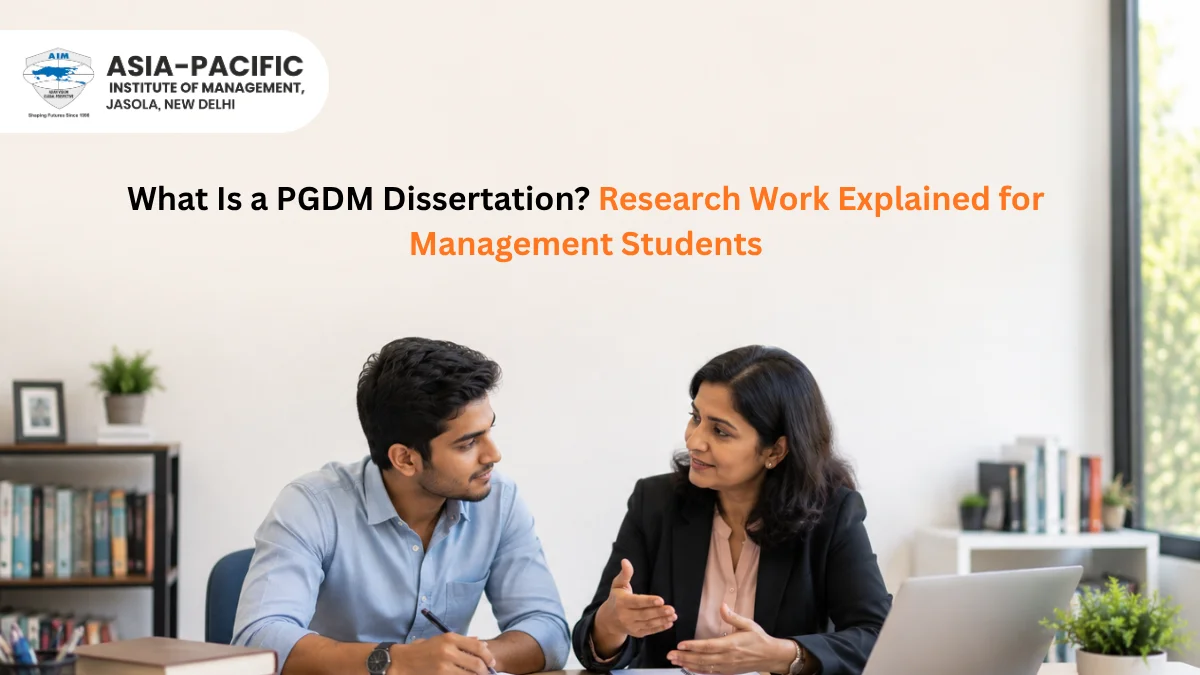
PGDM mentorship is a structured or informal guidance relationship in which an experienced faculty member, professional, alumnus, or designated mentor supports a management student's academic and professional development. Mentoring may involve discussing learning challenges, career interests, skills, projects, specialization choices, workplace expectations, and development goals while encouraging students to make informed decisions independently.
Mentoring is different from simply giving students answers.
A mentor can ask questions, offer perspective, identify gaps, recommend resources, and help a student evaluate alternatives. The student still remains responsible for decisions and outcomes.
Within a post graduate diploma in management, mentorship can complement lectures, case discussions, projects, internships, and other learning activities. Its exact purpose depends on the institution and the type of mentor involved.
Why Is Mentorship Important During a PGDM Program?
Mentorship can be important during a PGDM program because students face multiple academic and career decisions within a relatively concentrated period. Regular guidance can help them understand their strengths, identify areas for improvement, connect classroom learning with professional expectations, and approach decisions about specializations, internships, projects, and career interests more systematically.
Management education can expose students to several disciplines at once.
A student may study marketing, finance, operations, human resources, analytics, economics, strategy, and communication before deciding which areas deserve greater attention. This breadth is useful, but it can also create uncertainty.
Mentorship gives students a person with whom they can discuss that uncertainty.
For example, someone attracted to a marketing program might be unsure whether their interests lie in sales, brand management, market research, or digital channels. Another student exploring PGDM in data analytics may need to understand whether they enjoy quantitative problem-solving enough to pursue analytics-focused learning more deeply.
The mentor's role is not to make the choice for the student. Effective guidance helps students examine the choice more clearly.
PGDM Mentorship Guide
Gain 1-on-1 career guidance from top faculty and alumni mentors. Accelerate your professional growth and leadership success at Asia-Pacific Institute today!
The main benefits of PGDM mentorship can include greater academic clarity, more thoughtful career planning, improved self-awareness, constructive feedback, stronger professional understanding, and better integration of classroom and practical learning. The actual benefits depend on mentor quality, programme structure, meeting frequency, student participation, and whether mentoring conversations translate into realistic actions.
1. Academic Guidance
Students can sometimes struggle to understand where a particular subject fits into their larger management education.
A faculty mentor may help them recognise connections between subjects, identify academic weaknesses, improve learning habits, or approach projects more systematically.
This guidance should supplement—not replace—independent study and classroom interaction.
2. Specialization Decisions
Choosing a specialization can be difficult when students have limited professional experience.
Mentoring conversations can help students compare their interests with the nature of different business functions. Someone considering PGDM in marketing management may discuss customer-facing roles and market-oriented work, while another student interested in PGDM in banking and finance may explore financial services, analytical work, and related career environments.
3. Skill Development
Mentors can help students identify skills that need attention.
These may include communication, presentation, analytical reasoning, teamwork, research, time management, or professional behaviour.
Instead of trying to improve everything simultaneously, students can prioritise specific development goals. Bonus:life in PGDM college
4. Constructive Feedback
Useful feedback can reveal gaps students may not notice themselves.
A mentor might identify that a student understands concepts well but struggles to communicate them concisely, or that another student presents confidently but needs stronger analytical reasoning.
The value comes from converting feedback into deliberate practice.
5. Professional Perspective
Industry and alumni mentors can provide context about workplace expectations, career functions, and professional communication.
Their experiences can help students ask more informed questions about industries and roles, although individual career experiences should not be treated as universal predictions.
What Types of Mentors Can PGDM Students Learn From?
PGDM students may receive guidance from faculty mentors, industry professionals, alumni, career-development professionals, or peer mentors, depending on the institution. Each type offers a different perspective: faculty can support academic development, industry mentors can provide workplace context, alumni can share transition experiences, and career mentors can help students think systematically about professional preparation.
Mentor Type
Typical Area of Guidance
Potential Student Benefit
Faculty Mentor
Academics, projects, research, learning goals
Greater academic clarity
Industry Mentor
Workplace expectations and business practices
Professional perspective
Alumni Mentor
PGDM-to-work transition and career experiences
Relatable career insight
Career Mentor
Role exploration and professional preparation
More structured career planning
Peer Mentor
Adjustment and shared academic experience
Practical student perspective
Students should recognise that these roles can overlap.
A faculty member with industry experience, for example, may offer both academic and professional insights. Similarly, alumni can discuss their experiences but should not be expected to provide definitive answers about every career path.
The best mentoring environment often gives students access to different perspectives while teaching them to evaluate advice critically.
How Does PGDM Mentorship Support Academic Development?
PGDM mentorship supports academic development by helping students identify learning priorities, reflect on performance, connect subjects across management disciplines, and seek appropriate resources when they encounter difficulties. Mentors can also encourage better planning for assignments, research, presentations, and projects while helping students develop greater ownership of their academic progress rather than depending continuously on external direction.
A PGDM course often requires students to move between individual and collaborative work.
One week may involve a finance case; another may require a marketing presentation, data analysis, or group strategy project. Students therefore need to learn how to organise competing priorities.
A mentor can help them reflect on questions such as:
Which subjects require additional preparation?
Where is performance improving or declining?
Which feedback keeps appearing across assignments?
What study habits are producing results?
Which skills require deliberate practice?
How should academic interests influence elective choices?
Over time, these conversations can encourage students to become more self-directed learners.
How Can Mentorship Help With Specialization and Career Decisions?
Mentorship can help with specialization and career decisions by encouraging students to compare their interests, abilities, preferred work styles, academic performance, and exposure to different business functions. Rather than recommending a specialization simply because it is popular, a good mentor helps the student investigate what particular fields involve and where additional exploration may be necessary.
Consider a student interested in marketing.
The student might explore a post graduate diploma in marketing pathway or subjects connected with digital marketing, sales, consumer behaviour, branding, and analytics. Mentoring can help distinguish genuine interest from familiarity with the word “marketing.”
The same applies to analytics. Terms such as big data and big data analytics can attract attention, but students should understand the quantitative reasoning, data interpretation, and business problem-solving involved before selecting an analytics-focused direction.
Students considering banking financial services can similarly discuss the nature of financial analysis, banking operations, markets, customer-facing functions, risk, and related business areas.
Good mentorship improves the questions students ask; it does not simply provide a ready-made career answer.
How Does Mentorship Build Professional and Interpersonal Skills?
Mentorship can support professional and interpersonal development by creating regular opportunities for students to communicate goals, receive feedback, reflect on behaviour, and practise professional interaction. Through these conversations, students may become more aware of communication style, accountability, listening, confidence, preparation, teamwork, and other behaviours that influence how effectively they operate in academic and professional environments.
Mentorship itself requires professional habits.
Students need to arrive prepared, explain problems clearly, listen carefully, ask follow-up questions, and act on agreed priorities. These behaviours are also useful when communicating with managers and colleagues.
Mentors can additionally encourage students to reflect after presentations, internships, group projects, and interviews.
Instead of asking only, “Did I perform well?”, students can ask, “What worked, what did not work, and what should I change next time?”
That shift toward reflection is an important part of student development.
Expert Mentor Access
Connect with industry experts to bridge skills gaps and choose ideal specializations. Transform your corporate career path with structured support right now!
What Makes a PGDM Mentorship Relationship Effective?
An effective PGDM mentorship relationship requires clear expectations, regular communication, specific goals, constructive feedback, confidentiality where appropriate, and active participation from the student. Mentors can provide perspective and guidance, but students gain more when they prepare for discussions, communicate challenges clearly, complete agreed actions, and treat mentoring as a developmental partnership rather than a source of ready-made solutions.
Students can make mentoring sessions more productive by maintaining a simple agenda.
Before each discussion, identify one or two questions that matter. These might concern academic performance, a project, specialization selection, internship learning, or a skill that needs improvement.
After the meeting, note the actions you intend to take.
The next conversation can then examine progress instead of restarting the same discussion. This creates continuity and accountability.
Mentorship also requires appropriate boundaries. Academic mentors are not automatically counsellors, placement guarantees, or decision-makers. When a concern requires specialised support, students should use the relevant institutional or professional resource.
What Should Students and Parents Look for in PGDM Mentorship?
Students and parents evaluating PGDM mentorship should look beyond claims that an institute simply “offers mentoring.” They should examine who provides mentorship, how students are assigned or connected with mentors, how often interactions occur, what areas mentors cover, and whether mentoring is integrated with academic, industry, and student-development activities.
Useful questions include:
Are mentors primarily faculty members, alumni, or industry professionals?
Is mentoring structured or available only when students request it?
How frequently can students interact with mentors?
Does mentoring cover academic development, career reflection, or both?
Are students encouraged to set and review development goals?
How does mentoring connect with projects, internships, and professional preparation?
Students comparing PGDM courses in Delhi NCR, a PGDM course in Delhi, or PGDM colleges in Delhi NCR should verify these details directly through current institutional information.
Asia-Pacific Institute of Management's published material, for example, refers to faculty support, student development activities, corporate interaction, and mentorship opportunities. Prospective students should still verify the current structure and availability of specific mentoring arrangements for their chosen programme.
How Can Students Get the Most From PGDM Mentorship?
Students get more from PGDM mentorship when they approach it actively rather than waiting for mentors to solve problems. Setting goals, preparing questions, sharing relevant context, requesting specific feedback, recording action points, and reviewing progress can make mentoring conversations more useful. Students should also remain open to feedback that challenges their initial assumptions or preferences.
Treat each mentoring conversation as part of an ongoing development process.
If you are considering a specialization, research it before the meeting. If you want feedback on communication, identify situations where you struggled. If you are uncertain about career direction, prepare two or three options rather than asking the mentor to choose a career for you.
Students pursuing a post graduate diploma in management can also learn from multiple sources. Faculty guidance, industry interaction, alumni perspectives, peer learning, internships, and independent reflection can complement one another.
Mentorship works best when it strengthens a student's ability to make decisions independently. Bonus:life of a management student
Conclusion
PGDM mentorship can add an important layer of guidance to management education by helping students reflect on academic progress, skills, specialization choices, professional interests, and development goals. Its value comes from sustained interaction and thoughtful feedback rather than simply having a mentor assigned on paper.
For students, effective mentoring requires active participation: preparing questions, discussing challenges openly, applying feedback, and reviewing progress. For parents evaluating a PGDM program, it is useful to examine how an institution integrates mentorship with academics, projects, industry exposure, and broader student development. Mentoring structures vary, so specific arrangements should always be verified with the institute. Ultimately, good mentorship does not make decisions for students; it helps them develop the judgment, self-awareness, and confidence needed to make increasingly informed decisions themselves.
Boost Career Network
Receive strategic advice, internship prep, and personalized academic feedback. Enroll in the AICTE approved PGDM program at Asia-Pacific Institute now!
Dr. Vikas Gupta is a distinguished academic in the education and research domain, specializing in finance and related interdisciplinary studies. He is known for his...
01.
Is PGDM mentorship the same as academic counselling?
Not necessarily. Academic counselling generally focuses on course requirements, academic progress, policies, or subject-related concerns. PGDM mentorship can be broader, covering academic development, skills, career exploration, projects, and professional growth. Institutions may define these roles differently, so students should check how mentoring and academic advising are structured within their programme.
02.
Who can become a mentor for a PGDM student?
Depending on the institution, a PGDM student may receive mentorship from a faculty member, industry professional, alumnus, career-development professional, or senior peer. Each mentor type brings different experience. Faculty may focus more on academic development, while industry and alumni mentors can provide additional perspective on professional environments and career transitions.
03.
Can PGDM mentorship help students choose a specialization?
Yes, mentorship can support specialization decisions by helping students examine interests, strengths, academic performance, work preferences, and career possibilities. A mentor may help a student compare marketing, finance, analytics, operations, or other pathways. However, the final decision should remain with the student and should also reflect the programme’s actual specialization options.
04.
How often should PGDM students meet their mentors?
There is no universal frequency that suits every PGDM programme or mentoring relationship. Some institutions may schedule regular meetings, while others use need-based interactions. What matters is continuity and purpose. Students benefit when meetings happen often enough to review progress, discuss emerging concerns, and follow up on actions rather than functioning as isolated conversations.
05.
Can mentorship help students interested in data analytics or finance?
Yes. Students considering PGDM in data analytics or finance-related pathways can use mentoring conversations to understand required capabilities, discuss academic strengths, identify skill gaps, and explore relevant projects or electives. Mentors can provide perspective, but students should verify curriculum and career information independently rather than treating one person’s experience as universally applicable.
06.
Should parents consider mentorship when comparing PGDM institutes?
Mentorship can be one useful factor, but it should be considered alongside curriculum, faculty, academic standards, practical learning, infrastructure, industry exposure, student support, and other relevant programme characteristics. Parents should ask how mentoring actually operates rather than relying on promotional terminology. The quality and accessibility of mentoring matter more than the existence of a mentorship label.

















.webp) Call Us
Call Us