The Ultimate First-Week Survival Guide for MBA Healthcare Students
Posted on 09 Jul 2026
By Dr. Vikas Gupta
Introduction
Congratulations on taking the first step toward a career in one of India's fastest-growing industries. Starting mba healthcare is more than joining a postgraduate programme—it marks the beginning of your journey into healthcare leadership, hospital administration, healthcare consulting, medical technology, and digital health.
The first week of business school is exciting but can also feel overwhelming. New classmates, faculty interactions, orientation sessions, assignments, presentations, and unfamiliar healthcare concepts can create both excitement and anxiety.
The good news is that a little preparation goes a long way. This guide will help you navigate your first week confidently by covering everything from orientation and classroom expectations to healthcare terminology, time management, and networking.
Whether you come from healthcare, pharmacy, life sciences, engineering, commerce, or any other academic background, these practical tips will help you start your MBA or PGDM in Healthcare Management on the right note.
Start Healthcare MBA
Begin your healthcare MBA journey with practical learning, industry exposure, and placement support designed for confident first-week success.
Many students think the real learning begins after orientation. However, the first week often shapes your academic habits, professional relationships, and confidence throughout the programme.
During your first week, you will likely experience:
Orientation programmes
Faculty introductions
Campus tours
Team-building activities
Course briefings
Club registrations
Networking sessions
Group assignments
Library orientation
Placement introductions
Students who actively participate during this period often adjust faster to business school life.
Understanding the MBA Healthcare Journey
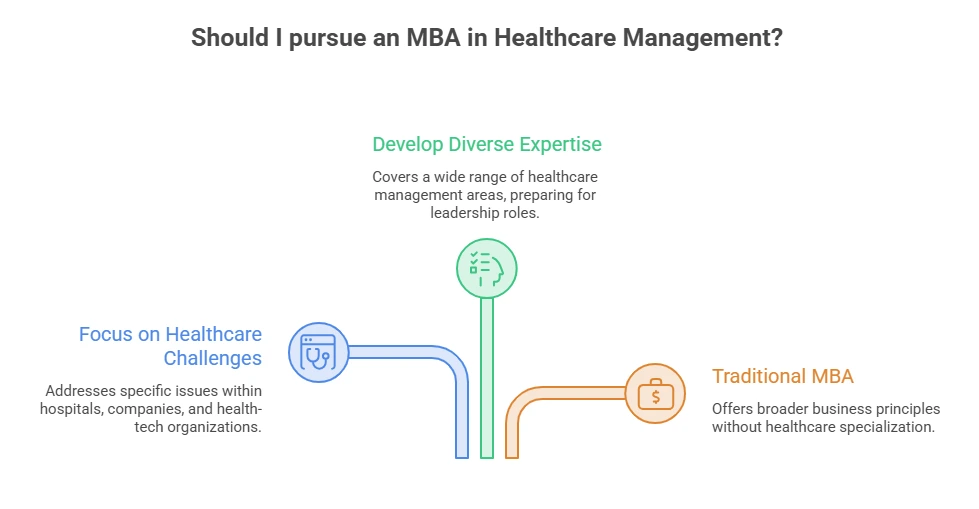
Starting mba healthcare means preparing for an interdisciplinary programme that combines management principles with healthcare industry knowledge.
Unlike traditional MBA programmes, healthcare management focuses on solving challenges within hospitals, healthcare companies, diagnostics, insurance, pharmaceuticals, medical devices, and health-tech organizations.
Throughout the programme, students develop expertise in:
Hospital administration
Healthcare operations
Healthcare finance
Healthcare marketing
Quality management
Supply chain management
Human resource management
Healthcare analytics
Healthcare regulations
Strategic management
This combination prepares graduates for leadership positions across the healthcare ecosystem.
B-School Orientation Tips Every Student Should Follow
The first official day is your opportunity to make a strong impression. These b-school orientation tips can help you feel prepared and confident.
Arrive Early
Reach campus before the reporting time to avoid unnecessary stress and become familiar with the surroundings.
Dress Professionally
Business casual or formal attire creates a positive first impression and reflects professionalism.
Introduce Yourself Confidently
Prepare a brief introduction covering:
Your educational background
Previous work experience (if any)
Career interests
Why you chose healthcare management
Ask Questions
Orientation sessions are designed to help students. Don't hesitate to ask about academics, clubs, internships, or campus facilities.
Network with Classmates
The relationships you build during the first week often become valuable professional connections throughout your career.
Although the curriculum varies between institutes, students generally study subjects such as:
Principles of Management
Healthcare Operations
Hospital Administration
Marketing Management
Financial Management
Human Resource Management
Healthcare Economics
Healthcare Quality
Strategic Management
Healthcare Information Systems
Business Analytics
Research Methodology
Initially, the syllabus may appear extensive. However, each subject builds practical skills required in healthcare organizations.
Medical Jargon for Freshers: Learn the Basics
Students from non-medical backgrounds often worry about understanding clinical language. Fortunately, healthcare management programmes do not expect students to become medical experts.
National Accreditation Board for Hospitals & Healthcare Providers
Infection Control
Measures to prevent hospital-acquired infections
Learning five to ten new terms daily can significantly improve your understanding during lectures and case studies.
Build an Effective Study Schedule Management Plan
MBA programmes move quickly. Good study schedule management helps students stay organized throughout the semester.
A practical weekly routine may include:
Morning
Review lecture notes
Read industry news
Revise previous topics
Afternoon
Attend classes
Participate actively
Take organized notes
Evening
Complete assignments
Work on presentations
Collaborate with teammates
Weekend
Revise weekly concepts
Read healthcare articles
Prepare for upcoming classes
Update your resume and LinkedIn profile
Consistent study habits are more effective than last-minute preparation.
Build B-School Confidence
Prepare for orientation, networking, healthcare terminology, and classroom participation with career-focused MBA training from experienced mentors and faculty support.
Avoiding these habits makes the transition to business school much smoother.
Develop Skills Employers Value
Healthcare organizations increasingly seek graduates who demonstrate:
Leadership
Communication
Problem-solving
Business understanding
Data interpretation
Team collaboration
Customer focus
Ethical decision-making
Adaptability
Emotional intelligence
These competencies improve placement opportunities.
How MBA Healthcare Prepares You for Leadership
Healthcare management programmes prepare students to lead complex healthcare organizations.
Students gain knowledge in:
Hospital operations
Healthcare consulting
Medical technology
Healthcare marketing
Strategic planning
Quality management
Business analytics
Supply chain management
Healthcare finance
Patient experience
At Asia Pacific Institute of Management, students benefit from an industry-oriented curriculum, experienced faculty, practical learning, corporate exposure, internships, live projects, and placement support. These experiences prepare graduates for leadership careers across hospitals, healthcare consulting firms, diagnostics, health-tech companies, medical device organizations, and healthcare services.
Career Opportunities After MBA Healthcare
Graduates can pursue careers such as:
Hospital Administrator
Healthcare Operations Manager
Quality Manager
Healthcare Consultant
Business Development Manager
Product Manager
Patient Experience Manager
Healthcare Marketing Manager
Medical Device Sales Manager
Healthcare Analytics Manager
The healthcare industry offers opportunities across both clinical and corporate sectors.
First-Week Success Checklist
Before your first week ends, make sure you have:
✅ Attended orientation sessions
✅ Introduced yourself to classmates
✅ Met faculty members
✅ Joined student clubs
✅ Organized study materials
✅ Created a weekly study schedule
✅ Updated your LinkedIn profile
✅ Learned basic medical terminology
✅ Explored the library
✅ Understood the academic calendar
Small actions during the first week create long-term success.
Starting mba healthcare is the beginning of a rewarding professional journey in one of India's most dynamic industries. While the first week may seem overwhelming, proper preparation can help you build confidence, develop productive habits, and establish meaningful professional relationships.
By understanding the healthcare management syllabus, learning basic medical terminology, following effective study schedule management, and actively participating in orientation, you can create a strong foundation for academic and career success.
At Asia Pacific Institute of Management, students receive industry-oriented education, practical exposure, experienced faculty guidance, corporate interactions, live projects, and placement support to prepare them for successful leadership careers in healthcare management.
Lead From Week-One
Turn your first MBA week into a strong foundation for healthcare leadership, projects, internships, and placement readiness success.
Dr. Vikas Gupta is a distinguished academic in the education and research domain, specializing in finance and related interdisciplinary studies. He is known for his...
01.
What should I do before starting mba healthcare?
Prepare your documents, understand the programme structure, learn basic healthcare concepts, organize your study schedule, and participate actively during orientation.
02.
What are the best b-school orientation tips?
Arrive early, dress professionally, introduce yourself confidently, ask questions, and network with classmates and faculty.
03.
Is healthcare management difficult for non-medical students?
No. The programme is designed for students from diverse academic backgrounds. Learning basic medical terminology before classes can make the transition easier.
04.
What does the healthcare management syllabus include?
The syllabus generally covers hospital administration, healthcare operations, finance, marketing, quality, HR, analytics, strategy, and healthcare information systems.
05.
Why should I learn medical jargon for freshers?
Understanding common medical terms helps students participate confidently in lectures, case studies, and hospital visits.
06.
How should I manage my study schedule?
Create a weekly plan that balances lectures, assignments, revision, group work, and industry reading instead of relying on last-minute preparation.
07.
How can I prepare for MBA healthcare placements from the beginning?
Develop communication skills, participate in projects, build your professional network, stay updated on healthcare trends, and gain internship experience.
















.webp) Call Us
Call Us