August Review Checklist: Tracking Your First Month Progress in an MBA Healthcare B-School
Posted on 22 Aug 2026
By Dr. Vikas Gupta
Introduction
You are adjusting to classes, assignments, new classmates, faculty expectations, presentations, case discussions, and career planning. If you are pursuing healthcare management, you may also be learning hospital operations, healthcare terminology, quality systems, and industry-specific business models.
August is often the right time to review how your first few weeks have gone. Instead of asking, “Am I doing enough?”, you can evaluate your progress across academics, career readiness, networking, case-study performance, and professional confidence.
This blog provides a practical checklist for reviewing your first month and preparing for the next stage of your MBA journey.
Start Your MBA Strong
Build practical business skills, industry exposure, professional confidence, and career readiness from day one with an industry-focused MBA programme.
Students who organize their time early often find it easier to manage academic pressure later. Similarly, students who begin profile building early have more time to prepare for internships and placements.
Your first month should help you answer five important questions:
Am I keeping up academically?
Am I building relevant business skills?
Am I exploring internship opportunities?
Am I developing professional relationships?
Am I becoming more confident in classroom and industry discussions?
The goal is not perfection.
The goal is measurable progress.
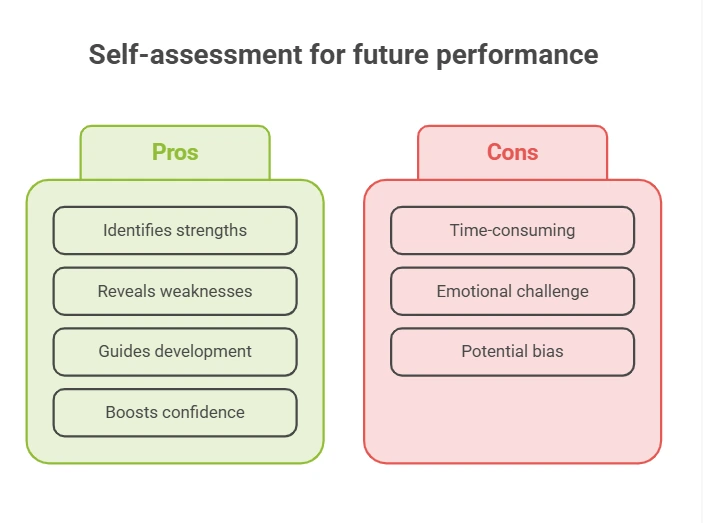
First Month of MBA Guide: Start With a Self-Assessment
A useful review begins with an honest self-assessment.
Rate yourself from 1 to 5 in the following areas:
Academic understanding
Class participation
Time management
Communication
Presentation skills
Excel or data skills
Healthcare industry knowledge
Networking
Internship preparation
Professional confidence
Do not focus only on your strongest areas.
Look for the gaps that could affect your future performance.
For example, you may understand concepts well but hesitate to speak in class. Or you may be good at presentations but have done very little internship research.
Your action plan should focus on these gaps.
Evaluation of B-School Performance: What Should You Review?
Instead of reading a case casually, follow a structured approach.
Step 1: Identify the Core Problem
Ask:
What decision must be made?
Do not confuse symptoms with the actual problem.
Step 2: Gather Relevant Facts
Identify:
Business context
Stakeholders
Financial information
Operational constraints
Market conditions
Risks
Step 3: Analyze Alternatives
Do not jump to one solution.
Compare at least two or three possible options.
Step 4: Recommend an Action
Your recommendation should be practical.
It should answer:
What should be done?
Why?
What are the risks?
How should it be implemented?
Step 5: Connect It to Healthcare
For healthcare management students, ask how the same framework applies to hospitals, pharmaceuticals, health-tech, diagnostics, insurance, or senior care.
This turns a general business case into sector-specific learning.
Create a Case Study Tracker
A simple tracker can include:
Case name
Subject
Main problem
Framework used
Recommendation
Faculty feedback
Lesson learned
After one month, review the tracker.
You may discover that you repeatedly struggle with financial analysis or implementation planning.
That gives you a clear improvement target.
Internship Hunt Roadmap: Start Earlier Than You Think
Many MBA freshers delay internships until applications begin.
That is risky.
An internship hunt roadmap should start in the first month.
You do not need to apply everywhere immediately.
However, you should begin building clarity.
Step 1: Choose Two or Three Target Functions
For healthcare management, these may include:
Hospital operations
Healthcare marketing
Quality management
Healthcare analytics
HR
Supply chain
Revenue cycle management
Business development
Do not keep ten unrelated career options open indefinitely.
Explore broadly, then narrow gradually.
Step 2: Build a Target Employer List
Instead of searching randomly, create a structured list of sectors and roles.
For example:
Hospitals
Pharmaceutical companies
Healthcare consulting
Diagnostics
Health-tech
Insurance
Senior care
Medical devices
Focus on the type of work you want.
Step 3: Identify Skill Gaps
Compare your current profile with the roles you want.
If you want analytics roles, build Excel and dashboard skills.
If you want hospital operations, learn patient flow and hospital KPIs.
If you want marketing, strengthen market research and communication.
Step 4: Improve Your Resume
Your first-month resume does not need to be final.
However, it should already include:
Education
Internships
Projects
Technical skills
Certifications
Leadership
Achievements
Review it every month.
Your resume should grow as your MBA experience grows.
Networking Goals for Freshers
Networking goals freshers set in the first month can influence future internship and placement opportunities.
Networking does not mean sending random messages asking for jobs.
It means building professional relationships gradually.
Start with people around you.
Connect With Classmates
Your classmates may come from different academic and professional backgrounds.
Learn from them.
Someone with hospital experience may understand operations.
Another student may understand finance or analytics.
Peer learning can be extremely valuable.
Build Faculty Relationships
Faculty members can help you understand:
Career directions
Academic gaps
Industry trends
Projects
Research interests
Ask thoughtful questions.
Do not approach faculty only when you need recommendations.
Attend Industry Sessions
Guest lectures and corporate interactions can expose you to real business challenges.
After a session, note:
One important insight
One new role you learned about
One skill employers value
One question you still have
This converts passive attendance into active learning.
Set a Monthly Networking Target
A practical first-month target could be:
Speak with 5 new classmates meaningfully
Interact with 2 faculty members
Attend 2 industry sessions
Connect with 5 relevant professionals online
Have 1 informational conversation
This is more useful than trying to collect hundreds of connections.
Build Career Momentum
Turn your MBA journey into measurable career growth through practical learning, corporate exposure, networking, skill development, and placement preparation.
You feel more confident when you understand the topic, organize your thoughts, and practice communicating clearly.
Improve Your Introduction
Prepare a short professional introduction.
It should explain:
Who you are
What you are studying
Your area of interest
The skills you are building
For example:
“I am an MBA student focusing on healthcare management. I am interested in hospital operations and healthcare analytics, and I am currently building skills in process improvement and data interpretation.”
This is clear and relevant.
Practice Presentations
Do not wait for major presentations.
Practice explaining a topic in two minutes.
Use:
Problem → Insight → Recommendation
This structure works in presentations, interviews, and case discussions.
Learn to Ask Better Questions
Professional confidence also appears in the questions you ask.
Instead of asking:
“Is healthcare management a good career?”
Ask:
“Which entry-level roles in hospital operations require the strongest analytical and process-management skills?”
An MBA healthcare student should gradually build sector understanding.
After your first month, ask whether you understand:
Hospital departments
Patient journey
Healthcare revenue models
Hospital KPIs
Accreditation basics
Digital healthcare
Pharmaceuticals
Insurance
Healthcare supply chains
You do not need expert knowledge yet.
However, you should be able to understand basic discussions.
Choose one healthcare sector each week.
Read about:
Business model
Major challenges
Career opportunities
Management roles
Technology trends
This habit can make industry interviews much easier later.
Review Your Technical Skills
Management roles increasingly require digital confidence.
Evaluate your current ability in:
Excel
PowerPoint
Data visualization
Business writing
Presentation design
Basic analytics
Do not simply add these skills to your CV.
Practice them.
For example, create a small hospital KPI dashboard using sample data.
Or analyze a case study using Excel.
Practical application builds confidence.
Check Your Time Management
The first month often reveals whether your schedule is realistic.
Track where your time goes.
Your week may include:
Classes
Assignments
Group work
Case preparation
Skill building
Networking
Internship research
Rest
If every evening becomes reactive, create a weekly planning routine.
One simple method is to divide tasks into:
Academic priorities
Career priorities
Personal priorities
Select two or three important actions in each category every week.
Your August MBA Review Checklist
Use this checklist at the end of your first month.
Academic Progress
I understand the major concepts covered so far.
I am completing assignments on time.
I participate in class discussions.
I review faculty feedback.
I can connect business concepts with healthcare.
Case Study Progress
I use a structured case-analysis framework.
I identify the main problem before recommending solutions.
I compare alternatives.
I track important case lessons.
I practice presenting recommendations clearly.
Career and Internship Progress
I have identified two or three target career functions.
I have started my internship hunt roadmap.
I have updated my resume.
I understand the skills required for target roles.
I am working on at least one skill gap.
Networking Progress
I have built meaningful relationships with classmates.
I interact with faculty.
I attend industry sessions.
I have defined monthly networking goals.
I am building a professional online presence.
Professional Confidence
I can introduce myself professionally.
I speak during group discussions.
I can present ideas in a structured way.
I ask specific career questions.
I can explain why I chose healthcare management.
Set Your Next 30-Day Goals
After reviewing your performance, convert observations into action.
Avoid vague goals such as:
“I will improve networking.”
Instead, write:
“I will schedule two informational conversations with healthcare professionals this month.”
Avoid:
“I will improve Excel.”
Write:
“I will complete one Excel dashboard project using healthcare data.”
Avoid:
“I will become more confident.”
Write:
“I will volunteer for at least two classroom presentations this month.”
Specific goals are easier to track.
Why Monthly Reviews Matter for MBA Profile Building
MBA performance improves when students review progress regularly.
A monthly review helps you identify small problems before they become major gaps.
It also helps you track growth.
After six months, you should be able to see progress in:
Academic understanding
Projects
Technical skills
Internships
Networking
Communication
Industry knowledge
This creates a stronger profile for future placement opportunities.
At Asia Pacific Institute of Management, an industry-oriented curriculum, experienced faculty, practical learning, corporate exposure, and placement support can help students build wider managerial capabilities.
However, students also need to take ownership of their development.
Your MBA becomes more valuable when you actively track what you are learning and how you are applying it.
The first month of MBA is not about proving that you already know everything.
It is about creating momentum.
A structured first month of MBA guide helps you evaluate academic performance, case-study skills, internship preparation, networking, and professional confidence.
Use August as a checkpoint.
Review what worked.
Identify what needs improvement.
Then set clear goals for the next 30 days.
Your MBA profile will not be built during one placement week.
It will be built through the small decisions you make throughout the programme.
Students who track progress regularly can become more intentional about academics, industry exposure, practical skills, and career preparation.
Shape Your MBA Future
Strengthen your academic foundation, leadership abilities, industry knowledge, and professional profile while preparing confidently for internships and future opportunities.
Dr. Vikas Gupta is a distinguished academic in the education and research domain, specializing in finance and related interdisciplinary studies. He is known for his...
01.
What should I achieve in the first month of MBA?
You should build a strong academic routine, understand faculty expectations, start networking, improve communication, identify possible career paths, and begin developing practical skills.
02.
How should I evaluate my B-school performance?
Evaluate academics, class participation, case analysis, assignments, teamwork, skill development, networking, and career preparation. Marks alone do not provide a complete picture.
03.
When should MBA students start looking for internships?
Students should begin researching internship functions and employers early. Actual application timelines vary, but career preparation should start from the first months of the programme.
04.
How can I improve my case study methodology?
Use a structured approach: identify the problem, analyze facts, compare alternatives, recommend an action, and explain implementation risks.
05.
What networking goals should MBA freshers set?
Focus on meaningful relationships. Start with classmates, faculty, industry speakers, alumni, and professionals relevant to your career interests.
06.
How can I improve professional confidence during MBA?
Prepare before discussions, volunteer for presentations, practice your professional introduction, strengthen subject knowledge, and communicate regularly.
07.
Should I start updating my CV in the first month?
Yes. Build an initial version and update it as you add projects, certifications, internships, competitions, and leadership experiences.
08.
How often should MBA students review their progress?
A monthly review works well because it provides enough time to show progress while allowing students to correct problems early.

















.webp) Call Us
Call Us




