Classroom to Corporate: How AIM Prepares Students for the Business World
Posted on 09 Oct 2026
By Dr. Vikas Gupta
Introduction
The transition from college to the corporate world requires more than academic qualifications. Employers expect graduates to communicate clearly, analyse business problems, collaborate with teams, understand organisational priorities and make informed decisions. For management aspirants, developing these capabilities is an essential part of career readiness for management students.
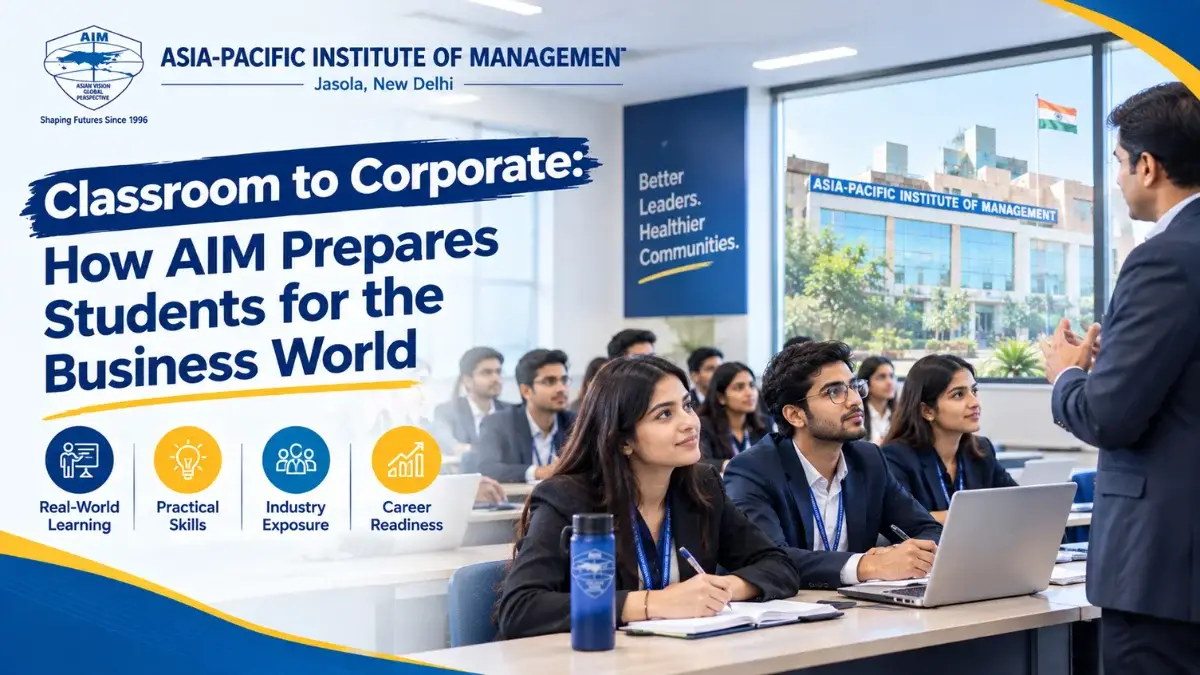
At Asia-Pacific Institute of Management (AIM), New Delhi, the published PGDM programme structure combines classroom learning with practical formats such as case studies, simulations, live projects, internships and research work. These learning opportunities can help students connect management concepts with business situations and understand the expectations of professional environments.
For students comparing management institutes, the important question is not simply what a programme teaches, but how its learning methods help them prepare for work. Understanding AIM's approach, the skills students can develop and the evidence to examine can support a more informed decision about management education.
Inviting Applications for PGDM 2027–29
Explore AIM PGDM and build skills for a future-ready management career.
Career readiness combines management knowledge, practical problem-solving, communication and professional conduct.
AIM's published PGDM structure includes case studies, simulations, projects, internships and research-based learning.
Group assignments, presentations and campus activities offer opportunities to practise teamwork, leadership and communication.
Career preparation is a shared process: institutional learning opportunities matter, but students must actively develop and demonstrate their capabilities.
Aspirants should evaluate curriculum, practical exposure, career-development support and dated placement information before choosing a management institute.
What Does Career Readiness Mean for Management Students?
Career readiness for management students means being able to apply academic knowledge, work effectively with others and contribute to business objectives in a professional setting. It includes technical understanding, interpersonal skills, analytical thinking, adaptability and ethical judgement.
A student may understand marketing theory but still need practice presenting a recommendation to a client. Similarly, a finance student may know financial concepts but need to improve the ability to explain findings to colleagues who do not have a finance background.
Corporate readiness therefore develops through repeated practice. Students need opportunities to analyse situations, make decisions, communicate their reasoning and respond constructively to feedback.
For management aspirants, this means evaluating a PGDM programme beyond its subject list. Learning methods, opportunities for application, project supervision and career-development support can all influence how effectively students prepare for professional responsibilities.
How AIM Connects Classroom Learning with Corporate Expectations
AIM's published PGDM – General information describes a programme that combines theoretical foundations with live projects, case studies, simulations and corporate internships. Its curriculum also includes management subjects that help students understand different business functions. Applicants should verify the latest structure and available activities for their intended admission session.
1. Case Studies and Business Problem-Solving
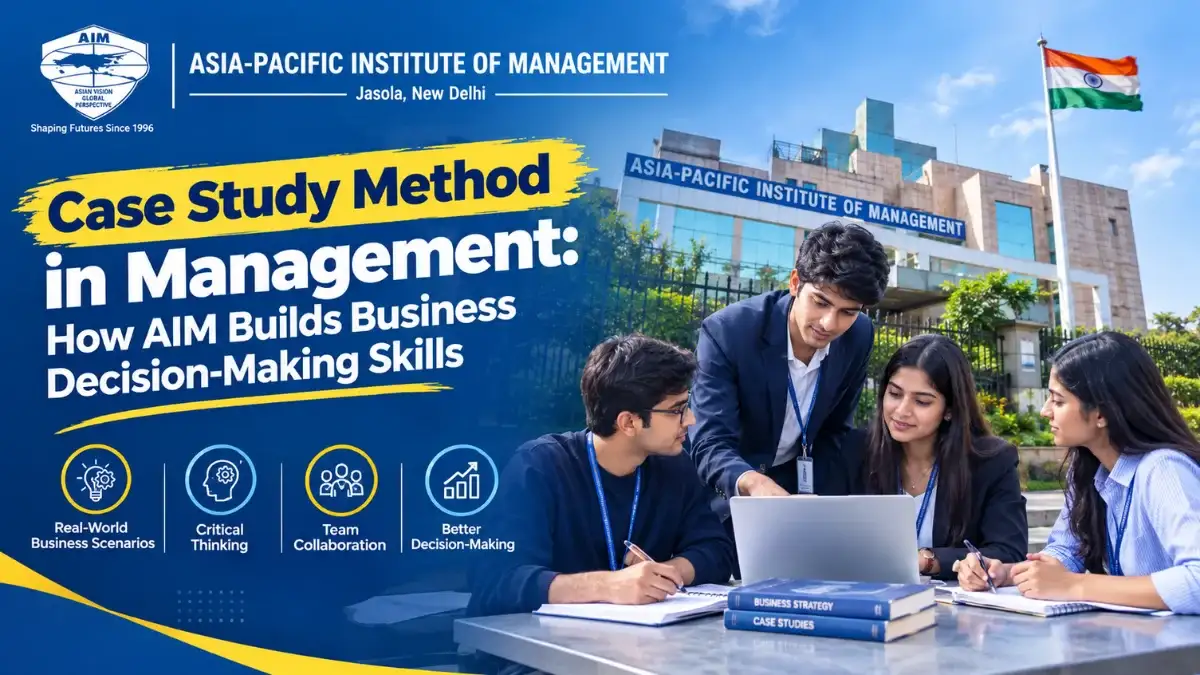
Case studies help students examine business situations, compare alternatives and defend decisions using evidence. Rather than treating every question as having one obvious answer, students learn to consider constraints, risks and competing priorities.
For example, a hypothetical retail company may be losing customers despite increasing its advertising budget. A management student could investigate customer feedback, pricing, product availability and competitor activity before recommending a course of action.
This process helps connect theory with decision-making. It can also develop the ability to explain why a recommendation makes sense, what evidence supports it and which uncertainties remain.
2. Simulations and Experiential Learning
Simulations allow students to practise decisions in structured learning environments. Depending on the exercise, participants may need to manage resources, respond to changing demand or balance competing business objectives.
A hypothetical operations simulation might require a team to increase production without allowing costs or inventory levels to rise excessively. Students would need to interpret information, coordinate responsibilities and review the consequences of their decisions.
AIM's published programme information includes simulations and experiential learning components. Their value to an individual student depends on participation, the design of the activity and the feedback received.
3. Projects, Internships and Research
Projects help students investigate a business question and communicate their findings. Internships can provide exposure to workplace processes, deadlines and professional responsibilities, while research work can strengthen analytical discipline.
AIM's published PGDM – General structure describes internship-related learning and a second-year research project. These components provide opportunities to apply management concepts beyond conventional examinations.
For students, the objective should be to learn from the work rather than simply add an activity to a résumé. A useful project experience includes a clearly defined responsibility, evidence-based analysis, feedback and a result that the student can explain during an interview. Bonus:From Orientation to Graduation: The Student Journey at Asia Pacific Institute of Management
Essential Business Skills Students Need Before Entering the Corporate World
Employers assess more than subject knowledge when considering management graduates. The ability to interpret information, work with colleagues, communicate professionally and take responsibility for assigned work can influence how effectively a new employee contributes to a team.
The following skills are useful areas of focus during management education.
Skill
Why it matters at work
How students can practise
Communication
Makes recommendations and updates easier to understand
Presentations, reports and group discussions
Analytical thinking
Helps evaluate evidence and compare options
Case studies, research and data-based assignments
Teamwork
Supports coordination across people and functions
Group projects and collaborative activities
Time management
Helps meet deadlines and manage competing priorities
Planning assignments and project milestones
Problem-solving
Supports practical responses to business challenges
Simulations and structured case analysis
Leadership
Helps coordinate work and take responsibility
Team roles, committees and project ownership
Digital and data literacy
Supports informed decisions using business information
Relevant software, analytics exercises and research
Professional ethics
Encourages responsible decisions and conduct
Ethical case discussions and reflective learning
These capabilities are not developed automatically by enrolling in a management programme. Students need to practise them, identify weaknesses and improve through feedback.
Communication and Presentation Skills
Management professionals frequently need to explain ideas to people with different priorities and levels of technical knowledge. A clear presentation should identify the problem, explain the supporting evidence and offer a practical recommendation.
Students can improve by structuring presentations around key findings rather than reading slides aloud. They can also practise answering questions, acknowledging uncertainty and explaining complex concepts in straightforward language.
Written communication deserves equal attention. Concise emails, well-organised reports and accurate documentation are useful in almost every management function.
Analytical Thinking and Business Judgement
Consider a hypothetical company experiencing declining sales. A weak analysis might immediately recommend additional advertising. A stronger analysis would examine customer segments, conversion rates, pricing, distribution and competitor activity before identifying possible causes.
This approach demonstrates the reasoning that management students should practise through assignments and projects.
Corporate work often involves shared goals, different viewpoints and limited time. Students can prepare by taking responsibility for specific tasks, coordinating with teammates and communicating delays early.
Leadership does not always mean holding a formal position. It can mean organising a project, resolving a disagreement fairly or ensuring that a team completes its responsibilities.
These behaviours become more credible when students can describe a specific situation, the action they took and what they learned from the outcome.
How Campus Activities Can Support Corporate Readiness
Learning outside formal classes can give students additional opportunities to practise professional behaviours. Clubs, committees, events and collaborative activities may require planning, coordination, communication and shared responsibility.
AIM's published student-life information describes clubs and committees as part of its broader campus environment. The opportunities available and the extent of individual participation can vary, so aspirants should check the current activities offered to their batch.
Students can approach campus activities with specific development goals:
For communication: Volunteer to present ideas, host discussions or explain project findings.
For teamwork: Help coordinate an event or take responsibility for a defined part of a group assignment.
For leadership: Plan activities, delegate tasks fairly and monitor progress.
For professional networking: Practise introducing yourself, asking relevant questions and following up appropriately.
For time management: Balance extracurricular commitments with academic deadlines.
The aim is not to participate in everything. It is to select meaningful opportunities and reflect on the skills each experience develops.
AIM Career Preparation: Turning Learning into Employability
AIM career preparation should be assessed through the opportunities available to students and the extent to which those opportunities help them build demonstrable skills. Curriculum, practical assignments, internships and professional-development activities can contribute to readiness, but students should also investigate the institute's current career support arrangements.
AIM's website provides information about its Centre for Corporate Relations, internship and industry activities, placement process and career-related resources. Applicants can use these official pages to understand the published support structure and ask what is available for their programme and admission batch.
Build a Résumé Around Evidence
A résumé is more convincing when it describes what a student actually did rather than relying on broad claims such as “excellent leadership” or “strong analytical skills”.
For example, a student who completed a hypothetical market research project could describe the research question, the method used, the findings presented and the recommendations developed. Any numerical results should be included only when they are genuine and documented.
Students should maintain a record of projects, presentations, internships, certifications and responsibilities throughout the programme. This makes it easier to prepare accurate applications and discuss experience during interviews.
Prepare for Interviews and Group Discussions
Interview preparation requires more than memorising standard answers. Students should understand their own projects, explain their decisions and discuss what they would do differently with additional information.
A useful preparation routine includes practising introductions, reviewing business news, explaining a case recommendation aloud and preparing examples of teamwork or problem-solving. Candidates should also research the organisation and role before an interview.
For group discussions, the objective is to contribute relevant ideas, listen carefully and engage respectfully with differing opinions. Speaking frequently is not the same as contributing thoughtfully.
Develop a Professional Learning Habit
Corporate expectations and business tools change over time. Management graduates benefit from staying curious, seeking feedback and identifying skills that need further development.
Students can follow industry developments relevant to their specialisation, practise appropriate digital tools and review how organisations respond to market changes. The goal is not to claim expertise in every emerging technology, but to develop the judgement to learn what a particular role requires.
Which Career Paths Can Management Students Prepare For?
Management education can support preparation for different entry-level business roles, depending on the programme, specialisation, prior experience and individual capabilities. A PGDM qualification alone does not guarantee eligibility for every position or a particular employment outcome.
Career area
Examples of entry-level roles
Useful capabilities
Marketing
Marketing executive, market research analyst
Customer understanding, communication, research
Finance
Financial analyst trainee, finance executive
Financial concepts, numerical analysis, accuracy
Human resources
HR executive, recruitment coordinator
Communication, organisation, interpersonal skills
Operations
Operations executive, process coordinator
Planning, problem-solving, process understanding
Business analytics
Junior business analyst, reporting analyst
Data interpretation, logical reasoning, presentation
These are illustrative role examples, not a list of guaranteed placements or confirmed openings at AIM. Job requirements differ by employer, and some analytical or finance positions may require specific technical skills or relevant prior experience.
Students should explore career options before choosing projects and electives. Reviewing job descriptions can reveal recurring requirements, such as spreadsheet proficiency, research skills, client communication or familiarity with particular analytical tools. Bonus:PGDM at the Asia Pacific Institute of Management Worth It?
How to Evaluate a Business School's Corporate Readiness Approach
When comparing institutes, look for verifiable details rather than broad promises about employability. A structured evaluation helps aspirants understand whether a programme provides opportunities aligned with their career goals.
Consider the following questions:
Curriculum: Does the programme combine core management knowledge with relevant practical work?
Projects: Are assignments supervised, assessed and connected to meaningful business questions?
Internships: What are the current arrangements, responsibilities and evaluation processes?
Career support: What preparation is available for résumés, interviews, group discussions and employer interactions?
Industry exposure: Which activities are offered, and how frequently do they occur?
Placement evidence: What is the reporting batch, how many students are included and what placement metric is being reported?
For placement comparisons, examine the reporting period, eligible student population, number placed and salary definitions. Cost to company (CTC) is not the same as take-home pay, and outcomes from one batch should not be treated as a guarantee for future students.
For AIM specifically, applicants should confirm current programme details and career-support arrangements directly through the institute's published information and admissions team. Comparing the same criteria across shortlisted institutes will make the decision more useful than relying on promotional claims alone.
Conclusion
Preparing for the corporate world is a gradual process that combines management knowledge, practical experience and professional skill development. For management aspirants, career readiness depends not only on what they learn in the classroom but also on how effectively they apply concepts, collaborate with others and communicate their decisions. AIM's published PGDM structure includes several learning formats that can support this transition, including projects, case studies, simulations, internships and research. Before choosing a programme, students should examine its current curriculum, career-development support and placement evidence. Active participation and continuous learning remain essential to making the most of management education.
Inviting Applications for PGDM 2027–29
Explore AIM PGDM and build skills for a future-ready management career.
Dr. Vikas Gupta is a distinguished academic in the education and research domain, specializing in finance and related interdisciplinary studies. He is known for his...
Explore these answers to understand corporate readiness, practical learning at AIM and how management aspirants can prepare for professional responsibilities.
01.
What is career readiness for management students?
Career readiness means developing the knowledge, practical skills and professional behaviours needed to contribute effectively at work. It includes communication, analytical thinking, teamwork, problem-solving, adaptability and ethical judgement, alongside the management concepts learned during a programme.
02.
How does AIM prepare PGDM students for corporate work?
AIM’s published PGDM – General structure includes case studies, simulations, live projects, internships and research work. These formats provide opportunities to apply management concepts in practical contexts. Students should confirm the latest programme structure and career-development support for their intended admission session.
03.
Which business skills should management students develop first?
Students should prioritise clear communication, analytical thinking, teamwork and time management. These capabilities support academic projects and many entry-level business responsibilities. They can then build role-specific skills, such as financial analysis, market research or data interpretation, according to their career interests.
04.
How can students improve their employability during a PGDM?
Students can improve their employability by completing meaningful projects, seeking feedback, developing relevant technical skills and practising interviews. They should document genuine achievements and learn to explain their contributions clearly. Employability depends on individual preparation, role requirements and employer expectations.
05.
Why are internships important for corporate readiness?
Internships can expose students to workplace communication, deadlines, business processes and professional responsibilities. They also provide opportunities to test classroom knowledge in a working environment. The quality of the learning experience depends on assigned responsibilities, supervision and the student’s active participation.
06.
Does a PGDM guarantee a management job?
No. A PGDM can provide management knowledge and opportunities to develop relevant skills, but it does not guarantee employment, a particular salary or a specific role. Outcomes depend on factors including individual capabilities, experience, employer requirements and prevailing market conditions.
07.
How should aspirants compare corporate readiness at different institutes?
Compare curriculum, project work, internships, career-development support and industry interaction. Ask how activities are supervised and assessed, and review placement reports for their batch, population and salary definitions. Use consistent criteria across institutes instead of relying on general claims about employability.
08.
How can students demonstrate corporate readiness in interviews?
Students should prepare specific examples from projects, internships, presentations or team activities. Explain the situation, the responsibility undertaken, the actions performed and the outcome. Be prepared to discuss mistakes, feedback and lessons learned, using only genuine experiences and verifiable results.











.webp) Call Us
Call Us