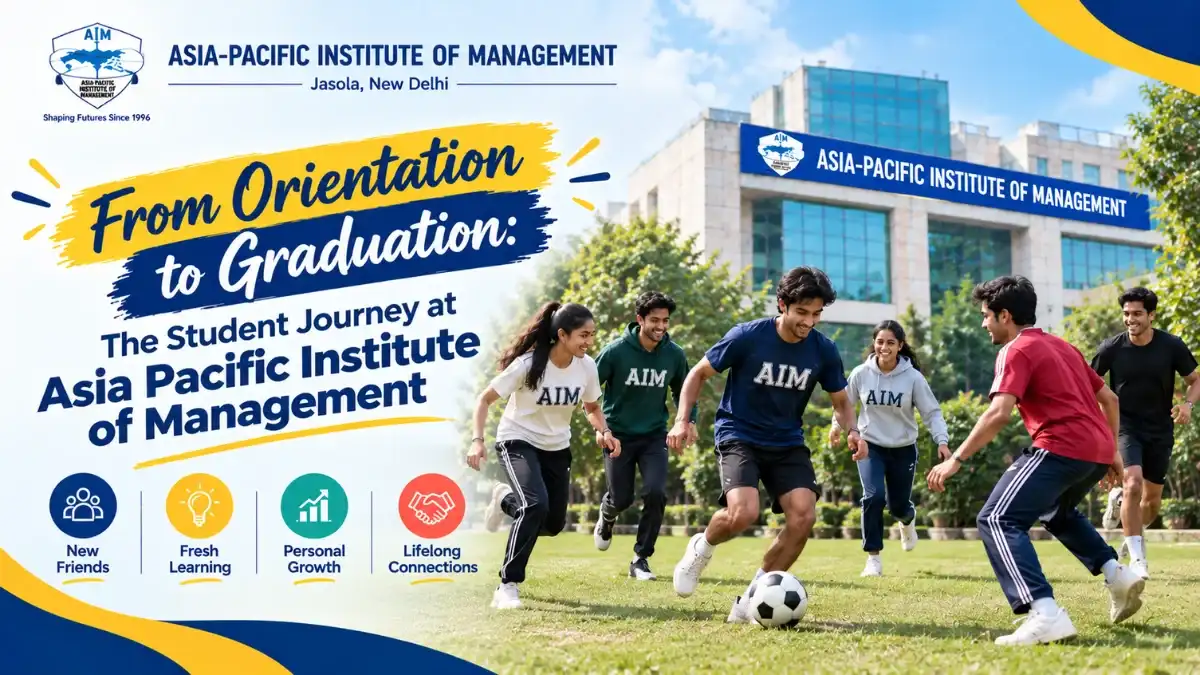
From Orientation to Graduation: The Student Journey at Asia Pacific Institute of Management
Posted on 03 Oct 2026
By Dr. Vikas Gupta
Introduction
The management student journeyis more than attending classes and completing examinations. For students entering a postgraduate management programme, it can involve academic learning, peer interaction, presentations, projects, internships, campus activities and preparation for professional opportunities. At Asia Pacific Institute of Management (AIM), the published PGDM structure describes a learning environment that combines classroom education with experiential learning, case studies, simulations, projects, internships and industry exposure.
For students and parents, understanding this journey can make the transition into business school easier. The experience also changes over time: orientation introduces students to the institution, the early academic phase builds management foundations, later stages encourage application and specialisation, and the final phase focuses increasingly on professional readiness.
Hospital Management
Advance your clinical career with specialized health management training. Elevate your potential!
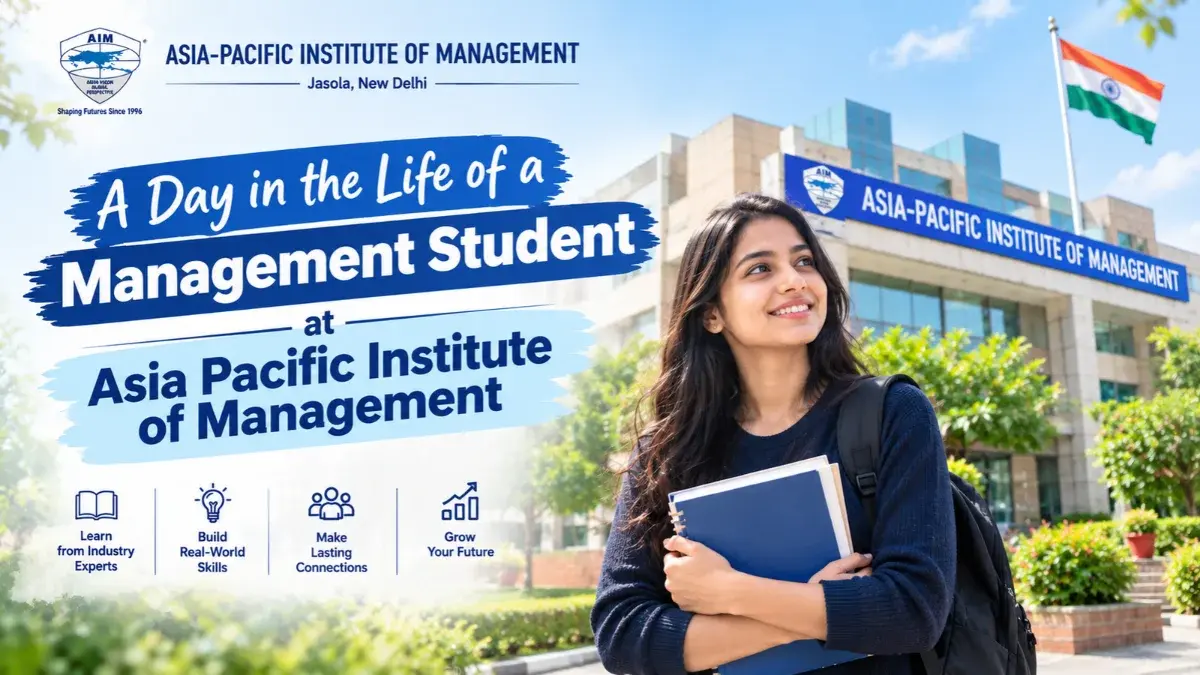
The management student journey typically progresses from orientation and academic foundations to projects, internships, professional development and graduation.
A PGDM student journey includes both classroom learning and opportunities to apply management concepts through practical activities.
AIM's published student-life information highlights campus facilities, clubs, committees, events and peer interaction as parts of the broader student experience.
The journey can help students develop communication, teamwork, analytical thinking, presentation and problem-solving skills alongside subject knowledge.
Students and parents should view business-school education as a gradual process in which academic learning and professional preparation develop throughout the programme.
Starting the Journey: Orientation and the First Weeks
The PGDM student journey begins before students become comfortable with the academic rhythm. Orientation and the first few weeks provide an opportunity to understand the institution, meet classmates, become familiar with facilities and learn how the programme is organised.
For a new student, this stage can involve:
Understanding the academic schedule
Meeting faculty members and classmates
Becoming familiar with campus facilities
Learning how assignments and presentations are handled
Understanding available student activities
Establishing an initial study routine
AIM's published campus information describes facilities including classrooms, library resources, IT infrastructure, auditorium, cafeteria and spaces supporting student activities.
The first few weeks can also be socially significant. Students entering from different undergraduate backgrounds may bring different interests and experiences. Group discussions and classroom interaction can gradually help students build a peer network.
The Foundation Phase: Learning How Management Works
After orientation, the business school journey moves into its academic foundation. Students encounter management concepts that can form the basis for later specialisation.
Depending on the programme structure, foundational management education can cover areas such as:
Marketing
Finance
Human resource management
Operations
Business communication
Economics
Business analytics
Strategic management
The purpose of this stage is not simply to memorise concepts. Management education often asks students to understand how different business functions interact.
For example, a marketing decision can affect revenue, operations and customer service. A financial decision can influence investment and growth. An operational change can affect cost and customer experience.
Understanding these connections can help students develop a broader perspective before moving deeper into their areas of interest.
Learning Through Cases, Projects and Discussions
The management education experience can become more interactive as students move beyond foundational concepts.
AIM's published PGDM information describes case studies, simulations, experiential learning, design thinking and projects as components of its learning approach.
Case-based learning can place students in situations where they need to examine a business problem and consider possible solutions. Projects can require students to research a topic, analyse information and present their conclusions.
This style of learning can encourage students to ask:
What is the business problem?
What information is available?
What assumptions are being made?
What alternatives should be considered?
How can the recommendation be communicated clearly?
These questions are relevant beyond the classroom because managers frequently need to interpret information and make decisions with incomplete or changing information.
Building Confidence Through Presentations and Teamwork
Another important stage in the AIM student experience is learning to work effectively with other people.
Management students may participate in group assignments, presentations and discussions. These activities can help students practise:
Communication
Listening
Presentation
Delegation
Coordination
Time management
Conflict resolution
Leadership
Teamwork can initially feel unfamiliar. Students may have different approaches to research, deadlines and presentations. Over time, learning to divide responsibilities and coordinate towards a shared objective can become an important part of the business-school experience.
Presentations also provide an opportunity to develop confidence in explaining ideas to an audience.
For parents, this is an important aspect of management education to consider. A student's development is not limited to examination marks; communication, collaboration and the ability to present ideas can also form part of the wider learning experience.
Exploring Campus Life and Student Activities
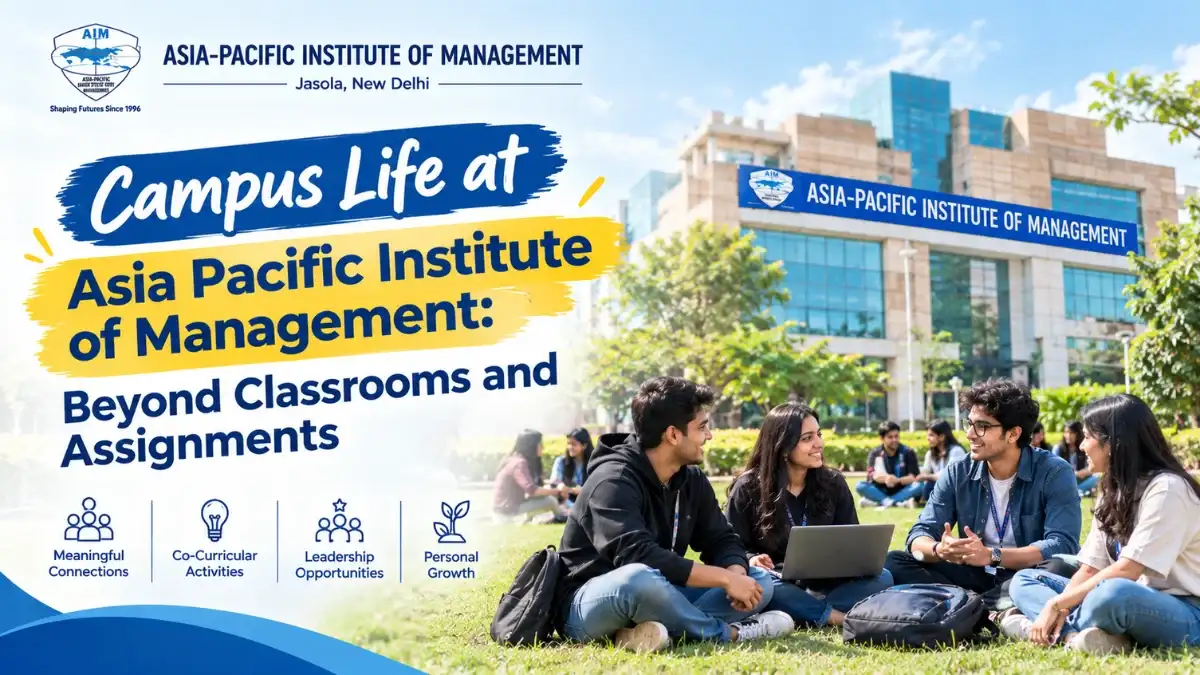
The PGDM campus experience extends beyond classrooms.
AIM's published student-life information describes clubs, committees, sports, events, cultural activities and other opportunities for student participation.
Students do not need to participate in every activity. Instead, they can explore different opportunities and gradually identify activities that match their interests.
For example:
Students interested in leadership may explore committees.
Students interested in communication may participate in presentation or event-related activities.
Students interested in sports can explore available sporting opportunities.
Students interested in professional development can participate in relevant events and activities.
Campus activities can also create informal opportunities to interact with students outside one's immediate classroom group.
Moving Toward Practical Exposure
As the programme progresses, students can begin connecting management concepts with practical business situations.
AIM's current PGDM information describes experiential learning, industry interaction, projects and internship components.
Practical exposure can help students understand how classroom concepts translate into workplace situations.
For example, a student working on a marketing project may need to understand customer behaviour. An analytics-focused student may need to interpret data and communicate insights. A finance student may examine financial information to support a business decision.
The practical experience will vary according to the programme, project, internship and student's own participation. Students should therefore treat internships and projects as opportunities to apply what they have learned rather than simply as items to add to a résumé.
The Internship Stage: Applying Classroom Learning
For many management students, the internship represents an important transition from academic learning to workplace exposure.
AIM's published PGDM programme information includes a summer internship as part of the programme structure.
During an internship, students may encounter:
Workplace communication
Reporting structures
Project deadlines
Team responsibilities
Business processes
Client or customer considerations
Professional expectations
The value of an internship is not only the organisation's name. Students can also learn from the responsibilities assigned to them, the problems they encounter and how they respond to professional feedback.
Before an internship, students can prepare by reviewing their core concepts, improving communication skills and becoming comfortable with basic professional tools.
Discovering Career Interests
The PGDM student journey can also help students refine their career interests.
Students may enter management school with a broad goal such as “I want to work in business” and gradually discover more specific interests.
A student may become interested in:
Marketing and brand management
Finance and financial analysis
Business analytics
Consulting
Human resources
Operations
Sales and business development
Product management
Digital business
The first choice does not necessarily need to be permanent. Exposure to different subjects, projects and professional experiences can help students understand which areas they enjoy and where their skills are strongest.
Students can use this period to ask themselves practical questions:
Which subjects do I enjoy studying?
What kind of problems do I like solving?
Do I prefer working with people, numbers, technology or customers?
Which industry interests me?
Which skills do I need to strengthen?
Developing Professional Skills Along the Way
A successful management education experience involves more than technical or academic knowledge.
Throughout the programme, students can work on skills such as:
Skill
How Students Can Develop It
Communication
Presentations, discussions and group work
Analytical thinking
Cases, projects and data-based assignments
Teamwork
Group projects and student activities
Leadership
Committees, projects and team responsibilities
Time management
Managing multiple academic deadlines
Problem-solving
Business cases and practical assignments
Professional confidence
Presentations, interviews and industry interaction
Business awareness
Reading, projects and industry exposure
These skills develop gradually. Students do not need to master everything at the beginning of the programme.
The first year can be viewed as a period of exploration and foundation-building, while later stages can provide more opportunities to apply and refine those capabilities.
As students move towards the later part of the programme, attention can increasingly shift towards professional readiness.
This may involve preparing for:
Interviews
Résumé development
Professional communication
Presentations
Industry roles
Career discussions
Final academic projects
AIM's programme information describes a capstone project as part of the PGDM structure, providing an opportunity for students to apply management learning to a substantial project.
A final project can bring together skills developed throughout the programme: research, analysis, communication, teamwork and business understanding.
From Student to Management Graduate
The final stage of the business school journey is not simply about completing examinations. Graduation represents the transition from structured academic learning to the next professional or academic step.
By this point, students may have accumulated experience through:
Classroom learning
Group projects
Presentations
Case discussions
Student activities
Internships
Industry interactions
Capstone or project work
The exact experiences differ from student to student. What matters is how students use these opportunities to understand their interests, develop relevant capabilities and prepare for the next stage.
For parents, this progression can provide a useful way to think about management education. The outcome is not created by one semester or one activity; it develops through a sequence of academic and practical experiences.
A Simple View of the AIM Student Journey
Stage
Student Focus
Development Area
Orientation
Understand the campus and programme
Adaptation
Foundation
Learn management concepts
Academic knowledge
Early Projects
Work with classmates
Teamwork
Presentations
Explain ideas clearly
Communication
Campus Activities
Explore interests
Collaboration and participation
Internship
Experience a professional environment
Workplace learning
Career Preparation
Identify roles and develop readiness
Professional skills
Capstone
Apply learning to a substantial project
Integration
Graduation
Transition to the next stage
Career or further education
This is a general representation of the journey, not an official individual student timetable. Programme schedules and activities can change by batch and academic year.
What Parents and Students Should Know
Choosing a management programme is a significant decision for both students and families. Looking only at classroom subjects provides an incomplete picture.
Students and parents can also consider:
Programme structure
Learning methods
Internship opportunities
Student activities
Campus facilities
Career-development support
Total programme costs
Location and accommodation requirements
Recognition and applicable regulatory requirements
It is also useful to distinguish between what an institution formally provides and what an individual student chooses to pursue. Two students on the same programme can have different experiences because their participation in projects, activities, internships and peer networks may differ.
Making the Most of the Journey
Students can take several practical steps to make their management-school experience more meaningful.
Participate actively. Classroom discussions and projects become more useful when students engage with them.
Build relationships gradually. Classmates, faculty and professional contacts can become part of a student's wider network.
Keep learning beyond the syllabus. Business news, company developments and industry trends can provide context for classroom concepts.
Use projects strategically. Choose topics that allow you to explore areas of genuine career interest where possible.
Treat feedback as useful information. Presentations, assignments and internships can reveal areas for improvement.
Stay consistent. Academic performance, skills and professional confidence usually develop through repeated practice rather than one-time effort.
The journey from orientation to graduation at Asia Pacific Institute of Management can involve several stages of development: becoming familiar with the campus, building management fundamentals, participating in projects and discussions, developing teamwork and communication skills, gaining practical exposure and preparing for professional opportunities. The management student journey is therefore not a single experience but a gradual progression. Students bring their own interests and goals to this process, while parents can support them by understanding the broader role of management education. The most valuable experiences are often those where students actively participate, reflect on what they learn and gradually connect classroom knowledge with their future aspirations.
Hospital Management
Advance your clinical career with specialized health management training. Elevate your potential!
Dr. Vikas Gupta is a distinguished academic in the education and research domain, specializing in finance and related interdisciplinary studies. He is known for his...
These answers address common questions students and parents may have about the PGDM journey, campus experience, practical learning and transition to graduation.
01.
What does the management student journey at AIM include?
The journey can include orientation, classroom learning, case studies, projects, presentations, student activities, internships, industry exposure and final academic work. The exact sequence and activities depend on the programme, batch and academic calendar.
02.
What can new students expect during orientation?
Orientation generally helps students become familiar with the institution, programme structure, classmates and available resources. It can also provide an introduction to the academic environment and help students begin adjusting to management-school life.
03.
What is the PGDM campus experience like?
The PGDM campus experience can extend beyond classes through peer interaction, clubs, committees, events, sports and other activities. AIM’s published campus information describes several facilities and student activities, although individual participation and schedules can vary.
04.
Does the PGDM include practical learning?
AIM’s published PGDM information describes experiential learning, case studies, simulations, projects and internship components. The specific practical activities students undertake depend on the programme and academic schedule.
05.
When does career preparation begin during the PGDM?
Career preparation can develop throughout the programme rather than starting only near graduation. Students can build communication, analytical, teamwork and presentation skills through coursework, projects and practical experiences before moving into more focused career preparation.
06.
How important is the internship in the student journey?
An internship can provide an opportunity to experience workplace expectations and apply classroom knowledge in a professional setting. AIM’s current PGDM programme information includes a summer internship as part of its programme structure.
07.
What role do campus activities play in management education?
Campus activities can provide additional opportunities to practise teamwork, communication, organisation and leadership. Students can explore clubs, committees and events according to their interests while balancing these activities with academic responsibilities.
08.
What happens towards the end of the PGDM journey?
Later stages can involve career preparation, professional development and substantial academic work such as a capstone project. Students then transition towards employment, further education or another professional pathway based on their individual plans.












.webp) Call Us
Call Us