

24 Oct 2026
Global Exposure in Management Education: Does an International Immersion Programme Help?


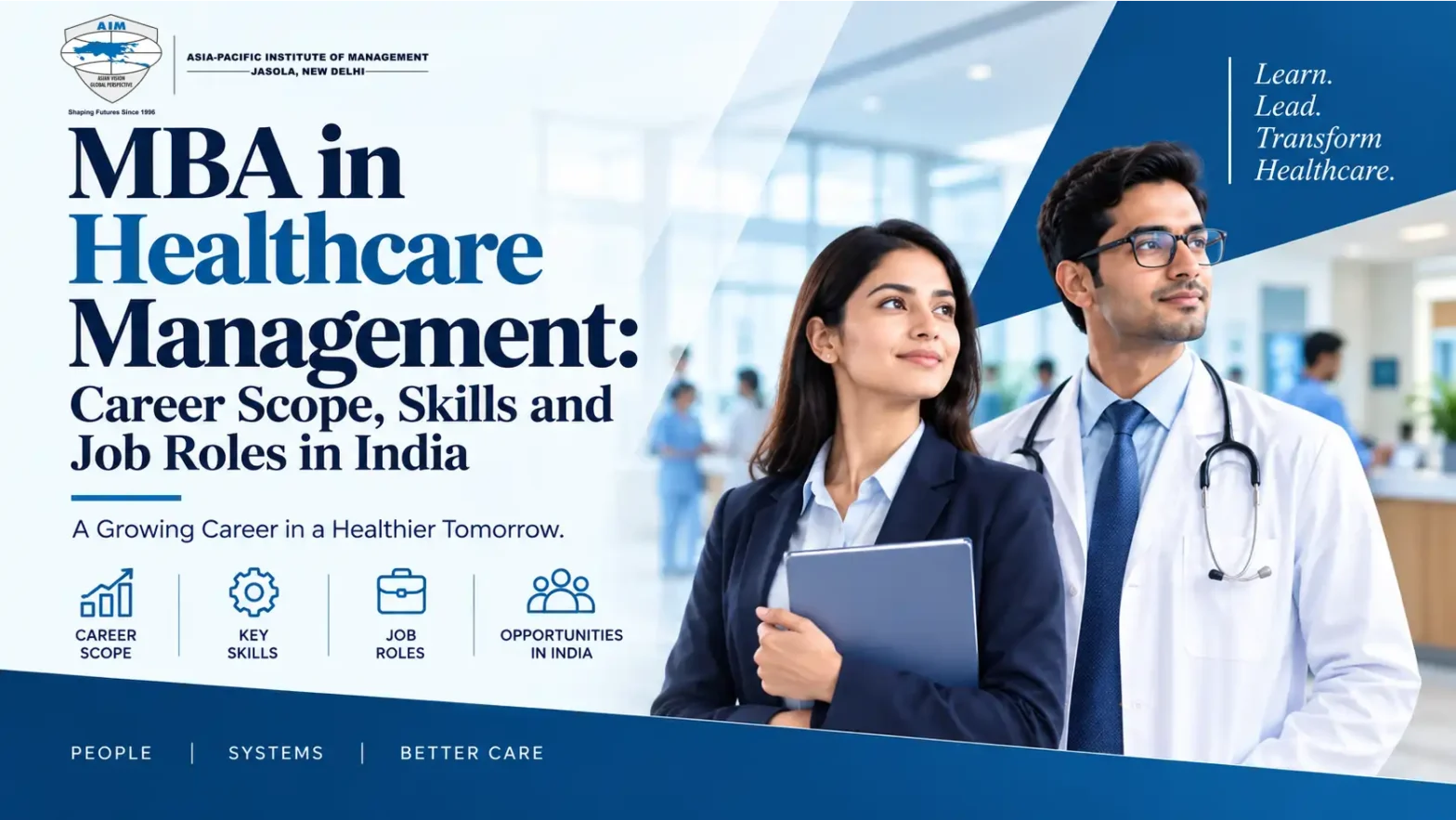
Hospitals run on clinical skill, but they also run on bed use, billing, staffing, supplies, and patient experience. Someone has to manage all of it, and that need is growing as private hospital chains, diagnostic networks, and health-tech firms expand. Many graduates are now exploring the healthcare management career in India and asking how specialised training can prepare them for it.
This is where management education built for healthcare fits in.
An MBA in Healthcare Management covers healthcare operations, finance, quality, policy, and analytics. Asia Pacific Institute of Management, New Delhi, offers this programme along with a one-year Executive MBA in Healthcare.
It suits clinicians who want to move into management and non-clinical graduates who want a career in the health sector. A good programme links classroom learning with hospital visits and projects.
Careers in this field can begin with hospitals, diagnostic chains, pharma and medical device companies, insurers, TPAs, health-tech start-ups, or consulting firms. Public health organisations and NGOs also hire managers.
Roles include operations manager, quality manager, patient experience lead, business development manager, supply chain manager, and insurance relations executive. Growth in smaller cities is creating new openings outside the metros.
A hospital administration career involves planning services, managing staff and budgets, ensuring regulatory compliance, supporting accreditation such as NABH, and handling vendors and equipment purchases. Crisis management is part of the job.
Professionals often start as an executive or trainee, then move up to manager, general manager, and eventually chief operating officer. The work can mean long hours and emergencies, so patience and a calm temperament matter.
Healthcare analytics jobs exist because hospitals generate data from records, billing, labs, and pharmacy. Analysts use this data to reduce waiting times, improve bed occupancy, cut claim rejections, and track patient outcomes.
Roles include healthcare data analyst, revenue cycle analyst, quality analyst, and clinical operations analyst. Tools such as SQL, Excel, and Power BI are the common starting point, and careful handling of patient data is non-negotiable.
AIM sets a recognised bachelor's degree with at least fifty per cent marks as its general admission requirement for MBA healthcare management eligibility. Candidates can apply with a valid score in CAT, XAT, CMAT, MAT, ATMA, or GMAT, after which they go through a group discussion and a personal interview.
Programme-specific rules, especially for the executive course, can differ, so applicants should read the relevant programme page or speak to the admissions cell before applying.
Healthcare management is a steady, purposeful career for people who want to improve how care is delivered without being clinicians themselves. Developing skills in operations, data, and communication is a good foundation. AIM in New Delhi offers programmes designed for this sector.


24 Oct 2026
Global Exposure in Management Education: Does an International Immersion Programme Help?

24 Oct 2026
PGDM Fees vs Return on Investment: How to Evaluate a B-School

24 Oct 2026
Fintech and BFSI Careers in India: Skills, Roles and Management Pathways

24 Oct 2026
Digital Marketing and AI: Career Opportunities for Management Graduates

24 Oct 2026
Business Analytics vs Data Science: Career Options After Graduation






BBA Brochure

PGDM Brochure
MBA Brochure



.webp) Call Us