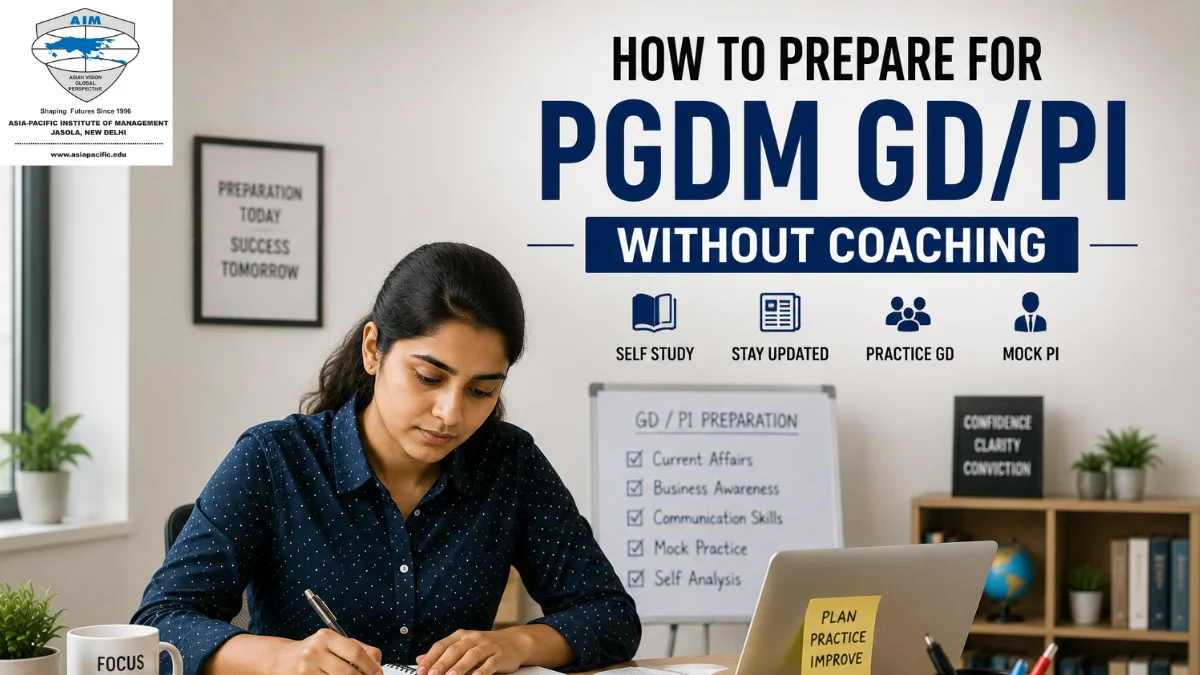
Clearing a management entrance exam is only the first step in your admission journey. The final selection process for many PGDM programs includes Group Discussions (GD), Personal Interviews (PI), and, in some cases, Written Ability Tests (WAT).
Many aspirants believe that professional coaching is essential to succeed in these rounds. However, with the right strategy, consistent practice, and access to quality resources, you can excel without enrolling in expensive coaching programs.
Effective PGDM GD PI preparation is less about memorizing answers and more about developing communication skills, business awareness, critical thinking, and self-confidence.
This guide explains how to prepare for PGDM GD and PI rounds independently and maximize your chances of securing admission.
The PGDM selection process typically includes entrance exam scores, Group Discussions (GD), Personal Interviews (PI), and sometimes Written Ability Tests (WAT). These rounds assess communication skills, business awareness, leadership potential, analytical thinking, and overall fit for management education.
While the process varies across institutions, the objective remains the same: identifying candidates with strong managerial potential.
Why GD and PI Matter in PGDM Admissions
Strong entrance exam scores alone do not guarantee admission.
Selection panels evaluate candidates across multiple dimensions.
Communication Skills
Managers must communicate ideas effectively.
Leadership Potential
Institutions seek candidates who can influence and inspire others.
Problem-Solving Ability
Candidates should demonstrate analytical thinking.
Business Awareness
Awareness of current affairs and industry trends is essential.
Personality and Attitude
Interviewers assess confidence, adaptability, and learning orientation.
GD and PI rounds help institutions evaluate these qualities.
Can You Prepare for PGDM GD/PI Without Coaching?
Yes. Thousands of candidates successfully prepare without formal coaching every year.
The key advantages of self-preparation include:
Flexibility
Personalized learning pace
Cost-effectiveness
Greater self-awareness
Success depends on consistency and structured preparation.
Step-by-Step PGDM GD PI Preparation Strategy
Step 1: Understand the Evaluation Criteria
Before preparing, understand what interviewers assess.
Common evaluation areas include:
Communication skills
Confidence
Clarity of thought
Leadership potential
Business awareness
Academic knowledge
Preparation becomes more effective when you understand the expectations.
Step 2: Build Strong Self-Awareness
Many interview questions focus on your personal journey.
Prepare answers for:
Tell me about yourself
Why do you want to pursue a PGDM?
What are your strengths and weaknesses?
What are your career goals?
Avoid memorized responses.
Focus on authenticity and clarity.
Step 3: Improve Communication Skills
Strong communication is essential for both GD and PI rounds.
Practice regularly by:
Speaking in front of a mirror
Recording your responses
Participating in group discussions with peers
Reading aloud
Focus on:
Clarity
Structure
Confidence
Step 4: Stay Updated on Current Affairs
Interview panels frequently ask questions about:
Business trends
Economic developments
Technology
Government policies
Global events
Spend 20 to 30 minutes daily reading quality news sources.
Focus on understanding issues rather than memorizing facts.
Step 5: Revise Academic Concepts
Interviewers often ask questions related to your graduation subjects.
Review:
Core concepts
Key projects
Internship experiences
Be prepared to discuss your academic background confidently.
Step 6: Conduct Mock Interviews
Mock interviews help reduce anxiety and improve performance.
Personal interviews evaluate your personality, aspirations, and fit for management education.
Be Authentic
Interviewers value honesty.
Maintain Positive Body Language
Focus on:
Eye contact
Posture
Facial expressions
Answer Concisely
Avoid lengthy or unrelated responses.
Demonstrate Career Clarity
Explain why you want to pursue management education.
Stay Calm Under Pressure
Interviewers may ask challenging questions to assess composure.
Take time to think before responding.
Frequently Asked PGDM Interview Questions
Prepare responses for questions such as:
Tell us about yourself.
Why do you want to pursue a PGDM?
Why should we select you?
What are your short-term and long-term goals?
What are your strengths and weaknesses?
Tell us about a leadership experience.
What current business trend interests you?
Practice answering these questions naturally.
Mistakes to Avoid During GD and PI
Memorizing Answers
Scripted responses sound artificial.
Ignoring Current Affairs
Business awareness is essential.
Speaking Without Listening
Effective communication includes active listening.
Overconfidence
Confidence should be balanced with humility.
Lack of Career Clarity
Interviewers appreciate candidates with defined goals.
How Specialization Interests Can Strengthen Your Responses
Your specialization preferences can help demonstrate career clarity.
PGDM in Marketing
Students interested in PGDM in Marketing, Post Graduate Diploma in Marketing, PGDM in Digital Marketing, or PGDM in Marketing Management should discuss:
Consumer trends
Brand strategies
Digital transformation
PGDM in Data Analytics
Students exploring PGDM in Data Analytics, Big Data Analytics Courses, BDA Courses, or Big Data Analytics in Cloud Computing should highlight:
Analytical thinking
Data-driven decision-making
Technology trends
PGDM in Banking and Finance
Students considering PGDM in Banking and Finance, Post Graduate Diploma in Financial Management, or PGDM in Banking should demonstrate awareness of:
Financial markets
Economic trends
Banking innovations
Connecting your interests to career goals strengthens interview performance.
The Value of Dual Specialization in PGDM
A Dual Specialization in PGDM can enhance career flexibility and broaden opportunities.
Candidates can discuss how interdisciplinary learning supports:
Cross-functional understanding
Adaptability
Diverse career pathways
Interview panels often appreciate candidates who understand evolving business requirements.
Choosing the Right PGDM Program Beyond GD and PI
Strong GD and PI performance is important, but selecting the right institution matters equally.
Students evaluating:
PGDM in Delhi
PGDM Courses in Delhi NCR
PGDM Course in Delhi
PGDM Colleges in Delhi NCR
PGDM Institute in Delhi
should assess factors beyond admission criteria.
Industry-Oriented Curriculum
Programs should align with current business trends.
Self-Assessment Checklist for PGDM GD/PI Preparation
Rate yourself from 1 to 5.
Skill Area
Rating (1–5)
Communication Skills
Business Awareness
Confidence
Academic Knowledge
Career Clarity
Leadership Potential
Identify areas that require improvement and create a preparation plan.
Conclusion
Successful PGDM GD PI preparation does not require expensive coaching programs. It requires discipline, self-awareness, consistent practice, and a willingness to learn.
Focus on improving communication skills, staying informed about current events, refining your career goals, and practicing regularly through mock interviews and group discussions.
Remember, selection panels are not looking for perfect answers. They are looking for candidates who demonstrate potential, curiosity, confidence, and a genuine interest in management education.
PGDM Admissions
Secure Admission Success
Access personalized PGDM admission support, preparation strategies, and career-focused mentorship to stand out in competitive selection processes today.
Dr. Vikas Gupta is a distinguished academic in the education and research domain, specializing in finance and related interdisciplinary studies. He is known for his...












.webp) Call Us
Call Us




