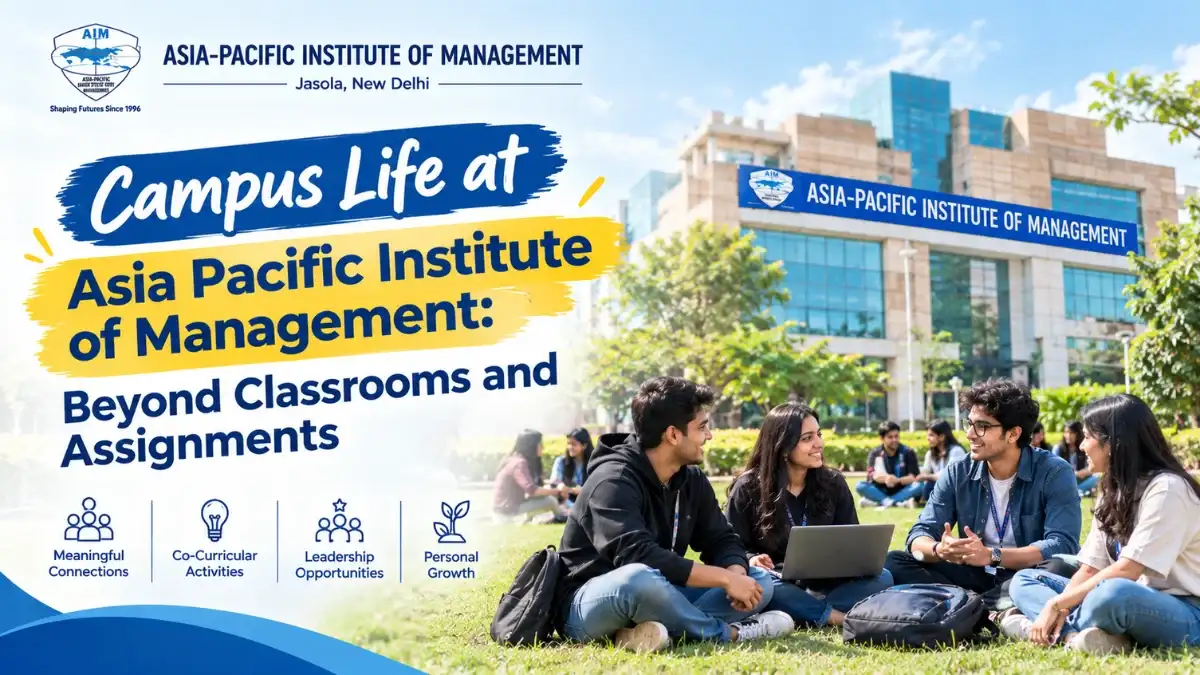
Campus Life at Asia Pacific Institute of Management: Beyond Classrooms and Assignments
Posted on 30 Sep 2026
By Dr. Vikas Gupta
Introduction
Asia Pacific Institute campus life extends beyond attending lectures and completing assignments. For students and parents evaluating a management institute, the everyday environment can be just as important as the academic programme. Campus facilities, peer interaction, student activities, study resources, events and accommodation can all shape the experience of spending two years in a business school.
Asia-Pacific Institute of Management (AIM) is located in Jasola Vihar, New Delhi. Its published campus information describes classrooms, a library and resource centre, IT infrastructure, an auditorium, cafeteria, student activities, clubs, sports and events. The institute also provides information about hostel facilities and its broader student-life environment.
This campus guide looks at these elements from a student and parent perspective, while distinguishing published facilities from the individual experience students may have on campus.
Inviting Applications for PGDM 2027–29
Explore AIM PGDM and build skills for a future-ready management career.
Asia Pacific Institute campus life combines academic learning with peer interaction, student activities, events and opportunities beyond regular classroom sessions.
AIM Delhi campus life includes learning infrastructure such as smart classrooms, library resources, IT facilities, an auditorium and cafeteria.
Asia Pacific student life includes clubs, sports, events and other student activities, with the exact experience depending on participation and the academic schedule.
Parents and students can use Asia Pacific campus facilities and official campus information to evaluate practical factors such as learning resources, accommodation and daily convenience.
Asia Pacific Institute photos can provide a visual reference, but a campus visit can offer additional context about the physical environment and everyday student experience.
Asia Pacific Institute campus life combines classroom learning with group work, presentations, peer interaction, student activities and events. The exact routine varies according to the programme, academic calendar, scheduled activities and individual participation.
For management students, campus life is rarely limited to sitting through lectures. Coursework can involve discussions, projects, presentations and collaborative assignments. Outside scheduled classes, students may use academic resources, meet classmates, participate in activities or spend time in common campus spaces.
AIM's published student-life information describes a broader environment involving clubs, sports and events alongside its academic infrastructure.
Exploring the AIM Delhi Campus
The AIM Delhi campus is located in the Institutional Area of Jasola Vihar, New Delhi. The campus infrastructure published by AIM includes smart classrooms, laboratories, library and knowledge-resource facilities, IT infrastructure, collaborative learning areas and other student-oriented spaces.
For a prospective student, the campus can be evaluated through two questions:
Does the infrastructure support the way management students are expected to learn?
Does the overall environment meet practical expectations for everyday student life?
For parents, additional considerations may include accommodation, food, security arrangements, accessibility and the availability of academic resources.
Asia Pacific Campus Facilities That Support Student Life
The institute's published infrastructure information identifies several facilities designed to support academic and campus activities. These include smart classrooms, a library and knowledge resource centre, IT infrastructure, laboratories and collaborative learning spaces.
Smart Classrooms
AIM's infrastructure page describes classrooms equipped with digital boards and technology-enabled learning facilities. For management education, classrooms can support presentations, discussions and technology-assisted teaching in addition to conventional instruction.
Library and Resource Centre
The library, referred to by AIM as the Athenaeum, provides management books, textbooks, reference materials, periodicals and journals. The institute's student-life page also describes a three-floor reading room with digital and computer facilities.
For students, access to these resources can be particularly relevant when preparing assignments, presentations, examinations and projects.
IT Infrastructure
The current infrastructure page highlights central Wi-Fi, campus intranet, advanced IT infrastructure and cloud-based systems. Such facilities can support digital coursework, research and day-to-day academic activities.
Auditorium
AIM's student-life information states that its auditorium can accommodate more than 200 people. The institute describes the venue as a space used for activities such as guest talks, seminars, cultural festivals, departmental events and other institutional programmes.
Cafeteria
The campus also includes an air-conditioned cafeteria. AIM's student-life page states that it serves breakfast and lunch and gives its listed operating schedule. Students and parents should confirm current timings and arrangements for their particular intake because operational details can change.
Student Activities Beyond the Classroom
Management campus activities can add another dimension to student life by creating opportunities for interaction, organisation and participation.
AIM's current events page lists student and institutional activities including cultural celebrations, orientation programmes, alumni events, Dandiya Night, Holi-related events, Diwali activities, seminars and other programmes. The page also lists more recent academic and professional events.
These activities should not be treated as a guaranteed daily schedule for every student. Participation depends on the programme, academic calendar, event schedule and individual interest.
For students, the practical value can come from choosing activities that complement their interests rather than attempting to participate in everything.
Clubs, Sports and Peer Interaction
A business school experience also includes the people students meet outside formal classes.
AIM's published student-life information highlights clubs, sports and events as components of campus life.
Peer interaction can happen through:
Group assignments
Classroom discussions
Student activities
Clubs and committees
Sports
Institutional events
Informal conversations between classes
For management students, these interactions can create opportunities to work with classmates who have different academic backgrounds and perspectives.
Parents can also consider this aspect when evaluating a campus because student development is not limited to formal teaching hours.
Accommodation and Everyday Student Experience
Accommodation is an important consideration for students relocating to Delhi.
AIM's student-life page states that separate hostels are available for female and male students and that the hostels are located approximately half a kilometre from the institute. It describes furnished double-sharing rooms and amenities, while noting that hostel arrangements form part of the broader student environment.
Students and parents should verify the accommodation terms, availability, fees, inclusions and applicable rules for the relevant programme and batch before making arrangements.
Beyond accommodation, everyday student experience can also depend on commuting, food, study spaces, academic workload and how students balance campus activities with coursework. Bonus:Asia Pacific Institute campus guide
What Does a Typical Day on Campus Look Like?
There is no single timetable that represents every AIM student. Programme schedules, academic calendars, classes, assignments and activities can vary.
A typical management-student routine could involve:
Part of the Day
Possible Activity
Student Focus
Morning
Classes and academic sessions
Learning concepts and participating in discussions
Midday
Break and cafeteria time
Food, rest and peer interaction
Afternoon
Classes, projects or group work
Collaboration and academic preparation
Later
Presentations, assignments or activities
Applying concepts and completing responsibilities
Evening
Independent study or personal time
Revision, reading and preparation
This is an illustrative example, not an official AIM timetable.
The important point is that student life can involve a mixture of structured classes, independent work, collaboration and activities rather than one continuous classroom routine.
How Asia Pacific Institute Photos Can Help Prospective Students
Students searching for Asia Pacific Institute photos can use official campus photographs to get a visual impression of classrooms, infrastructure, common areas and other facilities.
However, photographs have limitations. A picture can show the design of a classroom or library but cannot fully communicate factors such as how students use the space, the atmosphere during busy periods or whether a particular facility meets an individual's expectations.
A practical approach is to combine:
Official campus photographs.
Current infrastructure information.
Student-life information.
Programme-specific details.
A physical campus visit where possible.
AIM's infrastructure page also provides information about a virtual walkthrough and lists campus-visit details, giving prospective students additional ways to explore the physical environment.
What Should Parents Look for During a Campus Visit?
Parents evaluating a management campus can look beyond appearance.
Useful questions include:
Are classrooms and study areas suitable for regular academic work?
What library and digital resources are available?
Where do students spend breaks?
What accommodation options apply to the intended programme?
What student activities are currently active?
How accessible is the campus?
What facilities are available for academic and extracurricular activities?
Which facilities are included for the specific programme and batch?
A campus visit can also help families distinguish between facilities that exist on campus and facilities that are actually relevant to the student's intended programme.
How Students Can Make the Most of Campus Life
Students do not need to participate in every activity to have a meaningful campus experience. A balanced approach can be more practical.
1. Use Academic Resources
Make regular use of the library, digital resources and classroom facilities instead of relying entirely on last-minute preparation.
2. Participate Selectively
Choose clubs, events, sports or other activities that genuinely interest you and fit your academic workload.
3. Build Peer Connections
Group assignments and classroom discussions provide natural opportunities to work with classmates and understand different perspectives.
4. Balance Academics and Activities
Campus activities are more sustainable when students keep track of assignments, presentations and other academic responsibilities.
5. Explore the Campus
New students can gradually become familiar with the library, cafeteria, auditorium, activity spaces and other facilities instead of trying to learn everything during the first few days.
Why Campus Life Matters in Management Education
Management education involves more than learning concepts from textbooks. Students may need to communicate ideas, work in teams, deliver presentations, analyse business situations and manage multiple responsibilities.
A campus environment can provide settings in which students practise some of these behaviours through academic and extracurricular activities. However, the outcomes depend on how actively individual students participate and how the programme is structured.
For prospective students and parents, the useful question is therefore not simply whether a campus looks attractive. It is whether the facilities, activities and learning environment match the student's expectations and programme requirements.
Conclusion
Asia Pacific Institute campus life brings together academic facilities, peer interaction, student activities and everyday spaces that contribute to the management-school experience. AIM's published information covers smart classrooms, library resources, IT infrastructure, an auditorium, cafeteria, hostel facilities, clubs, sports and events. The actual experience can differ between students because participation, programme schedules and academic responsibilities vary. For prospective students and parents, official campus information and photos can provide an initial understanding, while a campus visit can add useful context. Looking beyond classrooms and assignments can therefore help families form a more complete picture of management student life.
Inviting Applications for PGDM 2027–29
Explore AIM PGDM and build skills for a future-ready management career.
Dr. Vikas Gupta is a distinguished academic in the education and research domain, specializing in finance and related interdisciplinary studies. He is known for his...
These FAQs address common questions students and parents may have when evaluating AIM Delhi campus life, facilities and the wider student experience.
01.
What is Asia Pacific Institute campus life like?
Asia Pacific Institute campus life combines academic learning with peer interaction, group work, student activities and institutional events. AIM’s published student-life information also covers clubs, sports and events. The actual experience varies according to programme schedules, academic workload and individual participation.
02.
Where is the AIM Delhi campus located?
Asia-Pacific Institute of Management is located in the Institutional Area of Jasola Vihar, New Delhi. AIM’s current infrastructure information lists the campus address as 3 & 4, GD Birla Marg, Institutional Area, Jasola Vihar, New Delhi, Delhi 110025.
03.
What facilities are available at the Asia Pacific campus?
Published campus information includes smart classrooms, a library and knowledge resource centre, IT infrastructure, laboratories, an auditorium, cafeteria and collaborative learning spaces. Specific facilities and their availability should be checked against the programme and relevant admission cycle.
04.
What activities are part of Asia Pacific student life?
AIM’s published student-life and events pages include clubs, sports, cultural activities, seminars, orientation programmes, alumni events and other institutional activities. The events calendar can change, so students should treat individual events as schedule-dependent rather than permanent daily activities.
05.
Does AIM provide hostel facilities?
AIM’s student-life page states that separate hostels are available for male and female students and describes furnished double-sharing accommodation located approximately half a kilometre from the institute. Students should verify current availability, fees, inclusions and applicable hostel rules for their specific batch.
06.
Where can students see Asia Pacific Institute photos?
Official AIM pages provide photographs and visual information about campus infrastructure and student life. The infrastructure page also provides information about a virtual campus walkthrough. Prospective students can use these resources as an initial reference and consider a physical campus visit for a more complete assessment.
07.
Is campus life only about extracurricular activities?
No. Campus life also includes academic interaction, group assignments, presentations, library use, peer learning and independent preparation. Extracurricular activities are one part of the broader experience. The balance between academics and activities depends on the student’s programme, workload and participation.
08.
What should parents check before choosing a management campus?
Parents can review academic facilities, library resources, accommodation, food arrangements, student activities, accessibility and programme-specific provisions. It is also useful to distinguish currently published information from individual expectations and to verify details that may change by programme, batch or academic year.















.webp) Call Us
Call Us