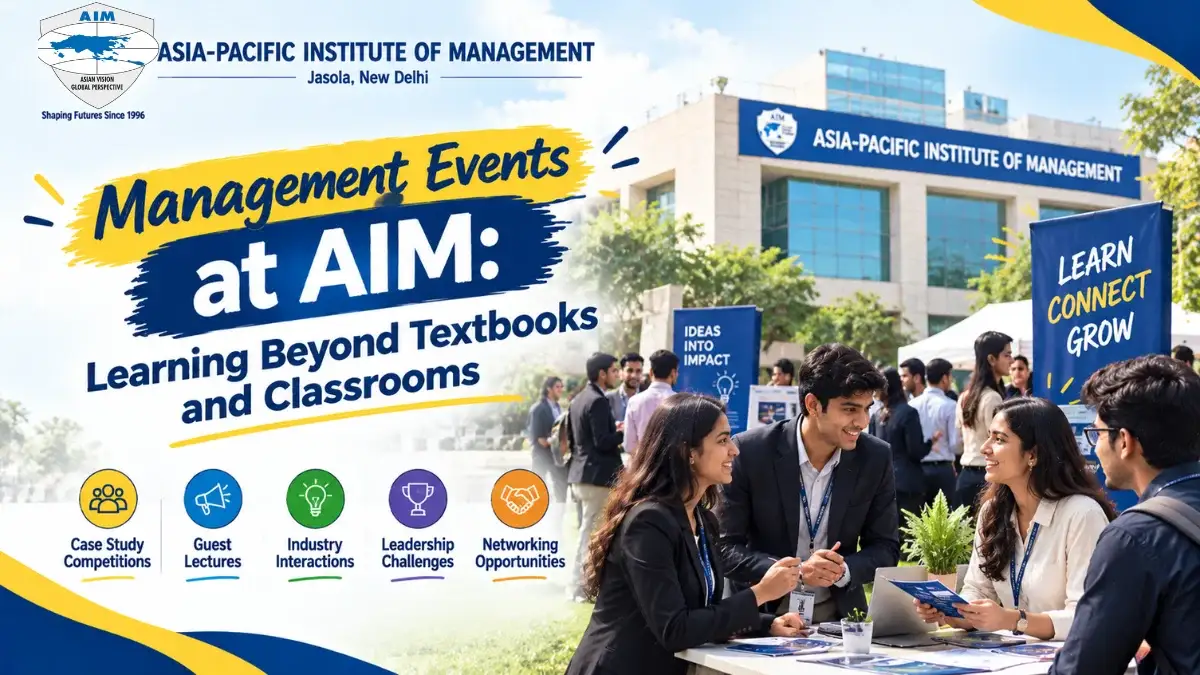
Management Events at AIM: Learning Beyond Textbooks and Classrooms
Posted on 05 Oct 2026
By Dr. Vikas Gupta
Introduction
Management education is not confined to lectures, textbooks and examinations. Management college events can give students additional settings to communicate, collaborate, organise activities and engage with ideas beyond regular coursework. At Asia-Pacific Institute of Management (AIM), the published student-life and events information reflects a mix of academic, professional, cultural and student-oriented activities.
AIM's current events page includes academic and professional programmes such as an Innovation Masterclass on AI, circular economy and sustainable business, an industry-exposure webinar, career seminars and other institutional activities. It also lists cultural and community events, including orientation programmes, alumni gatherings and celebrations.
For a student evaluating a management college, these experiences matter because they show how campus life can complement formal learning.
Executive MBA in Healthcare
Explore the curriculum, eligibility, career opportunities, and key details of the Executive MBA in Healthcare.
AIM's management events include academic, professional, cultural and student-oriented activities alongside regular classroom learning.
PGDM events can provide practical settings to practise communication, teamwork, organisation and presentation skills.
Business school activities can help students interact with peers beyond their usual classroom groups and develop broader perspectives.
Events are most useful when students participate selectively while maintaining their academic responsibilities.
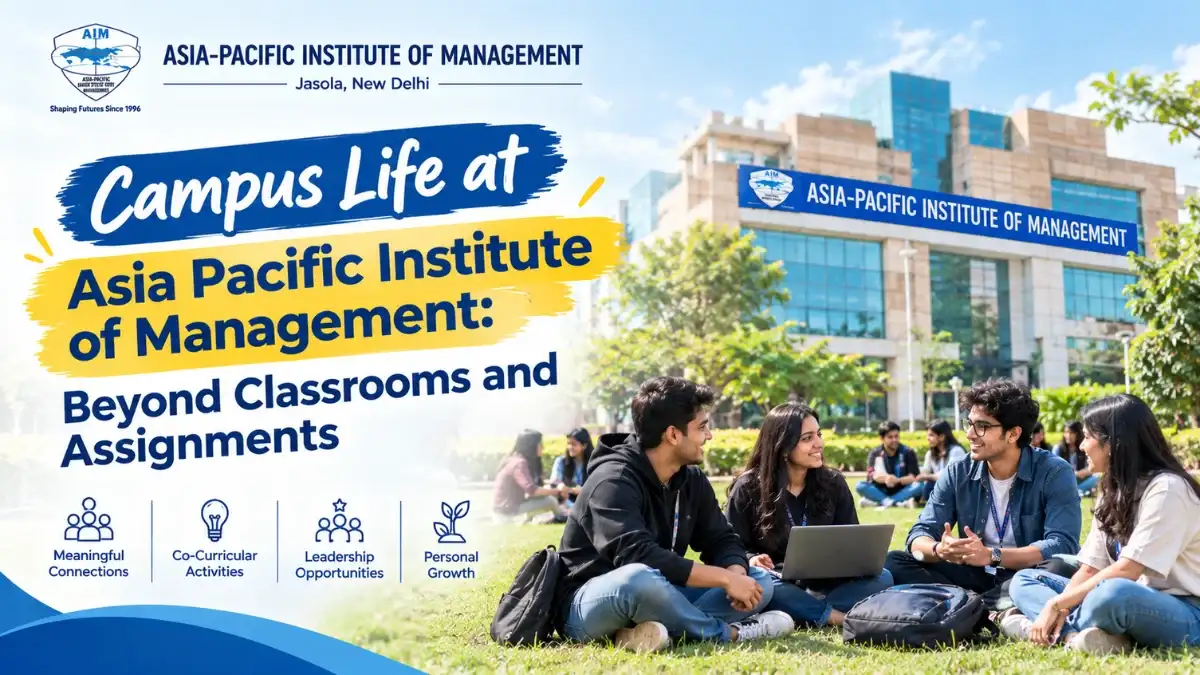
Learning beyond classroom settings can complement management education, but the actual experience depends on the programme, schedule and individual participation. Bonus:Campus Life at Asia Pacific Institute of Management
What Are Management College Events and Why Do They Matter?
Management college events are organised activities that extend the student experience beyond routine classes. They can include professional sessions, seminars, cultural programmes, alumni interactions, student activities and other campus events.
Their value is not simply that they make college life more enjoyable. A management student may need to present an idea, coordinate with a team, communicate with different people, manage deadlines or respond to an unexpected situation. Events can create additional opportunities to practise these behaviours.
At AIM, the published events page describes activities organised for and by students as part of the broader student experience. The institute's student-life information also highlights clubs, sports, events and peer interaction.
This makes events a useful part of the wider learning environment rather than a replacement for academic study.
A Look at PGDM Events at AIM
AIM's published event listings show that campus activities can cover different dimensions of management education. Recent listings include an Innovation Masterclass focused on AI, circular economy and sustainable business, an industry-exposure webinar, career seminars and other professional activities. The page also records cultural celebrations, orientation programmes and alumni events from previous academic cycles. These examples illustrate an important point:
PGDM events do not have to follow one format.
Event type
What students may experience
Potential learning value
Industry and professional sessions
Business perspectives, discussions and professional themes
Industry awareness and communication
Academic or innovation events
Emerging ideas, management themes and problem-solving
Curiosity and analytical thinking
Alumni interactions
Conversations around shared institutional experiences
Broader career perspectives
Cultural events
Participation, coordination and social interaction
Teamwork and organisation
Orientation programmes
Introduction to campus and peers
Adaptation and relationship-building
The exact event calendar can change according to the academic schedule and institutional plans. Students should therefore view published examples as an indication of the range of activities rather than as a guaranteed timetable for every batch.
From Watching an Event to Participating in It
The learning value of an event can depend heavily on the student's role.
Attending a seminar may expose a student to a new business topic. Participating in a discussion can require the student to formulate an opinion. Helping organise an event can involve dividing responsibilities, coordinating with classmates, communicating information and managing time.
For example, consider a hypothetical student helping coordinate a campus seminar. The academic subject may be business-related, but the student may also have to prepare a schedule, communicate with participants, coordinate with peers and respond to last-minute changes. Those responsibilities create a different type of learning from reading about event management in a textbook.
This is one reason learning beyond classroom settings can complement formal management education.
The experience should not, however, be overstated. Participation in an event does not automatically develop a particular skill. The outcome depends on what the student actually does, how much responsibility they take and how they reflect on the experience.
Business School Activities and Peer Learning
A business school brings together students with different educational backgrounds, interests and ways of approaching problems. Events can create informal opportunities to interact with people outside a student's immediate classroom group.
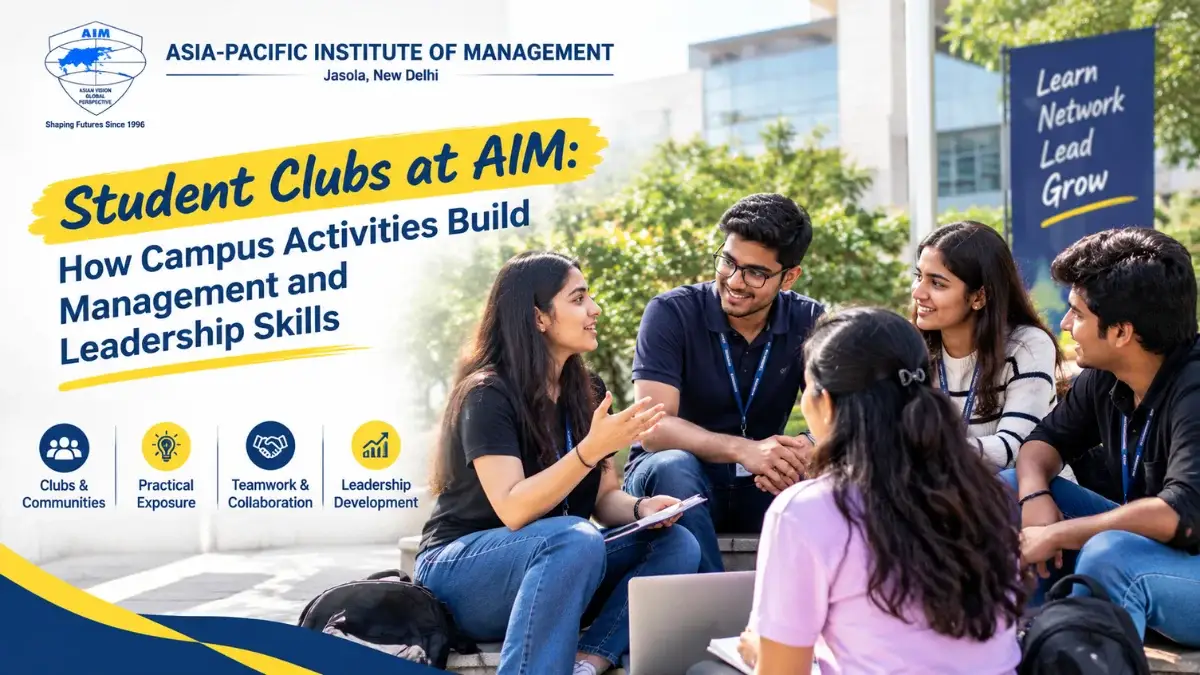
AIM's published student-life information identifies clubs, committees, sports, events and peer interaction as parts of campus life.
The institute's published clubs information includes areas such as Finance, Marketing and Human Resources, giving students opportunities to explore interests beyond their regular academic sessions.This can make business school activities particularly useful for peer learning. A marketing-focused student might exchange ideas with someone interested in finance. A student comfortable with presentations might work alongside someone who is stronger in analysis. Such interactions can broaden how students approach business problems.
What Skills Can MBA Student Activities Help Practise?
Although the term MBA student activities is often used broadly, the underlying skills are relevant across management programmes.
Communication
Events can require students to introduce themselves, present information, participate in discussions or coordinate with others. Repeated practice can make communication more familiar in situations that are less structured than a classroom presentation.
Teamwork
Many activities involve more than one person. Students may need to divide tasks, meet deadlines and coordinate decisions. The experience can expose them to different working styles.
Organisation
An event has multiple moving parts. Even a small student activity can require planning, scheduling and follow-up. Taking responsibility for one part of an event can help students understand why coordination matters.
Leadership
Leadership is not limited to holding a formal title. A student who takes responsibility for solving a problem, coordinating classmates or ensuring a task is completed is already practising aspects of leadership.
Adaptability
Events do not always proceed exactly as planned. Adjusting to changes can provide students with a practical setting in which to think calmly and respond constructively.
These are practice opportunities, not guaranteed outcomes. Students develop skills through active participation, feedback and repeated application.
Cultural Events Are Part of the Campus Experience Too
Management education does not have to be separated from campus culture.
AIM's published events page records activities such as Holi celebrations, Dandiya Night, Diwali activities and alumni gatherings alongside academic and professional events.
Cultural events can give students opportunities to interact in a less formal environment. They can also involve coordination, participation and teamwork.
For a student moving from an undergraduate environment into a more intensive management programme, these interactions can contribute to a sense of campus community. They may also help students meet classmates outside their usual academic groups.
The important distinction is that cultural participation is not a substitute for academic learning. Its value lies in complementing the wider student experience.
How to Balance Events With Academic Responsibilities
A busy calendar can be attractive, but students do not need to attend everything.
A practical approach is to choose activities according to personal interests and development goals. AIM's published campus guidance similarly notes that students can participate selectively while balancing classes, projects, presentations and other academic responsibilities.
A simple decision framework can help:
Does the activity interest me?
Will I actively participate or only attend?
Does it complement a skill I want to practise?
Can I manage it without affecting academic deadlines?
Will I gain an experience that I can reflect on afterwards?
For instance, a student interested in marketing might prioritise relevant club or professional activities, while a student interested in analytics may prefer innovation or technology-oriented sessions. Neither needs to participate in every event.
This selective approach can make management college events more meaningful.
What Should Students Look for When Comparing Colleges?
Students comparing management institutes should look beyond the number of events listed on a website.
A more useful evaluation considers the quality and relevance of the opportunities.
Ask whether the college offers a mix of academic, professional, cultural and student-led activities. Check whether students have opportunities to participate rather than only attend. Look at how events fit alongside the academic programme. Consider whether the activities align with your interests.
AIM's published campus information describes student life through academic learning, clubs, sports, events, peer interaction and professional activities. It also notes that individual experiences vary according to programme, academic schedule and participation.
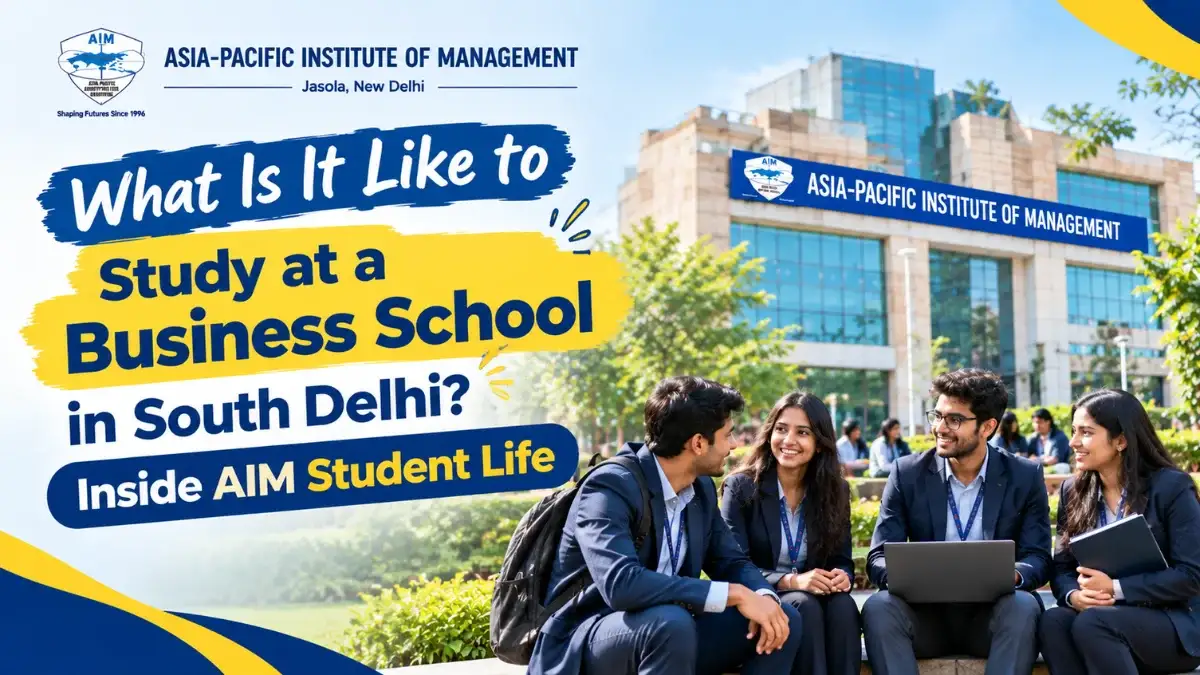
For prospective students, this distinction is important. A long event list does not by itself guarantee a better educational experience. What matters is whether the available opportunities fit the way you want to learn and participate. Bonus:AIM student life
Management Events as Part of a Larger Learning Journey
Events work best when they connect with other parts of management education.
A classroom discussion may introduce a business concept. A case study may require students to analyse it. A project may require them to apply it. An industry session may provide another perspective. A student activity may then create an opportunity to communicate or organise around a related idea.
This combination is what makes learning beyond classroom settings useful.
AIM's broader student journey includes classroom learning alongside projects, presentations, practical activities, internships, clubs, committees and events.
For students, the objective should not be to collect participation experiences. It should be to use campus opportunities thoughtfully and connect them with academic and personal development.
Conclusion
Management education becomes richer when students have opportunities to learn, interact and participate beyond regular lectures. At AIM, published information shows a mix of professional sessions, academic programmes, cultural celebrations, alumni activities, clubs and other student experiences. These management college events can complement classroom learning by giving students additional opportunities to communicate, collaborate, organise and engage with different perspectives. The most meaningful experience, however, depends on active participation and balance. For students comparing business schools, the useful question is not simply how many events a campus offers, but whether its activities support the kind of learning and student experience they are seeking.
Executive MBA in Healthcare
Explore the curriculum, eligibility, career opportunities, and key details of the Executive MBA in Healthcare.
Dr. Vikas Gupta is a distinguished academic in the education and research domain, specializing in finance and related interdisciplinary studies. He is known for his...
These answers explain how management events can complement academics and what students should consider when evaluating campus activities.
01.
What are management college events?
Management college events are activities beyond routine classes, including professional sessions, seminars, cultural programmes, alumni interactions, student activities and other campus programmes. They can provide additional opportunities for students to communicate, collaborate and engage with management-related ideas.
02.
What types of PGDM events can students expect at AIM?
AIM’s published events page includes professional and academic activities, innovation-focused programmes, industry-exposure sessions, career seminars, orientation programmes, alumni events and cultural activities. The actual schedule can vary by academic cycle, programme and institutional calendar.
03.
How do business school activities support student learning?
Business school activities can give students practical settings to practise communication, teamwork, organisation and presentation. Their value depends on participation. Simply attending an event may provide exposure, while taking responsibility for an activity can create a more active learning experience.
04.
Are MBA student activities only about entertainment?
No. Cultural and social activities are part of campus life, but management student activities can also include professional sessions, clubs, committees, seminars, projects and industry-oriented programmes. The balance between academic and non-academic activities varies by institution and student participation.
05.
Should students participate in every campus event?
No. Students can benefit more from selective participation that fits their interests, development goals and academic workload. Joining every activity is not necessary. A balanced approach allows students to gain campus experience without compromising classes, assignments, projects or presentations.
06.
Can management events help students build professional networks?
They can create opportunities for students to meet classmates, alumni, faculty members or professionals in shared settings. However, networking develops through meaningful interaction and continued relationships rather than simply attending a large number of events.
07.
How can students judge the value of a college's events?
Students should examine the range of activities, opportunities for active participation, relevance to their interests, student involvement and compatibility with the academic schedule. It is also useful to distinguish between activities listed historically and those currently scheduled.
08.
Do campus events replace classroom learning?
No. Events complement rather than replace academic learning. Classroom teaching, assignments, projects and assessments remain important parts of management education. Events can provide additional contexts in which students practise communication, teamwork, organisation and engagement with practical topics.













.webp) Call Us
Call Us