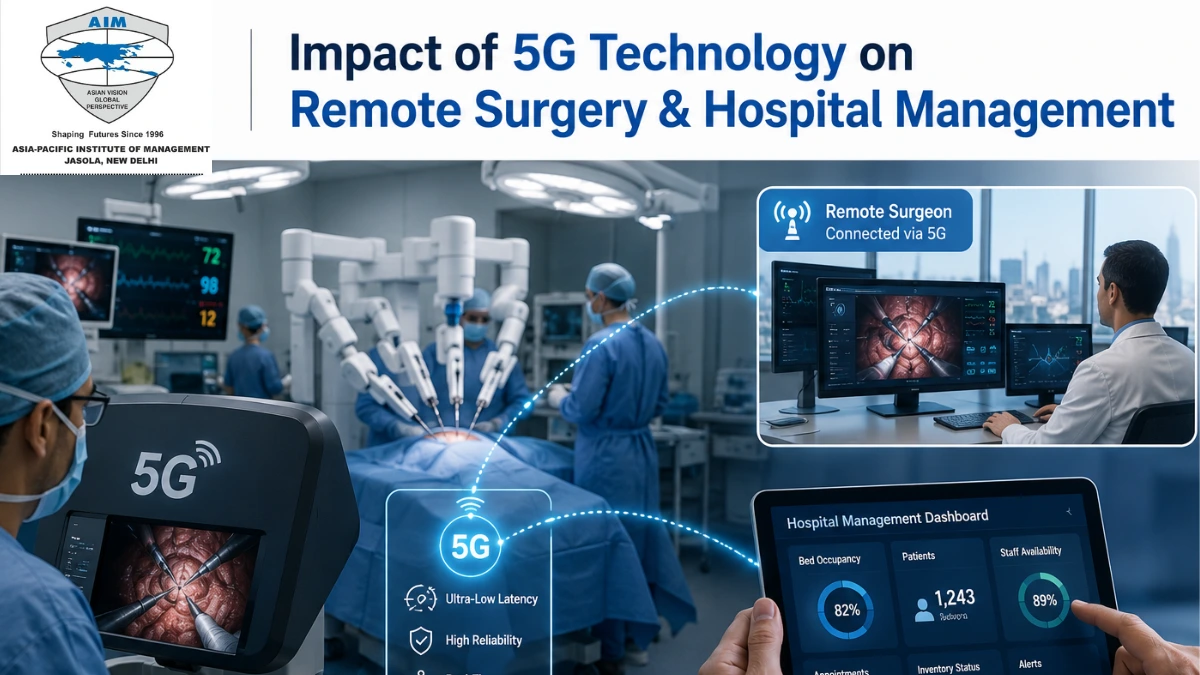
Impact of 5G Technology on Remote Surgery & Hospital Management
Posted on 23 May 2026
By Dr. Vikas Gupta
Introduction
Technology is reshaping healthcare at an unprecedented pace. From telemedicine to artificial intelligence, digital transformation is changing how hospitals operate and deliver patient care. One of the most significant innovations driving this transformation is 5G technology.
With faster speed, lower latency, and stronger connectivity, 5g in healthcare management is creating new possibilities in remote surgery, hospital operations, and patient care systems.
For students pursuing an MBA in hospital and healthcare management, understanding the impact of emerging technologies is becoming increasingly important for future healthcare leadership roles.
What is 5G Technology in Healthcare?
5G refers to the fifth generation of wireless communication technology that enables significantly faster and more reliable data transmission.
In healthcare, 5G supports:
Real-time data sharing
Remote healthcare services
Telemedicine systems
Connected medical devices
Smart hospital technologies
This technology enables healthcare systems to operate more efficiently and respond faster.
Why 5G Matters in Healthcare Management
Healthcare increasingly relies on digital systems and connected technologies.
Traditional network limitations often create challenges such as:
Data transmission delays
Connectivity issues
Limited remote healthcare capabilities
This is where 5g in healthcare management creates transformative opportunities.
Impact of 5G on Remote Surgery
Remote surgery allows healthcare professionals to perform or assist procedures using robotic systems and digital technologies.
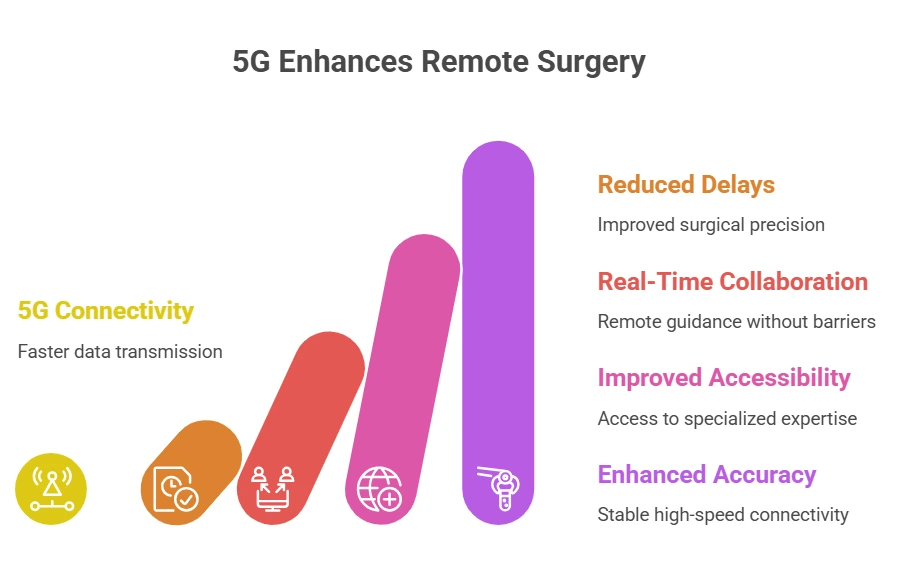
Faster Data Transmission
5G reduces delays in communication between devices and surgical systems.
This is critical because even small delays can affect surgical precision.
Real-Time Surgical Collaboration
Doctors and specialists can provide guidance remotely without geographical barriers.
Improved Healthcare Accessibility
Patients in remote regions can potentially access specialized healthcare expertise.
Technology adoption is creating new healthcare leadership opportunities.
How MBA in Healthcare Management Helps
An MBA in hospital and healthcare management develops business and healthcare leadership skills.
Key Learning Areas
Healthcare operations
Technology integration
Strategic planning
Leadership development
Healthcare systems management
Institutes like Asia Pacific Institute of Management focus on practical learning and industry-oriented education. Students gain exposure to healthcare trends and real-world healthcare challenges.
Why Delhi NCR is Ideal for Healthcare Education
Delhi NCR offers strong healthcare and technology ecosystems.
Technology continues redefining healthcare systems globally. The rise of 5g in healthcare management highlights how digital innovation can improve patient care, hospital operations, and healthcare accessibility.
Students who understand technology and healthcare management together can build future-ready careers in this rapidly evolving industry.
Experience Campus Life
Build healthcare technology leadership skills with industry-focused MBA programs designed for future healthcare innovation.
Dr. Vikas Gupta is a distinguished academic in the education and research domain, specializing in finance and related interdisciplinary studies. He is known for his...












.webp) Call Us
Call Us