Top 10 Essential Hospital Management Jargons Every Fresher Must Learn
Posted on 11 Jul 2026
By Dr. Vikas Gupta
Introduction
Starting a career in hospital administration or healthcare management can feel overwhelming, especially when you hear unfamiliar medical and administrative terms in meetings, classrooms, or hospital corridors. Doctors, nurses, administrators, and healthcare executives use technical language every day to coordinate patient care and hospital operations.
Understanding these hospital management terms is one of the first steps toward becoming a confident healthcare management professional. Whether you are joining an MBA or PGDM in Healthcare Management, beginning an internship, or starting your first hospital administration job, learning common healthcare terminology will improve your communication and decision-making.
This guide explains ten essential hospital management terms that every fresher should understand before entering the healthcare industry.
Why Hospital Management Terminology Matters
Hospitals are complex organizations where clinical and administrative teams work together. Healthcare managers coordinate departments, monitor performance, improve patient services, and support operational efficiency.
Understanding common terminology helps students and freshers:
Communicate confidently with healthcare teams
Understand hospital reports
Participate in meetings
Interpret healthcare data
Improve operational decision-making
Build credibility during internships
Learn hospital processes faster
Instead of memorizing hundreds of medical terms, beginners should first focus on the most frequently used operational concepts.
Master Hospital Terms
Learn essential hospital management terms and build confidence for healthcare internships, operations roles, and MBA classroom discussions success.
One of the most important hospital management terms is ALOS in healthcare, which stands for Average Length of Stay.
What Does ALOS Mean?
ALOS measures the average number of days patients remain admitted in a hospital before discharge.
Why Is It Important?
Hospitals monitor ALOS to:
Improve bed availability
Increase operational efficiency
Reduce unnecessary hospitalization
Improve patient flow
Optimize treatment planning
A very high ALOS may indicate operational delays or complex patient cases, while an extremely low ALOS should still ensure patients receive appropriate care before discharge.
Healthcare managers regularly review this indicator to improve hospital performance.
Additional Hospital Management Terms Freshers Should Know
Besides the top ten, students should gradually become familiar with:
ICU
NICU
PICU
EMR
EHR
Infection Control
Hospital Acquired Infection (HAI)
Standard Operating Procedure (SOP)
Root Cause Analysis (RCA)
Key Performance Indicator (KPI)
Quality Indicators
Patient Safety Goals
Learning these terms improves confidence during internships and interviews.
How to Learn Hospital Management Terms Faster
Students can improve their vocabulary by:
Reading hospital case studies
Following healthcare news
Watching healthcare webinars
Visiting hospitals during internships
Reading hospital quality reports
Using healthcare management glossaries
Asking faculty questions
Maintaining a personal terminology notebook
Learning a few terms every day is more effective than memorizing long lists.
Why These Terms Matter During Placements
Interviewers often evaluate whether students understand basic hospital operations.
Knowledge of hospital terminology demonstrates:
Industry awareness
Professional readiness
Operational understanding
Communication ability
Genuine interest in healthcare management
Even simple terminology can make a positive impression during interviews.
How MBA Healthcare Helps Students Understand Hospital Operations
Healthcare management education connects management principles with healthcare delivery.
Students learn about:
Hospital administration
Healthcare operations
Quality management
Healthcare finance
Marketing
Supply chain
Human resources
Healthcare analytics
Digital healthcare
Strategic management
At Asia Pacific Institute of Management, students benefit from an industry-oriented curriculum, experienced faculty, practical learning, hospital exposure, internships, live projects, and placement support. These experiences help students understand hospital operations while preparing for management careers across the healthcare sector.
Career Opportunities After Learning Hospital Management
Healthcare management graduates may pursue careers such as:
Hospital Administrator
Operations Executive
Patient Experience Manager
Quality Executive
Healthcare Consultant
Hospital Coordinator
Medical Records Manager
Healthcare Analyst
Hospital Marketing Executive
Healthcare Operations Manager
Strong operational knowledge creates a foundation for long-term career growth.
Learning essential hospital management terms is one of the easiest ways for freshers to build confidence before entering the healthcare industry. Concepts such as ALOS in healthcare, bed occupancy rate, NABH guidelines basics, clinical workflow terms, and outpatient vs inpatient admin form the foundation of hospital operations and healthcare administration.
Rather than memorizing complex medical language, students should focus on understanding how these terms influence patient care, operational efficiency, and hospital performance. This practical knowledge will support classroom discussions, internships, and future management roles.
At Asia Pacific Institute of Management, students develop industry-relevant knowledge through practical learning, experienced faculty, corporate exposure, internships, and placement support, preparing them for successful careers in healthcare management.
Start Industry Ready
Turn healthcare terminology knowledge into career-ready skills with practical MBA learning, hospital exposure, internships, and placement support today.
Dr. Vikas Gupta is a distinguished academic in the education and research domain, specializing in finance and related interdisciplinary studies. He is known for his...
Hospital management terms are operational and administrative concepts commonly used in hospitals to manage patient care, resources, quality, and healthcare services.
02.
What is ALOS in healthcare?
ALOS stands for Average Length of Stay. It measures the average number of days admitted patients stay in the hospital before discharge.
03.
Why is bed occupancy rate important?
Bed occupancy rate helps hospitals evaluate capacity utilization, staffing needs, and operational efficiency.
04.
What are NABH guidelines basics?
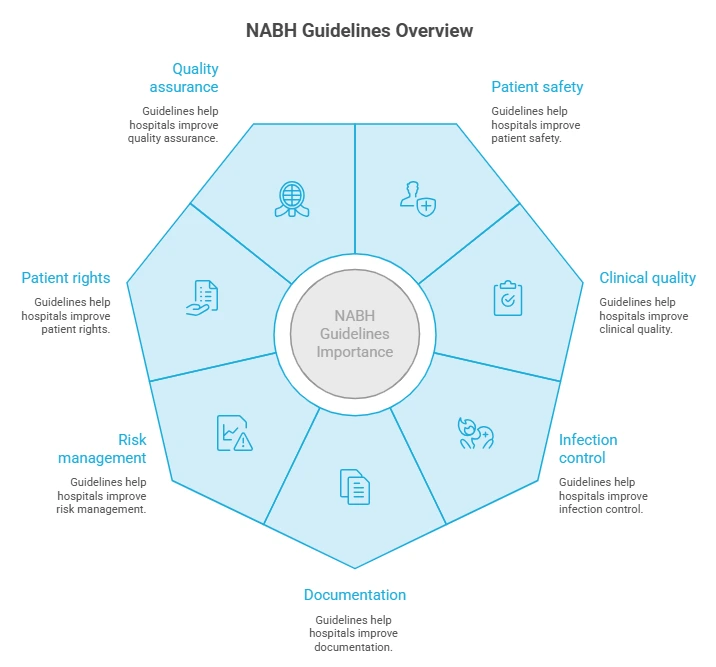
NABH guidelines are quality and patient safety standards that help hospitals improve healthcare delivery and operational excellence.
05.
What is the difference between outpatient and inpatient administration?
Outpatient administration manages patients who receive treatment without admission, while inpatient administration focuses on patients admitted for extended care.
06.
What are clinical workflow terms?
Clinical workflow terms describe the sequence of processes involved in patient care, from registration to discharge and follow-up.
07.
Why should MBA healthcare students learn hospital terminology?
Understanding hospital terminology improves classroom learning, internship performance, professional communication, and interview confidence.

















.webp) Call Us
Call Us