Starting MBA Healthcare 2026: 7-Day Checklist

PGDM Applications at AIM Are Closing Soon | Secure Your Seat Now

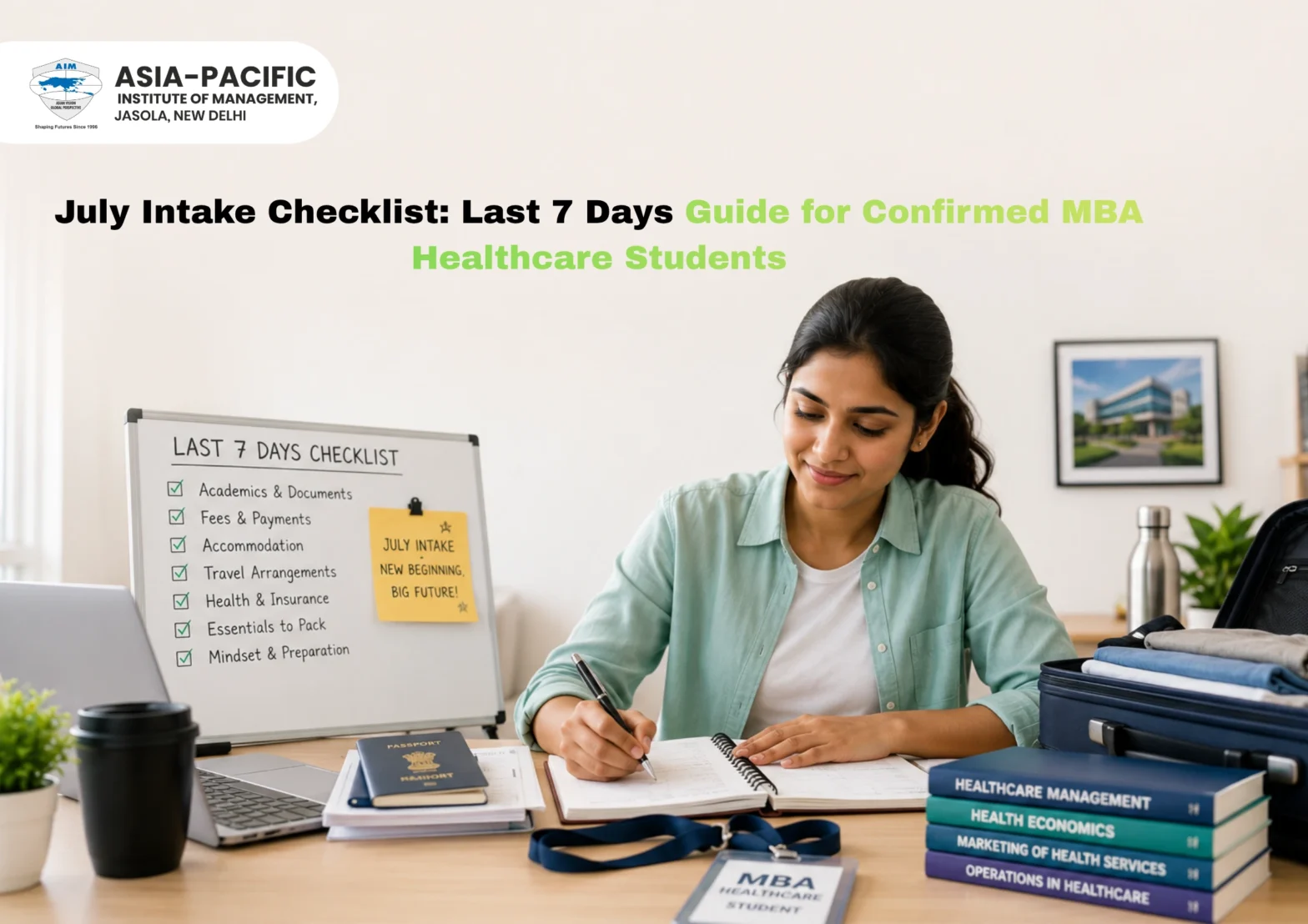
July Intake Checklist: Last 7 Days Guide for Confirmed MBA Healthcare Students

By Dr. Vikas Gupta

July Intake Checklist: Last 7 Days Guide for Confirmed MBA Healthcare Students

Introduction

Congratulations! If you've secured admission to an MBA or PGDM in Healthcare Management, you're about to begin an exciting journey toward a rewarding career in one of India's fastest-growing industries.

However, the week before classes begin is more important than many students realize. The final seven days are the perfect time to organize your documents, prepare academically, understand the healthcare industry, and mentally transition from student life to management education.

If you're starting mba healthcare 2026, this comprehensive checklist will help you begin your programme with confidence. From orientation preparation and essential healthcare reading to laptop selection and networking tips, this guide covers everything you need before your first day on campus.

Start MBA Strong

Prepare confidently for your healthcare MBA orientation with practical learning, industry exposure, and career-focused support from day one.

Apply Now

Why the Last Seven Days Matter

Many students believe preparation starts after classes begin. In reality, the first week of business school moves quickly.

You may experience:

  • Orientation sessions
  • Faculty introductions
  • Group activities
  • Case discussions
  • Club registrations
  • Team assignments
  • Networking events
  • Placement briefings
  • Academic orientation

Being prepared allows you to focus on learning instead of managing last-minute tasks.

Day 7: Complete Your Admission Documentation

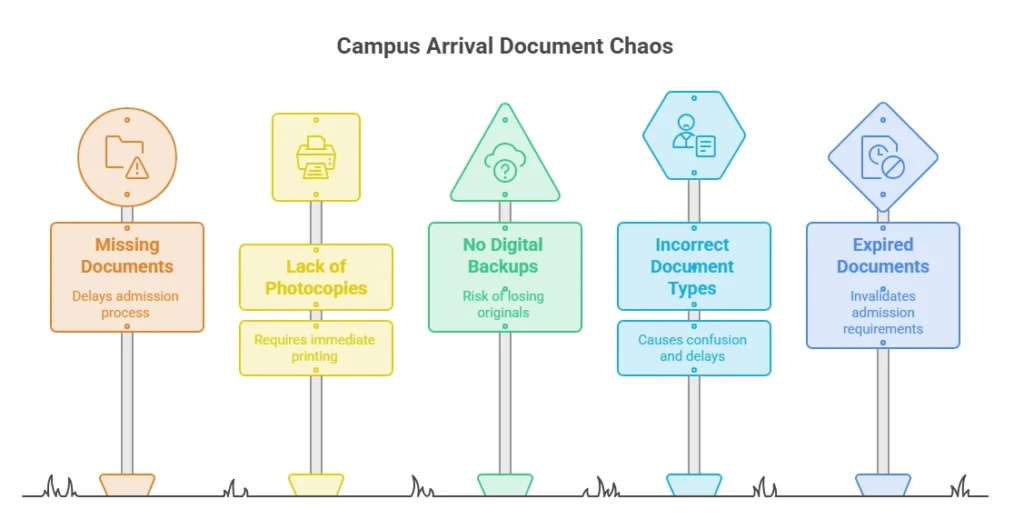
Before arriving on campus, ensure all required documents are organized.

Your checklist should include:

  • Admission confirmation letter
  • Fee payment receipts
  • Academic certificates
  • Graduation mark sheets
  • Identity proof
  • Passport-size photographs
  • Migration certificate (if applicable)
  • Medical fitness certificate (if required)
  • Category certificate (if applicable)
  • Passport (for international programmes, if applicable)

Carry both original documents and multiple photocopies.

Additionally, keep scanned copies stored securely in cloud storage.

Day 6: Laptop Requirement for MBA

One of the most common questions students ask is about the laptop requirement for mba.

A reliable laptop is an investment that supports classroom learning, presentations, research, internships, and placements.

A suitable MBA laptop should include:

  • Minimum Intel Core i5 or equivalent processor
  • 16 GB RAM (recommended)
  • SSD storage (512 GB or above)
  • Full HD display
  • Good battery life
  • Webcam and microphone
  • Stable Wi-Fi connectivity

Students frequently use:

  • Microsoft Office
  • PowerPoint
  • Excel
  • Zoom or Microsoft Teams
  • Google Workspace
  • PDF tools
  • Data visualization software

You do not necessarily need a gaming or high-end laptop. A lightweight, dependable system is usually sufficient.

Day 5: Healthcare Books Preparation

Strong academic preparation begins before the first lecture.

For healthcare books preparation, start with beginner-friendly topics rather than advanced textbooks.

Read about:

  • Indian healthcare system
  • Hospital administration
  • Healthcare management
  • Healthcare economics
  • Public health
  • Digital healthcare
  • Health insurance
  • Hospital quality
  • Patient experience

Additionally, follow healthcare news through reliable business newspapers and healthcare publications.

Daily reading helps students contribute confidently during classroom discussions.

Day 4: Learn Basic Medical Terminology

Management students often worry about understanding medical language.

Fortunately, healthcare management programmes do not expect students to become doctors.

However, learning basic terminology makes classroom learning much easier.

A medical jargon dictionary can help students understand terms such as:

  • ICU
  • OPD
  • IPD
  • Diagnosis
  • Prognosis
  • Triage
  • Vital signs
  • Electronic Medical Record (EMR)
  • Electronic Health Record (EHR)
  • Healthcare accreditation
  • Infection control

Learning a few medical terms every day builds confidence before classes begin.

Day 3: Orientation Day Preparation

Proper orientation day preparation helps students make an excellent first impression.

Before orientation:

  • Review the programme schedule.
  • Read about the institute.
  • Learn faculty profiles.
  • Dress professionally.
  • Reach early.
  • Carry required documents.
  • Bring a notebook.
  • Keep your laptop charged.
  • Prepare a short self-introduction.
  • Be ready to meet new classmates.

Orientation is your first opportunity to build professional relationships.

Day 2: Build Your Professional Profile

Before classes begin, update your professional presence.

Create or improve:

  • LinkedIn profile
  • Professional email signature
  • Resume
  • Passport-size photograph
  • Digital document folder

Your LinkedIn profile should include:

  • Educational background
  • Career interests
  • Certifications
  • Volunteer experience
  • Professional photograph

Networking begins earlier than many students expect.

Begin Healthcare Leadership

Turn your final preparation week into a strong MBA start with mentorship, projects, and placement-focused healthcare management training.

Apply Now

Day 1: Prepare Your Mindset

Success in MBA depends as much on attitude as academics.

Remember that business school involves:

  • Teamwork
  • Presentations
  • Case studies
  • Class participation
  • Time management
  • Critical thinking
  • Continuous learning

Approach every assignment with curiosity and professionalism.

B-School Checklist Freshers Should Follow

A complete b-school checklist freshers should include:

Academic Preparation

  • Notebook
  • Laptop
  • Stationery
  • Cloud storage
  • Email setup
  • Calendar management

Personal Preparation

  • Formal clothing
  • Business casual wear
  • Comfortable shoes
  • Identity documents
  • Passport photographs

Digital Preparation

  • LinkedIn profile
  • Resume
  • Professional email
  • Cloud backup
  • Microsoft Office

Financial Preparation

  • Banking access
  • UPI setup
  • Expense planning
  • Emergency contacts

Health Preparation

  • Personal medicines
  • Health insurance details
  • Emergency contacts
  • Water bottle
  • Daily essentials

Being organized reduces stress during the first semester.

Build Essential Soft Skills Before Classes Begin

Healthcare managers interact with doctors, patients, administrators, insurers, and technology professionals.

Important skills include:

  • Communication
  • Leadership
  • Presentation
  • Teamwork
  • Active listening
  • Problem-solving
  • Time management
  • Professional etiquette

Developing these skills early creates a strong foundation for future placements.

Bonus: Best Choice: MBA Healthcare or Public Health 

Learn About India's Healthcare Industry

Understanding the healthcare ecosystem improves classroom discussions.

Focus on areas such as:

  • Hospitals
  • Diagnostics
  • Medical devices
  • Health insurance
  • Digital health
  • Telemedicine
  • Pharmaceuticals
  • Public health
  • Healthcare consulting

Following industry news helps students connect theory with real-world developments.

Prepare for Group Learning

MBA programmes emphasize collaborative learning.

Students regularly participate in:

  • Group discussions
  • Case competitions
  • Business simulations
  • Presentations
  • Live projects
  • Research assignments

Developing teamwork skills early improves academic performance.

Common Mistakes Freshers Should Avoid

Avoid these common errors:

  • Arriving without required documents
  • Ignoring orientation sessions
  • Delaying networking
  • Poor time management
  • Skipping pre-reading
  • Waiting until exams to study
  • Avoiding class participation
  • Neglecting communication skills
  • Depending entirely on classroom learning

Successful students remain proactive throughout the programme.

How MBA Healthcare Prepares Students for Leadership

Healthcare management education develops expertise in:

  • Hospital administration
  • Healthcare operations
  • Strategic management
  • Healthcare marketing
  • Quality management
  • Human resource management
  • Healthcare finance
  • Supply chain management
  • Digital healthcare
  • Business analytics

These competencies prepare graduates for leadership roles across hospitals, healthcare companies, diagnostics, insurance, medical technology, consulting, and healthcare startups.

At Asia Pacific Institute of Management, students benefit from industry-oriented learning, experienced faculty, corporate exposure, practical projects, internships, and placement support. These experiences help students build confidence before entering the healthcare industry.

Career Opportunities After MBA Healthcare

Graduates can pursue careers such as:

  • Hospital Administrator
  • Healthcare Operations Manager
  • Quality Manager
  • Healthcare Consultant
  • Product Manager
  • Business Development Manager
  • Patient Experience Manager
  • Healthcare Marketing Manager
  • Medical Device Sales Manager
  • Health-Tech Operations Manager

Healthcare management offers opportunities across both clinical and corporate environments.

Bonus:  Hospital Analytics vs Business Analytics 

Conclusion

Starting mba healthcare 2026 marks the beginning of an exciting professional journey. The final seven days before your programme starts are the ideal time to prepare academically, professionally, and personally.

By organizing your documents, upgrading your technical readiness, learning healthcare basics, understanding medical terminology, and preparing for orientation, you can enter business school with greater confidence.

Healthcare management is a dynamic field that rewards professionals who combine leadership, analytical thinking, and compassion. Starting your preparation early will help you maximize every opportunity during your MBA or PGDM journey.

At Asia Pacific Institute of Management, students receive industry-oriented education, practical exposure, experienced faculty guidance, corporate interactions, and placement support that prepare them for successful healthcare management careers.

Get Campus Ready

Build confidence before classes begin with industry-oriented MBA learning, professional guidance, and healthcare career development support from expert mentors.

Apply Now

About the Author

author

Dr. Vikas Gupta

Dr. Vikas Gupta is a distinguished academic in the education and research domain, specializing in finance and related interdisciplinary studies. He is known for his...

Read Full Bio →

Leave a comment

Your email address will not be published. Required fields are marked *

Frequently Asked Questions (FAQs)

01. What should I do before starting mba healthcare 2026?

Complete admission formalities, prepare essential documents, arrange your laptop, learn basic healthcare concepts, and attend orientation confidently.

02. What is the ideal laptop requirement for mba?

A laptop with an Intel Core i5 or equivalent processor, 16 GB RAM, SSD storage, reliable battery life, and Microsoft Office support is generally sufficient.

03. Should I study healthcare before classes begin?

Yes. Reading about hospital management, healthcare systems, and current industry trends helps students adapt quickly.

04. Why is orientation day preparation important?

Orientation introduces students to faculty, classmates, academic expectations, campus facilities, and professional opportunities.

05. Is learning medical terminology necessary?

Basic medical terminology improves classroom understanding and communication during healthcare management studies.

06. What should be included in a b-school checklist freshers?

Important items include documents, laptop, formal clothing, notebooks, digital profiles, banking access, and healthcare reading material.

07. How can I prepare for MBA healthcare placements?

Develop communication skills, participate actively in projects, build industry knowledge, network professionally, and gain internship experience.

Follow Us

Subscribe to Our Newsletter

Download Brochure

BBA Brochure

PGDM Brochure

MBA Brochure

Apply Now Call Us Email WhatsApp