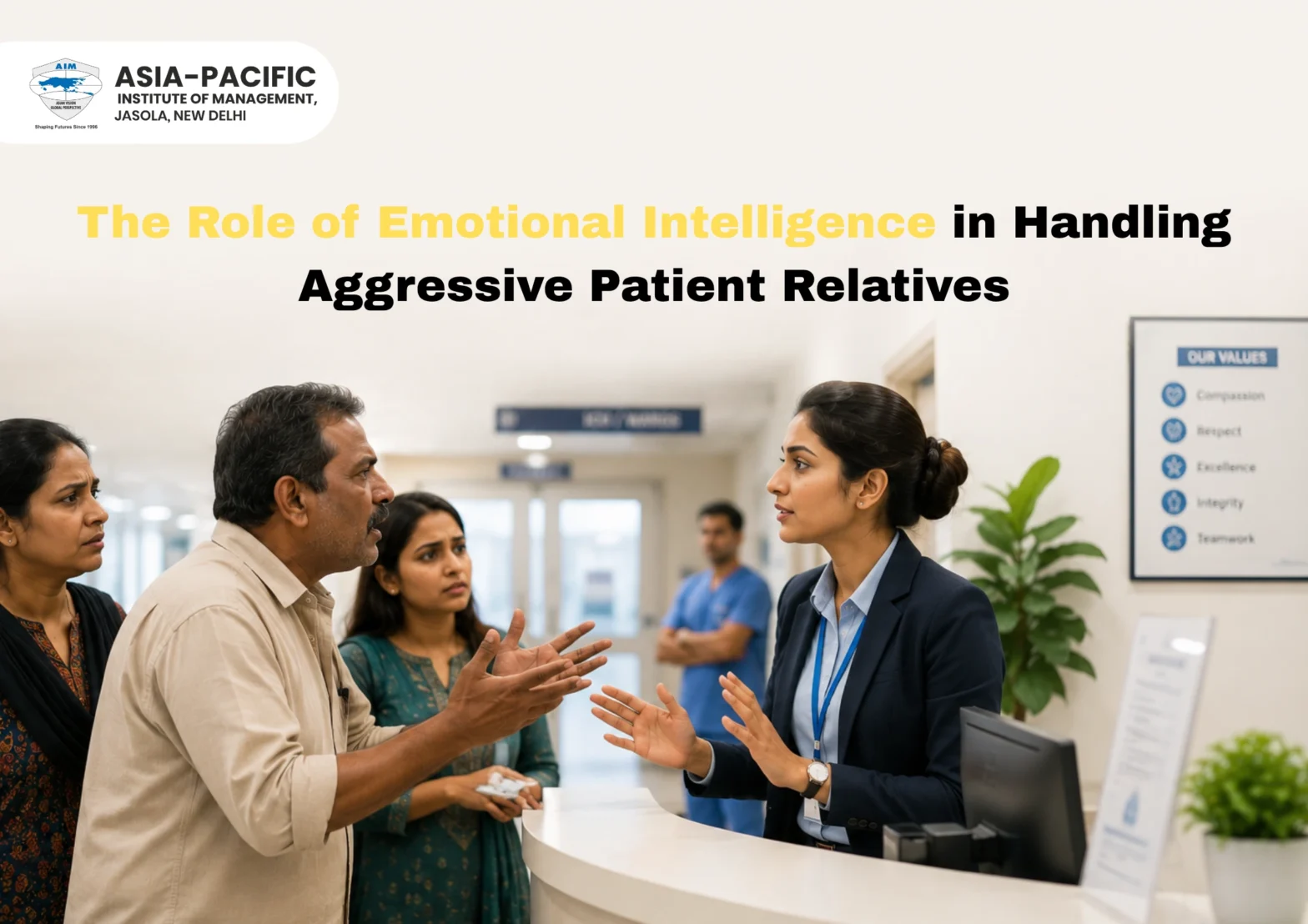
The Role of Emotional Intelligence in Handling Aggressive Patient Relatives
Posted on 04 Jul 2026
By Dr. Vikas Gupta
Introduction
Hospitals are emotionally charged environments where patients and their families often face uncertainty, fear, financial stress, and grief. During medical emergencies, these emotions can sometimes lead to anger, frustration, or aggressive behavior toward healthcare professionals.
In such situations, crisis communication in healthcare becomes one of the most valuable skills for hospital administrators, patient relationship teams, nurses, and healthcare managers. While clinical expertise saves lives, emotional intelligence helps preserve trust, reduce conflicts, and improve patient experiences.
Healthcare managers who communicate with empathy, remain calm under pressure, and resolve conflicts professionally contribute significantly to a hospital's reputation and service quality.
This blog explores how emotional intelligence supports healthcare professionals in managing aggressive patient relatives while maintaining safety, compassion, and effective communication.
Build emotional intelligence, crisis communication, and conflict resolution skills to manage patient relationships with confidence in hospital administration roles.
Crisis communication in healthcare refers to the structured process of communicating clearly, honestly, and compassionately during difficult medical situations, emergencies, unexpected complications, or service disruptions.
It involves:
Delivering critical information
Managing patient and family expectations
Responding during emergencies
Handling complaints professionally
Reducing misinformation
Supporting emotional conversations
Coordinating communication across departments
Protecting patient trust
Good crisis communication reduces panic and helps families understand complex medical situations more effectively.
Why Do Patient Relatives Become Aggressive?
Most families do not enter hospitals intending to create conflict. Aggressive behavior often develops because of emotional distress.
Common reasons include:
Fear of losing a loved one
Lack of medical understanding
Unexpected treatment costs
Long waiting times
Delayed updates
Miscommunication
Anxiety during emergencies
Emotional exhaustion
Cultural expectations
Previous negative healthcare experiences
Healthcare managers should understand that aggression is often a reaction to stress rather than personal hostility.
Recognizing this helps professionals respond with empathy instead of confrontation.
What Is Emotional Intelligence?
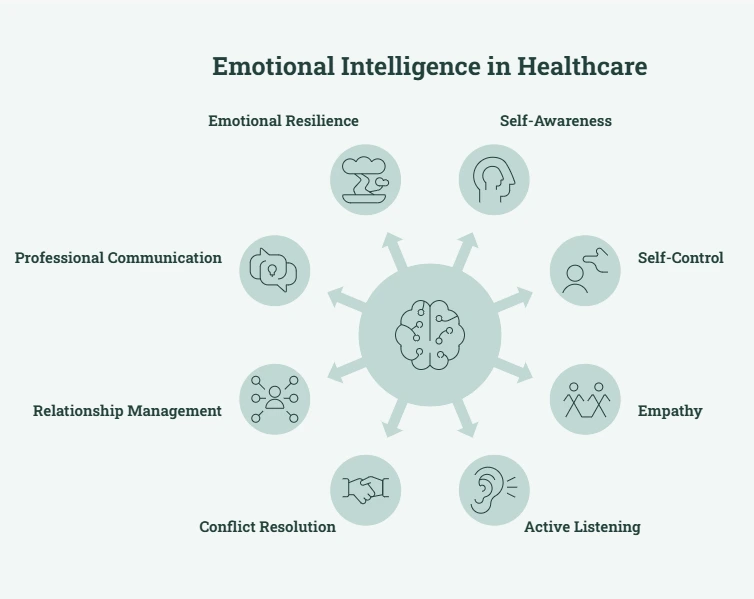
Emotional intelligence is the ability to recognize, understand, manage, and respond appropriately to emotions—both your own and those of others.
In healthcare, emotional intelligence includes:
Self-awareness
Self-control
Empathy
Active listening
Conflict resolution
Relationship management
Professional communication
Emotional resilience
These qualities are especially important when dealing with distressed patients and families.
Why Emotional Intelligence Matters in Hospitals
Healthcare decisions often involve uncertainty.
Families may wait anxiously for updates after surgeries, emergency admissions, or critical care procedures.
During these moments, emotionally intelligent healthcare professionals can:
Reduce misunderstandings
Build patient confidence
Improve communication
Minimize conflicts
Strengthen hospital reputation
Improve patient satisfaction
Support healthcare teams
Emotional intelligence complements technical knowledge by improving human interactions.
Crisis Communication in Healthcare During Emergencies
Effective crisis communication in healthcare becomes essential during:
ICU admissions
Emergency surgeries
Trauma cases
Cardiac emergencies
Disease outbreaks
Mass casualty incidents
Equipment failures
Delayed procedures
Patient deterioration
Unexpected deaths
Healthcare managers should ensure communication remains:
Honest
Timely
Respectful
Consistent
Compassionate
Easy to understand
Families appreciate transparency, even when the news is difficult.
De-Escalation Techniques Healthcare Professionals Should Know
One of the most valuable competencies for healthcare managers is understanding de-escalation techniques healthcare professionals use to reduce tension.
1. Stay Calm
Aggression often increases when staff members become defensive.
Maintaining a calm tone helps lower emotional intensity.
2. Listen Without Interrupting
Families often want to feel heard.
Allowing them to explain their concerns demonstrates respect and builds trust.
3. Show Empathy
Simple statements such as:
"I understand this is a difficult time."
"We understand your concern."
"Let me help explain the situation."
can significantly reduce emotional tension.
4. Provide Clear Information
Medical language can confuse families.
Healthcare managers should explain information using simple and understandable language.
5. Avoid Arguments
The goal is solving the problem, not winning an argument.
Professionals should avoid blame and remain solution-focused.
6. Offer Practical Next Steps
Families feel more confident when they know what will happen next.
Examples include:
Expected waiting time
Doctor consultation timing
Diagnostic updates
Billing process
ICU visitation policies
Clear guidance reduces uncertainty.
7. Seek Support When Needed
If a situation becomes unsafe, hospitals should follow established security and escalation procedures while continuing to prioritize respectful communication.
Patient Relation Manager Jobs: A Growing Career
The increasing focus on patient satisfaction has expanded opportunities for patient relation manager jobs across hospitals.
These professionals serve as the communication bridge between patients, families, doctors, and hospital administration.
Typical responsibilities include:
Resolving complaints
Explaining hospital processes
Coordinating patient services
Managing feedback
Supporting difficult conversations
Improving patient experience
Handling service recovery
Coordinating departments
Strong communication skills are essential for success in this role.
Lead With Empathy
Prepare for healthcare leadership by learning patient handling, service recovery, communication strategy, and hospital relationship management through MBA training.
Healthcare environments require timely and balanced decisions.
Active Listening
Patients and families appreciate professionals who genuinely listen.
Teamwork
Healthcare delivery depends on collaboration.
Adaptability
Hospital situations change quickly.
These skills improve both operational efficiency and patient satisfaction.
Building a Culture of Compassion
Hospitals can reduce conflicts by creating a culture centered on compassion.
Practical initiatives include:
Staff communication training
Emotional intelligence workshops
Patient experience programs
Regular feedback sessions
Employee wellness support
Recognition for compassionate care
Standard communication protocols
A supportive culture benefits both patients and healthcare professionals.
Technology Supporting Crisis Communication
Hospitals increasingly use technology to improve communication.
Examples include:
SMS appointment updates
Mobile notifications
Digital patient information systems
Queue management platforms
Electronic medical records
Patient feedback applications
Video consultation updates
Family communication portals
Technology improves transparency while reducing uncertainty.
Career Opportunities in Patient Communication
Healthcare management graduates can explore roles such as:
Patient Relations Executive
Patient Experience Manager
Hospital Administrator
Customer Service Manager
Quality Executive
Healthcare Operations Manager
Clinical Coordinator
Hospital Communication Officer
Patient Advocacy Executive
Service Excellence Manager
These careers combine healthcare knowledge with people management.
How MBA or PGDM Helps Build Communication Skills
Healthcare managers require both technical and interpersonal capabilities.
MBA or PGDM programmes help students develop:
Leadership
Crisis management
Hospital operations
Healthcare quality
Communication strategy
Conflict resolution
Organizational behaviour
Human resource management
Service excellence
Customer relationship management
At Asia Pacific Institute of Management, students gain industry-oriented learning, experienced faculty guidance, practical exposure, corporate interactions, live projects, and placement support. These experiences help prepare future healthcare leaders capable of managing complex hospital environments.
Best Practices for Managing Aggressive Patient Relatives
Healthcare professionals should:
Remain calm under pressure.
Listen actively.
Demonstrate empathy.
Communicate honestly.
Explain treatment processes clearly.
Keep families updated regularly.
Respect patient confidentiality.
Follow hospital communication protocols.
Document difficult interactions.
Seek assistance when safety becomes a concern.
These practices help protect both patient relationships and healthcare teams.
Conclusion
Crisis communication in healthcare goes beyond delivering information—it is about providing reassurance, building trust, and supporting families during some of the most difficult moments of their lives. Healthcare managers who combine emotional intelligence with strong communication skills can reduce conflicts, improve patient satisfaction, and strengthen hospital operations.
As India's healthcare sector continues to expand, hospitals increasingly value professionals who can manage patient relationships, lead teams, and respond effectively during emergencies. Developing emotional intelligence, conflict resolution abilities, and communication expertise prepares students for rewarding careers in healthcare management.
At Asia Pacific Institute of Management, students gain industry-oriented education, practical learning, experienced faculty guidance, corporate exposure, and placement support to build successful careers in hospital administration and healthcare leadership.
Build Crisis Readiness
Turn soft skills into career-ready hospital administration strengths for de-escalation, family communication, and patient experience leadership with expert mentorship.
Dr. Vikas Gupta is a distinguished academic in the education and research domain, specializing in finance and related interdisciplinary studies. He is known for his...
Crisis communication in healthcare involves delivering accurate, timely, and compassionate information during medical emergencies and difficult situations.
02.
Why is emotional intelligence important in hospitals?
Patient relation managers coordinate communication between patients, families, doctors, and hospital departments while resolving complaints and improving service quality.
04.
What are de-escalation techniques healthcare professionals use?
Common techniques include active listening, empathy, calm communication, clear explanations, respectful behaviour, and providing practical next steps.
05.
Why are soft skills important for hospital administration?
Hospitals improve customer care through better communication, faster service, patient feedback systems, staff training, and coordinated patient support.
07.
Is communication an important skill for healthcare managers?
Yes. Effective communication is one of the most important competencies for healthcare managers because it directly influences patient trust, service quality, and organizational reputation.
















.webp) Call Us
Call Us