How to Build a Resume for Healthcare Management Roles with Zero Prior Medical Experience
Posted on 13 Aug 2026
By Dr. Vikas Gupta
Introduction
Breaking into healthcare management without a medical or science background can feel difficult at first.
Many MBA students assume hospitals only hire doctors, nurses, pharmacists, or candidates with healthcare degrees. However, healthcare organizations also need professionals in operations, finance, human resources, analytics, quality, supply chain, consulting, marketing, and patient services.
This creates opportunities for candidates from commerce, management, economics, engineering, humanities, and other non-medical backgrounds.
The real challenge is positioning your experience correctly.
A strong healthcare management resume for freshers should not try to imitate a clinical profile. Instead, it should demonstrate transferable business skills, healthcare understanding, analytical ability, practical exposure, and a clear interest in the sector.
This guide explains how freshers can build a credible resume for hospital administration and healthcare management roles, even with zero prior medical experience.
From Clinician To Leader
Add strategic management expertise to your healthcare background and prepare for impactful roles in administration, operations, and organizational leadership.
What Should a Healthcare Management Resume for Freshers Include?
A healthcare management resume for freshers should highlight management education, transferable skills, healthcare projects, internships, analytical ability, certifications, leadership experiences, and measurable achievements. Candidates without medical experience should focus on business capabilities that support hospital operations rather than attempting to present themselves as clinical experts.
The strongest fresher resumes usually answer four questions:
Why healthcare?
What management skills do you bring?
What evidence supports those skills?
How can those skills contribute to a hospital or healthcare organization?
If your resume answers these clearly, lack of clinical experience becomes less important for suitable non-clinical roles.
Can You Enter Healthcare Management Without a Science Background?
Yes, many healthcare management functions do not require clinical qualifications.
Healthcare is both a patient-care sector and a large service industry.
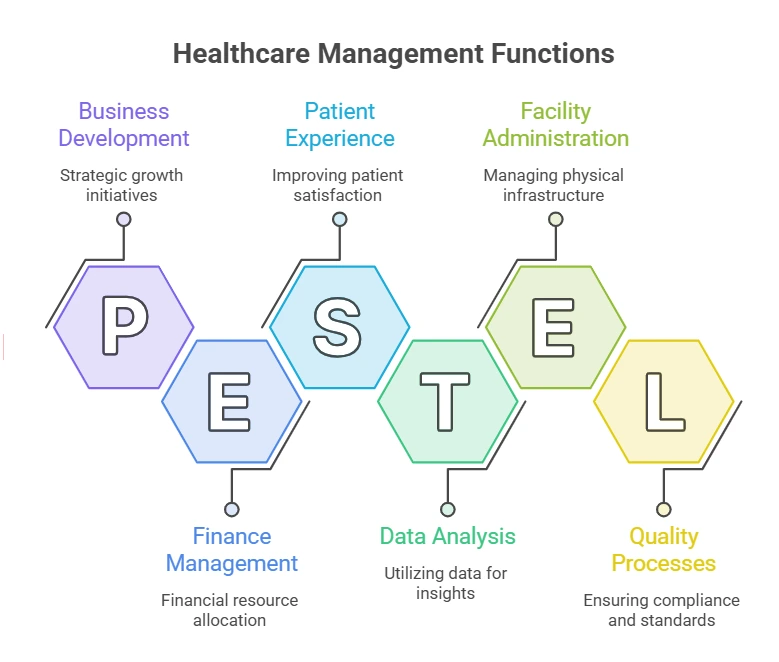
Hospitals need employees who can manage:
Operations
Finance
Human resources
Procurement
Supply chain
Patient experience
Quality processes
Marketing
Business development
Data analysis
Revenue cycle operations
Facility administration
Doctors and nurses remain responsible for clinical decisions.
However, non-clinical managers support the systems that allow clinical professionals to work efficiently.
Therefore, your resume should communicate value without visual clutter.
Use Clear Section Headings
Examples include:
Education
Internship Experience
Projects
Skills
Certifications
Leadership
Achievements
Avoid unusual labels that force recruiters to interpret the structure.
Use Consistent Formatting
Keep dates, bullet points, fonts, and spacing consistent.
A resume that looks organized can also signal attention to detail.
Avoid Decorative Designs
Healthcare administration is a professional sector.
Heavy graphics, large icons, multiple colors, and complicated layouts may reduce readability.
A simple structure usually works better.
Use Action-Oriented Bullet Points
Do not simply write:
“Worked on hospital project.”
Instead, write:
“Analyzed patient-flow processes and identified three potential causes of registration delays.”
The second version communicates action and analytical ability.
Write a Strong Professional Summary
Your professional summary should immediately explain your direction.
Avoid vague statements such as:
“Hardworking MBA student looking for a challenging career opportunity.”
Almost every candidate can write that.
Instead, connect your business background with healthcare.
For example:
MBA candidate interested in healthcare operations and hospital administration, with experience in process analysis, data interpretation, team projects, and service management. Seeking to apply business-management skills to improve patient experience and operational efficiency.
A strong profile is created through experiences that support your target career.
If you want healthcare management roles, intentionally build evidence in areas such as:
Hospital operations
Healthcare analytics
Supply chain
Quality management
Patient experience
Healthcare finance
Digital health
Revenue cycle management
Healthcare marketing
You can build this evidence through projects, internships, competitions, certifications, research, and industry exposure.
The objective is to show recruiters that healthcare is a deliberate career choice.
Turn Academic Projects Into Resume Evidence
Academic projects are highly valuable when you have limited professional experience.
However, they should be described as business problems rather than classroom assignments.
Suppose your project involved hospital waiting times.
A weak bullet might say:
“Completed a project on waiting time in hospitals.”
A stronger version could say:
“Mapped outpatient patient-flow stages and analyzed operational factors contributing to waiting-time variation.”
Another example:
“Compared monthly hospital KPI trends and created a management dashboard covering occupancy, patient volume, and service performance.”
These bullets demonstrate practical thinking.
Highlight Transferable Skills
Candidates without medical experience often underestimate their existing capabilities.
Your previous degree, internships, volunteering, or extracurricular activities may already demonstrate relevant skills.
Operations Skills
Examples include:
Process mapping
Workflow analysis
Scheduling
Resource planning
Service delivery
Capacity management
These skills can transfer directly into hospital operations.
Finance Skills
Healthcare organizations need managers who understand:
Budgeting
Cost analysis
Revenue
Financial reporting
Working capital
Business performance
Commerce and finance students can position these capabilities for healthcare roles.
Human Resources Skills
Hospitals employ diverse workforces.
HR-related skills may include:
Recruitment
Workforce planning
Training
Performance management
Employee engagement
Shift coordination
These capabilities are highly relevant to hospital administration.
Analytical Skills
Healthcare organizations generate large volumes of data.
Useful analytical skills include:
Excel
Dashboard creation
KPI analysis
Data visualization
Basic statistics
Presentation of findings
Employers value candidates who can convert data into management insights.
Skills for Non Science in Healthcare Management
Candidates from non-science backgrounds should not try to compete with clinicians on medical knowledge.
Instead, focus on the capabilities required for management.
Important skills for non science in healthcare may include:
Operations management
Business analytics
Communication
Financial understanding
Team coordination
Process improvement
Quality awareness
Data literacy
Problem-solving
Project management
Customer-service orientation
Digital tools
However, basic healthcare literacy still matters.
You should understand hospital departments, patient journeys, common healthcare terminology, quality standards, and the difference between clinical and non-clinical responsibilities.
Learn the Patient Journey
One effective way to build healthcare understanding is to study how patients move through a hospital.
Mention projects where you improved or analyzed a workflow.
Example:
“Mapped a five-stage service process and recommended changes to reduce duplicate data entry.”
Team Coordination
Hospitals depend heavily on multidisciplinary teamwork.
Example:
“Coordinated a six-member project team and completed research deliverables before the submission deadline.”
Data Analysis
Example:
“Analyzed 1,000+ survey responses using Excel and presented key service-experience findings.”
Customer or Patient Experience
Any service-sector experience can be useful.
Example:
“Resolved customer queries and tracked recurring service issues to support process improvements.”
Quality Management
If you have studied quality concepts, include relevant projects or certifications.
Example:
“Applied root-cause analysis to identify recurring service-quality issues in a healthcare case study.”
Unlock Healthcare Management
Complement your clinical knowledge with practical business skills to pursue opportunities across hospitals, rehabilitation, wellness, and healthcare management.
Freshers commonly weaken their resumes through avoidable mistakes.
Claiming Medical Expertise
If you are not clinically trained, do not present yourself as a medical expert.
Your strength lies in management.
Generic Career Objectives
Avoid statements that could belong to any candidate.
Show why you want healthcare management.
Listing Skills Without Evidence
Writing “leadership, teamwork, communication, analytics” is not enough.
Support those claims through projects and achievements.
Too Much Personal Information
Include only information relevant to the hiring process and appropriate for the market.
Long Paragraphs
Recruiters scan resumes quickly.
Use concise bullet points.
Fake Achievements
Never exaggerate numbers, titles, certifications, responsibilities, or internship work.
Credibility matters more than decoration.
Spelling and Formatting Errors
Healthcare administration values accuracy.
A careless resume may create the wrong impression.
A Sample Healthcare Management Resume Structure for Freshers
Professional Summary
MBA candidate interested in hospital operations and healthcare administration, with strengths in data analysis, process improvement, communication, and team coordination.
Education
Include:
MBA or PGDM
Undergraduate degree
Relevant academic performance
Healthcare Projects
Include projects connected with hospital operations, analytics, quality, healthcare finance, or patient experience.
Internship Experience
Highlight transferable responsibilities and measurable outcomes.
Skills
Include relevant management and technical skills.
Certifications
Add only meaningful, relevant qualifications.
Leadership and Achievements
Include positions of responsibility, competitions, volunteering, and significant accomplishments.
This format creates a clear story.
How to Build Your Healthcare Profile Before Placements
If placement season is still ahead, use the available time strategically.
Month 1: Learn Healthcare Fundamentals
Study hospital departments, patient journeys, and common management challenges.
Month 2: Build Technical Skills
Improve Excel, PowerPoint, analytics, or dashboard skills.
Month 3: Complete a Healthcare Project
Choose a practical operations or management problem.
Month 4: Gain Industry Exposure
Seek internships, live projects, webinars, or interactions with healthcare professionals.
Month 5: Improve Your Resume and Interview Stories
Convert experiences into achievement-focused bullet points.
This structured approach can help build a stronger profile even without prior medical experience.
Why Management Education Matters
Healthcare management requires more than sector knowledge.
Professionals also need strong business fundamentals.
These include:
Finance
Marketing
Operations
Human resources
Analytics
Strategy
Leadership
Communication
A management programme can help students develop these capabilities through classroom learning, practical projects, case discussions, and industry exposure.
At Asia Pacific Institute of Management, an industry-oriented curriculum, experienced faculty, corporate exposure, practical learning, and placement support can help students develop broader managerial capabilities.
For students interested in healthcare administration, the goal should be to combine management expertise with an understanding of healthcare operations.
That combination can support stronger career positioning.
Building a strong healthcare management resume for freshers does not require pretending to have clinical experience.
Healthcare organizations need much more than medical professionals.
They also need managers who can improve operations, analyze data, coordinate teams, manage resources, support quality, and enhance patient experiences.
Therefore, non-medical candidates should focus on the business side of healthcare.
Build relevant projects.
Develop analytical skills.
Understand hospital workflows.
Gain industry exposure.
Translate existing experience into measurable management achievements.
Most importantly, make your healthcare interest visible throughout the resume.
A strong fresher profile should show recruiters that you understand what healthcare managers do and that you have started building the capabilities required to contribute.
With focused MBA profile building, practical exposure, and careful resume positioning, candidates from non-science backgrounds can create a credible pathway toward hospital administration and wider healthcare management careers.
Shape Your Next Move
Develop leadership, business, and analytical capabilities that can help transform your healthcare expertise into broader management career opportunities.
Dr. Vikas Gupta is a distinguished academic in the education and research domain, specializing in finance and related interdisciplinary studies. He is known for his...
01.
How do I create a healthcare management resume with no medical experience?
Focus on transferable management skills, healthcare-related projects, internships, certifications, analytical ability, leadership, and your understanding of hospital operations. Do not try to present yourself as a clinical professional.
02.
Can a non-science graduate work in hospital administration?
Yes. Non-science graduates can explore non-clinical functions such as operations, HR, finance, quality, analytics, marketing, supply chain, and administration, subject to employer requirements.
03.
What skills should freshers add to a healthcare management resume?
Relevant skills may include operations management, Excel, data analysis, communication, process improvement, financial understanding, teamwork, project management, and healthcare quality awareness.
04.
How should MBA students build a healthcare profile?
Students can build their profiles through healthcare projects, internships, case competitions, certifications, industry exposure, analytics skills, and practical understanding of hospital workflows.
05.
What should I highlight for hospital administration roles?
Highlight operational projects, process analysis, team coordination, data skills, service-management experience, quality awareness, and measurable achievements.
06.
Is a one-page resume enough for an MBA fresher?
In many cases, yes. A concise one-page resume can work well when experience is limited. However, the appropriate length depends on the candidate’s relevant experience and recruiter expectations.
07.
How is a healthcare consulting resume different?
Consulting resumes typically place greater emphasis on analytical problem-solving, research, financial analysis, structured recommendations, presentations, and measurable impact.
08.
Should I mention that I have no medical background?
You do not need to emphasize the absence of medical experience. Instead, communicate your management capabilities, healthcare interest, relevant learning, and transferable skills.















.webp) Call Us
Call Us