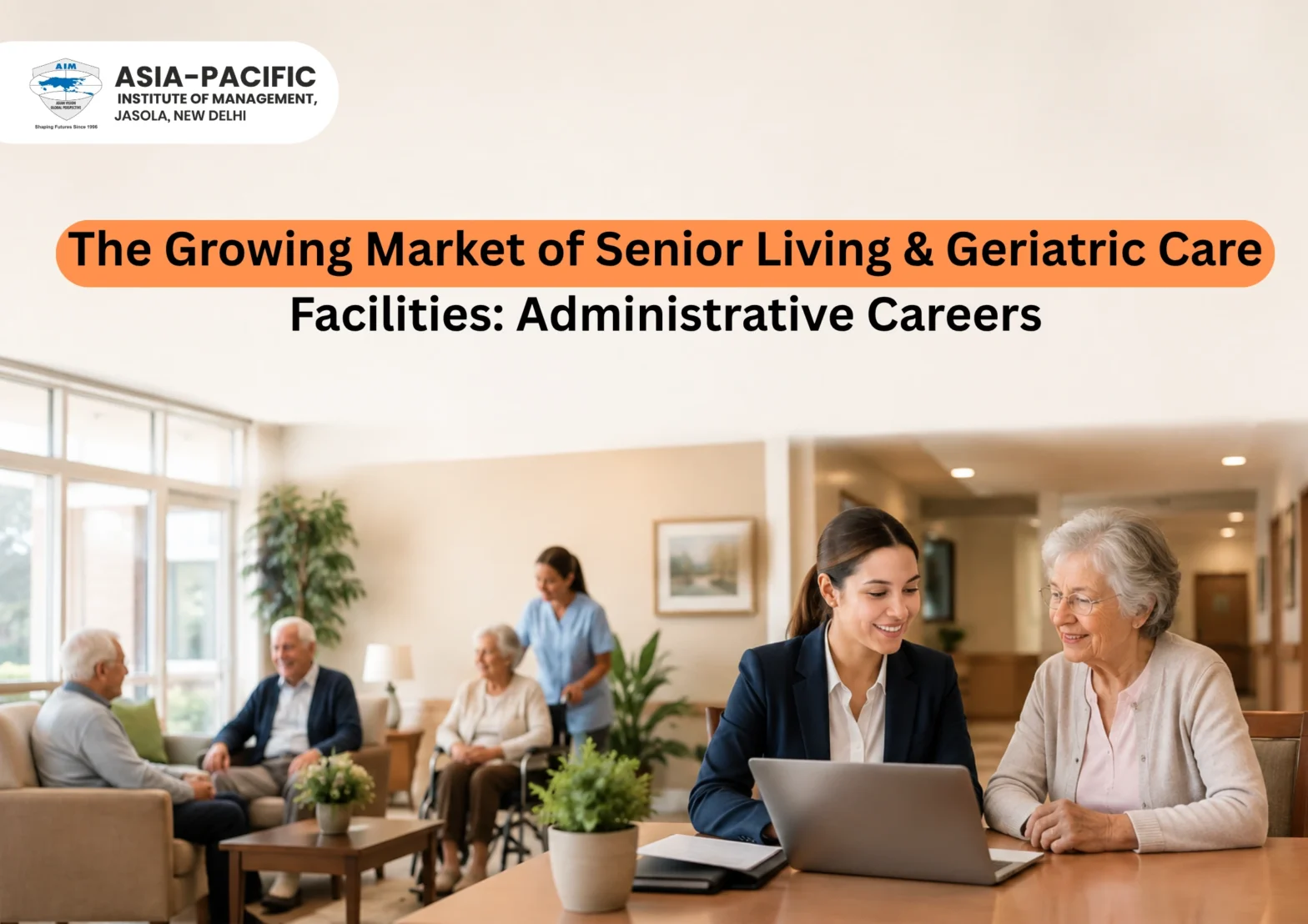
The Growing Market of Senior Living & Geriatric Care Facilities: Administrative Careers
Posted on 14 Aug 2026
By Dr. Vikas Gupta
Introduction
That demographic shift is creating new needs in healthcare, housing, rehabilitation, assisted living, home care, and long-term support.
For management students, this change is also creating an emerging career category.
Geriatric care management India is no longer limited to traditional old-age homes. The sector increasingly includes professionally managed senior living communities, assisted living facilities, dementia care, rehabilitation services, home-based care, and technology-enabled support.
According to government projections, India’s senior citizen population could reach around 230 million by 2036. UNFPA has also projected that people aged 60 and above may represent nearly one-fifth of India’s population by 2050.
This shift will require more than doctors and nurses.
Facilities will also need administrators who can manage operations, people, finances, resident experience, quality, facilities, supply chains, and family communication.
This guide explains how the senior-care market is evolving and which administrative careers management graduates can explore.
Accelerate Your Career Growth
Build essential business and leadership skills to transform your healthcare experience into rewarding management opportunities across growing organizations.
Geriatric care management in India involves coordinating healthcare, residential services, operations, safety, rehabilitation, social support, and quality of life for older adults. Administrative professionals may manage senior living facilities, assisted-care operations, resident services, staffing, quality systems, and healthcare coordination.
Geriatric care should not be understood only as medical treatment.
Older adults may require several types of support.
These can include:
Preventive healthcare
Chronic disease management
Rehabilitation
Nutrition
Mobility support
Assisted daily living
Mental-health support
Social engagement
Medication coordination
Emergency care
Home-based services
The Ministry of Health and Family Welfare’s National Programme for Health Care of the Elderly includes preventive, diagnostic, inpatient, outpatient, rehabilitative, day-care, and home-based services.
Therefore, senior care is becoming a multidisciplinary management ecosystem.
Why Is Senior Care Becoming a Major Healthcare Niche in 2026?
Among healthcare niches 2026, senior care stands out because its growth is supported by a long-term demographic shift rather than a temporary trend.
Several forces are changing demand.
1. India’s Population Is Ageing
India will have significantly more older adults over the coming decades.
UNFPA’s India Ageing Report projects that the 80-plus population could grow particularly rapidly between 2022 and 2050.
This matters because very old adults may require more assistance with mobility, chronic illnesses, daily living, and continuous care.
Therefore, demand may rise for:
Assisted living
Rehabilitation
Home healthcare
Dementia support
Long-term care
Palliative services
2. Family Structures Are Changing
Urban migration and smaller households can make traditional family-based elder care difficult.
Adult children may work in another city or country.
Meanwhile, older parents may want independence without becoming isolated.
This creates demand for organized communities where residents can receive support when needed.
JLL estimated that the addressable market for senior living in India could rise from around 1.57 million households in 2024 to 2.27 million by 2030.
3. Senior Care Is Becoming More Formal
India’s senior-care ecosystem historically depended heavily on families and informal caregivers.
However, government policy discussions increasingly emphasize standardized training, quality systems, stronger caregiver career pathways, and organized long-term care.
In August 2026, NITI Aayog published recommendations aimed at building a more organized caregiving ecosystem, including competency-based training, quality assurance, institutional coordination, and formal workforce pathways.
This formalization can create management opportunities alongside frontline caregiving roles.
Understanding the Senior Living Communities Business
That makes it different from a traditional hospital.
Residents may live in the facility for months or years.
Therefore, the operator is managing both a care environment and a living environment.
A senior community may need to manage:
Accommodation
Housekeeping
Food services
Security
Medical coordination
Emergency response
Recreation
Transportation
Maintenance
Physiotherapy
Social activities
Resident engagement
The business model may vary.
Some communities operate mainly as independent-living residences.
Others provide assisted living or continuous care.
Therefore, administrators must understand the exact service promise.
Independent Living vs Assisted Living
Students should understand this distinction before exploring careers.
Independent Living
Independent living communities are generally designed for older adults who can manage most daily activities independently.
The facility may provide:
Housing
Meals
Housekeeping
Security
Recreation
Transport
Basic wellness services
Healthcare support may be available when required.
Assisted Living
Assisted living provides more structured support.
Residents may need help with:
Mobility
Personal care
Medication routines
Meals
Daily activities
Medical appointments
The National Institute of Public Health Training and Research describes assisted-living settings as environments where older or chronically ill people can live with professional care available when needed.
Therefore, assisted-living operations require stronger care coordination and staffing systems.
What Does an Assisted Living Operations Manager Do?
Clinical decisions should remain with appropriately qualified healthcare professionals.
However, the operations manager ensures that the overall service system works.
Responsibilities may include:
Resident admission coordination
Staff scheduling
Facility operations
Vendor management
Food services
Housekeeping
Security
Resident engagement
Family communication
Quality monitoring
Emergency preparedness
Financial coordination
Maintenance
Performance reporting
The manager may coordinate doctors, nurses, caregivers, physiotherapists, dietitians, and support teams.
Therefore, stakeholder-management skills are particularly important.
Resident Experience Management
A senior living facility cannot be evaluated only through medical outcomes.
Resident quality of life is equally important.
Administrators may therefore monitor:
Food satisfaction
Social participation
Activity schedules
Complaint resolution
Family communication
Room maintenance
Staff responsiveness
Personal preferences
Transport support
A resident may be clinically stable but still dissatisfied with the service.
Therefore, successful operators need a hospitality mindset alongside healthcare awareness.
Admission and Resident Assessment
Admissions should match the facility’s capabilities.
For example, a community designed for independent residents should not accept a person requiring intensive nursing care unless appropriate services are available.
Administrators may coordinate assessments covering:
Mobility
Daily-living needs
Medical history
Medication requirements
Dietary needs
Cognitive status
Emergency risks
Social needs
Accessibility requirements
Clinical assessments should be performed by qualified professionals.
However, administrators ensure that findings are translated into an appropriate service plan.
Government senior-care programmes already include senior homes, mobile medical units, continuous-care homes, physiotherapy clinics, and other forms of support.
For administrators, infrastructure planning should focus on the practical needs of ageing residents.
Age-Friendly Facility Design
Senior facilities need stronger accessibility than ordinary residential projects.
Administrators may need to coordinate:
Handrails
Non-slip flooring
Wheelchair access
Accessible bathrooms
Adequate lighting
Emergency call systems
Safe corridors
Elevators
Seating areas
Clear signage
Small design problems can create significant risks for older residents.
Therefore, facility management becomes an important part of geriatric care.
Emergency Preparedness
Senior residents may have multiple chronic conditions.
Therefore, facilities need clear escalation systems.
An operations manager may coordinate:
Emergency contacts
Ambulance arrangements
Hospital partnerships
Staff drills
Emergency equipment
Family notification
Incident documentation
The clinical response remains the responsibility of healthcare professionals.
However, the administrative system determines how quickly that response can be activated.
Growth of Luxury Retirement Homes
The rise of luxury retirement homes reflects one segment of a broader shift in senior housing.
Affluent seniors may seek communities offering independent lifestyles combined with access to healthcare and hospitality-style services.
Such facilities may provide:
Premium accommodation
Restaurants or dining services
Wellness programmes
Fitness facilities
Recreation
Concierge services
Transportation
Preventive healthcare
Physiotherapy
Emergency support
The growth of professionally managed retirement living is reflected in current market research. JLL and other real-estate research groups have reported increasing demand for organized senior housing as family structures, longevity, and attitudes toward retirement living change.
However, the term “luxury” should not distract from the core responsibility.
Resident safety and care quality must remain priorities.
Administrative Career Opportunities in Senior Care
The growth of formal senior care can create several management pathways.
1. Assisted Living Operations Manager
This professional manages daily facility operations.
Responsibilities may include staff coordination, resident services, facilities, vendors, budgets, and quality indicators.
2. Senior Living Community Manager
A community manager may oversee the entire residential operation.
The role can combine:
Hospitality
Healthcare coordination
Facilities
Finance
Resident relations
People management
Therefore, it suits candidates comfortable with diverse responsibilities.
3. Resident Experience Manager
This role focuses more strongly on quality of life and service satisfaction.
Responsibilities may include:
Activity planning
Complaint handling
Family communication
Social programmes
Feedback
Service recovery
Candidates with hospitality or customer-experience backgrounds may find this role relevant.
4. Healthcare Operations Coordinator
A healthcare operations coordinator connects residents with medical services.
The role may involve:
Appointment scheduling
Diagnostic coordination
Hospital referrals
Health records
Rehabilitation scheduling
Transport
The coordinator should not make independent clinical decisions.
Instead, the role supports continuity.
5. Facility Manager
Facility managers maintain the physical environment.
Responsibilities may include:
Building maintenance
Utility systems
Safety
Security
Vendor management
Equipment maintenance
Emergency systems
Senior-care facilities require particularly strong attention to accessibility and safety.
6. Quality Manager
Quality managers may develop and monitor standards for:
Resident safety
Documentation
Complaints
Medication processes
Incident reporting
Staff training
Hygiene
Service quality
As the care sector becomes more formalized, quality assurance may become increasingly important.
NITI Aayog’s 2026 caregiving recommendations specifically emphasize accreditation and quality assurance within the emerging care ecosystem.
Step Into Healthcare Leadership
Combine your clinical foundation with strategic management knowledge to pursue meaningful roles in hospital administration, operations, and healthcare leadership.
Why Senior Care Is More Than a Healthcare Business
Senior living sits at the intersection of several industries.
It includes elements of:
Healthcare + Hospitality + Real Estate + Facility Management + Technology + Social Care
This combination creates distinctive management challenges.
For example, a hospital patient may stay for three days.
A senior-living resident may stay for several years.
Therefore, managers must think about long-term relationships.
The resident’s family may also become an important stakeholder.
Managers need transparency, communication, and trust.
Revenue Models in Senior Living
The commercial model can differ by operator.
Possible approaches include:
Property purchase
Long-term lease
Monthly rental
Service packages
Care packages
Membership models
Additional services may sometimes be charged separately.
These can include:
Nursing care
Physiotherapy
Personal attendants
Transportation
Specialized diets
Medical consultations
Therefore, administrators need financial literacy.
They should understand both service costs and resident expectations.
Cost Management Without Reducing Care Quality
Senior living requires careful cost control.
Major cost categories can include:
Manpower
Food
Utilities
Maintenance
Healthcare services
Transportation
Security
Housekeeping
However, aggressive cost reduction can create safety risks.
For example, reducing caregiver staffing may increase response time.
Therefore, managers should improve efficiency through process design rather than simply cutting resources.
Technology in Senior Care
Technology may increasingly support older adults and administrators.
Potential tools include:
Electronic resident records
Telemedicine
Wearable monitoring
Emergency alerts
Medication reminders
Fall-detection systems
Family communication apps
Operations dashboards
India’s current policy environment is also exploring technology-enabled caregiving and a more formalized long-term-care ecosystem.
However, technology should remain accessible.
Some older adults may have limited digital confidence.
Therefore, human support remains important.
KPIs for Senior Living Administrators
Managers need indicators that reflect both care and business performance.
Possible KPIs include:
Occupancy rate
Resident satisfaction
Complaint-resolution time
Staff turnover
Emergency incidents
Fall incidents
Maintenance turnaround time
Activity participation
Food satisfaction
Family satisfaction
Employee training completion
Operating cost per resident
However, not every facility should use the same dashboard.
KPIs should reflect the service model.
Workforce Management in Geriatric Care
People are central to senior care.
Facilities may employ:
Nurses
Caregivers
Physiotherapists
Doctors
Dietitians
Psychologists
Administrative employees
Housekeeping teams
Security personnel
Activity coordinators
The workforce challenge is not only recruitment.
Managers must also address:
Training
Scheduling
Burnout
Supervision
Retention
Behaviour
Communication
Skill development
India’s policy discussion in 2026 has placed stronger attention on recognizing caregiving as a skilled profession and creating standardized training and career pathways.
This can further professionalize senior-care operations.
Skills Required for Senior Care Administration
Healthcare management students interested in this field should develop several capabilities.
Operations Management
Managers need to coordinate multiple services every day.
Healthcare Understanding
Administrators should understand chronic diseases, rehabilitation, ageing needs, and emergency processes at a managerial level.
Hospitality Skills
Resident comfort and experience matter.
Financial Management
Managers need budgeting and cost-control skills.
Human Resource Management
Senior care is highly people-intensive.
Communication
Administrators interact with residents, families, caregivers, clinicians, and vendors.
Data Analysis
Performance dashboards can help identify trends and service gaps.
Empathy and Professional Judgement
Efficiency matters.
However, senior care also involves dignity, independence, and emotional wellbeing.
Managers need to balance operational requirements with human needs.
Challenges in Geriatric Care Management in India
The opportunity is significant, but the sector also faces challenges.
Limited Formal Infrastructure
Formal institutional senior care still serves only a small portion of India’s older population.
A 2026 NCAER commentary cited government data indicating that India had 696 senior citizen homes in 2025, highlighting the relatively limited scale of institutional infrastructure.
Shortage of Trained Caregivers
Quality senior care requires trained employees.
Therefore, workforce development will remain important.
Affordability
Premium senior communities may serve only higher-income households.
India also needs affordable community and home-care models.
Rural Access
Future senior-care demand will not exist only in metropolitan areas.
Recent demographic analysis has highlighted the scale of ageing expected in rural India as well.
Therefore, scalable rural care models may become an important challenge.
Regulation and Quality
Senior living combines housing and healthcare-related services.
Consequently, managers must remain aware of applicable state, local, healthcare, building, fire-safety, and social-welfare requirements.
India is also moving toward stronger standards and formalization of the senior-care ecosystem.
Is Senior Care a Good Career for MBA Graduates?
It can be a relevant option for students interested in healthcare, operations, hospitality, and service management.
MBA graduates may bring skills in:
Operations
Finance
HR
Marketing
Analytics
Strategy
Supply chain
Customer experience
However, they also need healthcare-sector understanding.
Senior care involves vulnerable individuals.
Therefore, decisions should prioritize safety and dignity alongside commercial performance.
How Management Students Can Prepare for the Sector
Students interested in senior-care careers can build their profile deliberately.
Learn Healthcare Operations
Understand patient and resident journeys.
Study Geriatric Care
Develop basic knowledge of ageing, chronic conditions, mobility, and rehabilitation.
Build Data Skills
Learn spreadsheets, dashboards, and KPI analysis.
Understand Hospitality
Resident experience is central to senior living.
Develop People-Management Skills
Caregiving operations depend heavily on workforce quality.
Gain Practical Exposure
Internships, healthcare projects, and operational case studies can help students understand real service environments.
At Asia Pacific Institute of Management, an industry-oriented curriculum, experienced faculty, practical learning, corporate exposure, and placement support can help students develop broader management capabilities.
Such skills can support learners exploring emerging healthcare sectors, including hospital operations, senior-care services, healthcare analytics, and other service-management careers.
The future of senior care is unlikely to depend on one model.
India will need multiple solutions.
These may include:
Independent retirement communities
Assisted living
Home healthcare
Day-care centres
Dementia care
Rehabilitation
Palliative services
Technology-enabled monitoring
Community-based services
Government programmes already recognize the need for home care, rehabilitation, mobile medical units, and other elderly health services.
At the same time, private organized senior living is expanding to serve households seeking professionally managed residential environments.
Therefore, this sector may increasingly need professionals who understand both healthcare and business.
Conclusion
The growth of geriatric care management India reflects one of the country’s most important long-term demographic changes.
India will have more older adults.
At the same time, changing family structures and increasing demand for professional services are creating new models of senior living and care.
This includes independent communities, assisted living, rehabilitation, home healthcare, continuous care, and premium retirement facilities.
Therefore, the sector needs more than clinical professionals.
It also needs skilled administrators.
Operations managers, resident-experience professionals, quality managers, facility leaders, business-development teams, and healthcare coordinators can all contribute.
For management students, senior care represents an emerging career path at the intersection of healthcare, hospitality, operations, and social impact.
The strongest professionals will understand that this sector cannot be managed only through occupancy and revenue.
Successful geriatric care also depends on safety, dignity, independence, trust, and quality of life.
Turn Expertise Into Impact
Strengthen your healthcare background with practical management capabilities for careers in rehabilitation, administration, operations, wellness, and business development.
Dr. Vikas Gupta is a distinguished academic in the education and research domain, specializing in finance and related interdisciplinary studies. He is known for his...
Geriatric care management coordinates healthcare, daily support, residential services, rehabilitation, safety, and wellbeing for older adults. Managers may work in assisted living, senior communities, home healthcare, rehabilitation, or related services.
02.
What does an assisted living operations manager do?
An assisted living operations manager coordinates staffing, facilities, resident services, vendors, quality systems, family communication, and day-to-day operations while qualified healthcare professionals handle clinical decisions.
03.
Is the senior living market growing in India?
Yes. Demographic ageing and changing household structures are supporting growing interest in organized senior living. JLL projects substantial expansion in the addressable senior-living household market through 2030.
04.
What are luxury retirement homes?
Luxury retirement homes are premium senior communities combining residential facilities with services such as hospitality, wellness, recreation, security, healthcare coordination, and emergency support.
05.
Can MBA graduates work in geriatric care?
Yes. Depending on employer requirements, MBA graduates can explore operations, finance, HR, marketing, business development, quality, facility management, and resident-experience roles.
06.
What skills are needed for senior living administration?
Important skills include operations management, communication, healthcare understanding, finance, HR, hospitality, analytics, quality management, and stakeholder coordination.
07.
What are the major challenges in senior care in India?
Challenges include limited formal infrastructure, workforce shortages, affordability, rural access, quality consistency, and the need for stronger professional standards.
08.
Is senior care a promising healthcare niche in 2026?
Senior care is an increasingly relevant healthcare and service-management field because India’s older population is growing and both government and private-sector models are becoming more structured.











.webp) Call Us
Call Us