Managing Outpatient Departments (OPD): The Hardest Job in Hospital Operations
Posted on 23 Jun 2026
By Dr. Vikas Gupta
Introduction
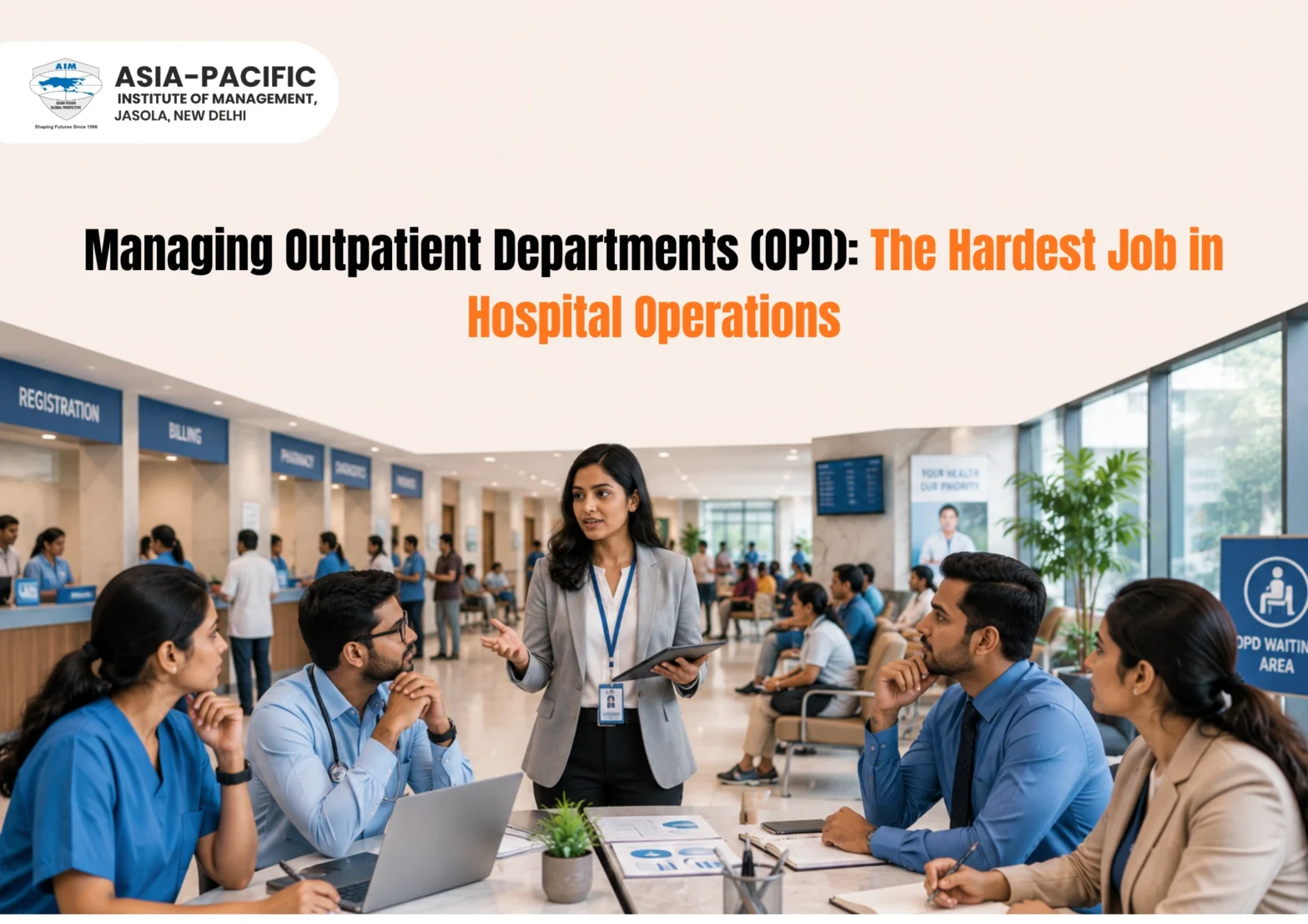
Outpatient department management is one of the most difficult responsibilities in hospital operations. The OPD is where most patients first experience a hospital’s service quality. It is also where registration, billing, doctor consultation, diagnostics, pharmacy, patient emotions, and staff coordination meet at the same time.
For patients, the OPD may look like a simple visit. However, for hospital managers, it is a live operations challenge. Every delay, queue, missed token, unclear signboard, or staff communication gap can affect the patient experience.
Therefore, managing an OPD requires process control, technology, empathy, and quick decision-making.
Master OPD Operations
Build practical hospital management skills to improve patient flow, reduce delays, and lead efficient OPD service teams confidently.
Outpatient department management is the process of planning, coordinating, and improving the complete OPD patient journey. It includes appointment scheduling, registration, queue handling, token management, consultation flow, billing, diagnostics, pharmacy movement, and patient communication.
The main goal is to reduce confusion and waiting time.
A good OPD system helps patients move smoothly from entry to exit. Moreover, it helps doctors, nurses, front-office staff, and coordinators work with better clarity.
Why OPD Management Is So Challenging
OPD operations are unpredictable. Some patients come with appointments. Others walk in without prior booking. Some need only consultation, while others need billing, tests, reports, medicines, and follow-up guidance.
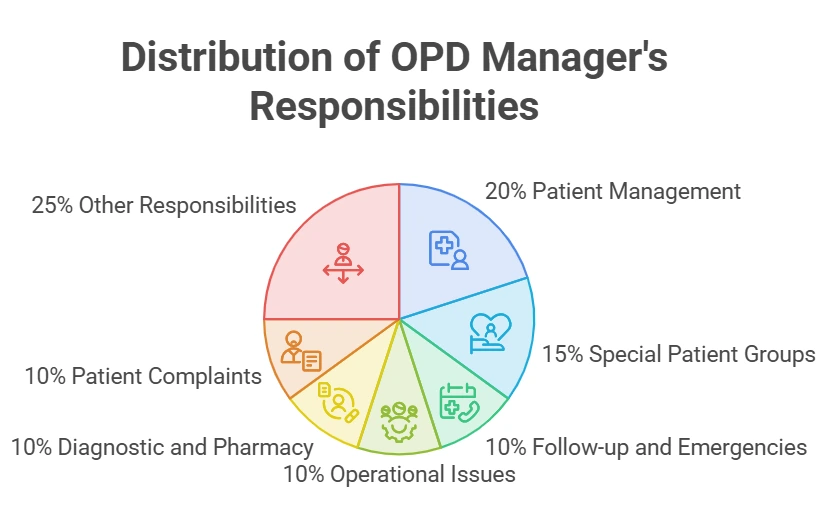
An OPD manager often handles:
Walk-in patients
Appointment patients
Senior citizens
Pregnant women
Children
Follow-up patients
Emergency spillovers
Doctor delays
Billing issues
Diagnostic referrals
Pharmacy queues
Patient complaints
Additionally, the OPD is highly visible. A crowded lobby or confused queue can immediately create a negative impression.
Research on outpatient services shows that waiting time has a strong effect on patient satisfaction. A 2023 study found that actual, perceived, and expected waiting time all influence how patients rate outpatient services.
OPD as the Front Door of Hospital Experience
The OPD is often the patient’s first real interaction with a hospital. Therefore, the patient waiting experience becomes very important.
Patients usually judge the hospital through simple questions:
Is registration easy?
Is the token system clear?
Is the waiting area clean?
Are staff members polite?
Is the doctor available on time?
Are billing and diagnostics easy to understand?
Is there someone to guide elderly patients?
Even if the doctor gives excellent medical advice, a poor waiting experience can reduce patient trust. Therefore, outpatient department management must focus on both speed and comfort.
Key Stages in OPD Patient Flow
A strong OPD process begins with patient journey mapping. Every step should have clear ownership.
1. Entry and Help Desk
The patient enters the hospital and looks for direction. At this point, signage and help-desk support matter.
If the patient does not know where to go, confusion starts immediately. Therefore, trained front-office staff should guide patients to registration, billing, consultation rooms, diagnostics, or pharmacy.
2. Registration
Registration is often the first bottleneck. It includes patient details, doctor selection, appointment confirmation, and token generation.
Digital registration can reduce this pressure. The Ayushman Bharat Digital Mission’s Scan and Share service allows patients to scan a hospital QR code and share their ABHA profile for OPD registration. The National Health Authority reported that the service had helped generate more than 3 crore OPD tokens by June 2024.
3. Waiting Area
The waiting area controls the patient’s mood. Seating, cleanliness, ventilation, token displays, announcements, and staff communication all matter.
Moreover, patients feel less anxious when they know the expected waiting time.
4. Doctor Consultation
Doctor consultation depends on schedule planning, patient complexity, and availability. However, even a small delay can disturb the entire queue.
Therefore, doctor-wise queue tracking is essential.
5. Billing, Diagnostics, and Pharmacy
Many patients need tests, medicines, or follow-up appointments after consultation. Consequently, OPD coordination does not end outside the doctor’s room.
Billing counters, lab teams, radiology units, and pharmacy staff must work in sync.
6. Exit and Follow-Up
The final step is clear patient guidance. Patients should know when to return, where to collect reports, and how to follow the prescription.
A smooth exit improves the overall patient experience.
Role of an OPD Queue Management System
An opd queue management system helps hospitals organise patient movement through tokens, displays, appointment slots, queue categories, and real-time tracking.
A good system can:
Reduce crowding near counters
Improve queue visibility
Guide patients to the correct room
Track doctor-wise patient load
Support priority handling
Reduce repeated patient queries
Improve waiting-time data
Help managers plan staff better
Studies on queue management systems show that structured queue processes can improve patient satisfaction in healthcare waiting areas.
However, technology alone cannot solve OPD problems. Staff must follow the process. Doctors must follow schedules. Patients must also receive clear instructions.
Token System Optimization in OPD
Token system optimization means improving how patient tokens are issued, displayed, prioritised, and managed.
Many hospitals use token systems. However, not all token systems are efficient.
A weak token system may create:
Confusion between walk-ins and appointments
Missed token numbers
Long registration queues
Arguments at counters
No priority for elderly patients
Poor doctor-wise queue control
Overcrowding near consultation rooms
A strong token system should include:
Separate Token Categories
Walk-ins, appointments, follow-ups, senior citizens, and urgent cases should not follow the same flow.
Real-Time Token Display
Patients should clearly see their token number, doctor room, and queue status.
Clear Announcements
Audio and visual announcements reduce confusion. They also reduce pressure on staff.
Missed Token Rules
Hospitals should define what happens when patients miss their turn. This prevents conflict.
Waiting-Time Tracking
Managers should track waiting time by department, doctor, and time slot.
Priority Support
Senior citizens, pregnant women, children, and patients with mobility challenges may need faster assistance.
Lead Hospital Excellence
Learn operations, analytics, and service quality skills for healthcare administration careers in modern hospitals and patient experience roles.
Hospital Lobby Operations: The Hidden Pressure Point
Hospital lobby operations are a major part of OPD success. The lobby is where patients wait, ask questions, observe staff behaviour, and form opinions about the hospital.
A good hospital lobby should be easy to understand. Patients should not need to ask multiple people for basic directions.
Important lobby areas include:
Lobby Area
Operations Focus
Entry gate
First guidance and crowd direction
Help desk
Query handling and patient support
Registration zone
Queue discipline and document support
Waiting area
Seating, cleanliness, and comfort
Token display
Queue visibility and announcements
Billing area
Payment support and receipt flow
Diagnostics direction
Movement to lab or radiology
Pharmacy access
Smooth medicine collection
Additionally, lobby staff must handle emotions. Patients and families may feel anxious, tired, or worried. Therefore, polite communication is essential.
Clinic Coordinator Roles in OPD Management
Clinic coordinator roles are central to outpatient department management. A clinic coordinator connects patients, doctors, nurses, billing teams, diagnostics, and front-office staff.
Key responsibilities include:
Managing doctor schedules
Monitoring patient queues
Guiding patients to consultation rooms
Handling delays and complaints
Supporting elderly patients
Coordinating with billing and diagnostics
Updating patients about waiting time
Ensuring consultation rooms are ready
Reporting operational issues
Maintaining service discipline
A clinic coordinator must have patience, communication skills, problem-solving ability, and emotional maturity.
This role is suitable for students interested in hospital operations, healthcare administration, and patient experience management.
Common OPD Management Problems
1. Unplanned Patient Arrivals
Many patients arrive at the same time, especially in the morning. Consequently, counters and waiting areas become crowded.
2. Poor Appointment Slot Design
If too many patients receive the same slot, queues become unavoidable. Therefore, appointment planning must match doctor capacity.
3. Doctor Delays
Doctor delays create a chain reaction. Moreover, patients become more frustrated when staff do not explain the delay.
4. Weak Signage
Poor signage increases confusion. It also increases repeated questions at the help desk.
5. Manual Registration Pressure
Manual registration slows down movement. Digital registration and QR-based systems can reduce this burden.
6. Lack of Queue Data
Many hospitals know the OPD is crowded. However, they may not know where the bottleneck starts.
Hospitals can improve outpatient department management by tracking key performance indicators.
Important OPD KPIs include:
Average registration time
Average waiting time before consultation
Doctor-wise patient load
Walk-in versus appointment ratio
No-show rate
Token abandonment rate
Billing turnaround time
Diagnostic turnaround time
Pharmacy waiting time
Patient complaint rate
Patient satisfaction score
Peak-hour crowd density
Additionally, hospitals should review these KPIs weekly. This helps managers improve staffing, appointment slots, counters, and patient movement.
How to Improve Patient Waiting Experience
Patients may still need to wait. However, hospitals can make the waiting experience more organised and respectful.
1. Give Realistic Waiting Updates
Patients feel less anxious when they know how long they may need to wait.
2. Improve Seating and Comfort
Senior citizens, children, and pregnant women need comfortable seating and clear priority support.
3. Use Digital Displays
Token displays reduce confusion and repeated questions.
4. Train Front-Office Staff
Polite communication can reduce conflict and improve satisfaction.
5. Create Priority Counters
Priority counters support elderly patients, pregnant women, and patients with special needs.
6. Separate Service Flows
Registration, billing, report collection, and follow-up should not always use the same queue.
7. Use Appointment Analytics
Hospitals should study peak hours and redesign appointment slots. Research on appointment scheduling shows that better scheduling can reduce outpatient waiting time.
8. Place Coordinators in the Lobby
Technology helps, but human guidance remains important in healthcare settings.
Skills Needed for OPD Management Careers
Students who want to work in OPD or hospital operations need both management and people skills.
Important skills include:
Healthcare operations knowledge
Patient flow understanding
Communication skills
Conflict resolution
Data analysis
Excel and dashboarding
Time management
Team coordination
Service quality awareness
Empathy
Problem-solving
Moreover, students should understand how hospital departments work together.
At Asia Pacific Institute of Management, students gain practical learning, industry-oriented education, experienced faculty guidance, and corporate exposure. These elements help students prepare for healthcare operations, hospital administration, and patient experience roles.
Why OPD Management Is a Strategic Hospital Function
OPD management is not only an operational task. It affects hospital revenue, doctor productivity, patient loyalty, and brand reputation.
A well-managed OPD can:
Improve patient satisfaction
Reduce complaints
Increase repeat visits
Improve doctor utilisation
Reduce staff pressure
Support digital health adoption
Strengthen hospital trust
Therefore, hospitals need trained professionals who can manage people, processes, data, and technology together.
Career Opportunities in OPD and Hospital Operations
Students interested in outpatient department management can explore roles such as:
OPD Coordinator
Clinic Coordinator
Patient Experience Executive
Hospital Operations Executive
Front Office Manager
Patient Flow Coordinator
Healthcare Operations Analyst
Quality Executive
Hospital Administration Trainee
Medical Services Coordinator
With experience, professionals can grow into:
OPD Manager
Hospital Operations Manager
Patient Experience Manager
Quality Manager
Healthcare Administrator
Unit Operations Head
This career path is suitable for students who enjoy coordination, service improvement, healthcare delivery, and real-time problem-solving.
Conclusion
Outpatient department management is one of the hardest jobs in hospital operations because it combines patient flow, technology, communication, service quality, and real-time decision-making.
A strong OPD system does not only reduce waiting time. It improves trust, comfort, and hospital efficiency.
For students planning a career in healthcare management, OPD operations offer excellent learning. It teaches discipline, empathy, problem-solving, and leadership.
Asia Pacific Institute of Management helps students build practical management skills through industry-aligned education, corporate exposure, experienced faculty, and placement support. These skills are useful for careers in hospital operations, healthcare administration, and patient experience management.
Start Healthcare Leadership
Turn your interest in OPD management into career-ready expertise with industry-oriented MBA learning, mentorship, and dedicated placement support.
Dr. Vikas Gupta is a distinguished academic in the education and research domain, specializing in finance and related interdisciplinary studies. He is known for his...
Outpatient department management is the process of managing patient flow in a hospital OPD. It includes registration, queue control, consultation coordination, billing, diagnostics, pharmacy movement, and patient communication.
02.
Why is OPD management difficult?
OPD management is difficult because it involves high patient volume, doctor schedules, staff coordination, patient emotions, billing issues, diagnostics, and complaints at the same time.
03.
What is an OPD queue management system?
An OPD queue management system manages patient tokens, appointment flow, waiting time, doctor queues, and service counters through manual or digital tools.
04.
How does token system optimization help hospitals?
Token system optimization helps hospitals reduce crowding, improve queue visibility, prioritise vulnerable patients, and manage doctor-wise patient flow better.
05.
What improves patient waiting experience?
Clear communication, digital displays, clean waiting areas, comfortable seating, trained coordinators, and realistic waiting-time updates improve patient waiting experience.
06.
What are clinic coordinator roles in OPD?
Clinic coordinators manage patient movement, doctor schedules, queue updates, consultation-room readiness, complaints, and coordination with billing or diagnostics teams.
07.
Is OPD management a good career option?
Yes, OPD management is a strong career option for students interested in hospital operations, healthcare administration, patient experience, and service management.
















.webp) Call Us
Call Us