Artificial Intelligence is transforming modern workplaces. Businesses now use AI for automation, analytics, customer support, forecasting, and operational efficiency. However, despite rapid technological advancement, organizations still depend heavily on human professionals for leadership, collaboration, creativity, and strategic decision-making.
This is where soft skills become critical.
Today, employers increasingly value professionals who can combine technical understanding with emotional intelligence and business judgment. Consequently, students pursuing a PGDM program are expected to develop not only managerial knowledge but also future-ready interpersonal capabilities.
This guide explores the top soft skills that help PGDM graduates outperform AI in real business environments.
Lead Beyond AI
Build emotional intelligence, leadership, and strategic thinking skills that help you succeed in future-ready business roles.
Apply Now
→
Why Emotional Intelligence in Management Matters More Than Ever
Emotional intelligence in management refers to the ability to understand emotions, manage interpersonal relationships, communicate effectively, and make balanced decisions in professional environments.
In modern organizations, emotional intelligence helps managers:
- Lead teams effectively
- Handle workplace conflict
- Build client relationships
- Improve collaboration
- Make ethical business decisions
Although AI can process data quickly, it cannot fully replicate empathy, emotional understanding, or human leadership. Therefore, emotional intelligence remains one of the most valuable managerial skills.
Bonus: PGDM Admission Process
Can AI Replace Management Professionals?
AI is extremely powerful in:
- Data analysis
- Process automation
- Forecasting
- Reporting
- Pattern recognition
However, AI still struggles with:
- Human empathy
- Leadership under uncertainty
- Ethical judgment
- Creativity
- Relationship management
- Negotiation
As a result, organizations continue prioritizing professionals who can combine technology with human-centered decision-making.
A strong post graduate diploma in management (PGDM) helps students build this balance between analytical capability and managerial intelligence.
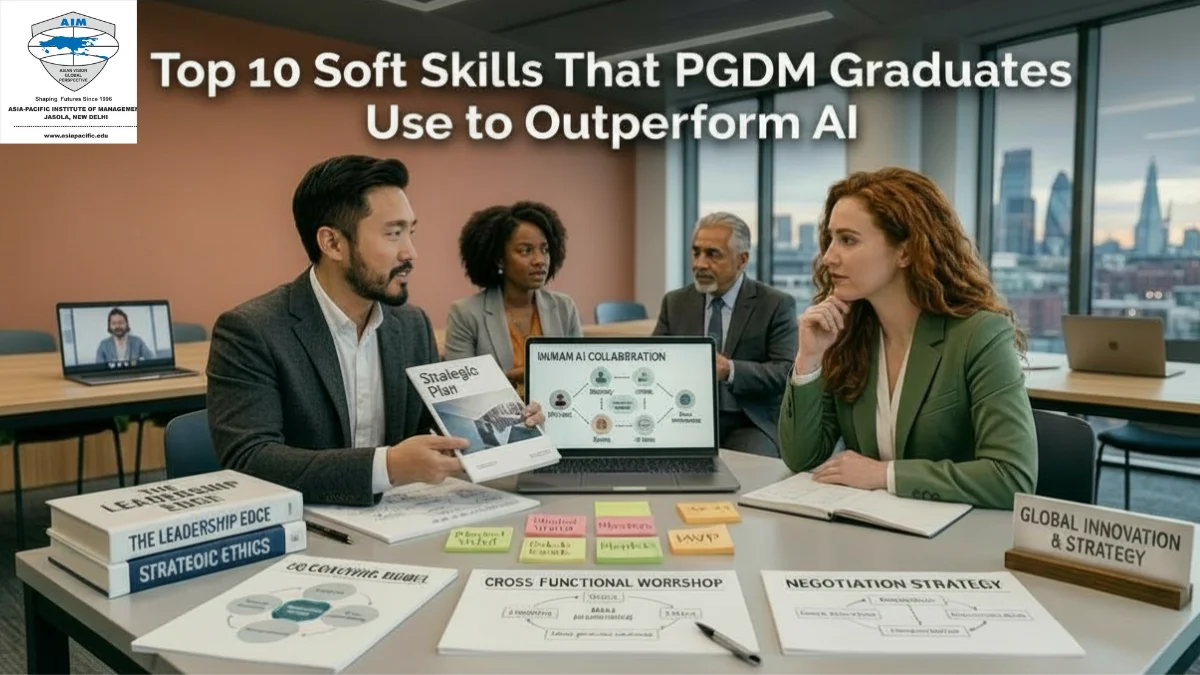
Top 10 Soft Skills PGDM Graduates Use to Outperform AI
1. Emotional Intelligence
Managers regularly interact with employees, clients, investors, and stakeholders. Therefore, understanding emotions and human behavior becomes essential.
Emotionally intelligent professionals can:
- Resolve conflicts
- Build trust
- Improve team morale
- Strengthen workplace communication
This capability gives human managers a significant advantage over AI systems.
2. Critical Thinking
AI can provide recommendations, but humans must evaluate outcomes critically.
Critical thinking helps managers:
- Analyze business risks
- Validate AI-generated insights
- Make practical decisions
- Solve ambiguous business challenges
Students pursuing a PGDM course often strengthen critical thinking through case studies and business simulations.
3. Communication Skills
Strong communication remains one of the most valuable professional skills.
Managers must:
- Present ideas clearly
- Handle negotiations
- Conduct meetings
- Communicate with clients
- Lead teams effectively
Even advanced AI tools cannot fully replace persuasive communication and relationship-building abilities.
4. Leadership
Leadership involves motivation, accountability, and decision ownership.
Effective leaders:
- Inspire teams
- Manage pressure
- Build organizational culture
- Encourage innovation
A modern PGDM program focuses heavily on leadership development through practical projects and collaborative learning.
5. Creativity
Creativity drives innovation and business growth.
Organizations need professionals who can:
- Develop new ideas
- Build marketing campaigns
- Improve customer experiences
- Create competitive strategies
AI can support creative processes, but human imagination remains central to innovation.
Future Ready Managers
Gain practical PGDM learning that strengthens communication, collaboration, creativity, and decision-making for modern workplaces.
Apply Now
→
6. Ethical Decision-Making
As AI adoption increases, ethical management becomes increasingly important.
Managers must evaluate:
- Responsible AI usage
- Data privacy
- Fair business practices
- Organizational ethics
Human judgment remains essential for balancing business goals with ethical responsibilities.
7. Adaptability
Business environments change rapidly.
Professionals must adapt to:
- New technologies
- Changing markets
- Customer expectations
- Industry disruptions
Adaptable managers learn continuously and remain competitive despite evolving workplace trends.
8. Collaboration
Modern organizations rely heavily on teamwork.
Managers frequently work across:
- Marketing
- Finance
- Operations
- Analytics
- Human resources
Strong collaboration skills improve productivity, innovation, and problem-solving.
9. Problem-Solving
Businesses face unpredictable challenges regularly.
Managers must:
- Analyze situations
- Evaluate alternatives
- Make strategic decisions
- Solve operational issues
A post graduate diploma in management PGDM helps students develop structured business problem-solving abilities through experiential learning.
10. Strategic Thinking
Strategic thinking helps organizations maintain long-term competitiveness.
Professionals with strategic capabilities can:
- Identify market opportunities
- Plan growth initiatives
- Analyze competition
- Improve organizational positioning
AI can support analysis, but long-term strategic direction still requires human leadership.
Bonus: Career Opportunities After PGDM
How a PGDM Program Builds Human-Centric Skills
A modern PGDM course goes beyond theoretical education.
Students develop practical skills through:
- Case studies
- Group discussions
- Presentations
- Industry projects
- Corporate internships
- Business simulations
These experiences improve:
- Confidence
- Communication
- Teamwork
- Leadership
- Decision-making
Additionally, industry-oriented management education prepares students for real workplace situations where human interaction remains essential.
Institutes like Asia Pacific Institute of Management focus on practical learning, corporate exposure, and industry engagement to support professional skill development.
Role of Specializations in Future-Ready Management Careers
Specializations help students build domain expertise alongside managerial capabilities.
PGDM in Marketing
A PGDM in Marketing develops:
- Consumer understanding
- Brand communication
- Creative strategy
- Customer engagement
Marketing professionals require emotional intelligence and communication skills that AI cannot fully replace.
PGDM in Data Analytics
Analytics-driven businesses require professionals who can interpret and apply insights effectively.
Students pursuing PGDM in Data Analytics learn:
- Business intelligence
- Data interpretation
- Strategic analysis
- Decision-making
Human judgment remains necessary for contextual business understanding.
PGDM in Banking and Finance
Finance professionals must balance analytical thinking with ethical and strategic judgment.
A PGDM in Banking and Finance strengthens:
- Risk assessment
- Financial planning
- Investment analysis
- Regulatory understanding
These areas require responsible human oversight.
Why Delhi NCR is a Strong Learning Hub for PGDM Students
Delhi NCR continues to attract management aspirants because of its strong professional ecosystem.
Students pursuing a PGDM in Delhi benefit from:
- Corporate exposure
- Networking opportunities
- Industry interaction
- Internship access
- Startup ecosystems
Additionally, PGDM colleges in Delhi NCR provide exposure across:
- Marketing
- Analytics
- Finance
- Healthcare management
- Technology-driven industries
This environment supports both technical learning and professional development.
How Asia Pacific Institute of Management Supports Future-Ready Skills
Future business leaders require a combination of technical understanding and human-centric management skills.
Asia Pacific Institute of Management focuses on:
- Industry-oriented curriculum
- Practical business learning
- Corporate exposure
- Leadership development
- Communication enhancement
- Experiential learning opportunities
Such learning environments help students prepare for rapidly evolving business ecosystems shaped by both technology and human collaboration.
Conclusion
Artificial Intelligence is reshaping business operations, but human-centric managerial skills remain irreplaceable. Organizations increasingly value professionals who can combine analytical capability with emotional intelligence, leadership, and strategic thinking.
A modern PGDM program helps students develop these future-ready capabilities through practical learning, industry exposure, and experiential education. Additionally, specialization-based learning strengthens both technical understanding and managerial competence.
Institutes like Asia Pacific Institute of Management support students through industry-oriented management education designed to prepare future professionals for technology-driven yet human-centered business environments.
Build Future-Ready Skills
Develop emotional intelligence, leadership, and practical business skills through an industry-oriented PGDM learning experience.
Apply Now
→
About the Author
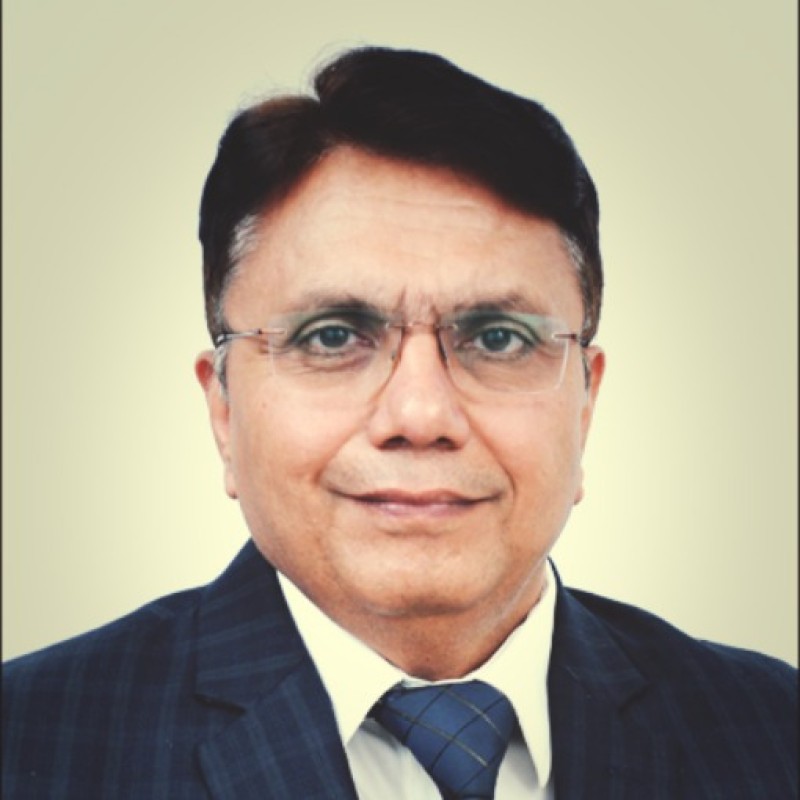
Dr. Vikas Gupta
Dr. Vikas Gupta is a distinguished academic in the education and research domain, specializing in finance and related interdisciplinary studies. He is known for his...
Read Full Bio →









.webp) Call Us
Call Us