

14 Oct 2026
MAT Score vs Percentile: What Is a Good Score for PGDM Admission?


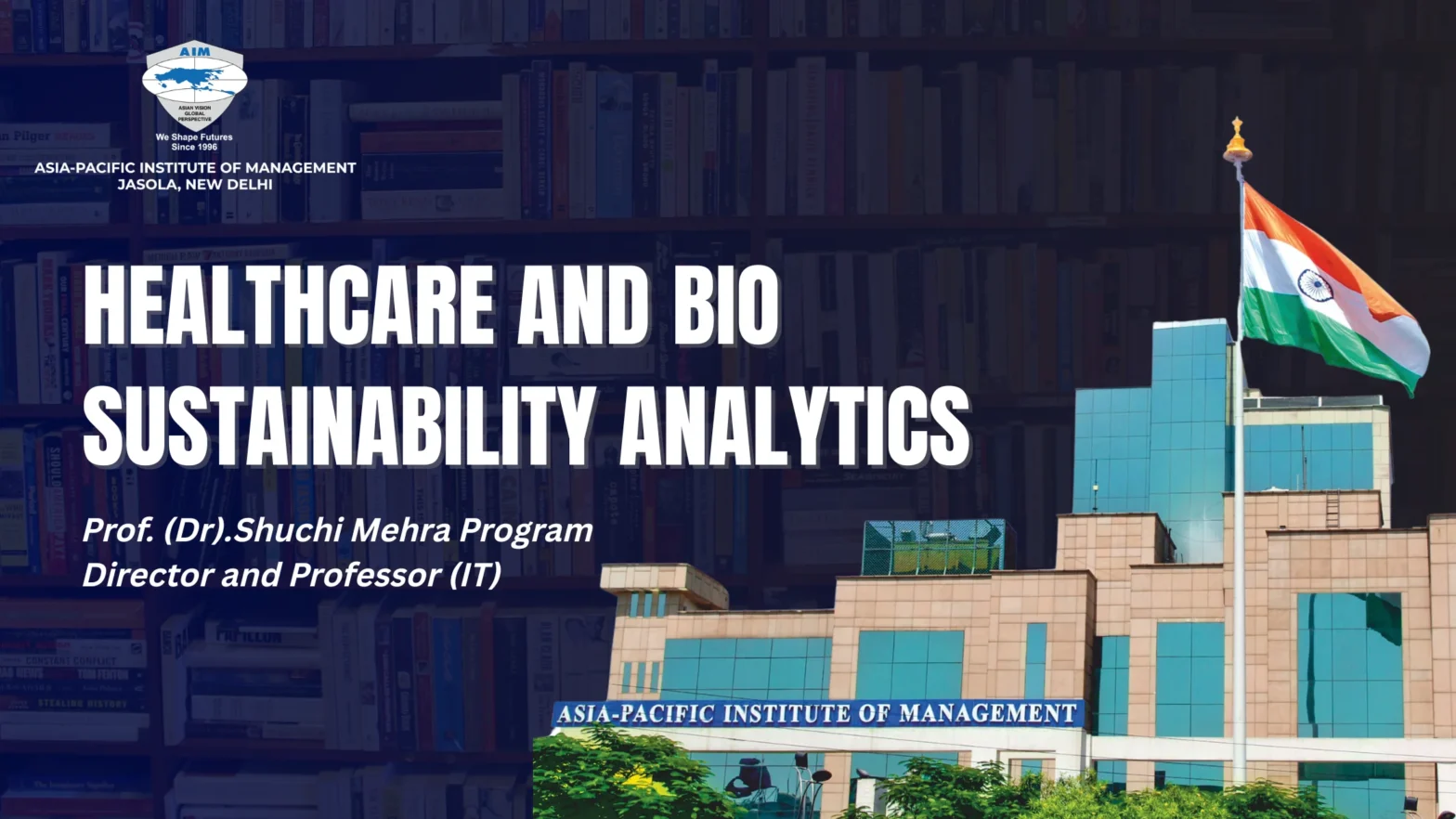
Prof. (Dr).Shuchi Mehra
Program Director and Professor (IT)
Asia Pacific Institute of Management
Jasola, New Delhi -India
The increasing age of the population, escalating expectations among citizens and the expanding role of technology create significant challenges for healthcare on a global scale. Additionally, the rising costs associated with medical services serve as an impediment to delivering high-quality healthcare. Healthcare professionals can fulfill these challenges with unparalleled assistance from big data analytics. Big data analytics possesses the ability to detect trends and translate vast amounts of electronic data into actionable insights, facilitating informed decisions to improve medical care.
The evolution of data analytics and flexible practices in handling, storing and managing healthcare information creates a more sustainable healthcare framework. Crucial patient information can be assessed through descriptive, predictive, prescriptive and diagnostic techniques enabled by software and algorithms in big data analytics. Analysing test results from infected individuals can help identify the contagiousness and spread rate of viruses over time. Predictive methods can also aid in diagnosing a patient's condition based on symptoms indicative of a specific illness or injury. After evaluating the patient's medical history and potential risk factors, practitioners can develop a comprehensive preventive care strategy. Moreover, data collected from patient interactions with healthcare providers can serve as a valuable resource for identifying key areas needing improvement.
Build expertise in healthcare management and analytics to solve real industry challenges with data-driven decision-making skills.
Apply Now →Healthcare data analytics leverages machine learning algorithms to analyse information more rapidly and efficiently than human capability. Big Data Analytics integrates biological insights and clinical data to refine medical treatments and tailor care to the distinctive needs of each patient. The strategic application of data management and oversight has undoubtedly advanced the sustainable healthcare system significantly.
The proliferation of data analytics also extends benefits to other sectors within healthcare, such as biomedicine and pharmaceuticals. Nevertheless, the management of crucial data presents its own challenges, including issues related to data synchronisation and integration as well as a shortage of trained personnel adept at utilising big data analytics tools. Undeniably effective oversight and evaluation of big data can transform it into a valuable means of addressing these challenges.
In medical environments, both structured and unstructured data are utilised. Structured data exists in multiple formats, is extensive, and adheres to a defined schema. Conversely, Big Data consists of unstructured information that defies conventional processing methods. Large data sets recognised as “Big Data” cannot be evaluated, stored or analysed using standard technologies. While this data may be retained, it often remains unexamined. Specific technologies and strategies are necessary to extract value from this information, as it cannot be navigated or analysed without a clear schema. Organisations can derive substantial benefits from merging data maintained in both structured and unstructured formats.
Learn how analytics, technology, and management skills can prepare you for emerging roles in modern healthcare systems.
Apply Now →Addressing unstructured data necessitates a distinct methodology for organisations. Therefore, Big Data Analytics holds significant promise. Big Data analytics comprises tools and methods used to analyse the insights drawn from extensive quantities of data. Technology alone is insufficient to achieve these objectives. Therefore, changes should be made to the service providers' business plans as well as to the administration and planning of all healthcare procedures, in addition to the technology level.
Businesses are using big data analytics more often. Nevertheless, medical organisations still fail to meet the information needs of administrators, clinicians, patients and the creators' policy. Implementing individualised and precise treatment based on real-time, patient-specific information will be feasible with the use of a big data approach.
Predictions can be derived from the results of extensive data analysis. They also assist in identifying historical patterns. In healthcare specifically, this facilitates the examination of large datasets derived from numerous patients, enabling the identification of connections and groupings within the data along with the development of predictive models through data mining methods.
The intricate healthcare system involves various participants, including patients, doctors, healthcare facilities, pharmaceutical firms and decision-makers. However, there are stringent regulations that impose limitations on this sector. A noticeable shift from the traditional doctor-patient dynamic is emerging globally. In the healing process, the patient and therapist collaborate closely. The focus on individual patient treatment is no longer the sole emphasis in healthcare. It is essential for decision-makers to prioritise the promotion of healthier lifestyles and the prevention of avoidable illnesses. This need became especially significant during the Covid-19 pandemic.
The quantitative analysis presented in this article identified which areas utilised Big Data Analytics and how. Medical institutions incorporate both structured and unstructured data such as database information, transaction logs, e-mails, documents with unstructured content, devices and sensors. They utilise analytics in clinical, administrative and business contexts, revealing a clear dependence on data-driven decisions.
The findings of this study corroborate what has been explored in existing literature about data-informed healthcare benefits drawing the interest of healthcare facilities. Therefore, big data analytics in healthcare holds the promise of positive outcomes and will have a widespread influence. Future research will aim to examine the strategies adopted by medical institutions to foster and implement these solutions as well as the advantages gained from employing big data analysis and how perceptions in this field are evolving.
Keywords: Big Data Analytics, data management, healthcare system, Healthcare data analytics
Join a future-focused PGDM program designed to connect business leadership with healthcare technology and analytics opportunities.
Apply Now →

14 Oct 2026
MAT Score vs Percentile: What Is a Good Score for PGDM Admission?

13 Oct 2026
CAT vs XAT: Which Exam Gives You Better PGDM Admission Opportunities?

12 Oct 2026
XAT 2027 Cut-Off: What Is a Good Score for PGDM Admission?

10 Oct 2026
XAT 2027 Exam Pattern: Sections, Marking Scheme & Decision-Making Strategy

09 Oct 2026
XAT 2027 Registration: Dates, Fees, Eligibility & How to Apply






BBA Brochure

PGDM Brochure
MBA Brochure


.webp) Call Us
Call Us