How to Read a Hospital Balance Sheet: Financial Accounting Guide for Non-Commerce Students
Posted on 18 Jul 2026
By Dr. Vikas Gupta
Introduction
Many students pursuing MBA or PGDM in Healthcare Management come from science, pharmacy, nursing, biotechnology, life sciences, or medical backgrounds. While they understand healthcare delivery, financial statements often appear intimidating because they have little or no commerce education.
The good news is that you do not need a commerce degree to understand hospital finance. Learning the fundamentals of hospital financial management can help you make informed business decisions, improve operational efficiency, and prepare for leadership roles in hospitals, healthcare startups, insurance companies, diagnostic chains, and healthcare consulting firms.
Among all financial reports, the balance sheet is one of the most important. It provides a snapshot of a hospital's financial health and helps management understand what the organization owns, what it owes, and how financially stable it is.
This guide explains hospital balance sheets in simple language, making financial accounting easy for non-commerce students.
Master Hospital Finance
Build practical financial confidence to read hospital balance sheets, manage budgets, and make smarter healthcare business decisions from day one.
Hospital financial management is the process of planning, monitoring, controlling, and evaluating the financial resources of a healthcare organization.
It helps hospitals:
Manage operating costs
Plan budgets
Monitor revenue
Control expenses
Purchase medical equipment
Improve profitability
Support strategic decisions
Ensure financial sustainability
Hospital administrators rely on financial information every day to make operational and investment decisions.
Why Every Healthcare Manager Should Understand Finance
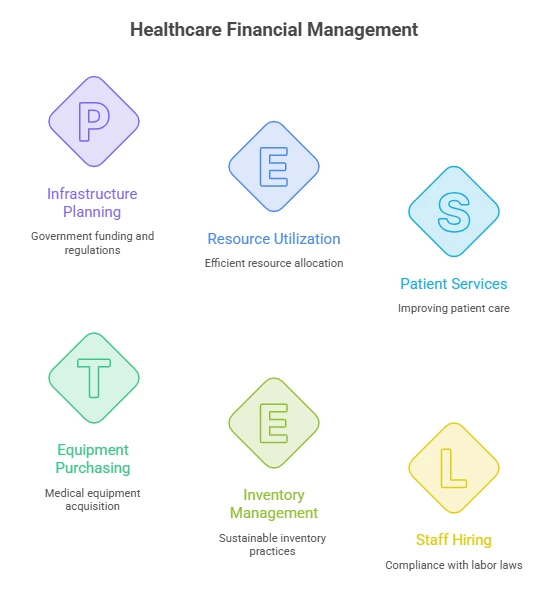
Healthcare managers make decisions that directly affect a hospital's financial performance.
Examples include:
Purchasing medical equipment
Hiring staff
Expanding departments
Managing inventory
Improving patient services
Planning hospital infrastructure
Without financial knowledge, managers may struggle to evaluate costs, budgets, and investment decisions.
Understanding basic finance enables healthcare leaders to balance quality patient care with efficient resource utilization.
What Is a Hospital Balance Sheet?
A balance sheet is a financial statement that shows a hospital's financial position at a particular point in time.
It answers three important questions:
What does the hospital own?
What does the hospital owe?
How much value belongs to the owners or stakeholders?
Every balance sheet follows one basic accounting equation:
Assets = Liabilities + Equity
This equation always remains balanced.
Understanding Assets
Assets are resources owned or controlled by the hospital.
Examples include:
Current Assets
Assets expected to be used within one year:
Cash
Bank balance
Accounts receivable
Medicines
Medical supplies
Short-term investments
Non-Current Assets
Long-term resources such as:
Hospital building
MRI machines
CT scanners
Ambulances
Laboratory equipment
Furniture
IT systems
Healthcare managers monitor assets because they directly affect operational capacity.
Financial Ratios Every Healthcare Manager Should Know
Healthcare managers frequently monitor:
Current Ratio
Measures the hospital's ability to pay short-term obligations.
Debt Ratio
Shows the proportion of debt used to finance assets.
Operating Margin
Measures profitability from healthcare operations.
Accounts Receivable Days
Indicates how quickly patient payments are collected.
Bed Occupancy Rate
Measures hospital capacity utilization.
These indicators help management evaluate operational and financial performance.
Common Financial Mistakes Hospitals Avoid
Effective hospital financial management reduces risks such as:
Excess inventory
Delayed insurance claims
Poor cash flow
High equipment downtime
Inefficient staffing
Unplanned capital purchases
Weak budget control
Healthcare managers work across departments to prevent these issues.
Why Financial Knowledge Helps Healthcare Managers
Finance influences nearly every hospital decision.
Healthcare managers regularly participate in:
Budget discussions
Procurement planning
Cost reduction projects
Department performance reviews
Equipment purchases
Operational improvements
Investment decisions
Financial literacy improves decision-making across all management functions.
Skills Required for Hospital Financial Management
Students should develop:
Financial analysis
Budgeting
Excel
Data interpretation
Cost management
Business analytics
Communication
Strategic thinking
Problem-solving
Decision-making
These skills improve career opportunities across healthcare organizations.
Career Opportunities in Healthcare Finance
Healthcare finance knowledge opens opportunities such as:
Hospital Finance Executive
Healthcare Operations Manager
Revenue Cycle Manager
Financial Analyst
Healthcare Consultant
Budget Analyst
Hospital Administrator
Cost Analyst
Procurement Manager
Business Analyst
Many management roles require both operational and financial understanding.
How MBA or PGDM Builds Financial Skills
Healthcare management programmes introduce students to business finance without requiring prior commerce education.
Students learn:
Financial management
Healthcare accounting
Budgeting
Cost analysis
Hospital operations
Strategic management
Business analytics
Procurement
Healthcare economics
Decision-making
At Asia Pacific Institute of Management, students benefit from industry-oriented learning, experienced faculty, practical exposure, case studies, internships, live projects, and placement support. These experiences help students understand healthcare finance while preparing for leadership roles across hospitals, consulting firms, health-tech companies, diagnostics, insurance, and healthcare businesses.
Tips for Non-Commerce Students
If you do not have a commerce background:
Learn accounting basics gradually.
Practice reading financial statements.
Focus on healthcare examples.
Use Excel regularly.
Ask questions during finance classes.
Solve business case studies.
Learn financial terminology.
Connect finance with hospital operations.
Consistency is more important than prior accounting knowledge.
Understanding hospital financial management is no longer limited to finance professionals. Today's healthcare managers are expected to interpret balance sheets, evaluate investments, manage budgets, and support financially sustainable healthcare operations.
For non-commerce students, learning financial concepts through real hospital examples makes accounting far more approachable. Topics such as healthcare accounting basics, revenue cycle management, capital budgeting in hospitals, and medical equipment costing are essential for future healthcare leaders.
At Asia Pacific Institute of Management, students gain practical financial knowledge through industry-oriented education, case-based learning, experienced faculty, internships, live projects, and placement support. These experiences prepare graduates to make confident business decisions in hospitals and healthcare organizations.
Build Finance Confidence
Turn non-commerce background into healthcare finance readiness with mentoring, Excel skills, budgeting knowledge, and placement-focused support for growth.
Dr. Vikas Gupta is a distinguished academic in the education and research domain, specializing in finance and related interdisciplinary studies. He is known for his...


















.webp) Call Us
Call Us