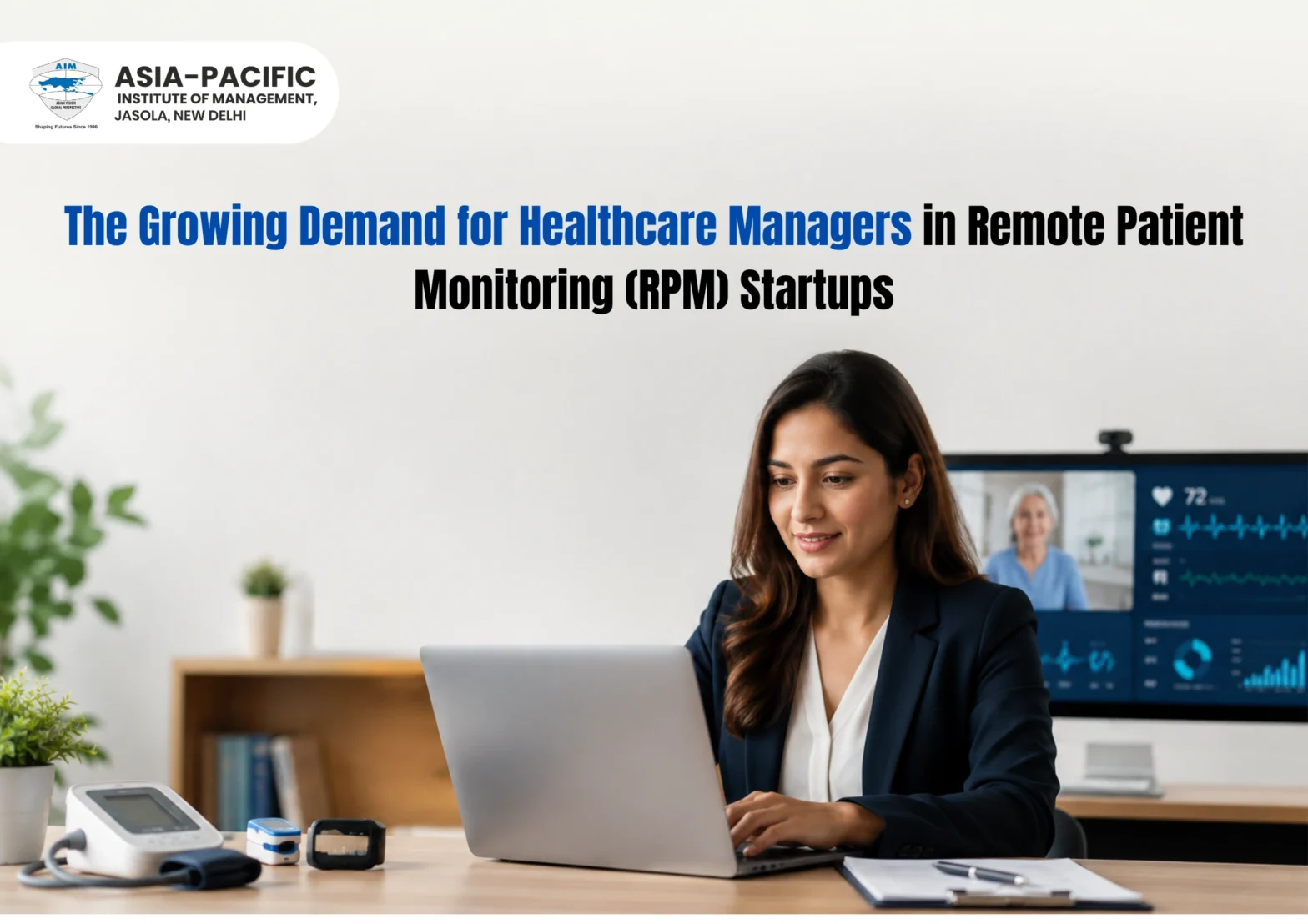
The Growing Demand for Healthcare Managers in Remote Patient Monitoring (RPM) Startups
Posted on 15 Jul 2026
By Dr. Vikas Gupta
Introduction
The healthcare industry is no longer confined to hospitals and clinics. Today, patients can consult doctors through mobile apps, monitor chronic diseases using wearable devices, and share real-time health data without visiting a healthcare facility. This shift has accelerated the growth of the remote patient monitoring business, creating exciting career opportunities for healthcare management professionals.
Remote Patient Monitoring (RPM) combines healthcare, technology, data analytics, and patient engagement to deliver continuous care beyond hospital walls. As healthcare providers increasingly adopt digital care models, they require managers who can oversee operations, ensure regulatory compliance, coordinate technology implementation, and enhance patient experiences.
For students pursuing an MBA or PGDM in Healthcare Management, RPM startups represent one of the fastest-growing career destinations in India's evolving healthcare ecosystem.
Lead RPM Startups
Build digital healthcare skills to manage remote monitoring operations, patient engagement, compliance, and virtual care growth confidently professionally.
Remote Patient Monitoring (RPM) is a healthcare delivery model that uses connected medical devices, wearable technologies, mobile applications, and digital platforms to monitor patients outside traditional hospital settings.
Doctors and healthcare teams can track:
Blood pressure
Blood glucose levels
Heart rate
Oxygen saturation
ECG readings
Body temperature
Weight
Physical activity
Medication adherence
The collected information helps healthcare providers identify health risks early and deliver timely interventions.
Understanding the Remote Patient Monitoring Business
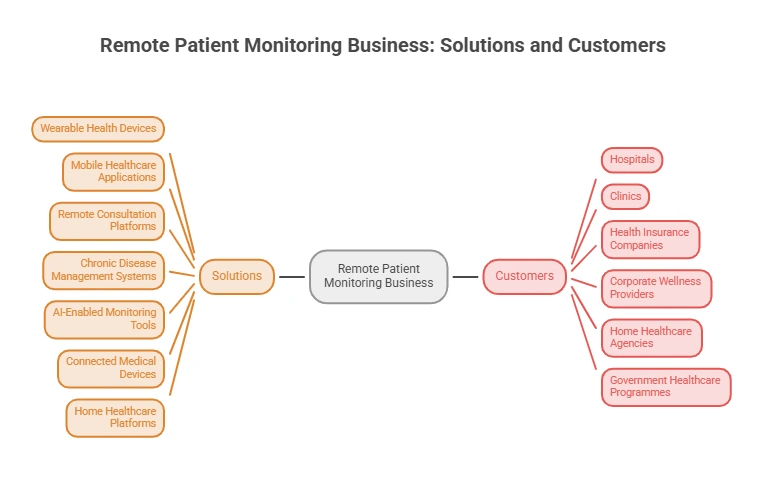
The remote patient monitoring business focuses on providing technology-enabled healthcare services that improve patient outcomes while reducing unnecessary hospital visits.
RPM companies develop solutions such as:
Wearable health devices
Mobile healthcare applications
Remote consultation platforms
Chronic disease management systems
AI-enabled monitoring tools
Connected medical devices
Home healthcare platforms
Their customers include:
Hospitals
Clinics
Health insurance companies
Corporate wellness providers
Home healthcare agencies
Government healthcare programmes
As digital healthcare expands, the business potential for RPM continues to grow.
Compensation varies depending on organization size, experience, location, responsibilities, and technical expertise.
Entry-level management professionals in digital healthcare generally receive competitive salaries, while experienced operations managers, product managers, and programme leaders often earn significantly higher compensation, along with performance incentives and leadership opportunities.
Students should focus on developing strong operational, analytical, and communication skills, which often influence long-term career growth more than initial salary.
Technologies Used in RPM Businesses
Healthcare managers working in RPM environments frequently interact with technologies such as:
Internet of Medical Things (IoMT)
Wearable devices
Electronic Health Records
Artificial Intelligence
Cloud computing
Mobile healthcare applications
Remote diagnostic devices
Data analytics dashboards
Patient engagement platforms
Understanding these technologies improves management effectiveness.
Challenges in Remote Patient Monitoring
Despite rapid growth, RPM businesses face operational challenges.
These include:
Patient technology adoption
Data privacy concerns
Device interoperability
Internet connectivity
Regulatory compliance
Patient engagement
Technology integration
Operational scalability
Healthcare managers help organizations overcome these challenges through strategic planning and process improvement.
Why MBA or PGDM Helps Build RPM Careers
Healthcare management education provides the business knowledge required for leadership roles in digital healthcare.
Students learn:
Healthcare operations
Project management
Strategic management
Healthcare marketing
Healthcare finance
Business analytics
Quality management
Human resource management
Leadership
Digital transformation
At Asia Pacific Institute of Management, students benefit from an industry-oriented curriculum, experienced faculty, practical learning, live projects, corporate interactions, internships, and placement support. These experiences prepare graduates for careers across hospitals, healthcare technology companies, telemedicine platforms, and remote patient monitoring businesses.
Career Opportunities in Remote Patient Monitoring
Healthcare management graduates can pursue roles such as:
RPM Operations Manager
Digital Health Manager
Telemedicine Operations Manager
Healthcare Consultant
Healthcare Project Manager
Customer Success Manager
Patient Engagement Manager
Healthcare Product Manager
Healthcare Business Analyst
Virtual Care Programme Manager
The growing digital healthcare ecosystem offers long-term career potential across multiple sectors.
How to Prepare for an RPM Career
Students can strengthen their profiles by:
Learning healthcare technology fundamentals.
Building Excel and analytics skills.
Understanding telemedicine workflows.
Following digital healthcare trends.
Completing internships.
Improving communication.
Learning project management basics.
Participating in healthcare case competitions.
Continuous learning is essential because digital healthcare evolves rapidly.
The remote patient monitoring business is transforming healthcare by enabling continuous, technology-driven patient care beyond hospital walls. As digital health becomes an integral part of healthcare delivery, organizations increasingly require managers who understand operations, compliance, technology, and patient engagement.
For MBA and PGDM Healthcare students, RPM startups offer exciting opportunities to build careers in healthcare technology, virtual care management, digital health operations, and strategic healthcare leadership.
At Asia Pacific Institute of Management, students develop industry-relevant knowledge through practical learning, experienced faculty, live projects, corporate exposure, internships, and placement support. These experiences prepare graduates to lead the next generation of digital healthcare organizations.
Build Digital Health
Turn your interest in RPM startups into career-ready expertise for healthcare operations, product management, and patient experience leadership.
Dr. Vikas Gupta is a distinguished academic in the education and research domain, specializing in finance and related interdisciplinary studies. He is known for his...
It involves providing technology-enabled healthcare services that monitor patients remotely using connected devices and digital platforms.
02.
What is virtual care management?
Virtual care management coordinates healthcare services delivered through digital platforms, telemedicine, and remote patient engagement.
03.
Are health tech startup jobs suitable for healthcare management graduates?
Yes. Health-tech startups recruit healthcare management graduates for operations, product management, consulting, analytics, customer success, and business development roles.
04.
Why is digital health compliance important?
It helps healthcare organizations protect patient information, meet regulatory requirements, and maintain trust in digital healthcare services.
05.
What skills are required for remote patient monitoring careers?
Healthcare operations, communication, analytics, project management, leadership, and digital healthcare knowledge are highly valuable.
06.
Is telemedicine a growing career field?
Yes. The expansion of digital healthcare continues to create opportunities in telemedicine operations, virtual care, and healthcare technology.
07.
Can MBA healthcare graduates work in RPM startups?
Yes. MBA and PGDM Healthcare graduates can pursue management roles in remote patient monitoring companies, health-tech startups, and digital healthcare organizations.








.webp) Call Us
Call Us