Hospital Financial Management Basics: Tariff Fixation Explained

PGDM Applications at AIM Are Closing Soon | Secure Your Seat Now

Understanding Hospital Tariff Fixation: The Core Financial Skill of an MBA Grad

By Dr. Vikas Gupta

Understanding Hospital Tariff Fixation: The Core Financial Skill of an MBA Grad

Introduction

Hospitals are often viewed primarily as healthcare institutions focused on patient care. However, behind every successful healthcare organization lies a complex financial system that ensures sustainability, operational efficiency, and quality service delivery.

One of the most critical aspects of healthcare finance is hospital tariff fixation—the process of determining the cost and pricing of medical services. From consultation fees and diagnostic procedures to surgeries and treatment packages, accurate tariff setting directly impacts a hospital's financial health and patient satisfaction.

For aspiring healthcare managers, understanding hospital financial management basics is essential. Among these skills, tariff fixation stands out as a core competency because it connects healthcare operations, finance, strategy, and patient care.

As healthcare organizations become increasingly data-driven and cost-conscious, professionals who understand healthcare pricing mechanisms are becoming highly valuable.

What Is Hospital Tariff Fixation?

Hospital tariff fixation refers to the systematic process of determining the prices charged for healthcare services.

These services may include:

  • Outpatient consultations
  • Diagnostic investigations
  • Surgical procedures
  • Room charges
  • Emergency services
  • Pharmacy services
  • Health check-up packages

The objective is to establish pricing that is:

  • Financially sustainable
  • Competitive
  • Transparent
  • Compliant with regulations
  • Acceptable to patients and insurers

Hospital tariffs must balance affordability with operational viability.

Why Tariff Fixation Matters in Healthcare Management

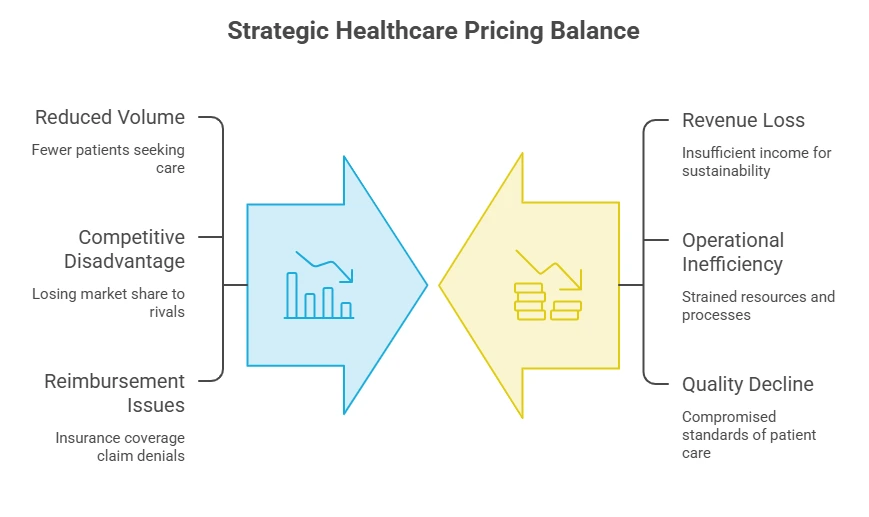
Unlike many industries, healthcare organizations must balance financial performance with patient welfare.

Incorrect pricing can create several challenges.

If Prices Are Too High

Hospitals may experience:

  • Reduced patient volume
  • Competitive disadvantages
  • Insurance reimbursement challenges

If Prices Are Too Low

Hospitals may face:

  • Revenue losses
  • Operational inefficiencies
  • Difficulty maintaining quality standards

Therefore, effective tariff fixation is a strategic function within healthcare management.

Bonus:  Investment Trends in Indian Hospitals 

Master Healthcare Finance

Build financial management expertise to optimize hospital operations, pricing strategies, and sustainable healthcare growth opportunities.

Apply Now

Hospital Financial Management Basics Every MBA Student Should Know

At its core, hospital finance focuses on managing resources efficiently while maintaining high-quality healthcare delivery.

Key Areas of Hospital Financial Management

  • Cost analysis
  • Budgeting
  • Revenue management
  • Tariff fixation
  • Financial reporting
  • Capital planning
  • Revenue cycle optimization

Understanding these hospital financial management basics helps healthcare managers make informed decisions that support organizational growth.

The Relationship Between Costing and Pricing

Before hospitals can determine service prices, they must understand the actual cost of delivering care.

This is where healthcare costing methods become essential.

Costing identifies the expenses involved in providing healthcare services.

Pricing determines the amount charged to patients or payers.

Accurate costing forms the foundation of effective tariff fixation.

Healthcare Costing Methods Used in Hospitals

Hospitals use several approaches to calculate service costs.

Activity-Based Costing (ABC)

Activity-based costing allocates expenses based on specific healthcare activities.

For example:

  • Laboratory tests
  • Surgical procedures
  • Nursing services
  • Diagnostic imaging

ABC provides detailed insights into resource utilization.

Direct Costing

This method considers expenses directly associated with patient care.

Examples include:

  • Medical supplies
  • Pharmaceuticals
  • Diagnostic consumables

Absorption Costing

Absorption costing includes both direct and indirect expenses.

Indirect costs may include:

  • Administrative salaries
  • Utility expenses
  • Facility maintenance

Many healthcare organizations use a combination of these healthcare costing methods to ensure accurate pricing.

Pricing Medical Packages: A Strategic Financial Decision

Modern hospitals increasingly offer bundled healthcare services.

Examples include:

  • Maternity packages
  • Cardiac care packages
  • Orthopedic surgery packages
  • Preventive health check-ups

The process of pricing medical packages involves multiple considerations.

Factors Affecting Package Pricing

  • Treatment costs
  • Specialist fees
  • Facility charges
  • Nursing services
  • Equipment utilization
  • Consumables
  • Market demand

Healthcare managers must ensure that packages remain attractive to patients while maintaining profitability.

Billing System in Corporate Hospitals: How It Supports Revenue Generation

An efficient billing system in corporate hospitals plays a vital role in financial performance.

The billing process typically includes:

Patient Registration

Capturing patient information and insurance details.

Service Documentation

Recording all clinical and non-clinical services provided.

Charge Capture

Assigning applicable charges based on hospital tariffs.

Claim Processing

Managing insurance and third-party payer submissions.

Payment Collection

Ensuring timely settlement of patient and insurer payments.

Accurate billing reduces revenue leakage and improves financial transparency.

Revenue Cycle Management: The Financial Backbone of Hospitals

One of the most important concepts in healthcare finance is revenue cycle management (RCM).

Revenue cycle management refers to the entire financial process from patient registration to final payment collection.

Key Stages of Revenue Cycle Management

Patient Registration

Collecting patient demographics and insurance information.

Service Delivery

Providing medical services and documenting care.

Charge Capture

Recording all billable services.

Claims Submission

Submitting reimbursement requests to insurers.

Payment Collection

Receiving payments from patients and third-party payers.

Denial Management

Addressing rejected claims and payment discrepancies.

Effective revenue cycle management ensures financial stability and operational efficiency.

Understanding CGHS Tariff Calculation

Many healthcare organizations in India interact with government healthcare reimbursement systems.

One important example is CGHS tariff calculation.

The Central Government Health Scheme (CGHS) establishes predefined reimbursement rates for various healthcare services.

Hospitals empaneled under CGHS must align certain service charges with approved tariff structures.

Why CGHS Tariff Calculation Matters

Healthcare managers use CGHS tariffs to:

  • Determine reimbursement eligibility
  • Negotiate payer agreements
  • Compare service pricing
  • Evaluate operational profitability

Understanding reimbursement frameworks is an important component of healthcare finance management.

Lead Hospital Strategy

Gain practical healthcare management skills to drive financial performance, operational efficiency, and leadership success.

Apply Now

How MBA Graduates Contribute to Hospital Tariff Fixation

Healthcare organizations increasingly recruit management professionals to support financial planning and pricing strategies.

MBA graduates may contribute in several ways.

Cost Analysis

Evaluating service delivery expenses.

Market Research

Analyzing competitor pricing and patient demand.

Financial Forecasting

Estimating future revenue and cost trends.

Revenue Optimization

Identifying opportunities to improve financial performance.

Strategic Pricing

Developing sustainable and competitive tariff structures.

These responsibilities require both analytical and managerial expertise.

Challenges in Hospital Tariff Fixation

Healthcare pricing is becoming increasingly complex.

Common challenges include:

Rising Healthcare Costs

Medical technology and infrastructure investments continue to increase operational expenses.

Insurance Negotiations

Hospitals must align pricing with reimbursement agreements.

Regulatory Compliance

Healthcare pricing may be subject to government regulations and guidelines.

Patient Expectations

Patients increasingly seek transparency and value-based care.

Healthcare managers must balance these competing priorities effectively.

Skills Required for Healthcare Financial Management

Students interested in healthcare finance should develop several key competencies.

Financial Analysis

Understanding costs, revenues, and profitability.

Data Interpretation

Using financial and operational data to support decisions.

Strategic Thinking

Aligning pricing decisions with organizational goals.

Healthcare Knowledge

Understanding clinical services and healthcare delivery processes.

Communication Skills

Explaining financial decisions to stakeholders.

These skills are highly valued across hospitals, healthcare networks, and healthcare consulting organizations.

Career Opportunities in Healthcare Finance and Hospital Management

Understanding hospital finance can open multiple career pathways.

Healthcare Financial Analyst

Analyzes hospital financial performance and cost structures.

Revenue Cycle Manager

Oversees billing, reimbursement, and payment processes.

Hospital Operations Manager

Coordinates operational and financial activities.

Healthcare Consultant

Advises organizations on financial and operational improvements.

Healthcare Strategy Manager

Supports long-term planning and resource allocation.

These roles combine healthcare expertise with business management capabilities.

Why Healthcare Management Education Is Important

The healthcare industry increasingly requires professionals who can understand both patient care and financial sustainability.

Healthcare management programs help students develop expertise in:

  • Healthcare finance
  • Revenue cycle management
  • Hospital operations
  • Strategic planning
  • Quality management
  • Healthcare analytics

Institutions such as Asia Pacific Institute of Management emphasize practical learning, industry-oriented education, and healthcare management competencies that prepare students for leadership roles within healthcare organizations.

Bonus:  Managing Complex Hospital Operations 

The Future of Healthcare Financial Management

Healthcare finance is evolving due to:

  • Digital billing systems
  • Data-driven pricing strategies
  • Value-based care models
  • Healthcare analytics
  • Regulatory reforms

As hospitals become more complex, professionals who understand tariff fixation, revenue management, and healthcare finance will remain in high demand.

For healthcare management students, financial literacy is no longer optional—it is a critical leadership skill.

Conclusion

Hospital tariff fixation is far more than a pricing exercise. It is a strategic financial function that influences revenue generation, patient satisfaction, operational efficiency, and long-term sustainability.

For aspiring healthcare managers, mastering hospital financial management basics, understanding healthcare costing methods, optimizing revenue cycle management, and supporting effective pricing medical packages are essential competencies.

As healthcare organizations increasingly focus on financial performance and value-based care, professionals with strong healthcare finance expertise will play a critical role in shaping the future of healthcare management.

Advance Healthcare Leadership

Learn revenue management, healthcare analytics, and strategic decision-making for impactful careers in healthcare management.

Apply Now

About the Author

author

Dr. Vikas Gupta

Dr. Vikas Gupta is a distinguished academic in the education and research domain, specializing in finance and related interdisciplinary studies. He is known for his...

Read Full Bio →

Leave a comment

Your email address will not be published. Required fields are marked *

Frequently Asked Questions (FAQs)

01. What is hospital tariff fixation?

Hospital tariff fixation is the process of determining prices for healthcare services, treatments, and medical procedures.

02. Why are hospital financial management basics important?

They help healthcare organizations manage costs, improve revenue, and maintain financial sustainability.

03. What are healthcare costing methods?

Healthcare costing methods calculate the expenses involved in delivering healthcare services and support pricing decisions.

04. What is revenue cycle management?

Revenue cycle management covers the entire financial process from patient registration to payment collection.

05. How does the billing system in corporate hospitals work?

It involves patient registration, service documentation, charge capture, claim processing, and payment collection.

06. What is CGHS tariff calculation?

CGHS tariff calculation refers to determining reimbursement rates based on Central Government Health Scheme guidelines.

07. Why is pricing medical packages important?

Package pricing helps hospitals offer transparent services while maintaining operational profitability.

Follow Us

Subscribe to Our Newsletter

Download Brochure

BBA Brochure

PGDM Brochure

MBA Brochure

Apply Now Call Us Email WhatsApp