Executive MBA for Healthcare Operations Managers: Career Growth Guide
Posted on 30 Sep 2026
By Dr. Vikas Gupta
Introduction
Healthcare operations managers play an important role in keeping healthcare organisations efficient, coordinated, and patient-focused. Their responsibilities can span people management, process improvement, resource planning, service delivery, and operational performance.
As healthcare organisations become more complex, operations professionals increasingly need skills beyond day-to-day coordination. Strategic planning, financial understanding, analytics, leadership, and change management can become important for taking on broader responsibilities.
An executive MBA for healthcare operations managers can help experienced professionals develop these capabilities while continuing their careers. It can connect operational experience with structured management education and prepare professionals for broader healthcare leadership responsibilities.
However, an Executive MBA should support a clear professional objective. The right program depends on your experience, career direction, learning preferences, and long-term goals.
Advance Healthcare Operations
Strengthen your strategic, finance, analytics, and leadership skills to prepare for broader healthcare operations management responsibilities and leadership roles.
What Is an Executive MBA for Healthcare Operations Managers?
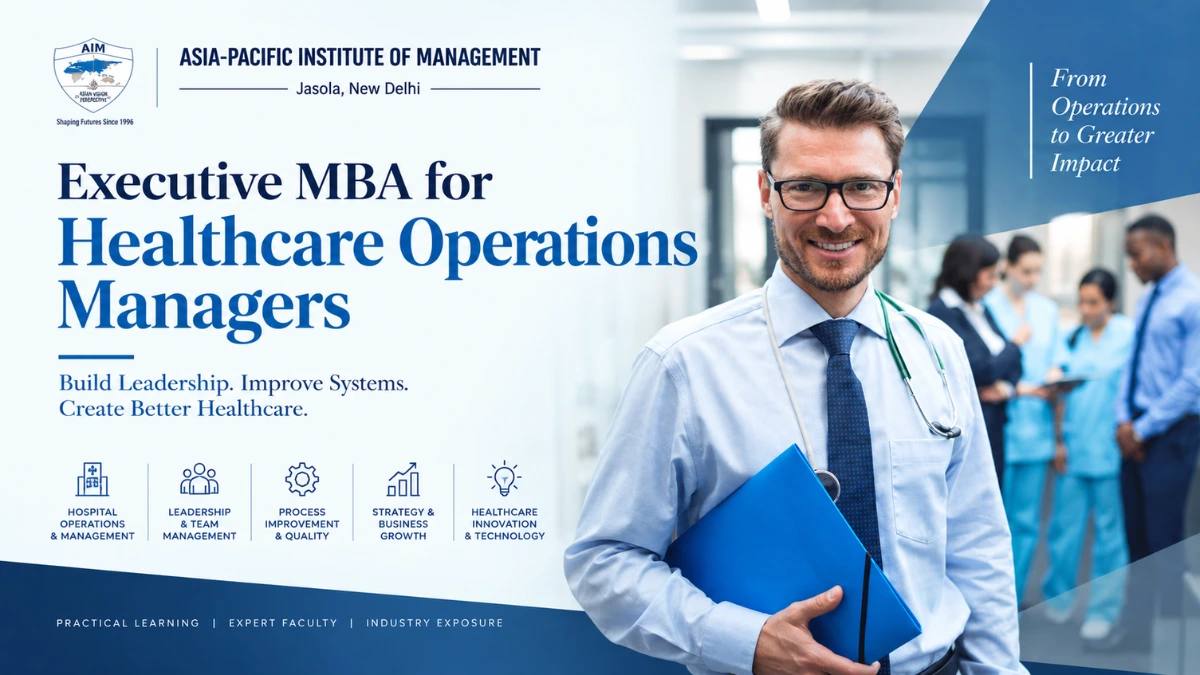
An Executive MBA for healthcare operations managers is a management program designed for working professionals who want to strengthen their business and leadership capabilities.
The curriculum may include areas such as:
Healthcare management
Operations management
Strategic management
Financial management
Business analytics
Leadership
Organisational behaviour
Project management
Marketing management
Decision-making
For an operations manager, these subjects can complement existing experience in healthcare processes and service delivery.
Therefore, the program can help professionals develop a broader understanding of how operational decisions connect with organisational strategy.
Why Consider a Healthcare Operations MBA?
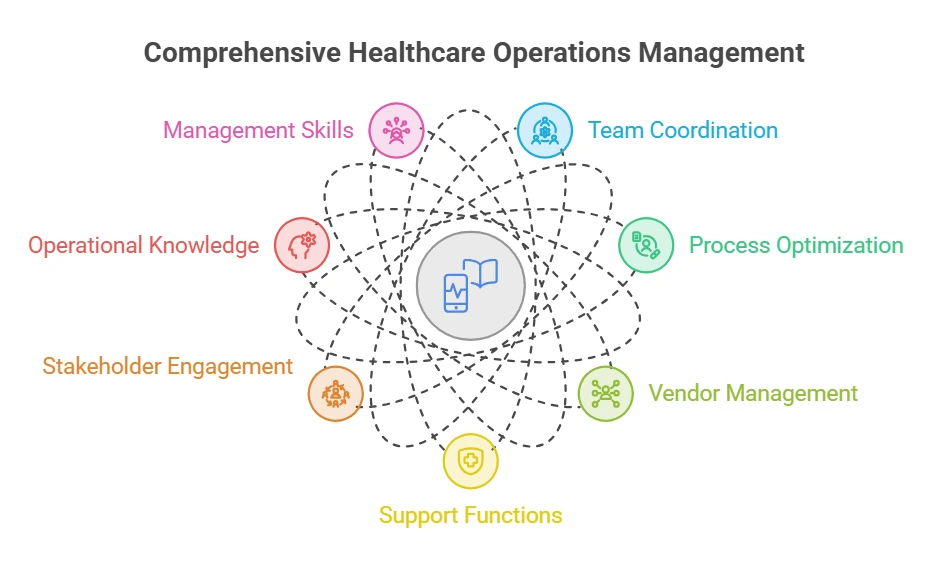
Healthcare operations are rarely limited to one department.
Operations managers often coordinate across teams, processes, vendors, support functions, and senior stakeholders. Consequently, they need both operational knowledge and management skills.
Professionals may start with responsibility for specific processes or departments. With experience, they may take on broader operational, administrative, or strategic responsibilities.
An Executive MBA can complement this experience by developing management capabilities.
For example, a professional with strong operational experience may already understand healthcare processes.
The MBA can add knowledge of:
Finance
Strategy
Leadership
Business analytics
Marketing
Organisational behaviour
This combination can help professionals approach healthcare operations from a broader business perspective.
However, career growth depends on performance, experience, skills, employer requirements, organisational opportunities, and professional development.
Executive MBA vs Experience Alone
Experience is extremely valuable in healthcare operations.
Professionals learn through managing teams, solving operational problems, coordinating departments, and responding to real-world situations.
However, experience and formal management education can develop different capabilities.
Experience
Executive MBA
Practical operational knowledge
Structured management knowledge
Real-world problem-solving
Management frameworks
Organisation-specific understanding
Broader business perspective
Team coordination
Leadership concepts
Process experience
Strategy and finance
Operational decision-making
Cross-functional management
The two can complement each other.
Therefore, experienced operations managers should evaluate whether formal management education can address their current skill gaps.
Strong stakeholder management can improve coordination and communication.
Team Leadership
Learn how to delegate, motivate, coach, and manage teams.
Business Communication
Senior operations roles often require presentations, reports, meetings, and strategic discussions.
Change Management
Develop the ability to support teams during process, technology, or organisational changes.
The Role of Technology in Healthcare Operations
Technology is becoming increasingly important in healthcare operations.
Healthcare organisations use digital systems for areas such as:
Scheduling
Patient records
Resource management
Reporting
Analytics
Communication
Process monitoring
Operations managers therefore need to understand how technology affects workflows and decision-making.
An MBA can provide the management perspective required to evaluate business implications.
Professionals may also benefit from developing digital literacy and analytics skills.
Why Practical Learning Matters for Operations Managers
Operations management requires the ability to apply concepts in real situations.
Therefore, classroom learning becomes more valuable when it connects with practical healthcare challenges.
Case studies can help professionals analyse operational problems. Projects can help them apply management frameworks. Industry exposure can provide insights into how organisations operate.
Asia Pacific Institute of Management focuses on industry-oriented management education, practical learning, experienced faculty, and corporate exposure.
For working healthcare professionals, this approach can help connect management concepts with real-world organisational challenges.
A Career Roadmap for Healthcare Operations Professionals
Step 1: Build Healthcare Experience
Develop a strong understanding of healthcare operations and service delivery.
Step 2: Identify Your Leadership Goals
Decide what type of responsibility you want to take on next.
Step 3: Evaluate an Executive MBA
Assess curriculum, eligibility, flexibility, faculty, practical learning, and industry exposure.
Step 4: Apply Learning at Work
Use management concepts to improve projects, processes, reporting, and team coordination.
Step 5: Develop Cross-Functional Experience
Seek opportunities to work with finance, quality, technology, business development, and other functions.
Step 6: Take on Broader Responsibilities
As your skills and experience grow, pursue roles involving larger teams, departments, projects, or strategic responsibilities.
Common Mistakes to Avoid
Healthcare operations managers should avoid several mistakes when selecting an Executive MBA.
Choosing Based Only on the Program Name
A program title does not tell you everything.
Review the actual curriculum.
Ignoring Practical Learning
Operations professionals need application-oriented education.
Overlooking Flexibility
A demanding program can be difficult to manage alongside a full-time role.
Expecting Automatic Promotion
An MBA can support skill development, but career advancement depends on multiple factors.
Focusing Only on Fees
Consider curriculum, faculty, learning approach, industry exposure, flexibility, and career support together.
Not Defining a Career Goal
Know why you are pursuing the program before enrolling.
An executive MBA for healthcare operations managers can help experienced professionals expand their capabilities beyond day-to-day operations. By developing knowledge of strategy, finance, analytics, leadership, and organisational management, operations professionals can prepare for broader management responsibilities.
For professionals interested in hospital operations management, the right Executive MBA should complement practical experience with structured management education.
Therefore, evaluate the curriculum, practical learning approach, faculty, flexibility, industry exposure, and career support before making your decision.
Asia Pacific Institute of Management offers industry-oriented management education, practical learning, corporate exposure, experienced faculty, and career-focused development.
If you are planning the next stage of your healthcare operations career, explore how an Executive MBA can complement your experience and help you develop broader management capabilities.
Transform Operations Experience
Turn operational experience into broader management capabilities through practical learning in strategy, leadership, finance, analytics, and healthcare management.
Dr. Vikas Gupta is a distinguished academic in the education and research domain, specializing in finance and related interdisciplinary studies. He is known for his...
01.
Is an Executive MBA useful for healthcare operations managers?
An Executive MBA can help healthcare operations managers strengthen skills in strategy, finance, leadership, analytics, operations, and organisational management. Its value depends on the professional’s career goals and existing experience.
02.
What can I study in a healthcare operations MBA?
A healthcare operations MBA may cover healthcare management, operations, strategy, finance, analytics, leadership, project management, marketing, and organisational behaviour. The exact subjects vary by program.
03.
Can hospital operations managers pursue an Executive MBA while working?
Yes. Executive MBA programs are generally designed for working professionals. However, candidates should review class schedules, attendance requirements, assignments, and overall workload before enrolling.
04.
What careers can follow an Executive MBA in healthcare operations?
Potential directions include senior operations management, hospital administration, healthcare project management, strategy, quality management, business development, and broader healthcare leadership roles.
05.
How does an MBA support hospital operations leadership?
An MBA can develop strategic thinking, financial understanding, analytics, leadership, and cross-functional management skills. These capabilities can complement practical hospital operations experience.
06.
Does an Executive MBA guarantee career growth?
No. Career growth depends on experience, performance, skills, employer requirements, market conditions, and available opportunities. An Executive MBA can support professional development but does not guarantee a specific outcome.
07.
What should operations managers check before choosing an Executive MBA?
Evaluate curriculum, eligibility, flexibility, faculty, practical learning, industry exposure, career support, and how well the program matches your professional goals.
08.
Can healthcare operations managers move into strategy roles?
They can explore strategy roles by developing business analysis, financial, strategic planning, communication, and leadership capabilities. Relevant experience and organisational requirements also influence such transitions.

















.webp) Call Us
Call Us