
PGDM Applications at AIM Are Closing Soon | Secure Your Seat Now

The AI Revolution: How MBA Healthcare Management Graduates Are Leading Digital Hospitals

By asiaPacific-admin

The AI Revolution: How MBA Healthcare Management Graduates Are Leading Digital Hospitals
Today, healthcare is in the midst of one of the greatest technological revolutions in the history of mankind, with AI, data analytics, and technology having already started to transform the very face of hospitals, both in terms of operation and service delivery to patients. It is in this regard that as hospitals have started to adapt to these technological changes, there was a huge need for professionals who were not only knowledgeable about the operation of hospitals, but also about business strategy. It is in this regard that the role of MBA in healthcare management professionals was felt, as they ensured that hospitals were not only adapting AI technology, but were adapting it in an efficient manner. Today, hospitals are in the process of transforming into a new kind of ecosystem, a new kind of healthcare system, namely the digital healthcare system, in which professionals with knowledge about healthcare administration are now decision-makers.

What is MBA Healthcare Management?

MBA in healthcare management is a special management program in which the subject matter includes hospital management, healthcare systems, operation management, and healthcare analytics. The program helps professionals learn the knowledge required for efficient management of hospitals, healthcare organizations, and medical institutions while adapting to technological changes like AI and digital healthcare systems. A student specializing in healthcare management studies healthcare policies, hospital management, financial management, and strategic management.

The Rise of Digital Hospitals in the Age of AI

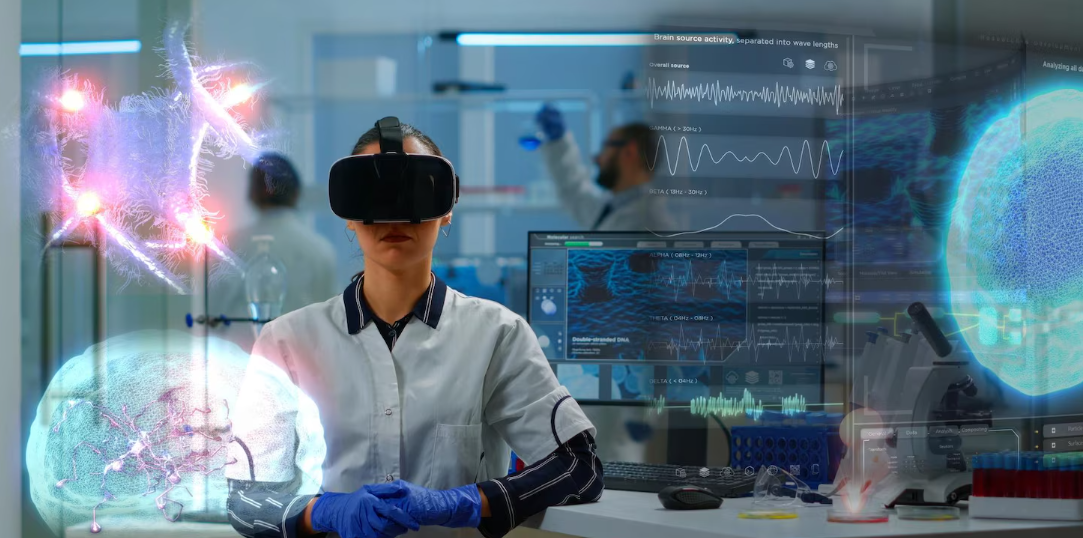
Digital hospitals utilize technology, data analytics, and automation for better patient care, hospital operations, and decision-making. AI technologies are revolutionizing the way hospitals diagnose patients, manage patient data, and utilize resources. There are several key innovations that are changing this field.

AI in Medical Diagnostics

With the help of AI-based technology, the doctor will be able to diagnose the disease at an earlier stage and in a more accurate manner by analyzing the data of the patient.  However, for the implementation of the above technology, professionals are required who know the working of the hospital and how the technology is integrated with the hospital.

Predictive Healthcare Analytics

Nowadays, hospitals are utilizing predictive analytics in patient admissions and healthcare requirements prediction. This data-driven strategy is helping healthcare organizations deliver quality patient care and achieve operational efficiencies. Management professionals with an MBA in hospital and healthcare management are leading the charge in data-driven initiatives.

Smart Patient Management Systems

Digital hospitals rely on electronic health records, AI chatbots, and digital appointment systems to streamline patient management. These technologies reduce administrative workload and improve the overall patient experience.

Automation in Hospital Operations

AI-powered automation can manage routine tasks such as patient scheduling, billing, and supply chain management. Consequently, hospitals can focus more resources on patient care while improving operational efficiency.

Why MBA Healthcare Management Graduates Are Critical for Digital Hospitals

However, while the medical attention is provided by the doctors and other health personnel, the hospital also requires management leadership for functionality.  It is in this context that the need for professionals with training in an MBA in healthcare management is becoming the primary requirement in the field. They help hospitals:
  • Implement healthcare technologies
  • Manage hospital operations efficiently
  • Improve patient experience and hospital services
  • Develop long-term healthcare strategies
  • Manage healthcare finances and budgets
As digital healthcare systems become more complex, hospitals increasingly rely on management professionals who understand both technology and healthcare operations.

Skills MBA Healthcare Management Professionals Bring to AI-Driven Hospitals

Hospitals undergoing digital transformation need professionals with a diverse skill set. Graduates from MBA healthcare management colleges in India typically develop several critical capabilities.

Healthcare Operations Management

Efficient hospital operations are essential for delivering quality healthcare. Management professionals ensure smooth coordination between departments, optimize resources, and reduce operational inefficiencies.

Data-Driven Decision Making

Modern hospitals generate vast amounts of data. Healthcare managers use analytics and AI insights to improve patient care strategies, resource allocation, and operational planning.

Strategic Planning

Healthcare organizations require long-term strategies to adopt emerging technologies. MBA graduates often help hospitals design digital transformation roadmaps and implement innovative healthcare solutions.

Technology Integration

Introducing new healthcare technologies requires careful planning. Management professionals oversee the adoption of digital systems and ensure they integrate smoothly into hospital workflows.

Leadership and Team Management

Hospitals involve multiple stakeholders, including doctors, nurses, technicians, and administrators. Effective leadership ensures collaboration and coordination among these teams.

Career Opportunities After MBA Healthcare Management

Along with this expansion and modernization of healthcare services, there is a need for efficient managers in this sector. There is a wide scope for students graduating from various MBA in healthcare management colleges. Some common roles include:
  • Hospital Operations Manager
  • Healthcare Strategy Consultant
  • Hospital Administrator
  • Healthcare Data Analyst
  • Digital Health Project Manager
  • Healthcare Technology Manager
Additionally, there are more health organizations today that require professionals who can handle AI hospital systems, which makes it a valuable specialization. Therefore, as India grows in terms of health facilities, it is expected that those graduating from an MBA in healthcare management college in India can look forward to a promising future in this field.

How to Choose the Right MBA Healthcare Management College

Choosing the right institution plays a critical role in shaping a student's career in healthcare management. Students should evaluate several factors before selecting a program.

Industry-Oriented Curriculum

A strong program should combine management principles with healthcare industry knowledge. Courses should include hospital administration, healthcare analytics, healthcare policy, and strategic management.

Practical Exposure

Healthcare management requires real-world understanding. Programs that provide internships, industry projects, and healthcare case studies help students develop practical skills.

Corporate Interaction

Interaction with healthcare professionals, industry leaders, and hospital administrators provides valuable insights into real healthcare challenges.

Experienced Faculty

Having faculty with both academic as well as industry knowledge could help in understanding the concepts as well as the application of concepts in the management of healthcare facilities. The Asia Pacific Institute of Management is dedicated to providing management education with industry alignment, giving students an opportunity to get exposed to the real-world business environment, which could help in preparing future leaders for managing healthcare organizations in the digital era.

Why Healthcare Management is One of the Fastest Growing MBA Specializations

The healthcare industry is expanding rapidly due to technological innovation, increasing healthcare demand, and improved medical infrastructure. Several factors are contributing to the growing demand for healthcare management professionals.

Rapid Digital Transformation

AI, telemedicine, and healthcare analytics are transforming how hospitals operate. These technologies require professionals who can manage digital healthcare systems effectively.

Expanding Healthcare Infrastructure

India is investing heavily in hospitals, healthcare services, and medical technology. Consequently, the need for trained healthcare managers continues to grow.

Rising Demand for Healthcare Services

An aging population, lifestyle diseases, and increased healthcare awareness have significantly increased the demand for healthcare services.

Integration of Technology and Healthcare

Currently, there is a need for people with the ability to fill the gap between technology, health care operation, and health care management.   With these trends, there are a number of students who have thought about the various options provided by the best colleges offering an MBA in health care management.

Conclusion

The healthcare industry is shifting gears and moving into a new era with the advent of artificial intelligence, digital technologies, and data analytics. There is a major transformation taking place in the way in which hospitals are being managed and are shifting towards smart and digitally connected healthcare systems. Professionals with the required skill sets and knowledge in the field of MBA in healthcare management are the need of the hour. These professionals play an important role in the implementation of healthcare technologies and in enhancing the efficiency of hospital management. Students who are keenly interested in making a career in the healthcare industry should seek the management programs.

Follow Us

Subscribe to Our Newsletter

Download Brochure

M.Sc/B.Sc Brochure

PGDM Brochure

MBA Brochure