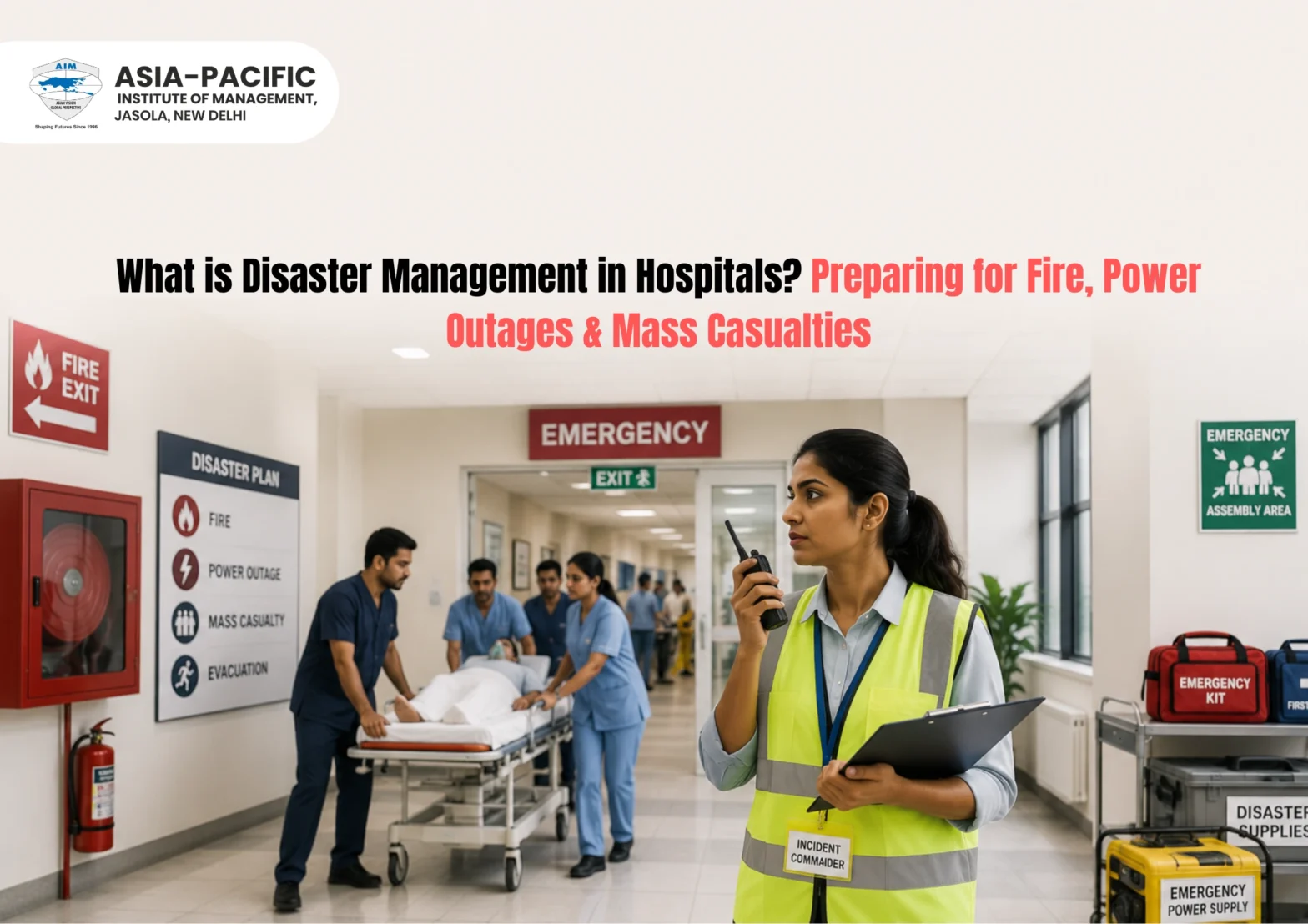
What Is Disaster Management in Hospitals? Preparing for Fire, Power Outages & Mass Casualties
Posted on 01 Jul 2026
By Dr. Vikas Gupta
Introduction
Hospitals are expected to function even during emergencies. Whether it is a fire, power outage, natural disaster, disease outbreak, chemical spill, or a major road accident, hospitals must continue delivering safe and timely patient care.
This is where a hospital disaster management plan becomes essential. It provides a structured framework that helps healthcare teams respond quickly, protect patients, coordinate resources, and restore normal operations with minimal disruption.
For healthcare managers, disaster preparedness is more than a regulatory requirement. It is a critical leadership responsibility that protects lives, hospital infrastructure, and public trust.
As healthcare facilities become larger and more technology-driven, disaster management has become an important area of hospital administration and healthcare management.
Master Hospital Emergencies
Build disaster management skills to handle fire safety, power outages, triage, and hospital emergency response with confidence professionally.
A hospital disaster management plan is a comprehensive document that outlines how a hospital will prepare for, respond to, and recover from emergencies or disasters.
It defines:
Roles and responsibilities
Emergency communication systems
Incident command structure
Resource allocation
Patient evacuation procedures
Emergency medical services coordination
Disaster recovery plans
Staff responsibilities
External agency coordination
Business continuity measures
The National Disaster Management Authority (NDMA) recommends that hospitals develop comprehensive disaster management plans to ensure preparedness for natural and human-made emergencies while maintaining uninterrupted healthcare services.
Why Disaster Management Is Important in Hospitals
Unlike many organizations, hospitals cannot simply stop operations during emergencies.
Critical patients continue to require:
Intensive care
Emergency surgeries
Oxygen support
Ventilator assistance
Dialysis
Blood transfusions
Neonatal care
Even a few minutes of disruption may affect patient safety.
A well-designed disaster management plan helps hospitals:
The Role of Hospital Administrators During Disasters
Hospital administrators coordinate the overall emergency response.
Their responsibilities include:
Activating disaster plans
Coordinating departments
Managing resources
Communicating with government agencies
Supporting clinical teams
Monitoring infrastructure
Ensuring staff availability
Managing media communication
Overseeing recovery operations
Strong leadership reduces confusion during emergencies.
Technology in Hospital Disaster Management
Technology improves disaster preparedness.
Hospitals increasingly use:
Hospital Information Systems
Emergency communication software
GPS ambulance tracking
Electronic health records
CCTV monitoring
Fire detection systems
Digital incident reporting
Emergency dashboards
Mass notification systems
Digital systems improve coordination and decision-making during crises.
Common Challenges During Hospital Disasters
Healthcare managers may face challenges such as:
Staff shortages
Equipment failures
Oxygen shortages
Communication breakdown
Overcrowded emergency departments
Limited ICU beds
Panic among patients
Supply chain disruptions
Infrastructure damage
Planning for these situations improves hospital resilience.
Skills Required for Healthcare Disaster Management
Students interested in healthcare management should develop skills including:
Crisis leadership
Emergency planning
Risk assessment
Communication
Team coordination
Resource management
Decision-making
Healthcare operations
Compliance management
Incident reporting
These skills are valuable across hospitals, healthcare organizations, and emergency management agencies.
How MBA or PGDM Helps Build Disaster Management Skills
Healthcare managers need more than clinical knowledge.
MBA or PGDM programmes help students understand:
Hospital operations
Risk management
Healthcare quality
Leadership
Supply chain management
Human resource management
Strategic planning
Business continuity
Healthcare regulations
At Asia Pacific Institute of Management, students benefit from industry-oriented learning, practical exposure, experienced faculty, corporate interactions, and placement support. These experiences prepare graduates for leadership roles in hospital administration and healthcare operations.
Career Opportunities in Hospital Disaster Management
Professionals with healthcare management education may explore roles such as:
Hospital Administrator
Emergency Operations Manager
Disaster Preparedness Coordinator
Quality Manager
Risk Management Executive
Healthcare Operations Manager
Facility Manager
Patient Safety Officer
Compliance Manager
Emergency Planning Officer
With experience, professionals can move into senior hospital leadership positions.
Best Practices for an Effective Hospital Disaster Management Plan
Hospitals should:
Update disaster plans regularly.
Conduct periodic mock drills.
Train every employee.
Maintain emergency equipment.
Test backup generators.
Review communication systems.
Coordinate with local authorities.
Audit emergency preparedness.
Monitor regulatory compliance.
Learn from previous incidents.
Preparedness should become part of everyday hospital culture rather than an annual exercise.
A strong hospital disaster management plan enables hospitals to respond effectively to fires, power outages, natural disasters, disease outbreaks, and mass casualty incidents. Beyond meeting compliance requirements, disaster preparedness strengthens patient safety, operational continuity, and organizational resilience.
As India's healthcare infrastructure continues to expand, hospitals need professionals who can combine operational excellence with crisis leadership. Understanding emergency preparedness, resource management, fire safety, triage protocols, and disaster coordination has become an essential competency for future healthcare managers.
For students interested in hospital administration, healthcare operations, and leadership, developing expertise in disaster management can open rewarding career opportunities across hospitals and healthcare organizations.
Build Safety Leadership
Turn disaster preparedness knowledge into career-ready hospital administration skills through industry exposure, mentorship, and placement-focused MBA training today.
Dr. Vikas Gupta is a distinguished academic in the education and research domain, specializing in finance and related interdisciplinary studies. He is known for his...















.webp) Call Us
Call Us