PGDM Applications at AIM Are Closing Soon | Secure Your Seat Now

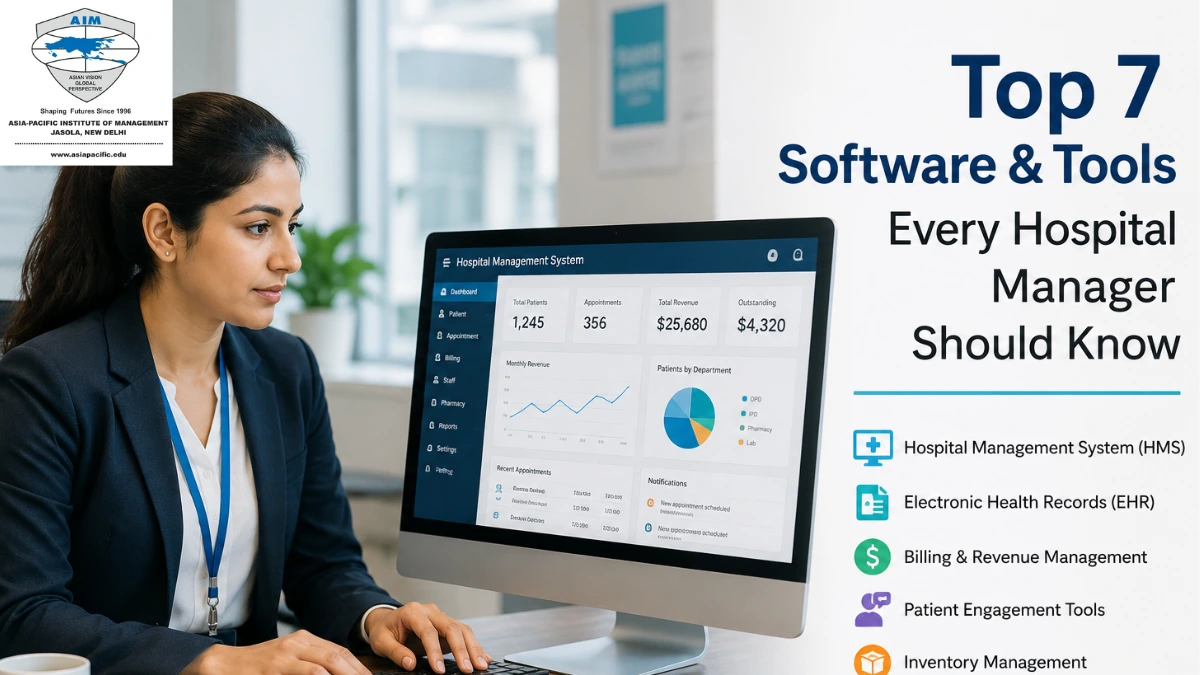
Top 7 Software & Tools Every Hospital Manager Should Know

By Dr. Vikas Gupta

Top 7 Software & Tools Every Hospital Manager Should Know

Introduction

Healthcare management today goes far beyond handling hospital operations manually. Modern hospitals rely heavily on digital systems to improve patient care, optimize workflows, and increase operational efficiency.

As hospitals become increasingly technology-driven, understanding hospital management software tools has become essential for future healthcare leaders.

For students pursuing an MBA in hospital and healthcare management, knowledge of healthcare technologies can provide a strong competitive advantage in today’s digital healthcare environment.

Why Hospital Managers Need Technology Skills

Healthcare organizations generate large amounts of patient, operational, and financial data every day.

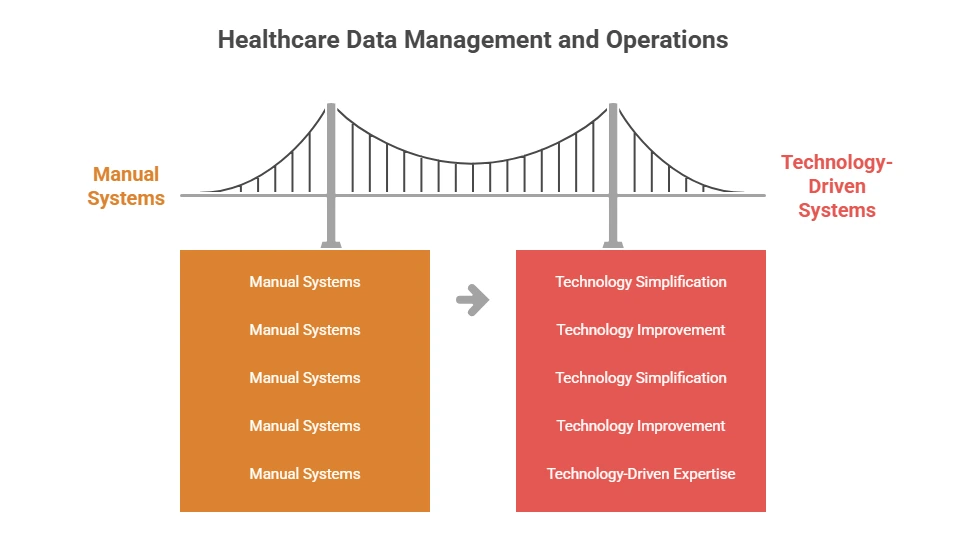
Manual systems often create:

  • Delays in operations
  • Communication gaps
  • Data management challenges
  • Higher administrative workloads

Technology simplifies these processes and improves healthcare delivery.

Therefore, future healthcare managers increasingly need digital and operational expertise.

What are Hospital Management Software Tools?

Hospital management software tools are digital platforms that help healthcare organizations manage operational and administrative activities.

These tools support:

  • Patient information management
  • Appointment scheduling
  • Billing and finance
  • Inventory management
  • Data analytics
  • Communication systems

The objective is to improve efficiency and patient experiences.

Bonus: Why Healthcare Management Offers Job Security 

Top 7 Software & Tools Every Hospital Manager Should Know

1. Hospital Information Systems (HIS)

Hospital Information Systems integrate multiple hospital functions into one platform.

Key Functions

  • Patient registration
  • Clinical records
  • Scheduling
  • Billing management

HIS improves coordination across hospital departments.

2. Electronic Health Records (EHR) Systems

EHR systems digitally store patient health information.

Benefits

  • Faster access to patient data
  • Reduced paperwork
  • Improved treatment coordination

Healthcare managers use these systems to improve operational efficiency.

3. Telemedicine Platforms

Telemedicine has transformed healthcare accessibility.

Functions Include

  • Virtual consultations
  • Remote patient monitoring
  • Online healthcare support

These platforms became increasingly important after digital healthcare adoption accelerated.

4. Healthcare Analytics Tools

Data-driven decision-making is becoming critical in healthcare.

Key Uses

  • Performance analysis
  • Operational forecasting
  • Resource optimization

Analytics helps managers make informed strategic decisions.

Bonus: 1-Year MBA Healthcare: Future Career Advantage 

5. Inventory and Supply Chain Management Software

Hospitals manage large inventories of medicines and medical equipment.

Benefits

  • Inventory tracking
  • Stock forecasting
  • Procurement management

Efficient systems reduce shortages and operational delays.

6. Patient Relationship Management (PRM) Systems

Healthcare organizations increasingly focus on patient engagement.

Major Functions

  • Patient communication
  • Feedback management
  • Appointment reminders

These tools improve patient satisfaction and service quality.

7. Healthcare Financial Management Systems

Hospitals manage complex financial processes.

Key Features

  • Budget monitoring
  • Billing systems
  • Revenue management
  • Financial reporting

Financial software improves operational transparency.

How Technology is Transforming Hospital Management

Digital transformation has changed healthcare operations significantly.

Improved Operational Efficiency

Automation reduces administrative workload.

Better Patient Experiences

Technology supports faster and smoother healthcare services.

Data-Based Decision Making

Healthcare leaders increasingly rely on analytics.

Enhanced Communication

Digital platforms improve collaboration across departments.

As a result, understanding hospital management software tools has become a key management skill.

Career Benefits of Technology Knowledge

Students exploring mba in healthcare management colleges in india should understand the growing importance of healthcare technologies.

Skills Employers Value

  • Digital healthcare understanding
  • Operational management
  • Technology adaptation
  • Strategic thinking
  • Data interpretation

Technology awareness improves employability and leadership opportunities.

Why MBA in Healthcare Management Helps

An MBA in hospital and healthcare management develops managerial and operational capabilities required in modern healthcare environments.

Key Learning Areas

  • Healthcare operations
  • Technology integration
  • Hospital administration
  • Leadership development
  • Strategic management

Institutes like Asia Pacific Institute of Management focus on industry-oriented learning and practical exposure. Students gain hands-on understanding of healthcare systems and emerging technologies.

Why Delhi NCR is Ideal for Healthcare Education

Delhi NCR offers excellent healthcare learning opportunities.

Key Advantages

  • Strong healthcare infrastructure
  • Corporate healthcare ecosystem
  • Healthcare technology exposure
  • Internship opportunities

Students looking for the best colleges for mba in healthcare management often prefer Delhi NCR because of its industry connectivity.

Step-by-Step Guide to Become a Technology-Aware Hospital Manager

Step 1: Understand Healthcare Operations

Learn how hospitals function.

Step 2: Choose the Right MBA Program

Enroll in an MBA in hospital and healthcare management.

Step 3: Build Digital Skills

Understand healthcare technologies and software systems.

Step 4: Gain Practical Experience

Participate in internships and healthcare projects.

Step 5: Stay Updated

Follow healthcare technology trends continuously.

Key Insights for Students and Parents

  • Technology is reshaping healthcare operations
  • Hospital managers increasingly require digital expertise
  • Practical exposure improves employability
  • Healthcare software knowledge strengthens career opportunities
  • Delhi NCR offers strong healthcare learning ecosystems

Conclusion

Technology continues to transform healthcare operations and patient experiences. Understanding hospital management software tools helps future healthcare leaders adapt to modern healthcare systems and improve organizational efficiency.

Students who combine healthcare knowledge with digital understanding can build successful careers in a rapidly evolving healthcare industry.

Experience Campus Life

Build healthcare technology leadership skills with industry-focused MBA programs designed for future healthcare managers.

Apply Now

About the Author

author

Dr. Vikas Gupta

Dr. Vikas Gupta is a distinguished academic in the education and research domain, specializing in finance and related interdisciplinary studies. He is known for his...
Read Full Bio →

Leave a comment

Your email address will not be published. Required fields are marked *

Frequently Asked Questions (FAQs)

01. What are hospital management software tools?

These are digital systems used to manage healthcare operations and administration.

02. Why do hospital managers need software knowledge?

Technology improves efficiency, decision-making, and patient care quality.

03. Which software is important for healthcare management?

HIS, EHR systems, analytics platforms, and financial tools are widely used.

04. Can MBA healthcare students learn healthcare technologies?

Yes, healthcare management programs increasingly include digital healthcare concepts.

05. Is technology important for future healthcare careers?

Yes, healthcare is becoming increasingly technology-driven.

06. Why study healthcare management in Delhi NCR?

Delhi NCR offers healthcare exposure and industry opportunities.

07. How to choose the best healthcare management college?

Focus on practical learning, internships, industry exposure, and placement support.

Follow Us

Subscribe to Our Newsletter

Download Brochure

M.Sc/B.Sc Brochure

PGDM Brochure

MBA Brochure

Apply Now Call Us Email WhatsApp