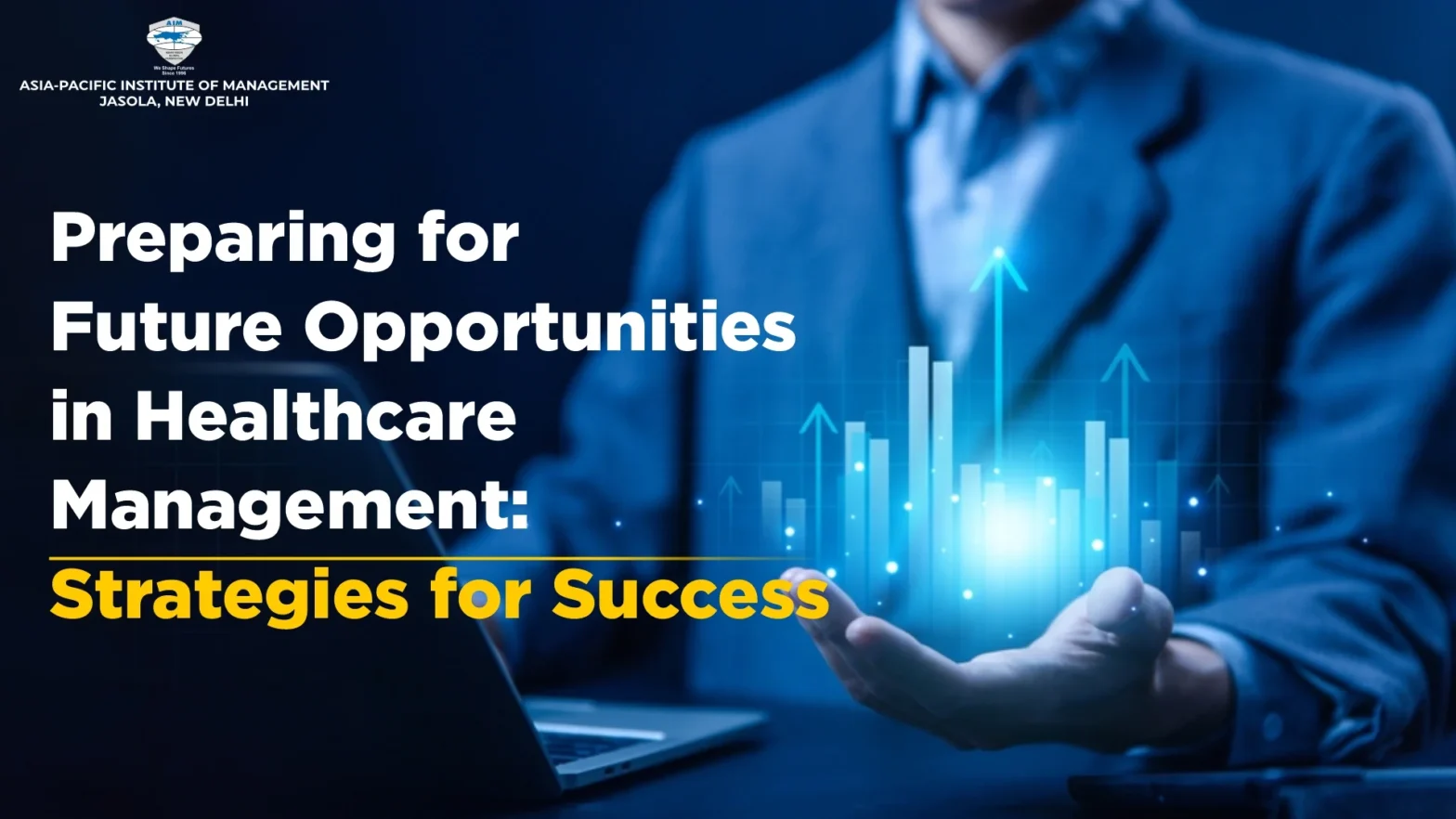
In a world characterized by constant change and rapid advancements, preparing for future opportunities is no longer an option but a necessity. Industries, technology, and global dynamics are evolving at an unprecedented pace, creating both challenges and opportunities. To thrive in such an environment, healthcare professionals must focus on strategic planning, skill development, and innovation.
The healthcare management field is rapidly transforming, driven by technological advancements, changing patient needs, and global challenges such as pandemics. This dynamic sector presents abundant opportunities for professionals, institutions, and businesses willing to adapt and innovate. Preparing for these future opportunities requires a strategic approach that combines technological proficiency, leadership development, and collaboration.
1. Embracing Technological Advancements in Healthcare
Technology is revolutionizing healthcare management, and staying ahead of these advancements is essential for success. Artificial Intelligence (AI) and Machine Learning (ML) are transforming patient care, predictive analytics, and administrative processes. Healthcare managers must understand how to implement AI solutions to improve efficiency and outcomes. The adoption of Electronic Health Records (EHRs) and data management platforms has become central to modern healthcare delivery. Investing in technology and staying updated on digital advancements will ensure that healthcare managers can streamline operations and enhance patient care.
2. Developing Leadership and Management Skills
Strong leadership is crucial in coordinating teams, negotiating with stakeholders, and addressing patient concerns. Effective healthcare managers possess a combination of strategic vision, decision-making abilities, and communication skills. Continuous professional development through mentorship programs, leadership workshops, and executive training can help managers hone these essential skills and prepare for future challenges.
3. Prioritizing Patient-centred Care
Healthcare management is increasingly focusing on personalized treatment and improved patient experiences. A patient-centred approach emphasizes efficiency, empathy, and responsiveness in healthcare services. Healthcare managers must implement systems that enhance patient satisfaction, streamline workflows, and ensure quality outcomes. Understanding patient needs and leveraging technology to provide personalized care will be critical for future healthcare leaders.
4. Building a Robust Professional Network
Networking fosters collaboration and opens doors to new opportunities in healthcare management. Engaging with industry professionals, attending healthcare conferences, and participating in leadership forums enable healthcare managers to stay informed about industry trends and best practices. Building strong relationships with peers, mentors, and experts can lead to valuable partnerships and career growth.
5. Promoting Sustainability in Healthcare
Sustainability is becoming a key focus in healthcare management as organizations seek to minimize their environmental impact while maintaining quality care. Hospitals and healthcare institutions are implementing eco-friendly initiatives, such as energy-efficient infrastructure, waste reduction strategies, and sustainable procurement practices. Sustainability not only benefits the environment but also enhances an organization’s reputation and reduces operational costs. Healthcare leaders must prioritize green practices to align with global sustainability goals.
6. Fostering Innovation and Research
Innovation and research are the cornerstones of progress in healthcare management. Encouraging a culture of research and development can lead to ground breaking solutions, from advanced treatment methods to efficient administrative systems. Investing in innovation helps healthcare organizations stay ahead of the curve and offer better services to patients. Collaborating with academic institutions and research centres can further drive advancements in the healthcare sector.
7. Preparing for Global Healthcare Challenges
The COVID-19 pandemic highlighted the importance of resilience and adaptability in healthcare management. The healthcare industry must be prepared for future global health crises by investing in proactive planning and crisis management strategies. Collaboration with government agencies, international organizations, and public health experts will help mitigate the impact of global challenges. Developing pandemic response protocols and strengthening healthcare infrastructure will be essential for future preparedness.
8. Leveraging Data-Driven Decision Making
Data analytics is transforming the way healthcare organizations operate. Healthcare managers must invest in analytics tools and training to make informed, evidence-based decisions. Using big data for predictive analysis, resource allocation, and patient management can significantly improve operational efficiency and patient outcomes. Implementing a data-driven approach enables healthcare leaders to develop strategic solutions and enhance service delivery.
Conclusion
Preparing for future opportunities in healthcare management requires a multifaceted approach that embraces technology, prioritizes patient-centred care, and fosters innovation. By staying informed about trends, investing in skills, and building strong networks, healthcare managers can position themselves and their organizations for long-term success. The key to thriving in this dynamic field lies in adaptability, collaboration, and a commitment to continuous improvement.
As the healthcare landscape continues to evolve, professionals who proactively prepare will be best equipped to seize new opportunities and drive positive change. To keep up with advancements, healthcare managers should invest in training programs, attend industry conferences, and collaborate with technology providers. By doing so, they will ensure that they are at the forefront of the industry, ready to meet the challenges and opportunities of the future head-on.
If you are passionate about making a difference in the global healthcare sector, explore AIM’s International MBA in Healthcare Management with RUDN University, Russia or AICTE approved PGDM in Healthcare Management to unlock exciting career opportunities.
We at Asia-Pacific Institute of Management encourage innovative thinking with an ethical paradigm. This is why we are considered a top rated PGDM College in Delhi and in North India. We encourage you to connect with us and grow at one of the best MBA colleges in Delhi.
Note: This blog was written by a faculty member of the Asia-Pacific Institute of Management
Keywords: Healthcare Management, Future Opportunities in Healthcare, Healthcare Leadership, Healthcare Innovation, Healthcare Sustainability, Data-Driven Decision Making, Patient-Centered Care, Global Healthcare Challenges, Healthcare Technology Advancements










.webp) Call Us
Call Us