Understanding Bed Turnover Rate & ALOS: How MBA Grads Optimize Hospital Capacity
Posted on 21 Jun 2026
By Dr. Vikas Gupta
Introduction
Modern hospitals face a constant challenge: delivering quality patient care while managing limited resources effectively.
Beds, staff, equipment, and clinical infrastructure must be utilized efficiently to ensure smooth operations and positive patient outcomes. As patient volumes increase and healthcare costs rise, hospitals are placing greater emphasis on hospital capacity optimization.
Two critical metrics help healthcare organizations measure and improve capacity utilization: Bed Turnover Rate (BTR) and Average Length of Stay (ALOS).
For healthcare management professionals, understanding these indicators is essential. They provide valuable insights into patient flow, resource allocation, and operational performance.
This article explains how MBA graduates use these metrics to enhance healthcare operational efficiency, reduce delays, and improve hospital performance.
What Is Hospital Capacity Optimization?
Hospital capacity optimization refers to the strategic management of resources to ensure patients receive timely and efficient care.
It involves maximizing the utilization of:
Hospital beds
Clinical staff
Diagnostic services
Operating rooms
Equipment and infrastructure
The goal is to balance patient demand with available resources while maintaining quality standards.
Effective capacity optimization improves both patient outcomes and financial performance.
Why Hospital Capacity Matters More Than Ever
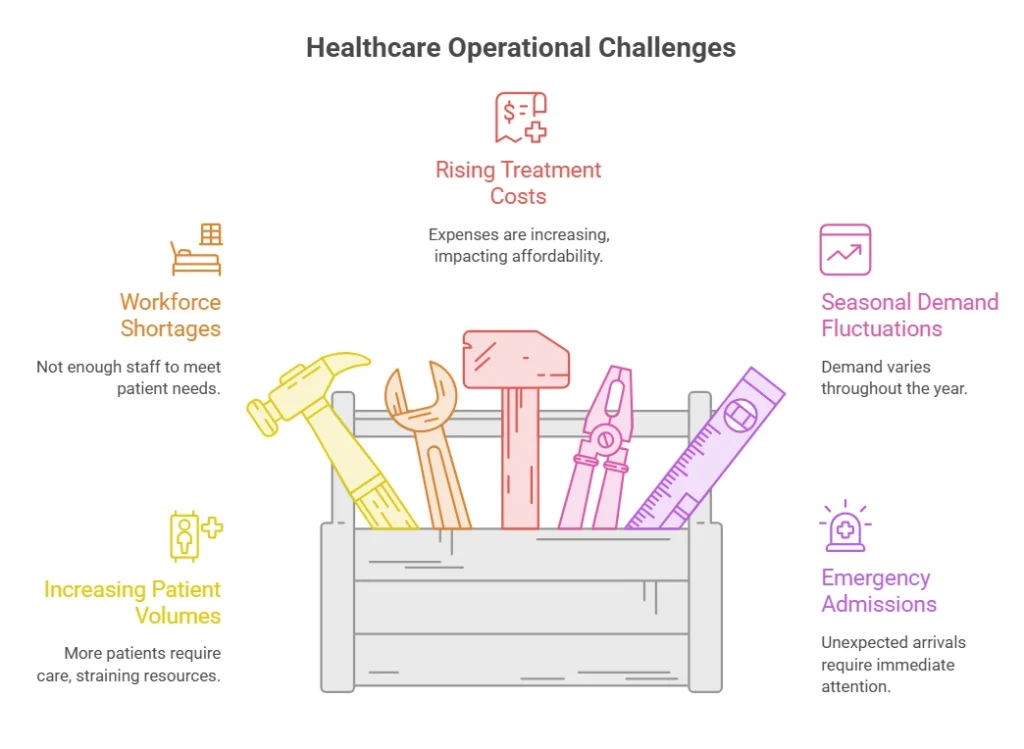
Healthcare organizations face several operational challenges.
These include:
Increasing patient volumes
Workforce shortages
Rising treatment costs
Seasonal demand fluctuations
Emergency admissions
Without effective capacity planning, hospitals may experience:
Overcrowding
Long waiting times
Delayed discharges
Staff burnout
Reduced patient satisfaction
This is why healthcare managers closely monitor operational metrics such as ALOS and Bed Turnover Rate.
Optimize Hospital Capacity
Learn practical healthcare operations skills to improve patient flow, bed utilization, and hospital performance effectively.
Expertise in capacity management opens diverse career pathways.
Potential roles include:
Hospital Operations Manager
Patient Flow Coordinator
Quality Manager
Healthcare Analyst
Capacity Planning Specialist
Hospital Administrator
These roles focus on improving efficiency, patient outcomes, and resource utilization.
Why Healthcare Management Education Matters
Healthcare organizations increasingly seek professionals who understand both clinical workflows and business operations.
Healthcare management programs help students develop expertise in:
Hospital operations
Healthcare analytics
Quality management
Healthcare finance
Strategic planning
Process improvement
Institutions such as Asia Pacific Institute of Management emphasize industry-oriented learning, practical exposure, and healthcare-focused management education that prepare students to address real-world operational challenges.
Conclusion
As healthcare systems become more complex, effective hospital capacity optimization is essential for maintaining quality care and operational efficiency.
Metrics such as the average length of stay formula and bed turnover rate calculation provide valuable insights into patient flow and resource utilization.
Healthcare management professionals play a crucial role in improving healthcare operational efficiency by optimizing discharge processes, reducing waiting times, and implementing data-driven strategies.
For aspiring healthcare leaders, understanding these operational metrics is not just an academic exercise—it is a critical skill for shaping the future of hospital management.
Lead Operational Excellence
Gain healthcare analytics and process improvement skills for high-impact hospital administration and leadership careers.
Dr. Vikas Gupta is a distinguished academic in the education and research domain, specializing in finance and related interdisciplinary studies. He is known for his...


















.webp) Call Us
Call Us