Executive MBA in Healthcare Without Leaving Your Job: Complete Guide
Posted on 16 Sep 2026
By Dr. Vikas Gupta
Introduction
For many healthcare professionals, pursuing an MBA sounds useful but difficult.
You may already have a full-time job, professional responsibilities, family commitments, and a demanding schedule. Taking a long career break may therefore feel impractical.
However, management education does not always require professionals to leave employment.
An executive MBA without leaving job can offer a pathway for experienced professionals who want to strengthen management and leadership skills while continuing their careers.
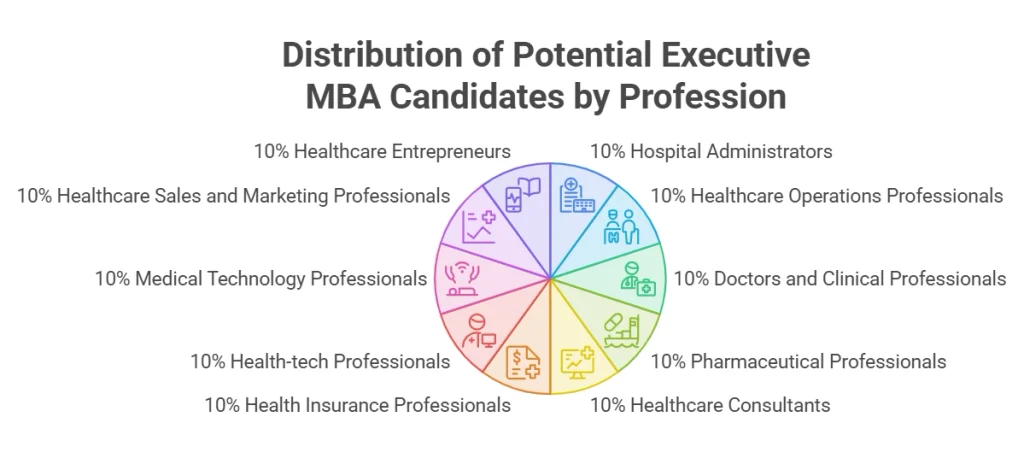
This approach can be particularly relevant to hospital administrators, healthcare operations professionals, pharmaceutical employees, insurance professionals, health-tech employees, consultants, and other working professionals.
But studying while working requires planning.
The right program must fit your schedule, career objective, financial capacity, and learning requirements.
This guide explains how to pursue an Executive MBA while working full time, what to look for in a flexible program, how to manage your workload, and how to decide whether a healthcare MBA fits your career plans.
Advance Without Career Break
Strengthen your healthcare management skills while continuing your career and prepare for greater leadership responsibilities without stepping away from work.
Can You Do an Executive MBA Without Leaving Your Job?
Yes, an Executive MBA can be designed for working professionals, allowing eligible candidates to continue employment while completing management education. However, the feasibility depends on the program's schedule, attendance requirements, learning format, workload, and individual responsibilities.
Executive programs are generally created with experienced professionals in mind.
Therefore, some programs use formats such as:
Weekend classes
Evening sessions
Online learning
Hybrid learning
Modular sessions
Intensive campus modules
However, not every Executive MBA uses the same format.
A program described as "executive" does not automatically mean that attendance requirements will be minimal.
Before enrolling, check the actual academic calendar and weekly workload.
Why Choose an MBA Without a Career Break?
Taking a career break for higher education can have financial and professional consequences.
Continuing employment while studying may help professionals maintain career continuity.
You Continue Building Experience
Your professional experience does not stop while you study.
In fact, you can potentially apply classroom concepts directly to workplace situations.
You Maintain Income
Continuing your job means you may not need to completely give up your existing salary during the program.
However, tuition and other education costs still need to be considered.
You Apply Learning Immediately
Suppose you are studying healthcare operations.
You may encounter a process-improvement concept in class and later apply that framework to a workplace challenge.
This can make management education more practical.
You Build a Stronger Professional Profile
An MBA combined with professional experience can demonstrate continued learning and management development.
However, the value depends on the quality and relevance of the program.
Who Should Consider an Executive MBA for Working Professionals?
Some employers may support professional education.
Support can take different forms.
For example:
Flexible working hours
Study leave
Partial fee reimbursement
Schedule adjustments
Project opportunities
However, employer policies differ.
Do not assume reimbursement or leave benefits exist.
Check your organisation's HR or learning-and-development policy.
Even without financial support, an employer may appreciate the additional skills if they can improve workplace performance.
How to Choose the Right Executive MBA for Working Professionals
Before applying, compare programs across several factors.
1. Recognition and Qualification
Understand exactly what qualification the institution awards.
2. Curriculum
Check whether subjects match your career goals.
3. Schedule
Confirm whether classes genuinely fit your working hours.
4. Learning Format
Evaluate online, offline, hybrid, weekend, evening, or modular options.
5. Faculty
Review faculty experience and academic background.
6. Industry Exposure
Look for case studies, projects, corporate interaction, and practical learning.
7. Total Fees
Consider tuition plus travel, accommodation, technology, and other costs.
8. Career Support
Understand the services available to working professionals.
9. Peer Group
Executive learning can become more valuable when participants bring meaningful professional experience.
How an Executive MBA Can Support Healthcare Leadership
Healthcare organisations need leaders who understand multiple business functions.
An operations manager may need financial knowledge.
A finance manager may need to understand service delivery.
A technology leader may need business strategy.
A hospital administrator may need stronger analytical capabilities.
Therefore, cross-functional management education can be useful.
At Asia Pacific Institute of Management, the emphasis on industry-oriented management education, practical learning, experienced faculty, corporate exposure, and placement support can help learners build transferable management capabilities.
Working professionals should review the current program structure, eligibility, schedule, curriculum, fees, and career-support provisions before deciding whether the program fits their needs.
The objective should be to complement professional experience with relevant management capabilities.
MBA Without Career Break: A Practical 12-Month Approach
If you choose a one-year executive format, planning becomes particularly important.
Months 1–2: Establish Your Routine
Create a fixed study schedule.
Understand the academic calendar.
Build relationships with classmates.
Months 3–5: Connect Learning With Work
Apply relevant frameworks to workplace situations.
Keep notes about real business problems.
Months 6–8: Build Your Specialisation
Identify the healthcare function you want to strengthen.
It could be operations, analytics, strategy, finance, marketing, or technology.
Months 9–10: Develop Leadership Skills
Focus on presentations, negotiation, teamwork, and decision-making.
Months 11–12: Plan Your Next Career Step
Update your CV.
Document projects and measurable achievements.
Identify internal and external career opportunities.
This approach helps ensure the MBA becomes a career-development process rather than simply an academic qualification.
Conclusion
An executive MBA without leaving job can be a practical pathway for professionals who want to strengthen management capabilities without completely stepping away from their careers.
However, continuing employment does not mean the program will require little effort.
Successful professionals need discipline, time management, employer coordination, and a clear career objective.
If you are considering an executive MBA for working professionals, evaluate the program's schedule, curriculum, eligibility, fees, learning format, faculty, industry exposure, and career support.
For healthcare professionals, the curriculum should also reflect the realities of healthcare operations, finance, analytics, technology, strategy, and leadership.
Asia Pacific Institute of Management focuses on industry-oriented management education, practical learning, experienced faculty, corporate exposure, and placement support.
Professionals considering healthcare MBA while working can review relevant program details and admission requirements to determine whether the learning format fits their professional commitments.
The goal is not simply to earn an MBA without taking a career break.
The goal is to make your existing professional experience more valuable by adding the management capabilities required for your next stage of growth.
Grow While You Work
Continue earning while developing healthcare management expertise through a program designed around professional responsibilities and career growth.
Dr. Vikas Gupta is a distinguished academic in the education and research domain, specializing in finance and related interdisciplinary studies. He is known for his...
01.
Can I pursue an Executive MBA without leaving my job?
Yes, many executive programs are designed for working professionals. However, the ability to continue employment depends on the program schedule, attendance requirements, academic workload, and your individual work commitments.
02.
Can I do an MBA while working full time?
Yes, depending on the program format. Weekend, evening, online, hybrid, and modular programs can provide different levels of flexibility. Always check the actual academic schedule before enrolling.
03.
Is an Executive MBA suitable for healthcare professionals?
It can be relevant for experienced healthcare professionals seeking broader management and leadership capabilities. Potential candidates include hospital administrators, doctors, pharmaceutical professionals, insurance professionals, consultants, and health-tech employees.
04.
Can I pursue a healthcare MBA while working?
Yes, subject to the program’s eligibility and schedule. Working professionals should check attendance, classes, examinations, projects, and campus requirements before choosing a program.
05.
What are the benefits of an Executive MBA?
Potential benefits include broader management knowledge, strategic thinking, leadership development, professional networking, and the ability to apply classroom learning to workplace challenges.
06.
Is a flexible Executive MBA easier than a regular MBA?
Not necessarily. Flexibility refers primarily to the delivery format and schedule. Executive programs can still have demanding assignments, examinations, projects, and attendance requirements.
07.
Can I pursue an MBA without a career break?
Yes. Many working professionals choose executive, online, hybrid, or other work-compatible formats. The appropriate option depends on eligibility, academic requirements, schedule, and personal circumstances.
08.
Will an Executive MBA guarantee a promotion or salary increase?
No. An MBA cannot guarantee promotion, placement, salary growth, or a specific job. Outcomes depend on professional experience, skills, performance, employer requirements, networking, and market conditions.


















.webp) Call Us
Call Us