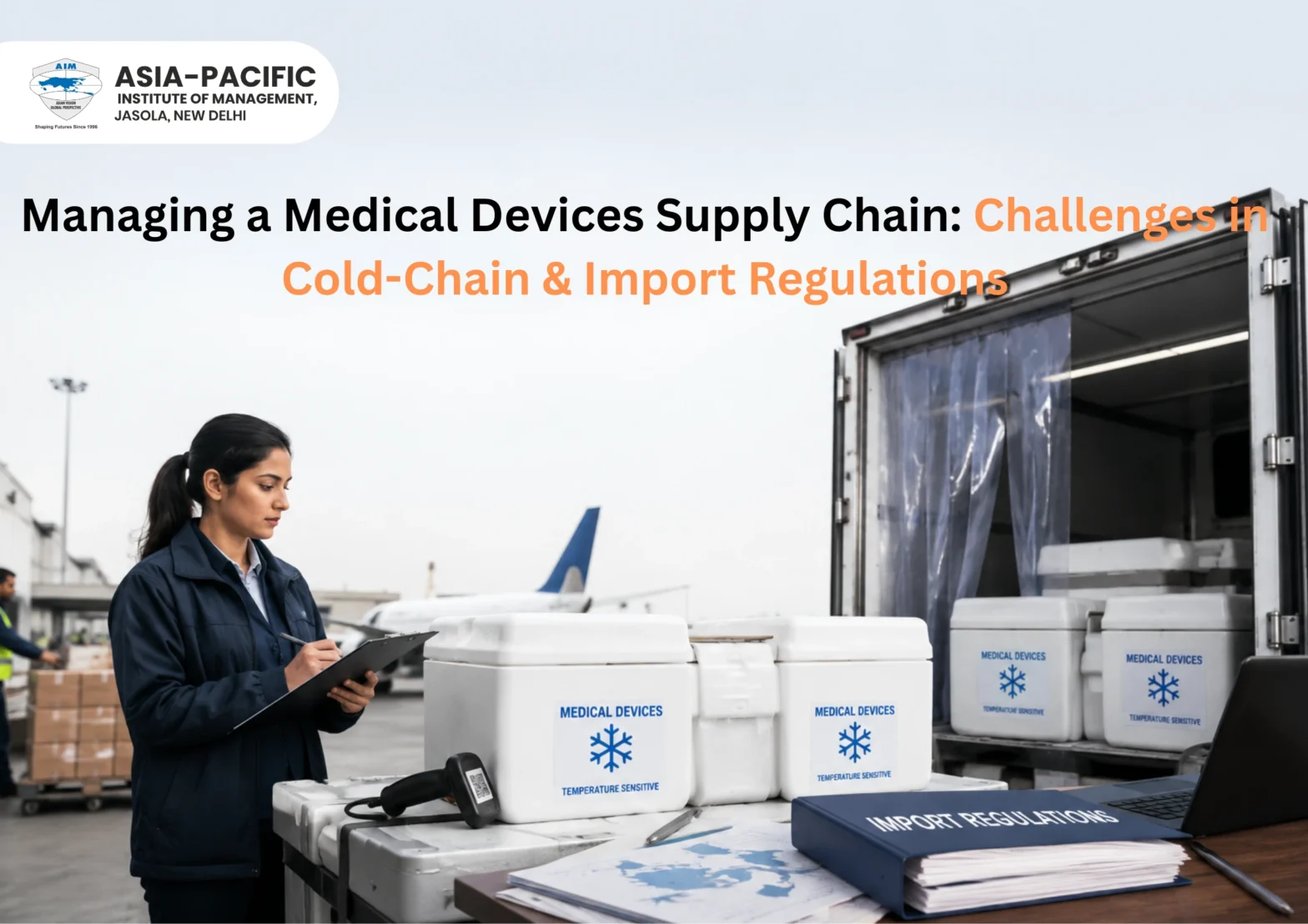
Managing a Medical Device Supply Chain: Challenges in Cold-Chain & Import Regulations
Posted on 27 Jul 2026
By Dr. Vikas Gupta
Introduction
The medical device supply chain is one of the most critical components of the healthcare ecosystem. Every day, hospitals, diagnostic centers, and healthcare providers rely on an efficient supply chain to ensure that life-saving medical devices, implants, and diagnostic equipment reach patients on time and in perfect condition.
However, managing a medical device supply chain is far more complex than traditional supply chains. Strict regulatory requirements, temperature-sensitive products, global sourcing dependencies, customs procedures, and inventory management all contribute to operational challenges. Even minor disruptions can delay patient care, increase costs, or compromise product quality.
As healthcare systems continue to adopt advanced technologies and rely on international suppliers, organizations must develop resilient supply chain strategies that balance compliance, efficiency, and patient safety.
This article explores the major challenges involved in managing a medical device supply chain, with a focus on cold chain logistics pharma, import regulations, customs clearance, hospital inventory management, and global sourcing.
Optimize Device Supply
Build healthcare supply chain skills to manage cold-chain logistics, imports, inventory, and compliance for medical device careers successfully.
A medical device supply chain refers to the end-to-end movement of medical equipment, surgical instruments, diagnostic devices, implants, consumables, and healthcare technologies from manufacturers to healthcare providers.
The process typically includes:
Raw material procurement
Manufacturing
Quality assurance
International transportation
Customs clearance
Warehousing
Distribution
Hospital inventory management
Final patient usage
Unlike many consumer products, medical devices require high levels of traceability, regulatory compliance, and quality assurance throughout the supply chain.
Healthcare products directly impact patient outcomes. Therefore, every stage of the supply chain must meet stringent quality and safety standards.
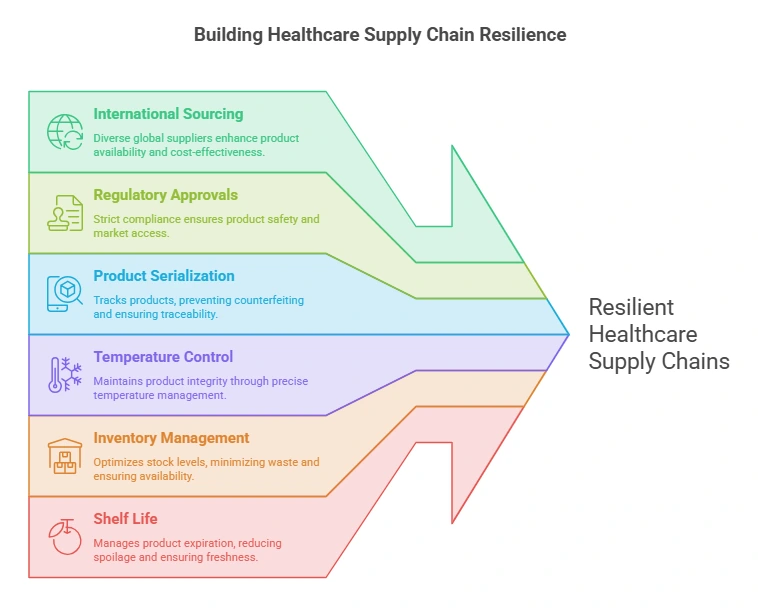
Several factors increase complexity, including:
International sourcing
Regulatory approvals
Product serialization
Temperature-controlled transportation
Expensive inventory
Limited shelf life for certain products
Strict documentation requirements
Additionally, disruptions caused by pandemics, geopolitical events, and transportation delays have highlighted the importance of building resilient healthcare supply chains.
Challenge 1: Cold Chain Logistics for Temperature-Sensitive Medical Devices
One of the biggest challenges in the medical device supply chain involves managing cold chain logistics pharma operations.
Certain medical products require controlled temperatures throughout transportation and storage to maintain their effectiveness.
These include:
Diagnostic reagents
Biological products
Vaccination devices
Laboratory kits
Specialized implants
Medical sensors
Risks of Cold Chain Failure
Temperature deviations may result in:
Product degradation
Reduced accuracy
Safety concerns
Regulatory violations
Product recalls
Financial losses
Healthcare organizations invest in advanced monitoring systems that provide real-time temperature tracking throughout the transportation journey.
Best Practices for Cold Chain Management
Successful cold chain operations typically include:
Continuous temperature monitoring
IoT-enabled tracking devices
Validated packaging solutions
Emergency backup procedures
Staff training
Real-time logistics visibility
Compliance documentation
Technology has significantly improved cold chain reliability by enabling proactive interventions before product quality is affected.
Master Healthcare Logistics
Prepare for medical device supply chain roles with practical MBA learning in sourcing, customs, tracking, and hospital inventory control.
Challenge 2: Customs Clearance for Medical Equipment
International sourcing has become essential for healthcare providers. However, custom clearance medical equipment remains one of the most time-consuming parts of global supply chain management.
Medical devices often require:
Import licenses
Regulatory certifications
Product registration
Country-specific approvals
Technical documentation
Safety certifications
Incomplete documentation can delay shipments for days or even weeks.
Common Customs Challenges
Healthcare organizations frequently encounter:
Documentation errors
Regulatory changes
Classification disputes
Import duty calculations
Inspection delays
Country-specific compliance requirements
Working with experienced customs professionals helps organizations minimize delays and ensure regulatory compliance.
Challenge 3: Global Healthcare Sourcing Risks
Modern healthcare depends heavily on global healthcare sourcing for medical devices, surgical instruments, electronics, and specialized components.
Global sourcing provides:
Cost advantages
Access to advanced technologies
Supplier diversification
Greater manufacturing capacity
However, international procurement introduces additional risks.
Key Global Sourcing Challenges
These include:
Supply disruptions
Currency fluctuations
Political instability
Shipping delays
Export restrictions
Supplier quality issues
Healthcare organizations increasingly diversify suppliers to reduce dependency on a single region or manufacturer.
Challenge 4: Inventory Management in Hospitals
Effective inventory management in hospitals ensures that essential medical devices remain available without excessive stock accumulation.
Hospitals face a unique challenge because demand can change unexpectedly due to emergencies, seasonal illnesses, or surgical schedules.
Poor inventory management can result in:
Device shortages
Overstocking
Expired products
Increased storage costs
Reduced operational efficiency
Strategies for Better Hospital Inventory Management
Healthcare providers are adopting technologies such as:
RFID tracking
Barcode scanning
AI demand forecasting
Automated inventory systems
Electronic procurement platforms
Predictive analytics
These technologies improve visibility while reducing manual errors.
Challenge 5: Stent and Implant Tracking
Patient safety depends heavily on accurate stent and implant tracking throughout the medical device supply chain.
Every implant must remain traceable from manufacturing to patient implantation.
Tracking systems help healthcare providers:
Maintain regulatory compliance
Support product recalls
Improve patient safety
Reduce documentation errors
Monitor implant performance
Modern hospitals increasingly use digital tracking platforms integrated with electronic health records.
Benefits of Digital Implant Tracking
Digital tracking enables:
Unique device identification (UDI)
Real-time inventory updates
Faster recall management
Improved surgical planning
Enhanced patient records
Better regulatory reporting
As regulations evolve, digital traceability is becoming an industry standard.
Regulatory Compliance Across the Medical Device Supply Chain
Compliance remains a core responsibility throughout every stage of the supply chain.
Organizations must comply with:
Quality management standards
Medical device regulations
Import-export policies
Product labeling requirements
Packaging standards
Traceability regulations
Failure to comply may result in shipment delays, penalties, or product recalls.
Therefore, compliance teams work closely with logistics providers, customs agencies, and healthcare institutions.
Technology Driving Smarter Supply Chains
Digital transformation has revolutionized the medical device supply chain.
Emerging technologies include:
Artificial Intelligence
AI predicts demand, optimizes inventory, and identifies supply chain risks before disruptions occur.
Internet of Things (IoT)
Connected sensors continuously monitor product location, humidity, and temperature.
Blockchain
Blockchain improves transparency by creating secure and tamper-resistant supply chain records.
Cloud-Based Supply Chain Platforms
Cloud technologies enable real-time collaboration among manufacturers, distributors, hospitals, and regulatory authorities.
Building a Resilient Medical Device Supply Chain
Healthcare organizations are focusing on resilience rather than simply reducing costs.
Key strategies include:
Diversifying suppliers
Maintaining safety stock
Strengthening supplier relationships
Investing in digital monitoring
Improving regulatory expertise
Developing contingency plans
Enhancing logistics visibility
Organizations that prioritize resilience are better prepared to handle future disruptions while maintaining uninterrupted patient care.
Career Opportunities in Healthcare Supply Chain Management
The increasing complexity of healthcare logistics has created strong demand for professionals with expertise in supply chain management.
Career roles include:
Healthcare Supply Chain Manager
Medical Procurement Specialist
Logistics Operations Manager
Regulatory Affairs Executive
Inventory Control Manager
Import-Export Compliance Specialist
Cold Chain Operations Manager
Healthcare Distribution Analyst
Students interested in management careers can benefit from industry-oriented programs that combine supply chain principles, healthcare operations, digital technologies, and regulatory knowledge. Institutions such as Asia Pacific Institute of Management emphasize practical learning, corporate exposure, and industry-relevant management education that prepares graduates for evolving healthcare and logistics sectors.
Managing a medical device supply chain requires careful coordination across manufacturing, transportation, regulatory compliance, inventory control, and healthcare delivery. Challenges such as cold chain logistics pharma, custom clearance medical equipment, inventory management in hospitals, stent and implant tracking, and global healthcare sourcing demand robust processes and advanced technologies.
As healthcare systems become increasingly interconnected, organizations that invest in digital transformation, resilient sourcing strategies, and regulatory expertise will be better equipped to ensure uninterrupted access to high-quality medical devices while improving patient outcomes. For aspiring management professionals, developing expertise in healthcare supply chain management offers access to a rapidly growing field with significant opportunities for impact and career growth.
Lead Supply Resilience
Turn logistics interest into career-ready expertise for regulatory compliance, cold-chain monitoring, digital traceability, and healthcare distribution leadership roles.
Dr. Vikas Gupta is a distinguished academic in the education and research domain, specializing in finance and related interdisciplinary studies. He is known for his...
A medical device supply chain is the complete process of sourcing, manufacturing, transporting, storing, distributing, and delivering medical devices while ensuring quality, regulatory compliance, and patient safety.
02.
Why is cold chain logistics important for medical devices?
Cold chain logistics ensures that temperature-sensitive medical products remain within specified temperature ranges during transportation and storage, preserving their safety and effectiveness.
03.
What challenges affect customs clearance for medical equipment?
Common challenges include incomplete documentation, changing import regulations, product classification issues, licensing requirements, inspections, and country-specific compliance standards.
04.
How does inventory management improve hospital operations?
Effective inventory management reduces shortages, minimizes waste, lowers storage costs, improves operational efficiency, and ensures timely availability of critical medical devices.
05.
Why is stent and implant tracking necessary?
Tracking supports patient safety, enables faster product recalls, improves regulatory compliance, and maintains complete traceability throughout the product lifecycle.
06.
How does technology improve medical device supply chains?
Technologies such as AI, IoT, blockchain, RFID, and cloud-based platforms enhance visibility, improve inventory accuracy, support compliance, and reduce supply chain disruptions.














.webp) Call Us
Call Us