MBA Healthcare for Physiotherapy (BPT) & Occupational Therapy Grads: Career Transformation
Posted on 01 Aug 2026
By Dr. Vikas Gupta
Completing a Bachelor of Physiotherapy can open doors beyond traditional clinical practice. Many graduates enjoy patient care. However, others discover an interest in healthcare leadership, operations, business, or administration.
This is why students researching career options after BPT increasingly explore management-oriented pathways. An MBA in Healthcare can help graduates combine their clinical understanding with business and leadership skills.
The transition can lead toward hospital administration, rehabilitation management, healthcare operations, fitness center administration, geriatric care management, and related roles.
For occupational therapy graduates, a similar path can broaden career possibilities beyond direct rehabilitation services.
So, is moving from BPT to an MBA in Healthcare a sensible career decision? This guide explains the opportunities, skills, career paths, and factors students should consider.
Lead With Data
Build practical management skills to interpret data, improve decisions, and prepare for leadership opportunities across modern healthcare organizations.
Career options after BPT include clinical physiotherapy, rehabilitation services, healthcare administration, hospital operations, fitness management, geriatric care, and healthcare business roles. Graduates who want to move beyond direct patient care can also pursue management education to build skills in operations, leadership, finance, marketing, and healthcare administration.
Clinical physiotherapy remains an important career pathway. However, it is not the only direction available.
Healthcare organizations require professionals who understand both patient needs and organizational operations. Therefore, physiotherapy graduates can use their healthcare knowledge as a foundation for management careers.
Some potential directions include:
Hospital and healthcare administration
Rehabilitation center management
Healthcare operations
Patient services management
Fitness and wellness management
Geriatric care management
Healthcare quality functions
Healthcare business development
Medical services coordination
Healthcare entrepreneurship
However, the exact opportunities depend on your qualifications, experience, specialization, employer requirements, and management skills.
Why Do Some BPT Graduates Move Beyond Clinical Practice?
Physiotherapy education develops a strong understanding of rehabilitation, patient interaction, anatomy, movement, and healthcare delivery.
Yet career interests can change after graduation.
Some graduates discover that they enjoy coordinating people and processes more than providing direct treatment. Others may want to work in healthcare while developing broader business responsibilities.
Additionally, modern healthcare organizations need managers who understand how clinical services operate.
This creates an interesting opportunity for BPT graduates.
Instead of leaving their healthcare knowledge behind, they can complement it with management expertise.
Consequently, an MBA in Healthcare can become a bridge between clinical understanding and managerial responsibility.
BPT to MBA Healthcare: How Does the Transition Work?
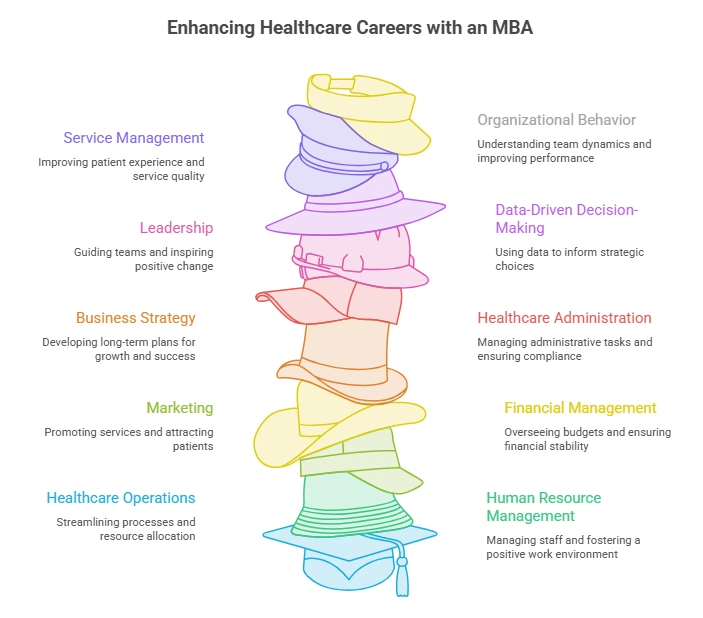
The BPT to MBA Healthcare transition involves adding business and management knowledge to an existing healthcare foundation.
A BPT graduate already understands many aspects of patient care and rehabilitation. An MBA can introduce a different set of competencies.
These may include:
Healthcare operations
Human resource management
Marketing
Financial management
Business strategy
Healthcare administration
Leadership
Data-driven decision-making
Service management
Organizational behavior
This combination can help graduates understand healthcare from both clinical and managerial perspectives.
For example, a physiotherapist understands the patient journey within rehabilitation. With management training, the same professional can learn how staffing, budgeting, capacity, service quality, and operational processes affect that journey.
Therefore, an MBA does not necessarily replace the value of a BPT degree. It can broaden how that healthcare knowledge is applied.
Career Options After BPT and MBA in Healthcare
Students should understand that an MBA does not automatically guarantee a senior management position.
Career progression depends on experience, skills, organizational needs, and individual performance.
However, management education can help BPT graduates prepare for several non-clinical and managerial pathways.
1. Hospital Administration
Hospital administration is one of the most relevant pathways for healthcare graduates interested in management.
Administrators may work with hospital departments, processes, patient services, resources, and operational teams.
A physiotherapy background can provide useful healthcare context. Meanwhile, an MBA can build the management knowledge required to understand the organization more broadly.
Depending on experience and the role, responsibilities may involve:
Department coordination
Patient service processes
Resource planning
Administrative reporting
Staff coordination
Operational monitoring
Service improvement
Therefore, this pathway may appeal to graduates who want to remain connected with healthcare without focusing entirely on clinical practice.
Rehabilitation services involve much more than treatment sessions. Centers also need scheduling, workforce coordination, patient experience management, quality monitoring, budgeting, and business planning.
A graduate with rehabilitation knowledge and management skills may understand both sides.
Potential responsibilities can include managing daily operations, coordinating rehabilitation teams, monitoring service quality, and supporting business growth.
Moreover, professionals with clinical backgrounds may communicate effectively with therapists because they understand rehabilitation workflows.
3. Fitness Center Administration
The fitness and wellness sector can offer another management pathway.
Fitness center administration involves business operations rather than only exercise instruction.
Managers may handle:
Membership operations
Staff coordination
Customer experience
Facility operations
Marketing activities
Budgeting
Service planning
Business development
A BPT graduate may already understand movement, physical function, and rehabilitation principles.
However, running a fitness or wellness organization requires additional business competencies. Therefore, management education can help bridge this gap.
4. Geriatric Care Management
India's changing demographic needs are increasing attention on elderly care and assisted healthcare services.
Depending on the organization and role, professionals may work with rehabilitation teams, healthcare providers, families, administrative teams, and care facilities.
Physiotherapy and occupational therapy graduates can bring valuable understanding of mobility and rehabilitation needs.
Additionally, management knowledge can help them understand operations, service coordination, staffing, and organizational planning.
This combination may become increasingly relevant as organized elder-care services develop.
5. Rehabilitation Center Administration
Rehabilitation centers require effective coordination between patients, therapists, support staff, equipment, schedules, and administrative processes.
A BPT or occupational therapy graduate already understands the rehabilitation environment.
Adding management knowledge can create opportunities to participate in administrative and operational functions.
For example, professionals may help improve appointment scheduling, staff allocation, patient experience, or service utilization.
Consequently, rehabilitation administration can provide a middle ground between purely clinical and broader corporate healthcare careers.
6. Healthcare Operations
Healthcare operations focuses on making services run efficiently.
Professionals working in this area may analyze workflows, coordinate departments, monitor operational indicators, and identify process improvements.
This can include areas such as patient flow, resource utilization, scheduling, and service delivery.
A healthcare background can be valuable because operational decisions often affect clinical teams and patients.
However, professionals also need analytical, communication, and problem-solving capabilities.
7. Healthcare Business Development
Healthcare organizations also need professionals who can support growth.
Business development roles may involve understanding markets, developing institutional relationships, supporting new services, or identifying business opportunities.
For BPT graduates, this represents a significant move away from traditional physiotherapy.
However, their understanding of healthcare consumers and services may provide useful context.
An MBA can additionally develop competencies in marketing, strategy, finance, and communication.
8. Healthcare Entrepreneurship
Some physiotherapy graduates may eventually want to build their own healthcare, rehabilitation, fitness, or wellness ventures.
Clinical knowledge alone may not be enough to manage a growing organization.
Entrepreneurs also need to understand pricing, marketing, finance, people management, customer experience, and business strategy.
Therefore, an MBA in Healthcare can provide a broader business perspective.
However, entrepreneurship also requires practical experience, market understanding, capital planning, and risk management.
Advance Healthcare Leadership
Strengthen your analytical and managerial capabilities to confidently handle data-driven decisions and emerging challenges across healthcare environments.
Or do you want a role that combines healthcare expertise with management?
This distinction matters.
Potential alternate fields may include healthcare administration, rehabilitation management, healthcare operations, fitness management, geriatric services, healthcare marketing, business development, and entrepreneurship.
Before choosing a field, consider:
Your interest in patient interaction
Your comfort with business responsibilities
Leadership abilities
Communication skills
Analytical thinking
Career expectations
Preferred work environment
Long-term career goals
A career transformation should not simply be an escape from clinical practice. Instead, it should move you toward work that better matches your strengths and ambitions.
Why Occupational Therapy Graduates Can Also Consider Healthcare Management
Occupational therapy graduates also develop valuable healthcare and rehabilitation knowledge.
Their education helps them understand patient needs, functional independence, rehabilitation processes, and multidisciplinary healthcare environments.
However, some graduates may eventually become interested in managing services rather than delivering them directly.
Healthcare management education can help build capabilities in areas such as operations, leadership, finance, marketing, and strategy.
Consequently, occupational therapy graduates can also explore managerial pathways within rehabilitation organizations, hospitals, elder-care services, wellness organizations, and other healthcare settings.
Clinical Career vs Healthcare Management: What Changes?
The transition from therapist to manager changes how professionals create value.
In a clinical role, your attention may primarily focus on individual patients.
In management, your decisions may affect departments, teams, services, or organizational processes.
For example, a physiotherapist may help one patient improve mobility. A rehabilitation manager may work on processes affecting hundreds of patients receiving rehabilitation services.
Neither pathway is inherently better.
They simply require different strengths.
Clinical careers generally require deeper patient-facing expertise. Management careers require stronger business understanding, coordination, communication, leadership, and decision-making.
Therefore, students should choose according to their interests rather than assuming management is automatically the next step.
Skills BPT Graduates Should Build for Healthcare Management
Moving into management requires a new professional skill set.
Business Understanding
Managers need to understand how organizations operate.
Therefore, students should learn the basics of finance, marketing, operations, strategy, and human resources.
Data Literacy
Healthcare is becoming increasingly data-driven.
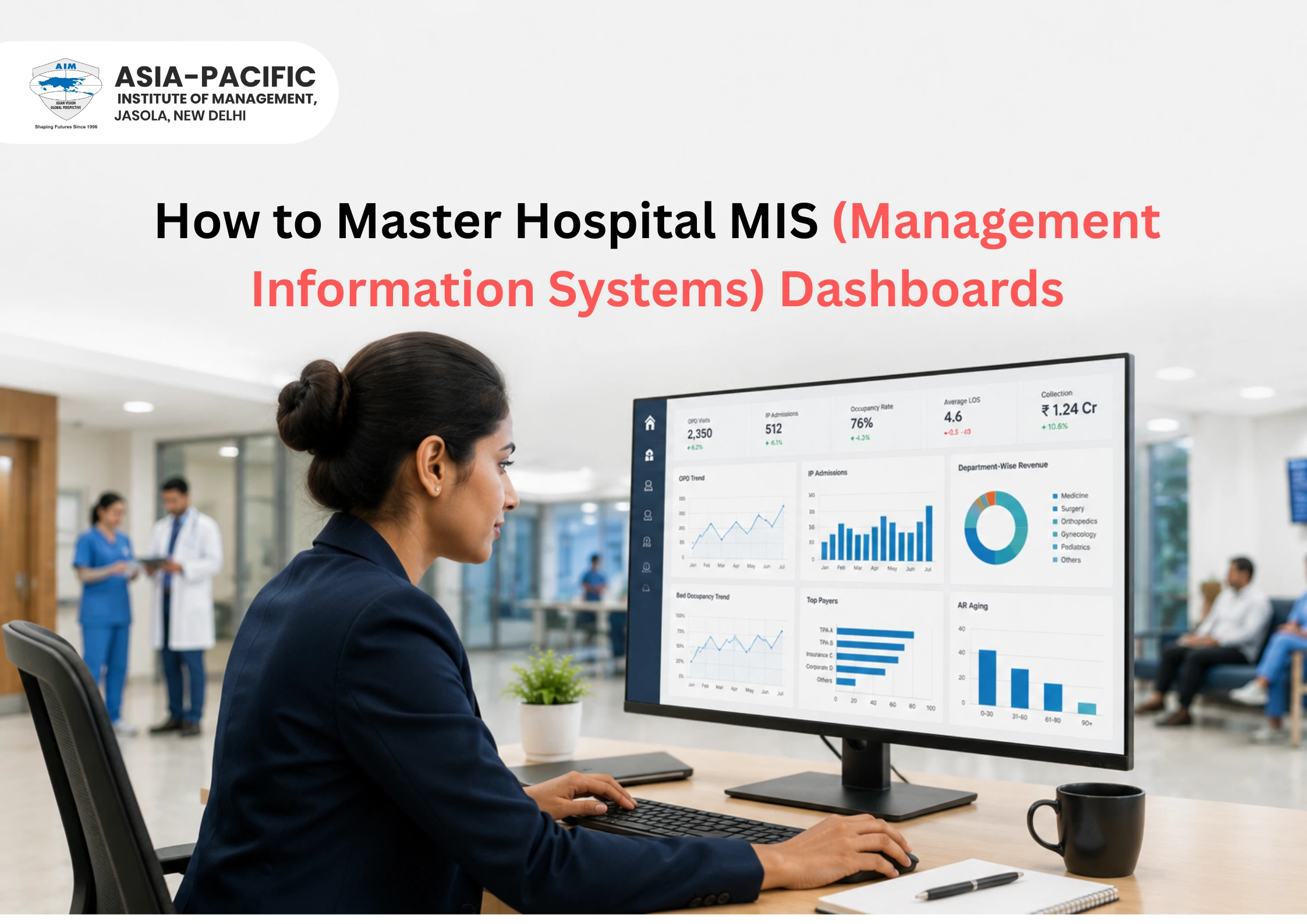
Managers may need to understand dashboards, performance indicators, patient data trends, utilization metrics, and operational reports.
Therefore, comfort with data can become a valuable career skill.
Communication
Healthcare managers interact with multiple stakeholders.
These may include clinicians, administrators, patients, vendors, senior management, and support teams.
Clear communication is consequently essential.
Leadership
Management involves working through people.
Students should develop the ability to coordinate teams, handle disagreements, delegate responsibilities, and support organizational goals.
Problem-Solving
Healthcare environments can be complex.
Managers often need to understand a problem, identify its causes, evaluate possible solutions, and implement practical improvements.
A clinical background can help because healthcare graduates already have experience approaching patient problems systematically.
Is an MBA in Healthcare Worth It After BPT?
An MBA in Healthcare can be worth considering for BPT graduates who genuinely want to move toward healthcare management, administration, operations, or business-oriented roles.
However, students should evaluate the decision carefully.
Ask yourself:
Do I enjoy management and coordination?
Do I want to reduce or leave direct clinical work?
Am I interested in how healthcare organizations operate?
Do I want to develop business skills?
Which healthcare management role interests me?
Does the MBA curriculum support that career direction?
If your long-term goal remains advanced clinical physiotherapy, a management degree may not be the most direct route.
However, if your goal is hospital administration, rehabilitation management, healthcare operations, or entrepreneurship, an MBA can provide relevant management knowledge.
How to Choose an MBA for a Healthcare Management Career
Choosing the right management education requires more than checking the degree title.
Students should examine whether the learning environment connects management concepts with practical industry requirements.
Look for factors such as:
Industry-oriented curriculum
Practical learning opportunities
Experienced faculty
Corporate exposure
Placement support
Case-based learning
Exposure to data-driven management
Communication and leadership development
Industry interaction
Moreover, students should understand the curriculum, eligibility requirements, admission process, and career support before applying.
At Asia Pacific Institute of Management, students can experience an industry-aligned approach to management education supported by practical learning, experienced faculty, corporate exposure, and placement support.
For healthcare graduates seeking broader managerial capabilities, such an environment can help develop business skills that complement their existing domain knowledge.
Creating Your BPT to MBA Healthcare Career Plan
A successful career transition should be planned rather than rushed.
Start by defining the type of role you want after management education.
Next, identify the skills that role requires. Compare those requirements with your existing BPT or occupational therapy capabilities.
Then, determine which gaps management education can address.
Additionally, continue using your healthcare background as a professional advantage.
Your clinical education has already taught you about patients, rehabilitation, healthcare teams, and service delivery. Management education can add the business perspective.
Together, these capabilities can create a differentiated professional profile.
Exploring career options after BPT does not mean abandoning the value of a physiotherapy education.
Instead, BPT and occupational therapy graduates can use their healthcare knowledge as the foundation for a broader career transformation.
For those interested in leadership and business, the BPT to MBA Healthcare pathway can help develop skills relevant to hospital administration, non clinical rehab management, fitness center administration, geriatric care management, healthcare operations, and related areas.
The key is to make the transition with a clear career objective.
Understand the role you want, identify the required skills, and select management education that provides practical and industry-relevant learning.
For healthcare graduates ready to expand from patient-focused expertise toward management responsibilities, the right combination of domain knowledge and business education can create new possibilities.
Build Management Expertise
Develop industry-relevant business skills and strategic thinking to pursue leadership roles in healthcare and other fast-evolving sectors confidently.
Dr. Vikas Gupta is a distinguished academic in the education and research domain, specializing in finance and related interdisciplinary studies. He is known for his...
01.
What are the best career options after BPT other than physiotherapy?
Career options can include hospital administration, rehabilitation management, healthcare operations, fitness center administration, geriatric care management, healthcare business development, and entrepreneurship. The right choice depends on your interests, additional qualifications, skills, and experience.
02.
Can I do an MBA after BPT?
Yes. BPT graduates can pursue management education, subject to the eligibility requirements of the chosen program and institution. Students should check current admission criteria before applying.
03.
Is an MBA in Healthcare useful after physiotherapy?
It can be useful for graduates seeking management-oriented careers in healthcare. An MBA may help build competencies in operations, finance, marketing, strategy, leadership, and administration. However, its value depends on your intended career direction.
04.
Can physiotherapists work in hospital administration?
Physiotherapy graduates can explore hospital administration after developing appropriate management skills and qualifications. Entry requirements vary by employer and position. Therefore, students should evaluate specific job requirements while planning their education.
05.
What is non-clinical rehab management?
Non-clinical rehab management focuses on the administrative and operational side of rehabilitation services. Responsibilities can include scheduling, staff coordination, service quality, patient experience, resource management, and business operations rather than providing therapy directly.
06.
Can occupational therapy graduates pursue an MBA in Healthcare?
Occupational therapy graduates may pursue an MBA or healthcare-focused management program when they meet the applicable eligibility requirements. This pathway can be relevant for graduates interested in healthcare administration, operations, rehabilitation management, or related business roles.
07.
What skills do BPT graduates need for management careers?
Important skills include business understanding, communication, leadership, analytical thinking, data literacy, problem-solving, and teamwork. Additionally, understanding healthcare operations can help graduates connect their clinical background with managerial responsibilities.
08.
What is the scope of BPT plus MBA in Healthcare in India?
The combination can support exploration of careers in hospitals, rehabilitation services, healthcare operations, fitness and wellness organizations, geriatric care, business development, and healthcare ventures. However, career outcomes depend on skills, experience, specialization, employer requirements, and market conditions.













.webp) Call Us
Call Us