Healthcare Analytics vs. Hospital Admin: Which Offers Better ROI in 2026?
Posted on 27 Aug 2026
By Dr. Vikas Gupta
Introduction
A management graduate no longer has to choose only between hospital operations, HR, finance, or marketing. Digital health, healthcare analytics, health informatics, and healthcare data management are creating new career pathways.
If ROI means only starting salary, healthcare analytics can have an advantage in some roles because technical skills such as SQL, Excel, dashboards, Python, and healthcare data interpretation are in demand.
If ROI means broader leadership opportunities, hospital administration can provide stronger exposure to operations, people management, quality, patient flow, finance, and hospital-wide decision-making.
Therefore, neither career is universally better.
The stronger option is the one that matches your skills, career goals, and willingness to build either technical or operational expertise.
This guide compares both pathways across salaries, skills, job roles, career growth, and long-term value.
Build Future-Ready Healthcare Skills
Combine healthcare management, analytics, digital literacy, and leadership skills to prepare for high-growth careers across hospitals and health-tech companies.
Healthcare Analytics vs Hospital Administration: What Is the Difference?
Healthcare analytics focuses on using data to improve healthcare decisions, while hospital administration focuses on managing healthcare operations, people, resources, quality, and service delivery. Analytics is more data-intensive, while administration is more operational and leadership-oriented.
A healthcare analyst may ask:
Why did patient waiting time increase?
Which department has higher readmission patterns?
What is driving revenue leakage?
Which patients are likely to miss appointments?
A hospital administrator may ask:
How do we reduce waiting time?
How should staffing be changed?
Why are beds unavailable?
Which department needs operational intervention?
Both roles can work on the same problem.
However, they approach it differently.
Analytics generates insight.
Administration converts insight into action.
What Is Healthcare Analytics?
Healthcare analytics involves collecting, organizing, analyzing, and interpreting healthcare data.
The data may come from:
Electronic health records
Hospital information systems
Claims
Insurance data
Billing systems
Patient feedback
Laboratory systems
Operational dashboards
Healthcare analytics professionals may work in:
Hospitals
Health-tech companies
Insurance
Pharmaceutical companies
Consulting
Healthcare outsourcing
Digital health
Possible job titles include:
Healthcare Data Analyst
Clinical Data Analyst
Business Analyst
Healthcare Analytics Consultant
Health Informatics Analyst
BI Analyst
India's digital-health ecosystem is expanding rapidly, supported by large-scale platforms and growing use of AI, data integration, and digital health records. This is increasing the strategic importance of healthcare data skills.
What Is Hospital Administration?
Hospital administration focuses on managing the organization that delivers care.
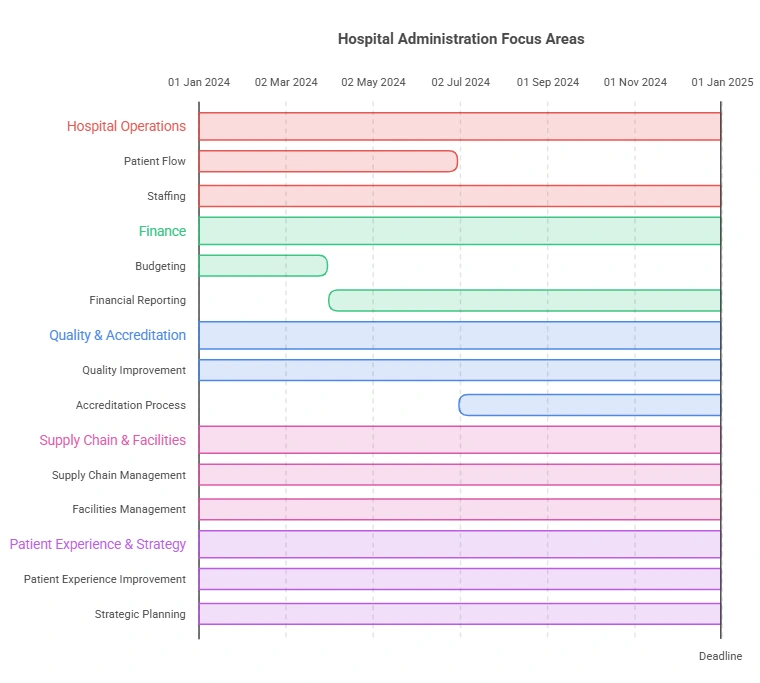
It may include:
Hospital operations
Patient flow
Staffing
Finance
Quality
Accreditation
Supply chain
Facilities
Patient experience
Strategy
Possible job titles include:
Hospital Administrator
Operations Manager
Floor Manager
Quality Manager
Patient Experience Manager
Unit Administrator
Hospital administrators work directly with multiple departments.
Therefore, they need broad management capabilities rather than deep technical specialization in one analytical tool.
Healthcare MBIT vs MHA: Which Educational Route Fits Better?
Students researching healthcare MBIT vs MHA are usually comparing technology-focused and administration-focused career pathways.
The exact programme titles vary by institution.
However, the distinction is useful.
Technology or Analytics-Focused Route
A healthcare technology or analytics programme may cover:
Data analytics
Information systems
AI
Digital health
Healthcare databases
Business intelligence
This route can suit students who enjoy data, technology, and structured problem-solving.
MHA or Hospital Administration Route
A hospital administration programme may focus more on:
Operations
Quality
Finance
HR
Healthcare laws
Hospital systems
Patient services
This route can suit students who enjoy people management, hospital operations, and leadership.
The better programme is the one aligned with your career goal.
Salary estimates vary significantly depending on the exact role.
Indeed's March 2026 data listed an average healthcare data analyst base salary of about ₹7.62 lakh per year in India, although the estimate was based on a small salary sample.
Glassdoor's 2026 India data also showed a median total-pay estimate around ₹6.75 lakh annually, again with variation by role and employer.
Therefore, students should treat online averages cautiously.
A clinical or healthcare data analyst's salary may depend on:
SQL skills
Python or R
Power BI or Tableau
Healthcare domain knowledge
EHR familiarity
Experience
Employer type
City
Analytics roles in technology firms, consulting, or multinational healthcare organizations can sometimes offer stronger compensation than basic hospital analyst roles.
Hospital Administration Salary in India
Hospital administration salaries also vary widely.
Current 2026 market guides suggest entry-level hospital administration roles may start around ₹3–8 lakh per year, while experienced administrators and senior executives can earn substantially more.
Operations-management salary data also show higher mid-career earnings in larger hospital environments.
The main difference is career structure.
Hospital administration salary growth often depends on:
Experience
Hospital size
Team responsibility
Budget responsibility
Role level
Operational complexity
A senior administrator managing an entire facility can earn far more than an entry-level operations executive.
Which Career Offers Better Salary ROI?
At the beginning of a career, healthcare analytics can have an advantage when a candidate possesses strong technical skills.
Why?
Because skills such as SQL, Python, and data visualization are transferable.
A healthcare analyst can potentially work across:
Hospitals
Insurance
Consulting
Health-tech
Pharma
IT services
This creates broader employer demand.
Hospital administration may start with comparatively modest pay in some hospitals.
However, senior hospital leadership can offer strong compensation.
Therefore, salary ROI depends on career stage.
Early Career
Healthcare analytics may have an advantage.
Mid Career
Both can perform well.
Senior Leadership
Hospital administration can offer significant upside when professionals move into unit-head, COO, or hospital-leadership roles.
The trade-off is simple:
Analytics may reward specialization earlier. Administration may reward responsibility later.
High Paying Healthcare Jobs in 2026
Students searching for high paying healthcare jobs should avoid assuming that one job title guarantees high compensation.
Higher-paying non-clinical healthcare roles often require a combination of specialization and experience.
Potential examples include:
Healthcare Analytics Manager
Healthcare Consultant
Hospital Operations Head
Health Informatics Manager
Healthcare Strategy Manager
Hospital COO
Digital Health Product Manager
The strongest salaries usually go to professionals who combine more than one capability.
For example:
Healthcare knowledge + Analytics + Business understanding
or
Hospital operations + Finance + Leadership
This combination creates greater career value.
Healthcare Analytics Career Path
A possible career path may look like:
Data Analyst → Senior Healthcare Analyst → Analytics Consultant → Analytics Manager → Healthcare Data Lead
Another route could be:
Business Analyst → Health-Tech Product Analyst → Product Manager
Career progression depends heavily on technical depth.
Professionals may need to continuously learn tools and technologies.
That creates both an opportunity and a challenge.
Hospital Administration Career Path
A typical pathway may look like:
Management Trainee → Operations Executive → Assistant Manager → Operations Manager → Senior Manager → Hospital Administrator → Unit Head
This path develops through responsibility.
Professionals need to learn:
People management
Finance
Operations
Quality
Healthcare regulations
Leadership
Hospital administrators may therefore become general managers over time.
Health Tech Career Options
The growth of health tech career options is one major reason healthcare analytics is becoming attractive.
Health-tech companies need professionals who understand both healthcare and technology.
Possible roles include:
Healthcare Business Analyst
Product Analyst
Data Analyst
Implementation Consultant
Digital Health Consultant
Product Manager
Healthcare AI Operations Manager
India's large digital-health infrastructure is creating a stronger environment for AI-enabled healthcare, digital records, and data-driven services.
Therefore, analytics skills can provide access to careers beyond hospitals.
A healthcare data professional may not always perform advanced analytics.
However, strong data management is necessary before analytics or AI can work effectively.
Poor-quality data produces poor-quality insights.
Skills Required for Healthcare Analytics
Students targeting analytics should build:
Excel
Still essential for business analysis.
SQL
Important for querying databases.
Power BI or Tableau
Useful for dashboards.
Python or R
Helpful for advanced analytics.
Statistics
Supports better interpretation of data.
Healthcare Domain Knowledge
Understanding:
Patient flow
Clinical terminology
Claims
Hospital KPIs
can differentiate healthcare analysts from general data analysts.
Skills Required for Hospital Administration
Hospital administrators need different strengths.
Important capabilities include:
Operations management
Communication
HR
Finance
Quality management
Leadership
Process improvement
Patient experience
Hospital administration is highly people-oriented.
Managers interact with:
Doctors
Nurses
Patients
Finance teams
Vendors
Support staff
Therefore, communication and coordination are essential.
Lead With Data
Develop business, analytics, operations, and decision-making capabilities for emerging opportunities in hospital management, healthcare consulting, and digital health.
Why Healthcare MBA Students Should Understand Both
Future healthcare managers cannot ignore data.
Similarly, analysts cannot ignore operations.
Therefore, management education should help students understand both business and healthcare systems.
At Asia Pacific Institute of Management, an industry-oriented curriculum, experienced faculty, practical learning, corporate exposure, and placement support can help students develop broader managerial capabilities.
For students interested in healthcare, combining operations knowledge with analytics and digital literacy can strengthen career readiness.
The objective should not be to chase the highest-paying job title.
It should be to build a skill combination that remains valuable as healthcare becomes more digital.
Conclusion
The healthcare analytics vs hospital administration decision is not simply a salary comparison.
Both paths create different kinds of value.
Healthcare analytics offers strong exposure to:
Data
Technology
Digital health
Consulting
Health-tech careers
Hospital administration offers stronger exposure to:
Operations
Leadership
Patient experience
Quality
Hospital-wide management
In 2026, analytics may provide faster salary upside for students with strong technical capabilities.
However, hospital administration remains an important pathway toward senior healthcare leadership.
The most future-ready professionals may combine both.
Healthcare organizations increasingly need managers who understand operations and data simultaneously.
Accelerate Healthcare Career Growth
Strengthen your management foundation with practical healthcare, analytics, technology, and leadership knowledge for versatile career opportunities and long-term growth.
Dr. Vikas Gupta is a distinguished academic in the education and research domain, specializing in finance and related interdisciplinary studies. He is known for his...
01.
Which is better: healthcare analytics or hospital administration?
Healthcare analytics may suit students interested in data and technology. Hospital administration may suit students interested in operations and leadership. The better option depends on your strengths and career goals.
02.
Which field has better salary growth?
Analytics can offer strong early-career pay for candidates with technical skills. Hospital administration can offer significant growth at senior leadership levels.
03.
What is the clinical data analyst salary in India?
Current public salary data vary. Indeed reported an average healthcare data analyst salary of approximately ₹7.62 lakh annually in March 2026, although the dataset was small.
04.
Does healthcare analytics require coding?
Many roles benefit from SQL. Python or R may be useful for advanced analytics. However, some business-intelligence roles rely more heavily on Excel and visualization tools.
05.
Can hospital administrators move into analytics?
Yes. Administrators can build skills in Excel, Power BI, SQL, and healthcare data management to move toward operational analytics or digital transformation roles.
06.
What are the main health tech career options?
Possible roles include healthcare analyst, product analyst, digital health consultant, implementation manager, health informatics professional, and product manager.
07.
Which are high paying healthcare jobs for MBA graduates?
Higher-paying non-clinical roles can include healthcare consulting, analytics management, digital health product management, strategy, and senior hospital operations. Compensation depends heavily on skill and experience.
08.
Which career has better ROI in 2026?
Healthcare analytics may provide better early ROI for technically strong candidates, while hospital administration can provide strong long-term ROI for professionals who progress into leadership. A hybrid analytics-plus-operations profile can offer particularly strong flexibility.
















.webp) Call Us
Call Us