


18 Sep 2026
Can Arts Students Pursue an MBA in Healthcare Management?


Choosing an Executive MBA in healthcare management requires more than checking the course duration or fee structure. Working professionals should understand what they will actually learn. The Executive MBA healthcare curriculum typically combines management fundamentals with healthcare-focused applications, leadership development, analytics, operations, finance, and strategic decision-making.
For professionals already working in hospitals, healthcare services, pharmaceuticals, insurance, consulting, or health-tech, the right curriculum can help bridge the gap between functional expertise and management responsibility.
Moreover, healthcare organisations increasingly need managers who understand both business priorities and patient-centric operations. Therefore, an Executive MBA curriculum should develop practical decision-making skills, not just theoretical knowledge.
Develop strategic, analytical, operational, and leadership capabilities through practical healthcare management learning designed for experienced working professionals.
Apply Now →An Executive MBA healthcare curriculum is a management-focused course structure designed to help working professionals develop business, operational, analytical, and leadership capabilities relevant to healthcare organisations.
Depending on the institution and program format, subjects may cover healthcare operations, financial management, marketing, strategy, human resources, business analytics, healthcare technology, quality management, and leadership.
The exact syllabus varies between programs. Therefore, prospective students should always review the latest curriculum, delivery format, project requirements, and eligibility criteria before applying.
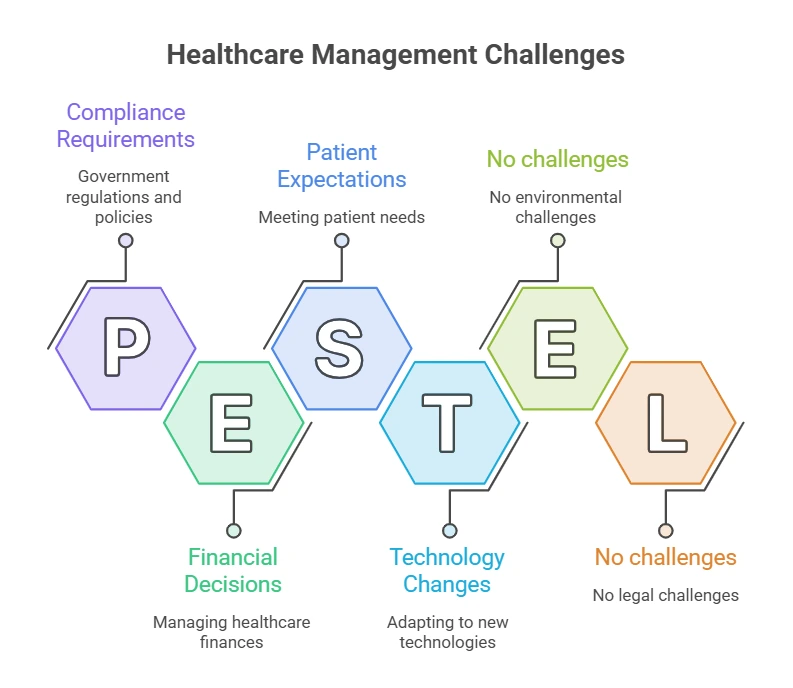
Healthcare is a complex industry. Managers may need to coordinate people, processes, technology, finances, compliance requirements, and patient expectations.
Consequently, a healthcare management program needs to go beyond basic business concepts.
A strong curriculum can help professionals understand:
For working professionals, practical application is especially important. The value of a subject increases when learners can connect classroom concepts with workplace situations.
The specific executive MBA healthcare subjects depend on the program. However, most comprehensive curricula combine general management subjects with healthcare-oriented topics.
Healthcare management introduces the structure and functioning of healthcare organisations.
Students may explore:
This foundation helps professionals understand how different functions work together.
Operations are central to healthcare management.
A healthcare manager may need to improve patient flow, resource utilisation, scheduling, service capacity, and process efficiency.
Therefore, healthcare operations subjects may cover:
Projects in this area can involve mapping a healthcare process and identifying opportunities for improvement.
Financial knowledge becomes increasingly important as professionals move into managerial positions.
Healthcare finance may cover:
The objective is not necessarily to turn every healthcare professional into a finance specialist.
Instead, the subject helps managers understand the financial consequences of operational and strategic decisions.
Healthcare organisations operate in an increasingly competitive and digitally connected environment.
Healthcare marketing subjects may introduce:
The emphasis should remain on ethical, patient-focused communication.
Managers must understand that healthcare marketing involves trust. Therefore, communication needs to be accurate, transparent, and responsible.
Healthcare delivery depends heavily on people.
Doctors, nurses, administrators, technicians, support teams, executives, and other professionals must often work together under demanding conditions.
HR-focused subjects can therefore address:
These skills become increasingly valuable when professionals move from individual contributor roles into team management.
Technology is changing how healthcare organisations collect information, communicate with patients, manage operations, and make decisions.
Therefore, a modern healthcare management MBA syllabus may include technology and analytics components.
Healthcare generates large amounts of operational and financial data.
Managers can use analytics to understand:
Professionals may also learn how dashboards and business intelligence tools support managerial decisions.
The focus should be on converting data into actionable business insights.
Digital transformation has created new management challenges.
Depending on the curriculum, students may explore:
Managers need to understand both the opportunities and organisational challenges created by new technologies.
Quality management is another important area.
Students may study:
This subject connects operational efficiency with service quality.
Explore healthcare operations, finance, analytics, strategy, and technology to strengthen your capabilities for broader management responsibilities.
Apply Now →An Executive MBA should prepare professionals for decisions that extend beyond daily operations.
Therefore, strategy-related healthcare MBA subjects can play an important role.
Strategic management helps students understand how organisations create long-term value.
Topics may include:
Healthcare managers can apply these concepts when evaluating new services, markets, partnerships, or operational priorities.
Business economics helps managers understand the external environment influencing organisational decisions.
It may cover:
This knowledge can support better strategic planning.
Managers often need to evaluate problems systematically.
Research methods can introduce:
These skills are particularly useful for management projects and workplace improvement initiatives.
The executive MBA course structure can vary significantly between institutions.
However, a comprehensive structure may progress from management fundamentals to specialised subjects and practical projects.
A typical learning progression could look like this:
| Stage | Major Learning Areas |
| Foundation | Management principles, economics, accounting |
| Functional Management | Marketing, finance, HR, operations |
| Healthcare Management | Healthcare administration, operations, quality |
| Analytics & Technology | Business analytics, digital transformation |
| Leadership | Strategy, organisational behaviour, decision-making |
| Application | Projects, case studies, presentations |
The actual sequence depends on the program.
Additionally, working professionals should examine whether the program uses weekend classes, evening sessions, hybrid delivery, online learning, or another format.
Bonus: Can Doctors Study MBA While Practicing?
Projects are among the most valuable components of management education.
An Executive MBA healthcare project allows professionals to apply classroom concepts to a practical business or operational problem.
Potential project areas include:
A learner could study patient flow and identify process bottlenecks.
The project might analyse:
A project could examine how a healthcare organisation can improve its digital patient engagement strategy.
The learner might study:
A data-driven project could examine operational or financial performance.
For example, the project might evaluate:
Students can also explore workforce challenges.
Possible topics include:
A strategic project could examine a proposed service expansion.
The analysis might include:
A strong project should solve a clearly defined management problem.
Therefore, students should avoid choosing a topic simply because it sounds impressive.
Instead, consider whether the project has:
Working professionals have an additional advantage. They can often connect academic projects with real workplace challenges, subject to organisational confidentiality and data policies.
Technical knowledge alone does not make someone an effective manager.
Leadership skills become increasingly important as professionals take responsibility for teams, budgets, projects, and organisational outcomes.
Therefore, healthcare leadership subjects may include several important areas.
Organisational behaviour helps professionals understand how individuals and teams function within organisations.
Key areas can include:
Strategic leadership focuses on long-term decision-making.
Professionals learn to consider:
Healthcare environments involve multiple stakeholders.
Managers may need to handle disagreements between departments, teams, vendors, patients, and other stakeholders.
Negotiation skills can therefore help managers approach difficult conversations more systematically.
Healthcare organisations regularly adapt to technological, operational, regulatory, and market changes.
Change management helps leaders understand:
Effective communication is a fundamental leadership skill.
Executive MBA learners may develop skills in:
These skills can directly influence managerial effectiveness.
A well-designed curriculum can develop a combination of business and leadership capabilities.
| Skill | Practical Application |
| Strategic thinking | Long-term business planning |
| Financial understanding | Budget and cost decisions |
| Analytics | Data-driven management |
| Operations | Process improvement |
| Leadership | Team and project management |
| Communication | Stakeholder engagement |
| Negotiation | Conflict and vendor management |
| Marketing | Patient and market engagement |
| Digital awareness | Technology-led transformation |
| Problem solving | Operational decision-making |
The objective is to develop managers who can connect different business functions.
Not every program has the same depth or practical orientation.
Before applying, professionals should evaluate the curriculum using the following checklist:
Look for a balanced combination of:
Ask whether the program includes:
Experienced faculty can help students connect management theories with real business situations.
Corporate interaction, practitioner sessions, case discussions, and practical assignments can strengthen learning.
Working professionals should verify:
Career services can matter when professionals are targeting managerial transitions or exploring new opportunities.
For working professionals, curriculum relevance is particularly important.
A strong program should allow learners to connect concepts with workplace situations.
For example, an operations manager can apply process-management concepts to workflow challenges. Similarly, a healthcare sales professional can apply marketing frameworks to market-development decisions.
Moreover, peer learning can expose professionals to different management problems and perspectives.
However, the program should fit the learner's career stage. Fresh graduates and experienced managers may have different learning requirements.
Asia Pacific Institute of Management focuses on industry-oriented management education and practical learning.
For professionals exploring management careers, the learning environment can provide exposure to management concepts, business problem-solving, corporate perspectives, and leadership development.
The curriculum and learning approach should be evaluated alongside factors such as faculty experience, industry exposure, practical assignments, and career support.
Students should also review the latest program-specific information before making an admission decision.
An Executive MBA can support professionals who want to develop broader management capabilities.
Depending on prior experience, industry exposure, and individual skills, potential career directions can include:
Career outcomes vary by professional background and employer requirements.
Therefore, students should view the Executive MBA as a capability-building program rather than an automatic career guarantee.
Bonus: Executive MBA Healthcare: Key Benefits
The Executive MBA healthcare curriculum should provide more than a collection of management subjects. It should help professionals understand how strategy, finance, operations, technology, people, and leadership connect within complex organisations.
The most useful curriculum combines academic foundations with practical projects and leadership development. Therefore, prospective students should evaluate subjects, course structure, industry exposure, faculty, and project work before choosing a program.
For professionals seeking to strengthen their management capabilities, an industry-oriented learning environment can provide a structured path toward broader business and leadership skills. Asia Pacific Institute of Management offers a management education environment focused on practical learning, corporate exposure, experienced faculty, and career-oriented development.
Before applying, review the latest program curriculum, eligibility, schedule, fees, and admission requirements to determine whether the program matches your professional goals.
Apply classroom concepts through healthcare projects and develop practical problem solving skills for strategic workplace challenges.
Apply Now →

18 Sep 2026
Can Arts Students Pursue an MBA in Healthcare Management?

16 Sep 2026
Executive MBA in Healthcare Without Leaving Your Job: Complete Guide

16 Sep 2026
Can Commerce Students Pursue an MBA in Healthcare Management?

15 Sep 2026
Can Doctors Pursue an Executive MBA While Practicing?

15 Sep 2026
Can I Pursue MBA Healthcare Management Without a Medical Background?






BBA Brochure

PGDM Brochure
MBA Brochure



.webp) Call Us
Call Us