PGDM Applications at AIM Are Closing Soon | Secure Your Seat Now

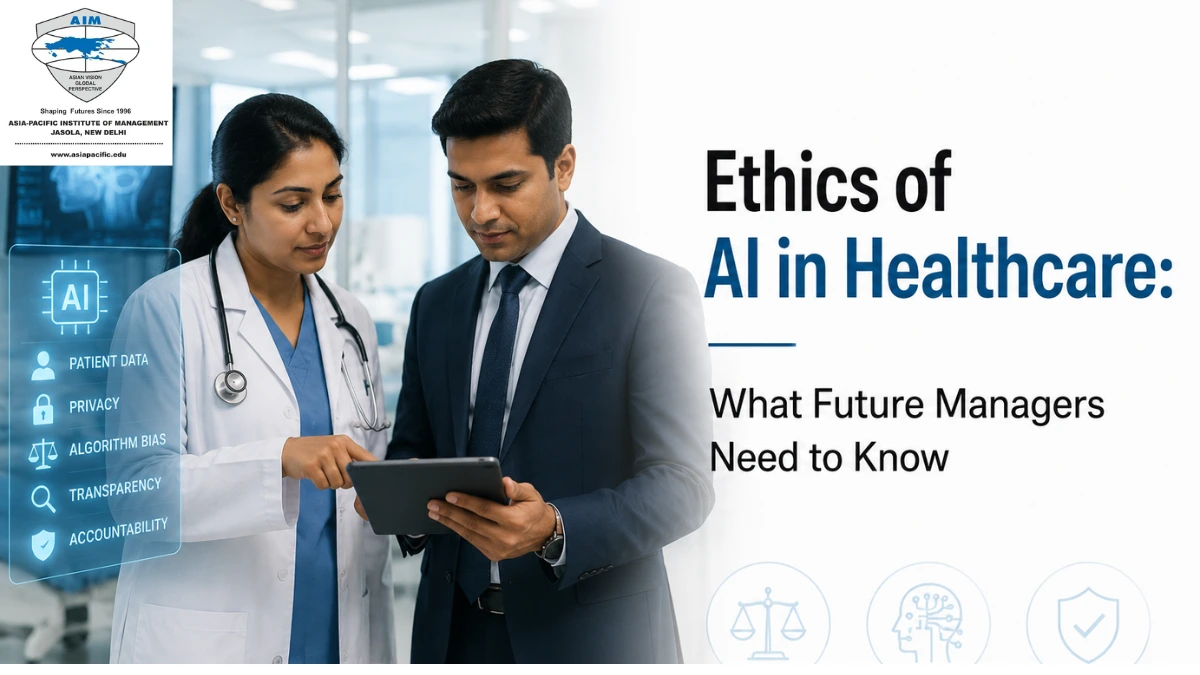
Ethics of AI in Healthcare: What Future Managers Need to Know

By Dr. Vikas Gupta

Ethics of AI in Healthcare: What Future Managers Need to Know

Introduction

Artificial Intelligence (AI) is rapidly transforming the healthcare industry. From disease prediction and diagnostics to patient monitoring and administrative automation, AI is changing how healthcare organizations operate.

However, as technology advances, important ethical questions also emerge. Can AI make unbiased decisions? How should patient data be protected? Where should human judgment remain essential?

These concerns have increased the importance of healthcare ai ethics, making it a critical area for future healthcare leaders.

For students pursuing an MBA in hospital and healthcare management, understanding AI ethics is becoming as important as understanding healthcare operations.

What is Healthcare AI Ethics?

Healthcare ai ethics refers to the moral principles and guidelines governing the use of artificial intelligence in healthcare systems.

It focuses on ensuring AI technologies remain:

  • Fair and unbiased
  • Transparent
  • Safe for patients
  • Accountable
  • Privacy-focused

The goal is to use technology responsibly while protecting patient interests.

Why AI is Transforming Healthcare

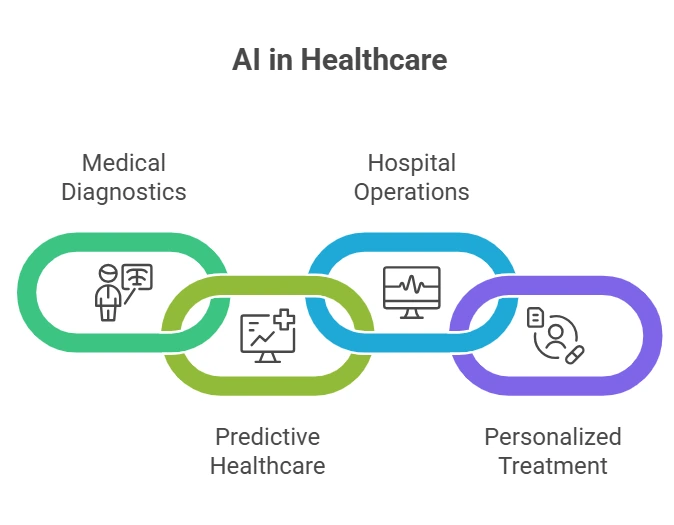
AI applications are expanding across healthcare functions.

Medical Diagnostics

AI tools assist doctors in detecting diseases more efficiently.

Predictive Healthcare

Advanced systems identify health risks using patient data.

Hospital Operations

AI helps optimize scheduling, resource allocation, and workflow management.

Personalized Treatment

Technology supports customized healthcare recommendations.

As hospitals become increasingly digital, healthcare managers must understand both technology and ethical responsibility.

Bonus: MBA After MBBS: Why It’s Growing Fast 

Major Ethical Challenges of AI in Healthcare

1. Patient Data Privacy

Healthcare systems manage highly sensitive patient information.

AI systems often process:

  • Medical histories
  • Diagnostic reports
  • Treatment records
  • Personal healthcare details

Improper data use can create privacy risks.

Therefore, patient confidentiality remains a major ethical concern.

2. Algorithm Bias

AI systems learn from historical data.

If data contains bias, AI may produce unfair outcomes.

Examples include:

  • Unequal treatment recommendations
  • Inaccurate predictions for specific populations
  • Healthcare accessibility disparities

Future managers must ensure fairness in technology implementation.

3. Transparency and Decision-Making

Patients and healthcare professionals often question how AI reaches decisions.

Lack of transparency creates trust issues.

Managers should promote systems that explain decision-making processes clearly.

4. Accountability Concerns

When AI systems make errors, an important question arises:

Who is responsible?

Healthcare organizations need clear accountability structures for AI-supported decisions.

5. Human Judgment vs Technology

AI can support decision-making but cannot replace human empathy and clinical judgment.

Healthcare managers must maintain balance between automation and human oversight.

Bonus: Healthcare Entrepreneurship After MBA 

Why Future Healthcare Managers Must Understand AI Ethics

Healthcare leadership now extends beyond operations management.

Managers increasingly oversee technology adoption and governance.

Key Responsibilities Include

  • Ensuring ethical technology use
  • Monitoring compliance and privacy standards
  • Managing digital healthcare systems
  • Building patient trust
  • Creating responsible healthcare policies

Understanding healthcare ai ethics prepares students for future healthcare leadership roles.

Role of MBA in Healthcare Management

An MBA in hospital and healthcare management helps students understand healthcare systems and emerging technologies.

Key Skills Developed

  • Strategic decision-making
  • Healthcare operations management
  • Leadership and communication
  • Technology management
  • Ethical problem-solving

Institutes like Asia Pacific Institute of Management emphasize industry-oriented learning and practical exposure. Students gain insights into evolving healthcare trends and real-world management challenges.

Career Opportunities in AI-Driven Healthcare Management

Students exploring mba in healthcare management colleges in india can pursue emerging technology-focused healthcare roles.

Popular Career Options

  • Healthcare Operations Manager
  • Digital Health Manager
  • Healthcare Consultant
  • Health IT Project Manager
  • Healthcare Technology Strategist

As AI adoption increases, technology-aware healthcare managers are becoming more valuable.

Why Delhi NCR is Ideal for Healthcare Education

Delhi NCR continues to emerge as a healthcare and technology hub.

Key Advantages

  • Access to healthcare organizations
  • Exposure to healthcare innovation
  • Internship opportunities
  • Corporate healthcare ecosystem

Students searching for the best colleges for mba in healthcare management often prefer Delhi NCR because of its strong industry exposure.

Step-by-Step Guide to Prepare for AI-Driven Healthcare Careers

Step 1: Understand Healthcare Operations

Learn how healthcare systems function.

Step 2: Build Technology Awareness

Understand digital healthcare and AI applications.

Step 3: Choose the Right MBA Program

Enroll in an MBA in hospital and healthcare management.

Step 4: Gain Practical Exposure

Participate in healthcare projects and internships.

Step 5: Stay Updated

Follow emerging healthcare technologies and ethical discussions.

Key Insights for Students and Parents

  • AI is transforming healthcare rapidly
  • Ethical decision-making is becoming increasingly important
  • Healthcare managers now require technology understanding
  • Practical exposure improves career readiness
  • Delhi NCR offers strong healthcare learning opportunities

Conclusion

Technology is reshaping healthcare systems globally. However, successful innovation requires responsible leadership. Understanding healthcare ai ethics helps future managers ensure that technology remains patient-centered, transparent, and trustworthy.

Students who combine healthcare management knowledge with ethical awareness can become future-ready leaders in an increasingly digital healthcare environment.

Experience Campus Life

Build future-ready healthcare leadership skills with industry-focused MBA programs and practical technology exposure today.

Apply Now

About the Author

author

Dr. Vikas Gupta

Dr. Vikas Gupta is a distinguished academic in the education and research domain, specializing in finance and related interdisciplinary studies. He is known for his...

Read Full Bio →

Leave a comment

Your email address will not be published. Required fields are marked *

Frequently Asked Questions (FAQs)

01. What is healthcare AI ethics?

It refers to ethical principles guiding responsible use of AI in healthcare systems.

02. Why is AI ethics important in healthcare?

Because healthcare involves sensitive data and patient safety concerns.

03. Can AI replace healthcare professionals?

No, AI supports decision-making but cannot replace human judgment and empathy.

04. What are the major ethical concerns in AI healthcare?

Privacy, bias, transparency, and accountability are key concerns.

05. Why should healthcare managers understand AI ethics?

Managers increasingly oversee technology implementation and healthcare policies.

06. Why study healthcare management in Delhi NCR?

Delhi NCR offers healthcare exposure and strong industry connectivity.

07. How to choose the best healthcare management college?

Focus on curriculum quality, practical exposure, internships, and placement support.

Follow Us

Subscribe to Our Newsletter

Download Brochure

M.Sc/B.Sc Brochure

PGDM Brochure

MBA Brochure

Apply Now Call Us Email WhatsApp