Patient Experience Management (PX): The Skill Driving Hospital Revenue
Posted on 30 Aug 2026
By Dr. Vikas Gupta
Introduction
Patients also remember how quickly they received help, whether staff explained delays, how smoothly billing worked, how complaints were handled, and whether they felt respected throughout their care journey.
These experiences influence trust.
They also influence whether patients return, recommend the hospital to others, or share negative feedback publicly.
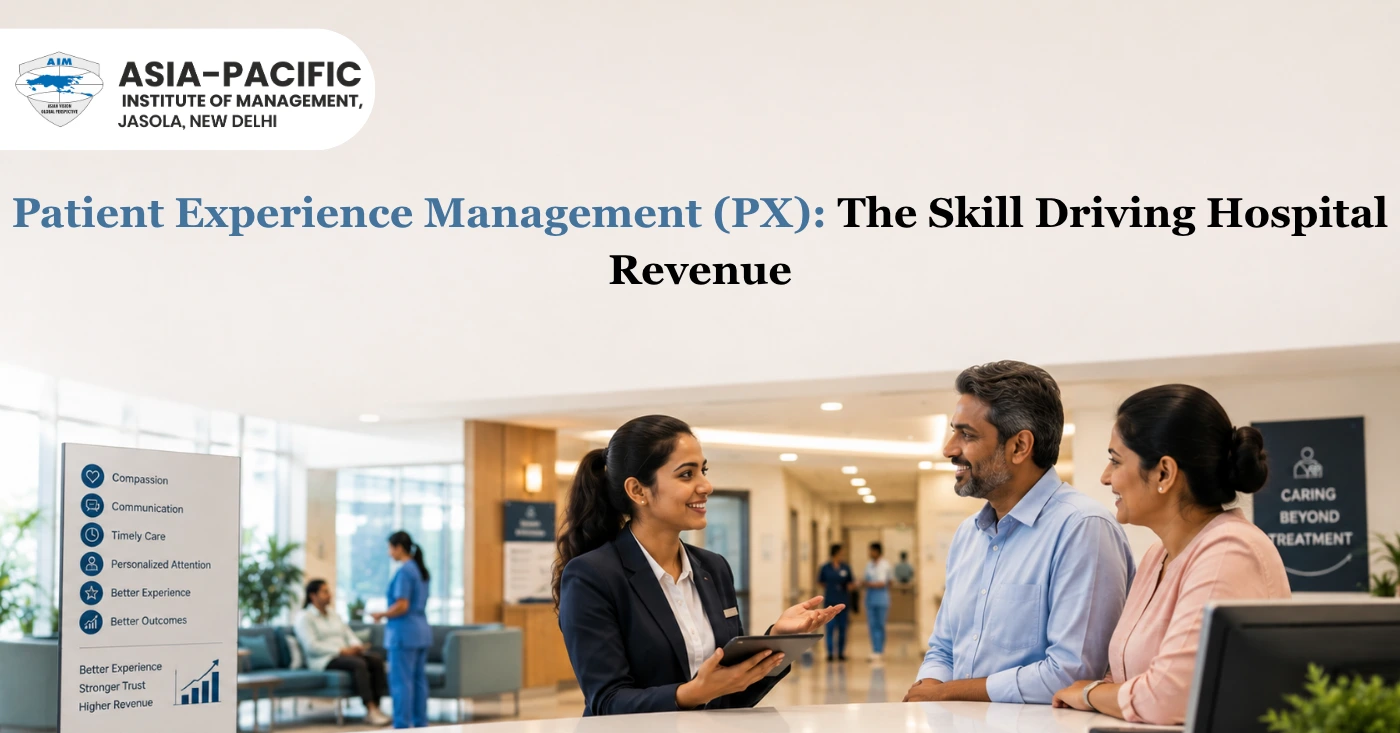
For healthcare managers, patient experience is not simply about hospitality. It connects operations, communication, quality, service recovery, digital systems, staff behaviour, and brand reputation.
When these areas work well together, hospitals can strengthen loyalty, improve satisfaction, reduce complaints, and support long-term revenue performance.
This guide explains how patient experience management works, which roles are involved, which metrics matter, and why the skill is becoming increasingly valuable for healthcare management careers.
Lead Better Patient Experiences
Build management, communication, analytics, and operational skills to improve patient journeys while preparing for impactful healthcare leadership roles.
Patient experience management is the structured process of improving how patients and families interact with a healthcare organization across appointments, registration, treatment, billing, discharge, communication, and follow-up. It combines service quality, operational efficiency, communication, grievance handling, and patient-centred care.
Patient experience begins before a patient enters the hospital.
Therefore, patient experience is not owned by one department.
It is an organization-wide responsibility.
Why Patient Experience Management Matters to Hospital Revenue
A patient may not understand every technical aspect of healthcare delivery.
However, they clearly understand whether the organization treated them well.
This affects future behaviour.
A strong experience can support:
Patient retention
Referrals
Positive reviews
Brand trust
Service utilization
Corporate relationships
Reputation
Poor experiences can create the opposite effect.
For example, a hospital may deliver clinically appropriate care.
However, if a family faces poor communication, unexplained delays, billing confusion, and unresolved complaints, their overall perception can remain negative.
Therefore, revenue cannot always be separated from experience.
Patients should know that their concern has been received.
Silence increases frustration.
The acknowledgement does not mean accepting fault.
It means respecting the concern.
Step 2: Categorize the Issue
Complaints can be classified into:
Service
Billing
Communication
Clinical
Facility
Staff behaviour
Clinical complaints should be escalated to qualified clinical leadership.
Serious cases may also require quality or legal review.
Step 3: Investigate the Root Cause
Do not simply ask:
“Who made the mistake?”
Ask:
“Why did the process fail?”
For example, repeated complaints about long discharge times may result from:
Late discharge summaries
Pharmacy delays
Billing bottlenecks
Insurance approvals
Root-cause analysis helps prevent recurrence.
Step 4: Communicate Resolution
Patients should understand what action was taken.
If the issue cannot be resolved immediately, provide a realistic next step.
Avoid vague statements such as:
“We are looking into it.”
Instead, provide clear ownership and follow-up.
Master Healthcare Experience Management
Develop practical expertise in patient experience, hospital operations, service quality, analytics, and leadership for rewarding healthcare management opportunities.
Why Healthcare Management Students Should Learn PX
Future healthcare managers need to understand patients as both care recipients and service users.
They should know how operational systems affect human experience.
At Asia Pacific Institute of Management, an industry-oriented curriculum, experienced faculty, practical learning, corporate exposure, and placement support can help students develop broader managerial capabilities.
For learners interested in healthcare, building skills in patient experience, operations, communication, and analytics can support preparation for roles across hospitals and other healthcare service organizations.
Conclusion
Patient experience management is becoming an important part of hospital strategy.
Patients judge healthcare through more than clinical outcomes.
They also remember:
Waiting
Communication
Staff behaviour
Billing
Cleanliness
Complaint handling
Discharge
Therefore, patient experience cannot remain the responsibility of one relationship officer or front-desk team.
It requires coordination across the entire hospital.
When hospitals improve patient journeys, they can strengthen trust, satisfaction, reputation, and loyalty.
These improvements can also support long-term financial performance.
For healthcare managers, the key lesson is simple:
Better patient experience is usually created by better systems.
That means improving operations, communication, grievance handling, staff training, technology, and service recovery together.
For MBA students, patient experience management therefore represents much more than a hospitality role.
It is a strategic healthcare-management capability connecting patient-centred service with operational performance and hospital brand value.
Shape Smarter Healthcare Services
Learn to connect patient satisfaction, operational efficiency, service quality, and business strategy while building a future-ready healthcare management career.
Dr. Vikas Gupta is a distinguished academic in the education and research domain, specializing in finance and related interdisciplinary studies. He is known for his...
Patient experience management is the structured process of improving interactions between patients, families, and healthcare organizations across appointments, treatment, communication, billing, discharge, and follow-up.
02.
What does a patient relationship officer do?
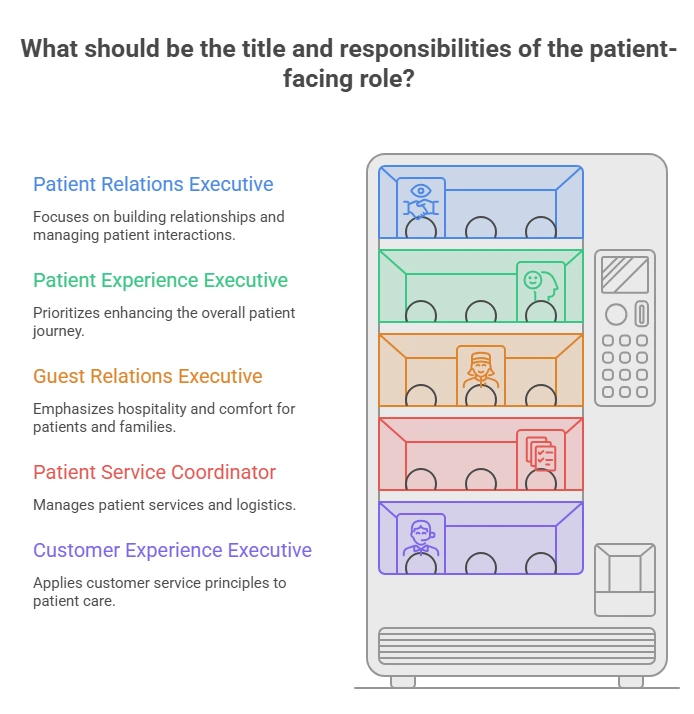
A patient relationship officer supports communication, service coordination, feedback, complaints, and patient assistance across hospital departments.
03.
Is corporate hospital hospitality the same as hotel hospitality?
No. Hospital hospitality must operate within clinical, privacy, safety, and healthcare requirements. The objective is to reduce patient stress while supporting care.
04.
How should hospitals handle patient grievances?
Hospitals should acknowledge complaints, categorize them, investigate root causes, communicate resolutions, record outcomes, and analyze repeated patterns.
05.
How does patient experience affect hospital brand reputation?
Consistent patient experiences influence reviews, recommendations, trust, repeat visits, and public perception. Therefore, service quality directly affects brand reputation.
06.
What is a patient satisfaction score?
A patient satisfaction score measures how satisfied patients are with aspects of hospital service such as communication, waiting time, cleanliness, billing, and overall experience.
07.
Can patient experience management improve hospital revenue?
Better experience can support retention, referrals, trust, and reputation. However, hospitals should improve experience primarily to provide better patient-centred service, not simply to maximize revenue.
08.
Is patient experience a good career after an MBA?
It can be a strong option for graduates interested in healthcare, communication, service management, analytics, operations, and cross-functional leadership.

















.webp) Call Us
Call Us