PGDM Applications at AIM Are Closing Soon | Secure Your Seat Now

Top 5 Case Studies of Famous Hospital Operational Failures (And How to Avoid Them)

By Dr. Vikas Gupta

Top 5 Case Studies of Famous Hospital Operational Failures (And How to Avoid Them)

Introduction

Every hospital strives to deliver safe, efficient, and high-quality patient care. However, even well-established healthcare organizations can experience operational failures caused by communication gaps, resource shortages, process inefficiencies, or poor coordination.

Studying hospital operations case studies helps future healthcare managers understand how operational challenges affect patient outcomes and organizational performance. More importantly, these real-world lessons demonstrate how better planning, leadership, technology, and process improvement can prevent similar issues.

For MBA and PGDM Healthcare Management students, analyzing operational failures is one of the best ways to develop problem-solving and decision-making skills required in modern healthcare organizations.

This blog explores five well-known categories of hospital operational failures, the lessons they provide, and practical strategies healthcare managers can implement to avoid similar situations.

Prevent Hospital Failures

Build operational excellence skills to reduce patient safety risks, improve workflows, and lead smarter healthcare teams confidently professionally.

Apply Now

Why Hospital Operations Matter

Hospital operations involve coordinating people, processes, technology, infrastructure, and resources to ensure seamless patient care.

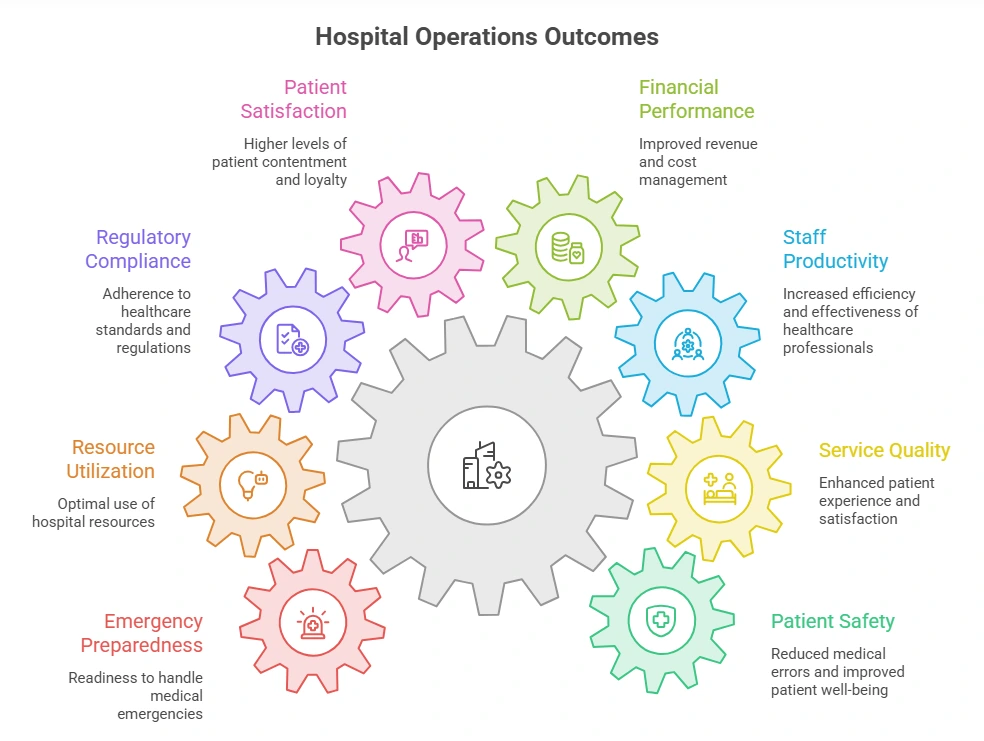
Efficient operations improve:

  • Patient safety
  • Service quality
  • Staff productivity
  • Financial performance
  • Patient satisfaction
  • Regulatory compliance
  • Resource utilization
  • Emergency preparedness

Even minor operational failures can disrupt patient care and damage a hospital's reputation.

Case Study 1: Emergency Room Overcrowding

One of the most common operational challenges worldwide is emergency room overcrowding.

The Challenge

Emergency departments often receive more patients than they can immediately accommodate.

Common causes include:

  • High patient inflow
  • Limited bed availability
  • Staff shortages
  • Delayed discharges
  • Seasonal disease outbreaks
  • Inefficient patient flow

When emergency departments become overcrowded, waiting times increase and clinical teams experience greater pressure.

Operational Impact

Overcrowding may result in:

  • Longer waiting times
  • Delayed treatment
  • Increased staff workload
  • Reduced patient satisfaction
  • Higher operational stress

How to Avoid It

Healthcare managers can improve emergency operations by:

  • Monitoring patient flow
  • Optimizing bed allocation
  • Improving discharge planning
  • Expanding triage capacity
  • Using digital queue management systems
  • Forecasting patient demand

Case Study 2: Communication Failures During Patient Handover

Effective communication is essential when responsibility for patient care shifts between healthcare professionals.

The Challenge

Incomplete or unclear patient handovers may lead to:

  • Missing clinical information
  • Medication errors
  • Delayed treatment
  • Duplicate investigations
  • Patient confusion

Operational Impact

Poor communication affects both patient safety and operational efficiency.

How to Avoid It

Hospitals should:

  • Standardize handover procedures.
  • Use electronic documentation.
  • Encourage multidisciplinary communication.
  • Train staff regularly.
  • Monitor compliance with communication protocols.

Structured communication significantly reduces avoidable errors.

Bonus: Managing Aggressive Patient Relatives 

Case Study 3: Delayed Equipment Availability

Hospitals depend on sophisticated medical equipment for diagnosis and treatment.

The Challenge

Equipment delays may occur because of:

  • Poor maintenance planning
  • Procurement delays
  • Inventory shortages
  • Inefficient scheduling
  • Equipment downtime

Operational Impact

Delays can affect:

  • Surgical schedules
  • Diagnostic services
  • Patient waiting time
  • Hospital productivity

How to Avoid It

Healthcare managers should:

  • Implement preventive maintenance.
  • Monitor equipment utilization.
  • Maintain vendor relationships.
  • Forecast replacement needs.
  • Improve inventory management.

Case Study 4: Infection Control Breakdowns

Infection prevention remains a major operational priority.

The Challenge

Hospital-acquired infections may increase when infection control protocols are not consistently followed.

Possible contributing factors include:

  • Poor hand hygiene
  • Inadequate sterilization
  • Overcrowding
  • Staff shortages
  • Insufficient training

Operational Impact

These issues may lead to:

  • Longer hospital stays
  • Higher treatment costs
  • Reduced patient confidence
  • Additional operational pressure

How to Avoid It

Hospitals should strengthen:

  • Infection control training
  • Environmental cleaning
  • Compliance monitoring
  • Quality audits
  • Staff awareness programmes

Patient safety improves when infection prevention becomes part of everyday operations.

Lead Safer Operations

Learn crisis management, quality improvement, and Lean Six Sigma practices for hospital operations through practical MBA training today.

Apply Now

Case Study 5: Digital Transformation Challenges

Many hospitals are adopting electronic health records and digital management systems.

The Challenge

Implementation difficulties may arise because of:

  • Staff resistance
  • Limited training
  • Technology integration issues
  • Workflow redesign
  • Data migration challenges

Operational Impact

Poor implementation can reduce productivity and create workflow disruptions during transition.

How to Avoid It

Healthcare managers should:

  • Train employees before implementation.
  • Introduce systems gradually.
  • Monitor adoption.
  • Collect staff feedback.
  • Improve change management.

Successful digital transformation requires both technology and people management.

Crisis Management in Healthcare

Strong crisis management in healthcare enables hospitals to respond effectively during emergencies.

Healthcare managers coordinate responses to:

  • Disease outbreaks
  • Fire emergencies
  • Power failures
  • Mass casualty incidents
  • Cybersecurity disruptions
  • Equipment failures
  • Natural disasters

Effective crisis planning includes:

  • Incident response plans
  • Staff training
  • Communication protocols
  • Emergency drills
  • Resource planning

Prepared organizations recover more quickly from unexpected events.

Understanding Patient Safety Incidents

Patient safety incidents refer to events that may cause or have the potential to cause unnecessary harm during healthcare delivery.

Examples include:

  • Medication errors
  • Patient falls
  • Identification mistakes
  • Documentation errors
  • Surgical scheduling issues
  • Diagnostic delays

Healthcare managers investigate these incidents to improve systems rather than assigning blame.

Continuous learning strengthens organizational safety.

Healthcare Failure Analysis: Learning from Mistakes

Effective healthcare failure analysis helps hospitals identify why operational problems occur.

Managers typically evaluate:

  • Process failures
  • Communication gaps
  • Staffing challenges
  • Technology limitations
  • Resource allocation
  • Leadership decisions
  • Policy compliance

The goal is continuous improvement through evidence-based decision-making.

Lean Six Sigma in Hospitals

Many hospitals use lean six sigma in hospitals to improve operational efficiency.

Lean principles help eliminate unnecessary activities, while Six Sigma focuses on reducing process variation and improving quality.

Applications include:

  • Reducing patient waiting time
  • Improving discharge processes
  • Optimizing operating theatres
  • Enhancing laboratory efficiency
  • Improving pharmacy workflows
  • Reducing documentation errors

Healthcare managers use these methodologies to improve both quality and productivity.

Lessons Every Healthcare Manager Should Learn

Successful healthcare leaders understand that operational excellence depends on:

  • Clear communication
  • Data-driven decisions
  • Team collaboration
  • Continuous quality improvement
  • Staff training
  • Patient-centered care
  • Technology adoption
  • Risk management

Preventing operational failures requires proactive leadership rather than reactive problem-solving.

Skills Required for Hospital Operations Management

Future healthcare managers should develop:

  • Leadership
  • Communication
  • Operations management
  • Process improvement
  • Data analysis
  • Crisis management
  • Financial understanding
  • Team coordination
  • Decision-making
  • Quality management

These competencies prepare professionals to manage complex healthcare environments.

Bonus: Hospital Equipment: Lease or Buy? 

How MBA or PGDM Helps Build Operational Excellence

Healthcare management programmes develop practical skills required for hospital leadership.

Students study:

  • Hospital administration
  • Healthcare operations
  • Quality management
  • Risk management
  • Healthcare finance
  • Business analytics
  • Human resource management
  • Strategic management
  • Healthcare information systems
  • Leadership

At Asia Pacific Institute of Management, students benefit from an industry-oriented curriculum, experienced faculty, practical learning, hospital exposure, internships, live projects, and placement support. These experiences prepare graduates to solve operational challenges across hospitals, healthcare consulting firms, diagnostics, medical device companies, and health-tech organizations.

Career Opportunities in Hospital Operations

Healthcare management graduates may pursue careers such as:

  • Hospital Operations Manager
  • Quality Manager
  • Patient Safety Officer
  • Healthcare Consultant
  • Hospital Administrator
  • Risk Management Executive
  • Healthcare Analyst
  • Patient Experience Manager
  • Operations Executive
  • Healthcare Project Manager

Professionals with operational expertise are highly valued across the healthcare sector.

Conclusion

Studying hospital operations case studies provides valuable insights into the challenges healthcare organizations face and the strategies that improve patient care, operational efficiency, and organizational resilience. From emergency room overcrowding and patient safety incidents to crisis management in healthcare and lean six sigma in hospitals, every operational lesson helps future healthcare leaders make better decisions.

Healthcare organizations increasingly seek managers who can identify risks, improve workflows, implement quality systems, and lead teams through change. Developing these competencies prepares students for rewarding careers across hospitals, healthcare consulting firms, diagnostics, digital health companies, and healthcare service organizations.

At Asia Pacific Institute of Management, students gain industry-oriented education, practical learning, experienced faculty guidance, live projects, internships, and placement support to become future-ready healthcare management professionals.

Build Patient Safety

Turn healthcare failure analysis into career-ready skills for emergency flow, infection control, digital change, and operational leadership roles.

Apply Now

About the Author

author

Dr. Vikas Gupta

Dr. Vikas Gupta is a distinguished academic in the education and research domain, specializing in finance and related interdisciplinary studies. He is known for his...

Read Full Bio →

Frequently Asked Questions (FAQs)

01. What are hospital operations case studies?

Hospital operations case studies examine real or representative operational challenges to help healthcare professionals understand problems, solutions, and best practices.

02. Why is crisis management important in healthcare?

Crisis management helps hospitals respond effectively to emergencies while protecting patients, staff, and critical operations.

03. What are patient safety incidents?

Patient safety incidents are events that may result in unnecessary harm during healthcare delivery and require investigation for continuous improvement.

04. What causes emergency room overcrowding?

Common causes include high patient volumes, limited beds, staffing shortages, delayed discharges, and inefficient patient flow.

05. What is healthcare failure analysis?

Healthcare failure analysis identifies operational weaknesses and system failures so hospitals can improve processes and prevent future incidents.

06. How is Lean Six Sigma used in hospitals?

Lean Six Sigma improves efficiency by reducing waste, minimizing errors, improving patient flow, and enhancing healthcare quality.

07. Why should healthcare management students study operational failures?

Analyzing operational failures develops problem-solving, leadership, quality improvement, and strategic decision-making skills essential for healthcare managers.

Follow Us

Subscribe to Our Newsletter

Download Brochure

BBA Brochure

PGDM Brochure

MBA Brochure

Apply Now Call Us Email WhatsApp