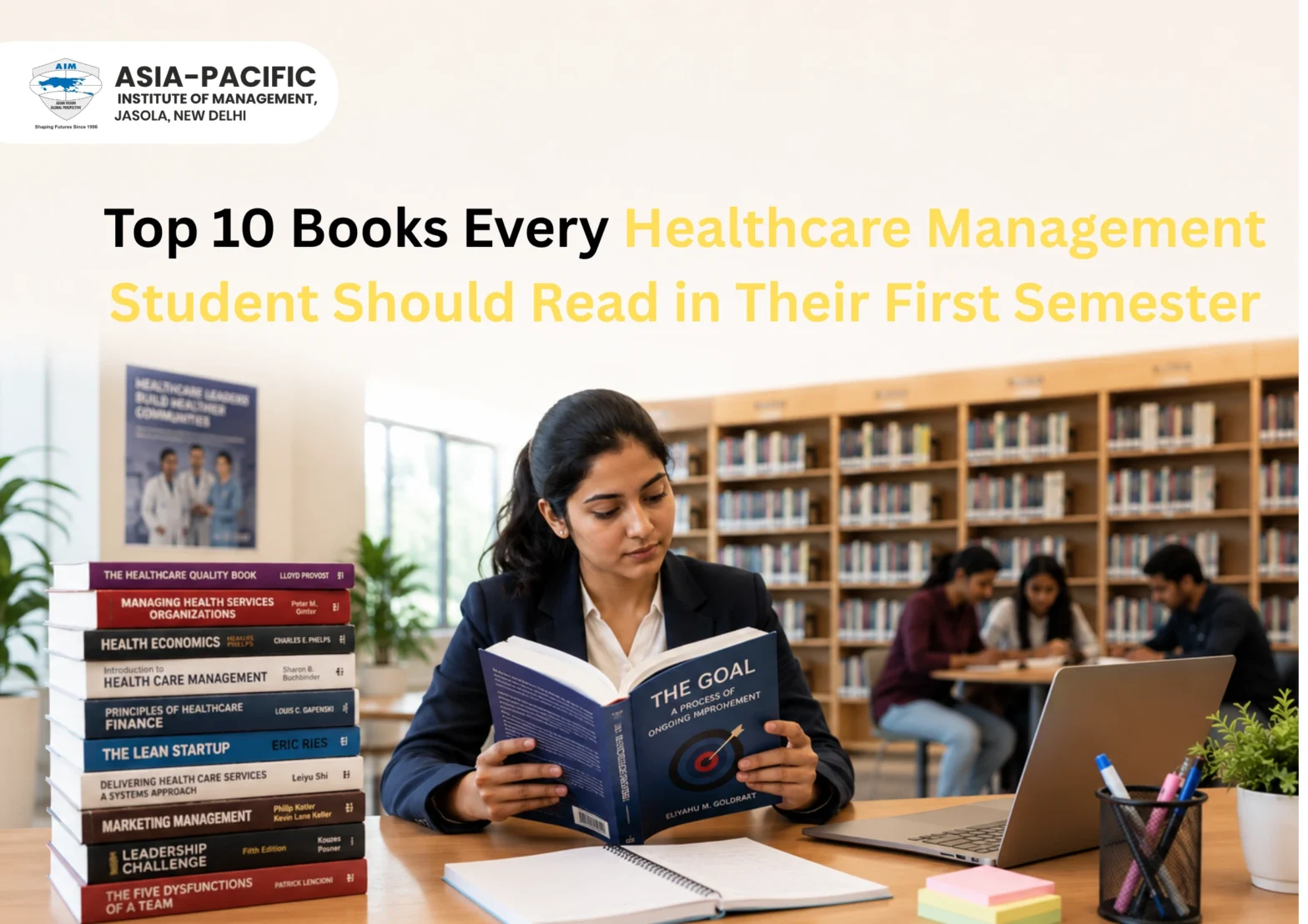
Top 10 Best Healthcare Management Books Every Student Should Read in Their First Semester
Posted on 29 Jul 2026
By Dr. Vikas Gupta
Introduction
Starting a healthcare management program is an exciting step toward building a career in one of the world's fastest-growing industries. However, succeeding in this field requires more than classroom lectures. Students need a strong understanding of hospital operations, leadership, healthcare policies, finance, patient care, and strategic decision-making. Reading the best healthcare management books early in your academic journey can provide practical insights that complement classroom learning.
Whether you aspire to work in hospital administration, healthcare consulting, pharmaceutical management, or healthcare operations, the right books can help you understand how the industry functions beyond theory. From learning the business of medicine to exploring healthcare leadership books and understanding healthcare economics, a well-rounded reading habit prepares students for academic success and future leadership roles.
In this guide, we explore the 10 best healthcare management books every first-semester student should consider reading to develop industry knowledge and professional skills.
Read Healthcare Smarter
Build your healthcare management foundation with expert-led MBA learning, practical exposure, reading guidance, and placement-focused support for future leadership.
The healthcare industry combines clinical excellence with efficient business management. Professionals must understand patient care, financial planning, operations, technology, regulations, and leadership simultaneously.
Building this foundation early makes classroom concepts easier to understand and apply.
How We Selected These Books
The books included in this hospital administration reading list were selected based on their relevance to healthcare management education. They cover essential topics such as leadership, healthcare economics, hospital operations, quality improvement, strategy, and patient-centered care.
Each book offers valuable perspectives that help students connect academic learning with practical healthcare management challenges.
Top 10 Best Healthcare Management Books for First-Semester Students
1. Essentials of Healthcare Management
This book introduces students to the fundamentals of healthcare organizations, hospital systems, strategic planning, quality improvement, and operational management.
Why Read It?
Builds a strong conceptual foundation
Explains healthcare systems clearly
Ideal for beginners
Key Learning Areas
Healthcare delivery systems
Hospital administration
Organizational management
Healthcare policies
2. The Goal: A Process of Ongoing Improvement
Although not exclusively focused on healthcare, this classic management book teaches operational efficiency and process improvement.
Why Read It?
Students learn how small operational improvements can significantly enhance organizational performance, including hospitals and healthcare facilities.
Key Learning Areas
Operations management
Process optimization
Performance improvement
Resource utilization
3. Good to Great
Leadership plays a crucial role in healthcare organizations. This widely recommended title explains how organizations transform into high-performing institutions through disciplined leadership and strategic thinking.
Why Read It?
It helps students understand organizational excellence and long-term leadership principles.
Strong leadership skills prepare students for supervisory and management roles in hospitals.
8. The Business of Medicine
Healthcare is both a public service and a complex business.
Books explaining the business of medicine explore how hospitals manage finances, operations, regulations, technology investments, and patient satisfaction while maintaining quality healthcare services.
Students gain valuable insights into balancing business performance with patient-centered care.
Start Learning Strong
Turn first-semester reading into real healthcare management confidence through case-based learning, mentorship, internships, and industry exposure from experts.
Reading multiple books may seem overwhelming initially. A structured approach can make learning more effective.
Consider these strategies:
Read 20–30 pages daily.
Maintain a notebook for key concepts.
Relate book insights to classroom discussions.
Discuss ideas with classmates.
Follow healthcare industry news.
Focus on understanding concepts instead of memorizing facts.
Consistent reading builds both knowledge and confidence over time.
How Reading Supports Career Growth
Healthcare organizations increasingly seek professionals who understand both healthcare delivery and business management.
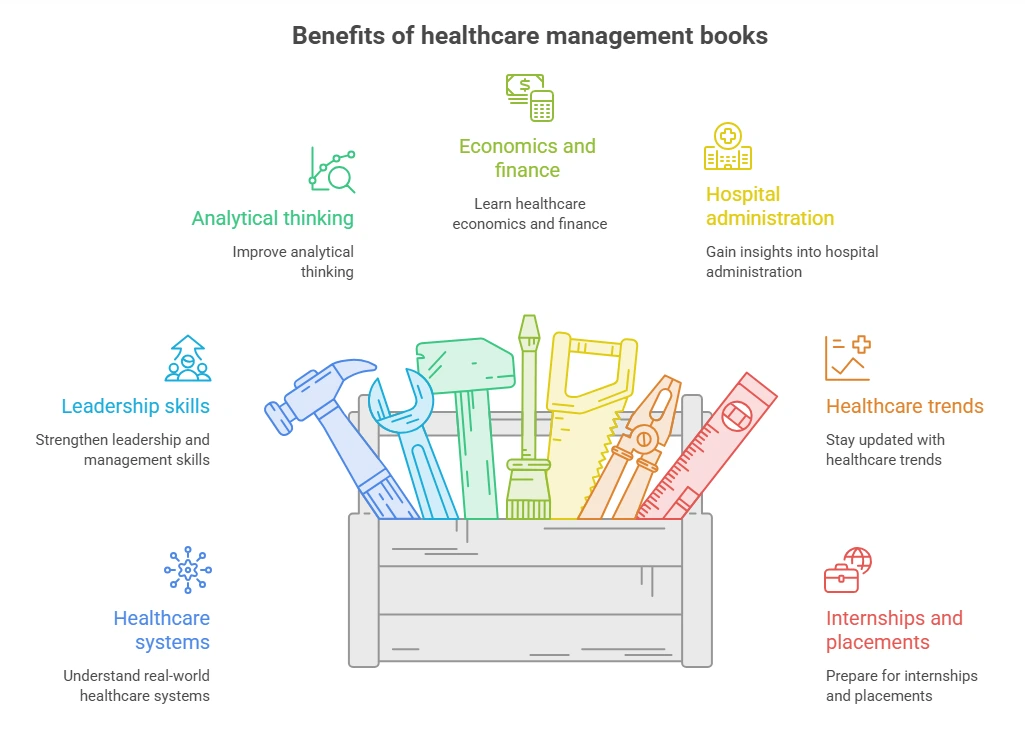
Students who regularly read industry-focused books often demonstrate:
Better analytical skills
Stronger leadership potential
Greater business awareness
Improved interview performance
Enhanced problem-solving ability
Higher confidence during internships
Continuous learning also prepares graduates for leadership roles in hospitals, healthcare startups, consulting firms, pharmaceutical companies, insurance organizations, and public health institutions.
Preparing for a Career in Healthcare Management
Healthcare management is evolving rapidly with advancements in technology, digital health, artificial intelligence, patient experience, and regulatory frameworks.
Students who combine classroom education with extensive reading develop broader perspectives and stronger decision-making abilities.
Industry-oriented management institutions like Asia Pacific Institute of Management encourage experiential learning, case-based discussions, industry interaction, and practical exposure alongside academic study. Combining structured education with independent reading helps students build the competencies required to thrive in the healthcare sector.
Conclusion
Reading the best healthcare management books during the first semester provides students with a strong academic and professional foundation. From healthcare leadership books and understanding healthcare economics to insights into the business of medicine, these resources help bridge the gap between theory and real-world healthcare management.
Developing a habit of reading industry-relevant books not only improves classroom performance but also prepares students for leadership roles in hospitals and healthcare organizations. Combined with practical learning, internships, and industry-oriented education, continuous reading can become one of the most valuable investments in a successful healthcare management career.
Build Management Insight
Prepare for hospital administration, healthcare economics, and leadership roles with practical MBA training and career guidance today successfully.
Dr. Vikas Gupta is a distinguished academic in the education and research domain, specializing in finance and related interdisciplinary studies. He is known for his...
01.
What are the best healthcare management books for beginners?
Books covering healthcare management fundamentals, hospital administration, leadership, healthcare economics, and quality improvement are ideal for beginners.
02.
Why should healthcare management students read leadership books?
Leadership books help students develop communication, decision-making, emotional intelligence, and team management skills essential for healthcare organizations.
03.
How does understanding healthcare economics benefit students?
It enables students to understand healthcare financing, budgeting, insurance systems, cost control, and strategic resource allocation.
04.
Are healthcare management books useful for MBA students?
Yes. Many books for MBA students specializing in healthcare provide practical knowledge that complements classroom learning and industry exposure.
05.
How many books should first-semester students read?
Reading one book every three to four weeks is a practical goal. Consistency is more valuable than trying to read many books quickly.
06.
Do healthcare management books improve career prospects?
Yes. Reading industry-focused books enhances subject knowledge, leadership skills, analytical thinking, and interview readiness, making graduates more competitive.
















.webp) Call Us
Call Us