MBA Healthcare After BAMS: Career Scope Beyond Clinical Practice
Posted on 23 Sep 2026
By Dr. Vikas Gupta
Introduction
For many BAMS graduates, clinical practice is not the only career path available. Healthcare is a large and evolving sector that needs professionals who understand both healthcare and business management. Therefore, pursuing an MBA healthcare after BAMS can open opportunities in hospital administration, healthcare operations, consulting, health-tech, insurance, marketing, and other management functions.
A BAMS degree provides knowledge of healthcare, patient needs, clinical environments, and the broader Indian healthcare ecosystem. An MBA can add business skills such as finance, strategy, operations, leadership, analytics, and marketing.
This combination can be useful for graduates who want to move from primarily clinical roles into management and leadership positions.
Expand Beyond Clinical Practice
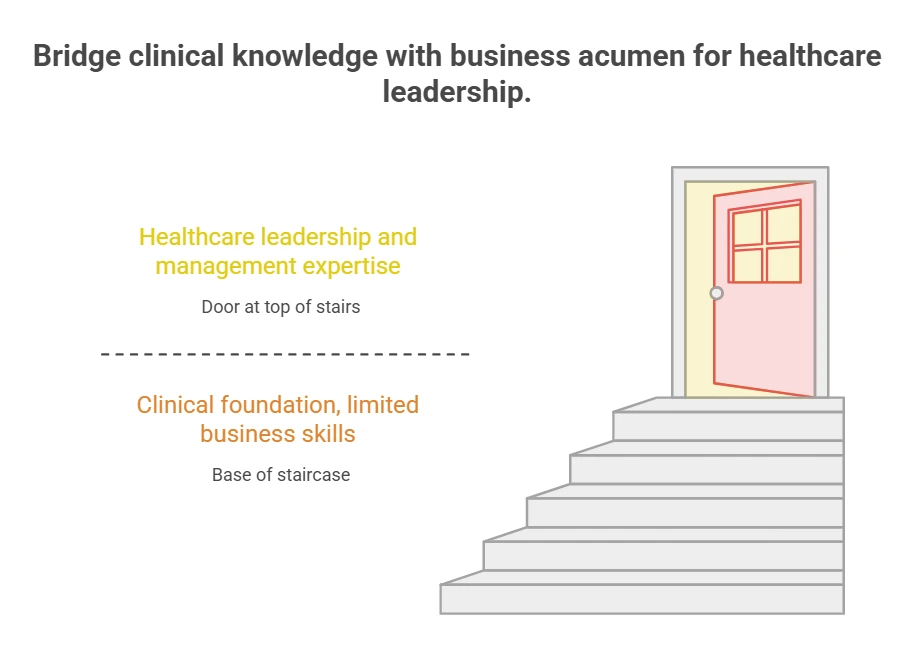
Combine your BAMS healthcare knowledge with management skills and explore broader opportunities in hospitals, consulting, health-tech, and business development.
MBA healthcare after BAMS refers to pursuing a healthcare-focused MBA or management program after completing a Bachelor of Ayurvedic Medicine and Surgery. The combination can help graduates develop both healthcare knowledge and management capabilities for non-clinical roles.
However, eligibility depends on the admission requirements of the specific management program. Students should always check the latest academic, entrance, and selection criteria before applying.
Why Consider an MBA After BAMS?
A BAMS degree builds a foundation in healthcare and clinical understanding. However, managing healthcare organisations requires additional business and administrative capabilities.
An MBA can help BAMS graduates understand areas such as:
Healthcare operations
Hospital administration
Financial management
Healthcare marketing
Human resource management
Business analytics
Strategic management
Healthcare technology
Quality management
Leadership and decision-making
Moreover, healthcare organisations involve many functions beyond patient treatment. They need professionals who can manage teams, resources, processes, budgets, technology, and patient services.
Therefore, an MBA after BAMS can be considered by graduates interested in the business and management side of healthcare.
Healthcare Management After BAMS: What Career Paths Are Available?
Healthcare management after BAMS can lead to several non-clinical career directions. The exact opportunities depend on qualifications, skills, experience, and the type of organisation.
1. Hospital Management
Hospital management is one of the most relevant options for BAMS graduates interested in administration.
Professionals may work across areas such as:
Hospital operations
Patient services
Administration
Quality management
Facility coordination
Front-office operations
Process improvement
Healthcare service delivery
A BAMS background can provide useful healthcare context. The MBA adds knowledge of management, finance, operations, and organisational strategy.
Therefore, hospital management after BAMS can be considered by graduates who want to work within healthcare organisations without limiting their careers to clinical practice.
2. Healthcare Operations
Healthcare operations focus on making healthcare services efficient, accessible, and well-coordinated.
An operations professional may work on:
Patient flow
Resource utilisation
Process improvement
Staff coordination
Service quality
Operational planning
Vendor coordination
Performance monitoring
BAMS graduates can bring healthcare awareness to these responsibilities. At the same time, management education can help them develop structured problem-solving and operational decision-making skills.
3. Healthcare Consulting
Healthcare consulting combines industry knowledge with business analysis.
Professionals in this area may contribute to projects involving:
Healthcare strategy
Operational improvement
Market analysis
Business planning
Process redesign
Healthcare expansion
Performance improvement
For a BAMS graduate, healthcare knowledge can be useful when understanding clinical workflows and patient-facing processes.
However, consulting also requires strong analytical, communication, presentation, and business skills. Therefore, an MBA curriculum with practical projects can be valuable.
Non-Clinical Jobs After BAMS
BAMS graduates who want to move away from direct clinical practice have several potential career directions.
Supporting operations, products or claims-related functions
Health-Tech
Working on healthcare technology and business processes
Quality Management
Supporting healthcare quality initiatives
Project Management
Coordinating healthcare projects and teams
These roles can vary significantly between employers. Therefore, students should examine the actual job description rather than relying only on a job title.
Management Careers After Ayurveda
The healthcare industry increasingly requires professionals who can understand both healthcare delivery and business management.
Healthcare marketing involves communicating services, building awareness, understanding patient needs, and supporting organisational growth.
An MBA can help BAMS graduates develop knowledge of:
Marketing strategy
Consumer behaviour
Digital marketing
Brand management
Market research
Communication
A healthcare background can also help professionals understand medical terminology and patient perspectives.
Business Development
Healthcare organisations need professionals who can identify opportunities and develop strategic relationships.
Business development roles may involve:
Partnership development
Market research
Client relationships
Service expansion
Revenue planning
Proposal development
Communication and negotiation skills are particularly important in these roles.
Healthcare Analytics
Healthcare organisations generate large amounts of operational and business data.
Analytics professionals may examine:
Patient volumes
Revenue indicators
Operational performance
Customer behaviour
Service utilisation
Business performance
Therefore, BAMS graduates interested in data should consider developing skills in Excel, business analytics, dashboards, and data interpretation.
Health-Tech Management
Technology is changing how healthcare organisations deliver and manage services.
Health-tech businesses may require professionals who understand both healthcare processes and business operations.
Potential responsibilities can include:
Product coordination
Healthcare operations
Customer success
Business development
Project management
Implementation support
For BAMS graduates, this can be an interesting direction if they also develop technology and business skills.
Build Your Healthcare Career
Build finance, strategy, operations, analytics, and leadership capabilities to prepare for diverse non-clinical healthcare management careers after BAMS.
The value of an MBA after BAMS is not limited to the degree title. The skills developed during management education can influence career opportunities.
Business and Financial Understanding
Healthcare organisations must manage budgets, costs, investments, and resources.
Management education introduces concepts such as:
Financial management
Cost analysis
Budgeting
Business planning
Revenue management
Leadership Skills
Healthcare management involves working with diverse teams.
Therefore, students can benefit from developing:
Team management
Communication
Conflict resolution
Negotiation
Decision-making
Change management
Strategic Thinking
Healthcare leaders need to consider both immediate operational requirements and long-term organisational goals.
MBA education can introduce students to:
Competitive analysis
Strategic planning
Business models
Market analysis
Growth strategy
Data-Driven Decision-Making
Modern healthcare management increasingly depends on data.
Learning analytics can help professionals interpret information and support evidence-based decisions.
Is MBA Healthcare After BAMS Suitable for You?
An MBA may be worth considering if you want to:
Move beyond direct clinical practice
Work in healthcare administration
Build a career in hospital operations
Explore healthcare consulting
Enter health-tech management
Work in healthcare marketing
Develop business leadership skills
Combine healthcare knowledge with management
However, an MBA is not automatically the right choice for every BAMS graduate.
If your primary goal is clinical practice, an MBA may not be necessary. On the other hand, if you are interested in management, strategy, operations, or healthcare business, management education may align better with your career goals.
Hospital Management After BAMS: What Should Students Learn?
Students considering hospital management after BAMS should look beyond the program title.
A useful management curriculum should cover areas such as:
Healthcare Operations
Understand how hospitals manage processes, people, capacity, and resources.
Healthcare Finance
Learn how financial decisions influence healthcare organisations.
Human Resource Management
Understand recruitment, workforce planning, employee engagement, and performance management.
Quality Management
Learn how organisations monitor and improve service quality.
Healthcare Marketing
Understand patient communication, brand strategy, digital channels, and market research.
Business Analytics
Develop the ability to interpret operational and business data.
Strategic Management
Learn how organisations develop and implement long-term strategies.
Additionally, practical projects, industry exposure, case studies, and experienced faculty can help students connect classroom concepts with real healthcare situations.
Career Roadmap: From BAMS to Healthcare Management
A structured approach can make the transition easier.
Step 1: Define Your Career Goal
First, decide why you want to move into management.
Do you want hospital administration, consulting, health-tech, marketing, analytics, or business development?
Step 2: Check MBA Eligibility
Review the latest eligibility criteria of the program you are considering.
Typically, management programs require a recognised undergraduate qualification. However, minimum marks, entrance requirements, work experience, and other criteria can vary.
Step 3: Choose the Right Specialisation
Consider a curriculum that matches your target career.
For example, students interested in hospital operations may prioritise healthcare operations and administration. Those interested in business roles may look for strategy, marketing, finance, and analytics.
Step 4: Develop Business Skills
Do not depend entirely on the MBA curriculum.
Build additional skills in:
Excel
Data analytics
PowerPoint presentations
Business communication
Digital marketing
Project management
Financial analysis
Step 5: Gain Practical Exposure
Internships, live projects, case studies, industry interactions, and practical assignments can help bridge the gap between academic learning and professional work.
How BAMS Gives You an Advantage in Healthcare Management
A BAMS background can provide several useful foundations.
Healthcare Context
You already understand many healthcare concepts and patient-related processes.
Clinical Environment Awareness
Your academic and practical exposure can help you understand healthcare workflows.
Patient Perspective
Healthcare management decisions ultimately affect patients. Clinical education can help you appreciate this perspective.
Medical Communication
Healthcare organisations work with doctors, nurses, administrators, patients, vendors, and other stakeholders.
A healthcare background can make communication within these environments easier to understand.
However, these advantages do not replace management skills. Therefore, BAMS graduates should deliberately develop finance, analytics, strategy, leadership, and communication capabilities.
How to Choose an MBA Healthcare Program After BAMS
Before applying, evaluate the program carefully.
Consider these factors:
Curriculum: Does it cover healthcare and core management subjects?
Industry exposure: Are there practical projects and industry interactions?
Faculty: Does the faculty have relevant academic or industry experience?
Career support: What type of placement and career guidance is provided?
Learning approach: Does the program use cases, projects, simulations, or practical assignments?
Eligibility: Do you meet the current academic and admission requirements?
Program format: Does the schedule suit your career plans?
Total cost: Consider tuition and other applicable expenses.
For students evaluating management education, an industry-oriented learning environment can be particularly useful. Asia Pacific Institute of Management focuses on practical learning, corporate exposure, experienced faculty, and career-oriented management education.
What Skills Should BAMS Graduates Build Before an MBA?
You can improve your readiness by developing a few practical skills.
Communication
Work on professional writing, presentations, group discussions, and interpersonal communication.
Analytical Thinking
Learn to interpret business data and identify patterns.
Basic Finance
Understand revenue, costs, budgets, margins, and financial statements.
Technology Awareness
Become comfortable with spreadsheets, dashboards, digital platforms, and healthcare technology concepts.
Leadership
Participate in projects and activities that require teamwork and responsibility.
Business Awareness
Follow healthcare industry developments, business models, policy changes, and technology trends.
MBA Healthcare After BAMS: Career Growth Perspective
Career growth depends on multiple factors. These include role, organisation, experience, skills, location, performance, and professional development.
An MBA can provide a structured foundation for moving from functional responsibilities toward broader management roles.
For example, a professional may begin with operational or administrative responsibilities. With experience, they may take responsibility for teams, projects, budgets, or business functions.
Therefore, students should view an MBA as a capability-building step rather than an automatic promotion.
An MBA healthcare after BAMS can help graduates expand their career options beyond clinical practice. The combination of healthcare knowledge and management education can support careers across hospital operations, healthcare administration, consulting, marketing, analytics, health-tech, insurance, and business development.
However, the right career path depends on your interests and capabilities. Therefore, start by identifying the type of work you want to do.
If your goal is to combine healthcare knowledge with business and leadership skills, a management program can provide a structured pathway. Asia Pacific Institute of Management offers an industry-oriented learning environment with practical exposure, experienced faculty, and career-focused management education.
Explore the program curriculum, admission requirements, learning approach, and career support before making your decision.
Turn Healthcare Into Leadership
Turn your healthcare foundation into business expertise and develop practical skills for leadership, operations, strategy, and healthcare growth.
Dr. Vikas Gupta is a distinguished academic in the education and research domain, specializing in finance and related interdisciplinary studies. He is known for his...
Yes, BAMS graduates can generally consider MBA programs if they meet the eligibility criteria of the chosen institution. Requirements can vary by program, including graduation marks, entrance tests, and selection criteria.
02.
Is MBA healthcare after BAMS a good career option?
It can be relevant for BAMS graduates interested in healthcare management, administration, operations, consulting, marketing, analytics, or health-tech. The suitability depends on your career interests and long-term goals.
03.
What are the non clinical jobs after BAMS?
Potential non-clinical roles include hospital administration, healthcare operations, consulting, business development, healthcare marketing, analytics, health-tech, insurance, quality management, and project management.
04.
Can BAMS graduates work in hospital management?
Yes. BAMS graduates can explore hospital management roles after developing relevant management skills and meeting the requirements of employers or management programs.
05.
What are management careers after Ayurveda?
Management careers after Ayurveda can include healthcare operations, hospital administration, consulting, marketing, business development, analytics, health-tech, insurance, and project management.
06.
Is an MBA necessary for hospital management after BAMS?
Not every hospital management role requires an MBA. However, formal management education can help build skills in operations, finance, leadership, strategy, analytics, and organisational management.
07.
Can BAMS graduates enter health-tech?
Yes. BAMS graduates with suitable business, technology, communication, and healthcare knowledge can explore roles in health-tech operations, product coordination, implementation, customer success, and business development.
08.
What should I consider before choosing an MBA after BAMS?
Evaluate eligibility, curriculum, industry exposure, practical learning, faculty, career support, program format, total cost, and alignment with your target career.















.webp) Call Us
Call Us